Blacklists, corruption and frontline needs: Ukraine tackles an arms-export puzzle黑名单、腐败和前线需求:乌克兰如何应对武器出口难题
After years of struggling to arm its one million active-duty soldiers, Kyiv has been wary of allowing its domestic producers to sell their weapons abroad.
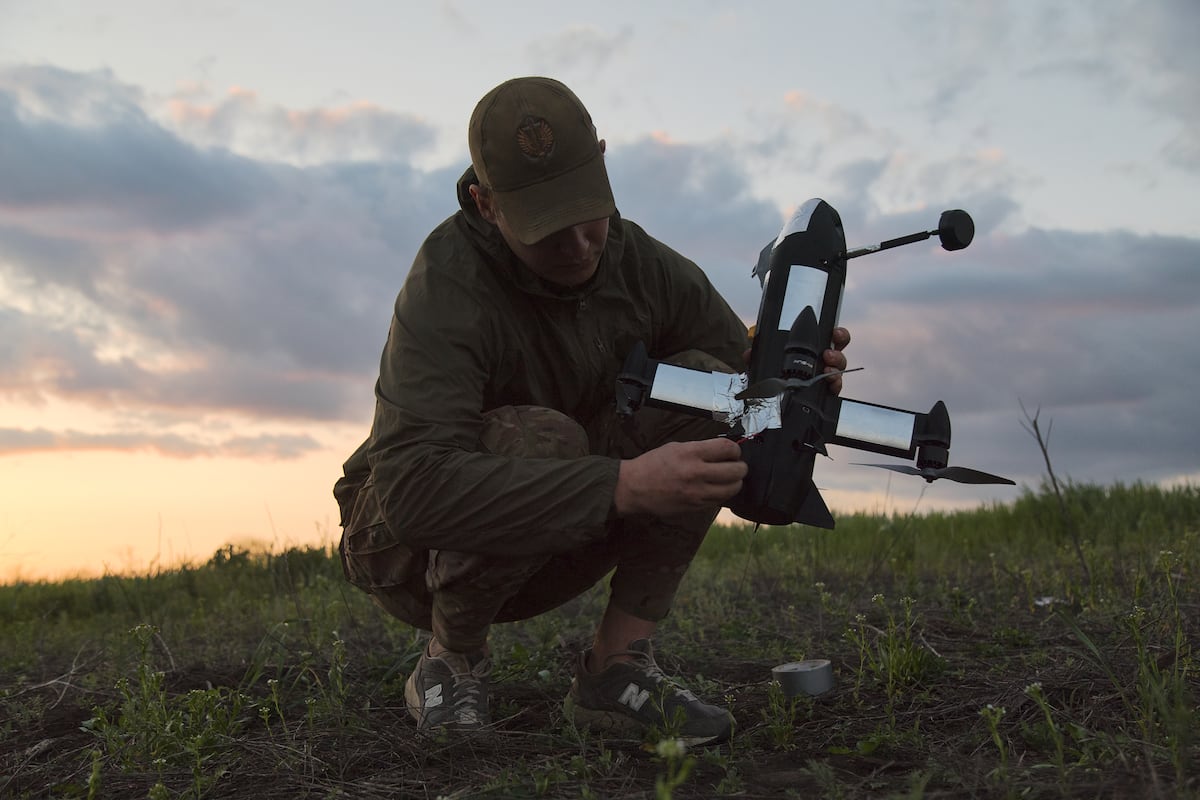
KYIV, Ukraine — The U.S. State Department and Ukraine’s ambassador in Washington have outlined a memorandum that would route Ukrainian drone technology into joint ventures on American soil in an attempt to inject Kyiv’s combat experience into the military’s equipment supply chains.
The draft agreement would open a legal channel for Kyiv to sell its weapons to the U.S. for the first time since it effectively banned arms exports to maintain its own forces at the start of Russia’s full-scale invasion in 2022, CBS News first reported.
The memorandum, drawn between the State Department and Ukrainian Ambassador Olha Stefanishyna, would integrate Ukrainian producers into joint ventures and tech-transfer arrangements with American firms.
The development caps two weeks in which Kyiv adopted an export framework dubbed “Drone Deals,” launched a procurement coalition with multiple European partners and watched Washington lift a 1997 import ban – all while signing four bilateral export contracts and pursuing roughly 20 more across the Middle East and partner countries, President Volodymyr Zelenskyy said this week.
Zelenskyy touted the new framework at a May 13 summit in Bucharest, Romania, with delegates from NATO’s nine eastern-flank members and their Nordic allies, as seen in a clip of the event posted on X .
“I believe all of us need bilateral Drone Deals,” he said, “using Europe’s production capabilities and Ukrainian expertise proven in real defense during a real war.”
Over four years into Russia’s full-scale invasion, Ukraine has built an arms industry that manufactures much of the hardware seen on the battlefield today, but that has struggled to scale up while capped by export bans, funding limitations and manufacturing challenges caused by the ongoing war.
“The Ukrainian military will always have the right to priority and sufficient supply – they will take what is needed, and the volume beyond that will go to export,” Zelenskyy said in a April 28 Telegram post announcing the new policies.
After years of struggling to arm its one million active-duty soldiers, Kyiv has been wary of allowing its domestic producers to sell their weapons abroad at a markup in case they may choose profit over supplying their own military.
But times have changed. Foreign defense funding to Ukraine hit $6.1 billion in 2025, marking a tenfold increase over the roughly $600 million the year before, according to the Ministry of Defense , and the world is turning to Kyiv as the leader in modern warfare and defense tech.
Fears over remaining empty-handed at home appear to have subsided.
Ukrainian President Volodymyr Zelenskyy arrives to attend the summit of B9 and Nordic countries in Bucharest, Romania, on May 13, 2026. (Alex Nicodim/Anadolu via Getty Images)
“In some production areas, we currently have up to 50% surplus capacity,” Zelenskyy said last month.
Ukraine’s defense production capacity has grown 35 times since the invasion began, from $1 billion to $35 billion, but domestic contracts covered only about a third of that last year – a gap Kyiv’s National Security and Defense Council projects will widen, with capacity expected to hit $55 billion in 2026.
Western contracts pay multiples of what the domestic procurement budget can offer, and those funds are the only capital large enough to fund the scale Ukraine needs to sustain both its front line and its surging arms industry.
Stefanishyna told the Philadelphia Inquirer in April that more than 100 U.S. investors have already expressed interest in Ukrainian defense-tech companies, and the U.S. government bought an initial 1,000 P1SUN drones from Ukraine that month.
Ukrainian producers have been pressing for new and improved export laws for years, but especially since demand from foreign buyers for Ukraine’s drones began surging after the war in the Middle East kicked off earlier this year.
Ihor Matviyuk has spent months turning down orders he cannot legally fill. He heads Aero Center Drones, a Kyiv-based manufacturer building FPV strike platforms and interceptor drones.
Until now, the only legal route has run through state arms-trade companies like Ukrspecexport, Progress and SpetsTechnoExport that take the contract on the producer’s behalf, he said.
“No Ukrainian company can export military goods independently. Companies can manufacture, but they cannot ship,” Matviyuk told Military Times in March.
He said a Western government asked Aero Center for 1,500 interceptor drones earlier this year, a request he’s now received several times over as the Iran war demonstrates how quickly a state can exhaust conventional interceptor stocks defending against mass-drone attacks .
But Matviyuk said he had to turn down the request despite having the manufacturing capacity to do it within weeks without affecting his current contracts.
“We cannot currently export large quantities,” he said at the time. “It’s only possible at the state level.”
The new framework permits five export categories – drones, missiles, ammunition, software and integration services – drawn from Defense Ministry-certified surplus. The Foreign Ministry and intelligence services have naturally blacklisted Russia and its cooperators from buying Ukrainian.
“The National Security and Defense Council of Ukraine, based on intergovernmental agreements with partners, will define the framework for cooperation – just to ensure that Ukrainian technologies and Ukrainian weapons do not end up in Russian hands,” Zelenskyy said.
It opens three legal channels for producers – independent licensing through the State Export Control Service, routing via specialized state arms-trade companies, and a 15-day “Defense City” preliminary permit that skips Cabinet designation, though the interagency commission still reviews every application under all three routes.
Defense City is a special legal regime for defense manufacturers, launched in January, that grants qualifying firms tax exemptions, simplified customs and the fast-track 15-day export permit regardless of where they operate in Ukraine. Approved firms will also be able to sell through the ten European hubs Zelenskyy announced in February, according to Euronews .
Every signed contract will now move through a 90-day clock at the State Export Control Service and a 17-member interagency commission under the National Security and Defense Council, replacing a licensing regime that set no fixed timelines and left approvals to bureaucratic discretion.
The NSDC commission had sat dormant for eight months until Zelenskyy reactivated it in December. It has made roughly 80 decisions since then, according to Ukrinform .
The new framework is intended to break the bottleneck that turned Matviyuk’s prospective 1,500-interceptor order into a loss, and Zelenskyy said the new timelines should close the room for graft that the old system created.
“We also need automatic export authorizations with a clear and predictable timeframe for approval, so that there is no ground for corruption,” he said.
Kyiv officials have pledged to continue advancing anti-corruption enforcement in parallel – a difficult process that has seen several successes but still has significant work ahead, according to a 2026 analysis by the global watchdog group Transparency International .
Procurement orchestrations
For Kyiv, things are moving forward elsewhere, too, when it comes to fresh approaches to defense purchases with European partners.
Ukraine and five European nations – Finland, Italy, Norway, Sweden and the United Kingdom – signed the CORPUS Memorandum on April 30 in a Kyiv hotel garage-turned-bunker, launching a defense-procurement coalition that links the countries’ national procurement agencies to coordinate buying, share supply-chain intelligence and open a path to joint contracts.
Ukraine’s CORPUS chair, Arsen Zhumadilov, also heads the country’s Defense Procurement Agency, set up in 2023 to take over arms buying after scandals over inflated food contracts and substandard winter jackets cost then-Defense Minister Oleksii Reznikov his job.
One of the DPA’s biggest moves against corruption and approval delays cut out the intermediaries – middleman firms that had been a required layer between state buyers and private manufacturers. Their share of arms procurement has fallen from 81% to 12%.
Zhumadilov’s role in CORPUS places Ukraine’s own procurement agency inside a multinational coalition, rather than leaving it only on the buyer’s side.
“We are starting with the exchange of experience and best practices to build coordination mechanisms, mutual trust, and plan for the future,” Zhumadilov said at the CORPUS post-signing press conference .
Denmark, France and the Netherlands have already registered interest in joining the group, he added.
More bilateral defense procurement partnerships are in the works, too. Kyiv and Berlin announced six new joint ventures over the last month, and Norway inked a parallel cooperation declaration to mass-produce Ukraine’s mid-range strike drones. Zelenskyy has announced plans to open ten export hubs across Europe in 2026, with production lines already running in the United Kingdom.
European leaders increasingly see Ukrainian weapons production as key to allied defense.
“Instead of us thinking that Ukraine needs Europe, perhaps we should think that we in Europe need Ukraine more,” Finland’s president, Alexander Stubb, said on May 4.
乌克兰基辅——美国国务院和乌克兰驻华盛顿大使概述了一份备忘录,旨在将乌克兰无人机技术引入美国本土的合资企业,以期将基辅的作战经验注入美国军方的装备供应链。
据 CBS 新闻报道,该协议草案将为基辅开辟一条合法渠道,使其能够向美国出售武器。这是自 2022 年俄罗斯全面入侵乌克兰以来,乌克兰为维持自身军队而实际禁止武器出口以来,基辅首次向美国出售武器。
美国国务院与乌克兰大使奥尔加·斯特凡尼什娜签署的备忘录,旨在将乌克兰生产商纳入与美国公司的合资企业和技术转让安排中。
弗拉基米尔·泽连斯基总统本周表示,这一进展标志着基辅在过去两周内通过了一项名为“无人机交易”的出口框架,与多个欧洲伙伴成立了采购联盟,并见证了华盛顿解除1997年的进口禁令——与此同时,基辅还签署了四份双边出口合同,并在中东和伙伴国家寻求签署大约20份其他合同。
泽连斯基在 5 月 13 日于罗马尼亚布加勒斯特举行的峰会上大力宣传了这一新框架,北约东翼九个成员国及其北欧盟友的代表出席了峰会,X 上发布的活动片段显示了这一情况。
“我认为我们都需要双边无人机交易,”他说,“利用欧洲的生产能力和乌克兰在真正的战争中经过实战检验的国防专业知识。”
在俄罗斯全面入侵乌克兰四年多之后,乌克兰建立了一个军火工业,生产了如今战场上许多武器装备,但由于出口禁令、资金限制以及持续战争造成的生产挑战,该工业难以扩大规模。
泽连斯基在4月28日通过Telegram发布新政策时表示:“乌克兰军队始终享有优先权和充足的供应——他们将获得所需的物资,超出部分将用于出口。”
多年来,基辅一直在努力武装其一百万现役士兵,因此一直谨慎地避免允许其国内生产商以加价向国外出售武器,以免他们选择追求利润而不是供应自己的军队。
但时代已经改变。据乌克兰国防部统计,到2025年,乌克兰获得的外国国防资金将达到61亿美元,比前一年的约6亿美元增长了十倍,世界正将基辅视为现代战争和国防技术的领导者。
人们似乎已经不再担心待在家里两手空空。
2026年5月13日,乌克兰总统泽连斯基抵达罗马尼亚首都布加勒斯特,出席B9国家和北欧国家峰会。(图片来源:Alex Nicodim/Anadolu via Getty Images)
泽连斯基上个月表示:“在一些生产领域,我们目前有高达 50% 的产能过剩。”
自入侵开始以来,乌克兰的国防生产能力增长了 35 倍,从 10 亿美元增长到 350 亿美元,但去年国内合同仅占其中的三分之一左右——基辅国家安全与国防委员会预计,这一差距将会扩大,预计到 2026 年产能将达到 550 亿美元。
西方的合同支付的金额是国内采购预算所能提供的数倍,而这些资金是唯一足以满足乌克兰维持其前线和蓬勃发展的军火工业所需规模的资金。
斯特凡尼什娜在 4 月份告诉《费城问询报》,已有 100 多名美国投资者对乌克兰国防科技公司表示了兴趣,美国政府当月从乌克兰购买了首批 1000 架 P1SUN 无人机。
多年来,乌克兰生产商一直在推动制定新的、改进的出口法律,尤其是在今年早些时候中东战争爆发后,外国买家对乌克兰无人机的需求开始激增。
伊戈尔·马特维尤克几个月来一直在拒绝那些他无法合法履行的订单。他是总部位于基辅的无人机制造商Aero Center Drones的负责人,该公司生产FPV攻击平台和拦截无人机。
他说,到目前为止,唯一的合法途径是通过像 Ukrspecexport、Progress 和 SpetsTechnoExport 这样的国有军火贸易公司,这些公司代表生产商签订合同。
“没有一家乌克兰公司能够独立出口军需品。公司可以生产,但不能运输,”马特维尤克3月份告诉《军事时报》。
他表示,今年早些时候,一个西方政府向航空中心索要了 1500 架拦截无人机,而随着伊朗战争表明一个国家在抵御大规模无人机袭击时,其常规拦截器库存会多么迅速地耗尽,他现在已经多次收到类似的请求。
但马特维尤克表示,尽管他有能力在几周内完成生产,而且不会影响他目前的合同,但他不得不拒绝这一请求。
他当时表示:“我们目前无法大量出口,这只能在州一级进行。”
新框架允许出口五类产品——无人机、导弹、弹药、软件和集成服务——这些产品均来自国防部认证的剩余物资。外交部和情报部门自然已将俄罗斯及其合作伙伴列入黑名单,禁止其购买乌克兰产品。
泽连斯基表示:“乌克兰国家安全与国防委员会将根据与合作伙伴的政府间协议,制定合作框架,以确保乌克兰的技术和武器不会落入俄罗斯手中。”
它为生产商开辟了三条合法渠道——通过国家出口管制局获得独立许可、通过专门的国家军火贸易公司获得许可,以及获得无需内阁指定即可获得的 15 天“国防城市”初步许可,尽管跨部门委员会仍然会审查所有三条途径下的每份申请。
“国防城”是今年1月启动的一项针对国防制造商的特殊法律制度,符合条件的企业无论在乌克兰境内何处运营,均可享受税收减免、简化海关手续以及15天快速出口许可。据欧洲新闻台报道,获批企业还可以通过泽连斯基2月份宣布的十个欧洲枢纽进行销售。
现在,每份签署的合同都将经过国家出口管制局和国家安全与国防委员会下属的17名成员组成的跨部门委员会90天的审批程序,取代了之前没有设定固定时间表、审批完全由官僚机构自行决定的许可制度。
国家安全与发展委员会(NSDC)已闲置八个月,直到泽连斯基在去年12月将其重新启动。据乌克兰通讯社报道,自那以来,该委员会已做出约80项决定。
新框架旨在打破导致马特维尤克预期的 1500 架拦截器订单亏损的瓶颈,泽连斯基表示,新的时间表应该能够堵住旧制度造成的贪污空间。
“我们还需要建立自动出口许可制度,并设定明确且可预测的审批时间,这样就不会滋生腐败,”他说。
基辅官员承诺将继续推进反腐败执法工作——这是一个艰难的过程,虽然已经取得了一些成功,但根据全球监督组织“透明国际”2026 年的分析,未来仍有许多工作要做。
采购协调
对于基辅来说,在与欧洲伙伴开展国防采购的新方法方面,其他方面也在取得进展。
4月30日,乌克兰和五个欧洲国家——芬兰、意大利、挪威、瑞典和英国——在基辅一家酒店的车库改建的掩体中签署了《CORPUS备忘录》,启动了一个国防采购联盟,将各国的国家采购机构联系起来,以协调采购、共享供应链情报并为联合合同开辟道路。
乌克兰 CORPUS 主席阿尔森·朱马迪洛夫同时也是该国国防采购局的局长。该局成立于 2023 年,负责接管武器采购工作。此前,由于食品合同虚高和冬季夹克不合格等丑闻,时任国防部长奥列克西·列兹尼科夫被迫下台。
国防采购局打击腐败和减少审批延误的最大举措之一是取消了中间商——这些中间商公司曾是国家采购方和私营制造商之间必不可少的环节。它们在武器采购中的份额已从81%下降到12%。
朱马迪洛夫在 CORPUS 中的角色,使得乌克兰自己的采购机构进入了一个多国联盟,而不是仅仅站在买方一方。
“我们首先交流经验和最佳实践,以建立协调机制、互信,并为未来做好规划,”朱马迪洛夫在 CORPUS 签约后的新闻发布会上说。
他还补充说,丹麦、法国和荷兰已经表示有兴趣加入该组织。
更多双边防务采购合作项目也在筹备中。基辅和柏林上个月宣布成立六家新的合资企业,挪威也签署了一项合作声明,旨在批量生产乌克兰的中程攻击无人机。泽连斯基宣布计划在2026年之前在欧洲各地开设十个出口中心,其中位于英国的生产线已经投入运营。
欧洲领导人越来越将乌克兰的武器生产视为盟军防御的关键。
芬兰总统亚历山大·斯图布5月4日表示:“与其认为乌克兰需要欧洲,或许我们应该认为欧洲更需要乌克兰。”