In Warsaw, EU continues push for unity in defense在华沙,欧盟继续推动国防领域的团结。
“It's very crucial to help Ukraine to defend itself and to defend the whole Europe,” European Commissioner for Defence and Space Andrius Kubillius.
Commissioner for Defence and Space Andrius Kubillius speaks at the Warsaw Security Forum. (Photo by Bartosz Głowacki)
WARSAW — The European Commission will continue to strengthen its defense capabilities to help defend Ukraine in its ongoing conflict with Russia, according to Commissioner for Defence and Space Andrius Kubillius.
“It’s very crucial to help Ukraine to defend itself and to defend the whole Europe,” Kubilius said here at the Warsaw Security Forum on Tuesday.
Kubillius’ comments come after the Trump administration has repeatedly called for Europe to become more self-reliant. However, Kubillius said his remarks are unrelated to US President Donald Trump’s statements alone, but rather a shift in global defense posturing as a whole.
“And that’s why [the] Commission president proposed to look into possibility to have what is called now the European Security Council, with member states, and … [the] United Kingdom, Ukraine, Norway, and Canada, which is close to Europe,” Kubilius said.
During her annual State of the Union Address in September, European Commission President Ursula von der Leyen pushed for the creation of the European Security Council , as Breaking Defense previously reported.
“For a long time we have discussed a leaders’ format focused on the security of our continent,” von der Leyen said at the time. “This is even more urgent now.”
The European Security Council could address the hurdle of fragmentation across the continent, Kibillius explained Tuesday.
Norwegian Minister of Defense Tore O. Sandvik agreed at the Warsaw Security Forum that Europe as a whole needs to band together.
“We have to take our responsibility. We are going to do that in Norway and we will go on for Europe,” he said.
“We now have a coalition of 11 countries in Europe supporting the anti-ballistic coalition, trying to develop anti-ballistic missile systems for Europe, because we need that,” Sandvik said.
“To a global level, we can support both countries in the Middle East, the US themselves, Europe, and our Pacific friends. What we can do in Ukraine, we can pass, we can develop, we can learn, and we can build new systems,” he added.
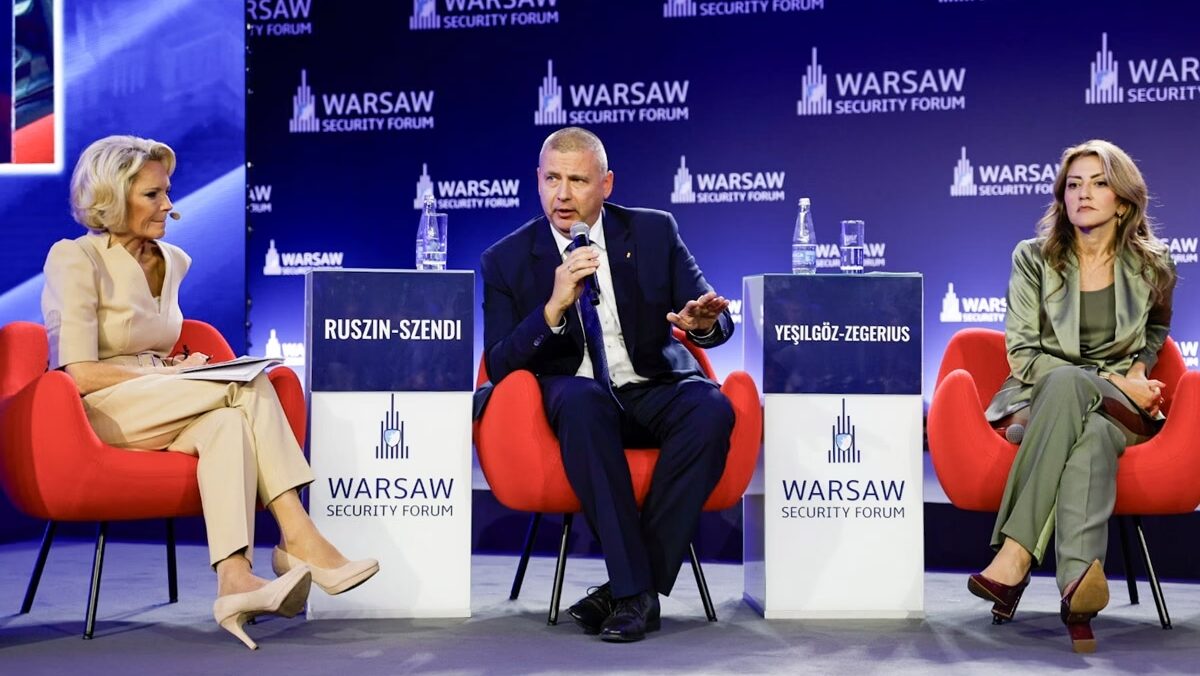
Hungarian Minister of Defence Romulusz Ruszin-Szendi said that under a new government, Budapest is aiming to focus more on the EU, particularly by getting the general public’s support.
“And we have a pretty large support. We have to do that. We have to change the mindset of the Hungarian society,” he said. “So, if you see what is happening in Hungary right now, more and more people are coming to the EU, more society is supporting them, and we try to introduce the Hungarian military to the society who can trust.”
Ruszin-Szendi also appealed for EU countries to have a better plan for potential future conflict, saying “if you see the different countries, the different interests, and different countries in Europe, see the threats, and the danger of aggression in Europe … [then] we have to find a way and we have to be able to deal with that.”
Netherlands Deputy Prime Minister and Minister of Defence Dilan Yeşilgöz-Zegerius explained that showing a united front is especially important in a hybrid war — a war that uses propaganda and disinformation in addition to physical attacks.
This sentiment was also laid out in France’s 2035 national security plan released in September.
The next conflict, according to Yeşilgöz-Zegerius, will not be ended “with tanks and guns,” but rather will “start and end with communication and … who controls the narrative.”
“And I think that we have to be very aware of that. And we, in our part of Europe, need to turn up to get that narrative right,” she continued. “I think that our narrative needs to get stronger because the story of the other [side] is way less factual.
Breaking Defense Video
Army doubles down on autonomy, stakes out Indo-Pacific role: AUSA Day 2
Telle talks ‘manufacturing rodeo,’ supply chain ‘weak links’: AUSA Day 1
New leaders, new drone command: What we expect from AUSA 2026
Unpacking Boeing’s F/A-XX win, plus a report from wartime Ukraine
How Hegseth envisions a new Autonomous Warfare Command
What Europe’s military air fleets will look like in 30 years
Riyadh gets closer to F-35s, Damascus presses sovereignty and an expert take on Iran
Drone-hunting on the border, plus turmoil at an Air Force think tank
The future of European airpower might be unmanned
The big news out of AFA, plus a guided tour of the show floor
国防与航天事务专员安德留斯·库比留斯在华沙安全论坛上发表讲话。(巴尔托什·格沃瓦茨基摄)
华沙——据欧盟国防与空间事务专员安德留斯·库比柳斯称,欧盟委员会将继续加强其国防能力,以帮助乌克兰应对与俄罗斯的持续冲突。
库比柳斯周二在华沙安全论坛上表示:“帮助乌克兰保卫自身和保卫整个欧洲至关重要。”
库比利乌斯发表此番言论之前,特朗普政府曾多次呼吁欧洲增强自力更生的能力。然而,库比利乌斯表示,他的言论并非仅针对美国总统唐纳德·特朗普的声明,而是关乎全球防务态势的整体转变。
“因此,欧盟委员会主席提议研究一下成立现在所谓的欧洲安全理事会的可能性,成员包括成员国以及……英国、乌克兰、挪威和加拿大,因为加拿大与欧洲距离很近,”库比柳斯说。
据 Breaking Defense 此前报道,欧盟委员会主席乌尔苏拉·冯德莱恩在 9 月份发表的年度国情咨文中力主成立欧洲安全理事会。
冯德莱恩当时表示:“长期以来,我们一直在讨论建立一个以维护欧洲大陆安全为重点的领导人会晤机制。现在,这个问题变得更加紧迫了。”
基比利乌斯周二解释说,欧洲安全理事会可以解决整个欧洲大陆的分裂难题。
挪威国防部长托雷·桑德维克在华沙安全论坛上表示,欧洲作为一个整体需要团结起来。
“我们必须承担起自己的责任。我们将在挪威这样做,我们也会继续为欧洲这样做,”他说。
“现在欧洲有 11 个国家支持反弹道导弹联盟,试图为欧洲开发反弹道导弹系统,因为我们需要这些系统,”桑德维克说。
“从全球层面来看,我们可以支持中东两国、美国、欧洲以及我们的太平洋盟友。我们在乌克兰取得的成就,我们可以借鉴、发展、学习并建立新的体系,”他补充道。
匈牙利国防部长罗穆卢什·鲁辛-森迪表示,在新政府的领导下,布达佩斯的目标是更加关注欧盟,特别是通过获得公众的支持。
“我们得到了相当广泛的支持。我们必须这样做。我们必须改变匈牙利社会的思维方式,”他说。“所以,如果你看看匈牙利现在正在发生的事情,越来越多的人加入欧盟,越来越多的社会人士支持他们,我们也在努力让匈牙利军队被社会大众所信任。”
鲁辛-森迪还呼吁欧盟各国制定更好的计划来应对未来可能发生的冲突,他说:“如果你看到欧洲不同的国家、不同的利益和不同的国家,看到欧洲面临的威胁和侵略的危险……[那么]我们必须找到一种方法,我们必须能够应对这种情况。”
荷兰副首相兼国防大臣迪兰·耶希尔戈兹-泽格里乌斯解释说,在混合战争中展现团结一致尤为重要——混合战争除了使用物理攻击外,还使用宣传和虚假信息。
法国在9月份发布的2035年国家安全计划中也表达了类似的观点。
叶希尔戈兹-泽格里乌斯认为,下一场冲突不会“以坦克和大炮”结束,而是“以沟通开始和结束,以及……谁控制了叙事”。
“我认为我们必须对此有非常清醒的认识。我们欧洲这部分地区的人需要站出来,把这件事说清楚,”她继续说道。“我认为我们的叙述需要更有力,因为对方的说法远没有事实依据。”
突破性防御视频
陆军加倍强调自主性,明确印太地区角色:AUSA第二天
特勒谈“制造业乱象”、供应链“薄弱环节”:AUSA第一天
新领导人,新无人机指挥部:我们对 AUSA 2026 的期待
深入剖析波音F/A-XX的竞标结果,以及来自战时乌克兰的报道
赫格塞斯设想的新型自主作战指挥部
30年后欧洲军用空军机队会是什么样子
利雅得距离F-35战机更近一步,大马士革强调主权,以及专家对伊朗的看法
边境无人机猎杀行动,以及空军智库的动荡
欧洲空军的未来或许在于无人化。
AFA展会最新动态,以及展会现场导览。