High Altitude Balloons Are A “Game-Changing” Capability: Army Space Command Boss陆军太空司令部负责人称,高空气球是一项“颠覆性”能力。
The Army recently disclosed it rushed high-altitude balloons to support operations in the Middle East.
新闻视频
By Joseph Trevithick
Published Oct 14, 2026 1:49 PM EDT
A sensor-laden high-altitude balloon from Aerostar seen lifting off from Won Pat International Airport on Guam during an exercise in 2024. US Army
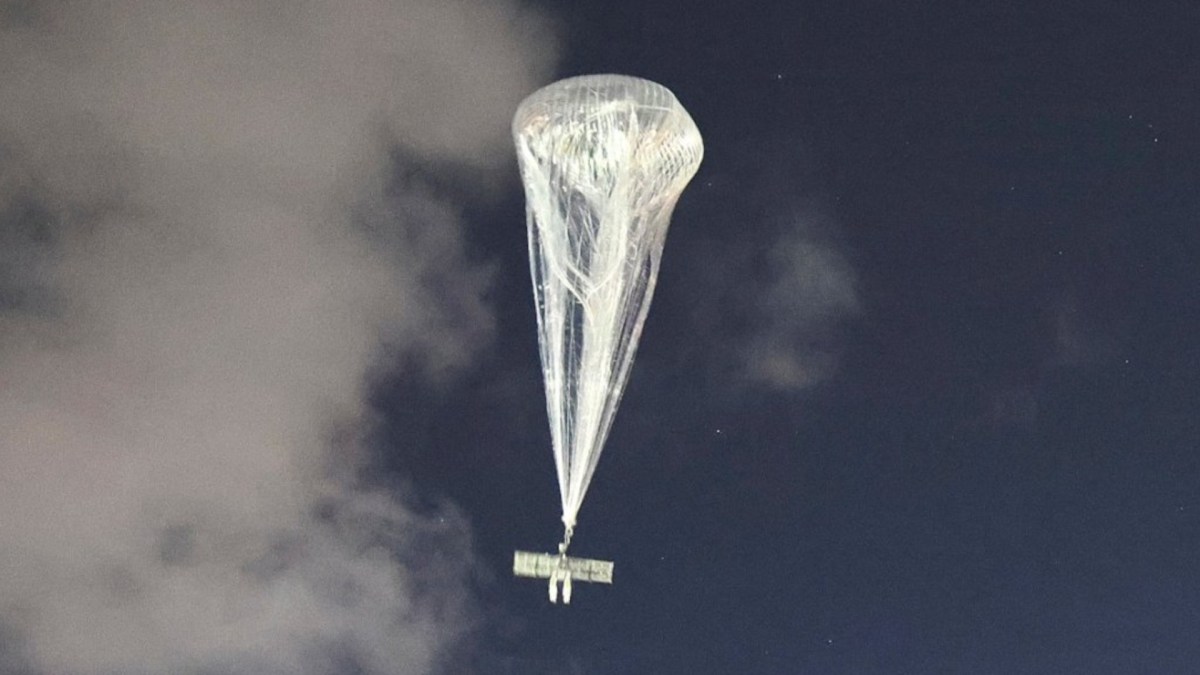
The head of the U.S. Army Space and Missile Defense Command (SMDC) was initially skeptical about the utility of high-altitude balloons , but now sees them as a “game-changing” capability. Lt. Gen. John Rafferty’s comments follow a separate disclosure that the Army axed plans for a balloon swarm test in the Pacific last year and instead sent those systems to support real operations in the Middle East. TWZ has been closely tracking the expanding use of high-altitude balloons and other lighter-than-air systems globally for intelligence gathering , as platforms for launching drones , and in support of other missions, for years now .
Lt. Gen. Rafferty was asked about high-altitude balloons during a media roundtable today, at which TWZ was in attendance, on the sidelines of the Association of the U.S. Army’s (AUSA) main annual convention . Army Col. Joseph Mroszczyk, head of SMDC’s Transformation Integration Directorate for Space Superiority (TID-Space Superiority), also discussed the service’s use of balloons during the roundtable. Breaking Defense first reported on the shift of balloon-based capabilities from the Pacific to the Middle East on Monday.
“I’ll just give a little personal history on high-altitude balloons. I started in the Army Futures Command in the Long Range Fires-Cross Functional Team. There was this talk of high-altitude balloons. I think it was the ISR [intelligence, surveillance, and reconnaissance] task force was talking about it,” Rafferty said. “It just sounded crazy to me that we were considering this.”
US Army personnel prepare to launch a high-altitude balloon during an exercise. US Army
“Then, a few years later, when the Sergeant Major [SDMC Command Sgt. Maj. Rickey Jackson] and I were together in the multi-domain community in Europe, I went with the 2nd MDTF [Multi-Domain Task Force] to Morocco for training and experimentation,” he continued. “[I] saw the high-altitude balloons in action, and I was immediately convinced after I understood better how they worked and how their ability to station-keep, and their ability to sense and even deliver effects from high altitude. It was game-changing for me.”
Broadly speaking, the main benefit that modern high-altitude balloons offer is their ability to be deployed persistently for days, weeks, or even months at a time. Designs available on the market today can hold their position, in spite of prevailing winds, and moderate their altitudes to keep on station, after precisely navigating to an assigned operating area.
On top of their persistence, the altitudes at which these balloons operate provide excellent fields of view for radars, cameras, and other sensors in all directions and across very broad areas. From a perch of 60,000 feet or more, they also offer a way to peer into certain denied areas while still soaring in international airspace and keeping further away from potential threats.
The video below from high-altitude balloon maker Aerostar offers a good general overview of the kind of capabilities on the market today.
As Lt. Gen. Rafferty noted today, ISR is not the only use case for high-altitude balloons, either. They can serve as communications relay nodes, as well as launch platforms for swarms of drones and other expendable payloads. These are all capabilities the Army has explicitly talked about as part of broader plans for balloons in the past. Other countries, especially China , are already actively employing high-altitude balloons for ISR and other missions, as we will come back to later on.
“In my former role as an MDTF commander , we experimented a lot in the Pacific with those [balloon-based] capabilities. We have leveraged different size platforms,” Col. Mroszczyk added today. “In this [TID-Space Superiority] role , as a proponent, what I’m pushing for is a family of stratospheric systems that really covers smaller size all the way up to larger size types of platforms in terms of balloons.”
“What that enables us to provide is space-like capabilities, really exploiting a transition point between what is normally considered the aerial layer and the space domain,” he continued. “Really, where you go from about 60,000 feet to 100,000 feet is what we focus on in the stratosphere. That operational space allows some persistence and broad coverage in an area where you can deliver space-like capabilities in terms of payloads, but then also take advantage of the deep access that you get from a stratospheric balloon.”
An element of a sensor payload called Wallabee designed to be carried aloft by high-altitude balloons. Urban Sky
“So, being able to go, take advantage of winds that are pushing you where you want to go already to be able to get either launched effects or other types of payloads for sensing and communications and extension of your launched effects portfolio,” he added. “That is a way that we can help exploit the stratosphere, and we’re looking to do that throughout multiple experiments over the course of the coming year.”
“Launched effects,” is a catch-all term the U.S. military now routinely uses to talk collectively about uncrewed aerial systems designed to be launched from other platforms in the air, on the ground , and/or at sea . This encompasses drones configured for a wide variety of missions, including surveillance and reconnaissance, electronic warfare, signal relay, and even kinetic attack.
A high-altitude balloon with an Apollo-R drone suspended underneath, seen demonstrated here during the U.S.-led Exercise Orient Shield 26 in Japan earlier this year. US Army
Col. Mroszczyk talked about plans to further demonstrate how high-altitude balloons will be commanded and controlled, as well as networked together with other Army capabilities, when asked to elaborate on what the forthcoming experimentation would entail.
As mentioned, the Army had also planned to demonstrate the ability of balloons to operate in swarms with a high degree of autonomy in the Pacific region last year before those assets were redirected to the Middle East. When exactly that deployment occurred and how long it lasted are unclear.
“We were asked to pivot and do some experimentation in combination with operations, and we pivoted and supported operations in CENTCOM [U.S. Central Command],” Andrew Evans, Director of Strategy and Transformation with the Office of the Deputy Chief of Staff of the Army, or G-2, told Breaking Defense , per the story that outlet published on Monday.
“They were effective for the mission that they were assigned,” he also said, but declined to elaborate further, according to Breaking Defense . “Balloons can be a little finicky in terms of temperature, and you have to contend with environmental characteristics.”
“We had a lot of help from vendors in this space, but as you think about employing your systems and going from something like a Pacific [theater] to something like a CENTCOM [theater], you learn where those friction points might exist between what the military might need to inherently own, and … what a vendor could help provide in terms of the service,” Evans added. Furthermore, “balloons can be a little finicky in terms of temperature, and you have to contend with environmental characteristics.”
Another stock picture of a US Army soldier inflating a high-altitude balloon during training. US Army/Staff Sgt. Brandon Rickert
The remarks today from Lt. Gen. Rafferty and Col. Mroszczyk underscore the Army’s commitment to fielding new high-altitude balloon-based capabilities and the immense benefits the service sees in them. However, the continued emphasis on testing and experimentation highlights a discrepancy with the state of the service’s current efforts, and even more so in light of global trends.
The Army has been openly talking about balloons as part of its vision for a new multi-layered persistent sensor architecture, and how they could also be used to launch drones and other ‘effects,’ for at least six years now . In that same time, China has very actively shown off its ability to gather intelligence and conduct other missions using balloons and other lighter-than-air craft on a broad operational level across the Pacific. TWZ had been reporting on this reality for years before it was thrust fully into the public consciousness after a Chinese spy balloon passed over parts of the United States and Canada back in 2023.
A graphic the Army released in 2020 showing a notional “operational view” for how a “Multi Domain Sensing System” made of various capabilities, including high-altitude balloons, might be employed. US Army
Other countries, including U.S. allies and partners, are increasingly fielding balloon-based and other lighter-than-air systems , too. Forces in Ukraine have notably been using balloons to conduct kinetic attacks and launch drones in the course of the ongoing conflict with Russia. On the other side of that conflict, Russian forces have used balloons as decoys to confuse and misdirect air defenses .
American-made Hornet middle-range strike UAV being tested with balloon-assisted launch system. Such resolution allows to drastically increase its original range (approx. 100km). Hornet OWA-UAVs are actively employed by Ukrainian forces for strikes on Russian logistics and other… pic.twitter.com/S1bHqLNhPY — Status-6 (@Archer83Able) May 20, 2026
American-made Hornet middle-range strike UAV being tested with balloon-assisted launch system. Such resolution allows to drastically increase its original range (approx. 100km). Hornet OWA-UAVs are actively employed by Ukrainian forces for strikes on Russian logistics and other… pic.twitter.com/S1bHqLNhPY
The Middle East deployment does show new efforts on the Army’s part to operationalize high-altitude balloons on a more widespread basis, but also that it is still relying on largely experimental capabilities to do so. Earlier this year, the service called attention to the establishment of a new schoolhouse for high-altitude balloon training to help further lay this groundwork, further underscoring how all of this is still very much in its infancy.
The remarks today from Lt. Gen. John Rafferty, especially, show there is substantial support within the Army for pushing ahead with high-altitude balloon programs. At the same time, there is clearly much work to be done if they are to have a truly game-changing impact, while the gap with China and others only continues to grow.
Contact the author: joe@twz.com
Comments couldn’t be loaded. Please refresh the page.
作者:约瑟夫·特雷维西克
发布于美国东部时间2026年10月14日下午1:49
2024年,美国陆军在关岛的沃恩帕特国际机场进行演习时,一枚装载传感器的Aerostar高空气球被拍摄到升空。
美国陆军太空与导弹防御司令部(SMDC)司令最初对高空气球的实用性持怀疑态度,但现在认为它们是一项“颠覆性”能力。约翰·拉弗蒂中将发表此番言论之前,另有消息披露,陆军取消了去年在太平洋地区进行的气球群测试计划,转而将这些系统用于支持中东地区的实际作战行动。多年来,TWZ一直密切关注高空气球和其他轻于空气系统在全球范围内的日益广泛的应用,包括情报收集、无人机发射平台以及支持其他任务。
今天,在美军协会(AUSA)年度大会期间举行的一场媒体圆桌会议上,拉弗蒂中将(Lt. Gen. Rafferty)被问及高空气球问题。TWZ也出席了此次会议。陆军上校约瑟夫·姆罗什奇克(Joseph Mroszczyk)是太空优势转型整合局(TID-Space Superiority)的负责人,他也在圆桌会议上讨论了美军使用气球的情况。Breaking Defense网站周一率先报道了美军将气球作战能力从太平洋地区转移到中东地区的消息。
“我先简单介绍一下我个人对高空气球的了解。我最初在陆军未来司令部远程火力跨职能小组工作。当时有人在讨论高空气球。我记得好像是情报、监视和侦察(ISR)特遣部队在讨论这个,”拉弗蒂说。“我觉得我们居然在考虑这个,简直太疯狂了。”
美国陆军人员在演习中准备发射高空气球。
“几年后,我和军士长(圣地亚哥海军陆战队司令部军士长里基·杰克逊)在欧洲多域作战部队共事时,我随第二多域特遣部队前往摩洛哥进行训练和试验,”他继续说道。“我亲眼目睹了高空气球的运作,在更深入地了解了它们的工作原理、保持位置的能力以及从高空感知甚至投放效果的能力后,我立刻被说服了。这对我来说是一次意义非凡的经历。”
总的来说,现代高空气球的主要优势在于它们能够连续部署数天、数周甚至数月。目前市面上的气球设计能够克服风向的影响,保持自身位置,并在精确导航至指定作业区域后,调节高度以维持在预定位置。
除了持久性之外,这些气球的运行高度也为雷达、摄像头和其他传感器提供了各个方向、覆盖范围极广的绝佳视野。从6万英尺甚至更高的高度,它们还能在国际空域内飞行,远离潜在威胁,同时还能窥探某些禁入区域。
下面这段来自高空气球制造商 Aerostar 的视频,很好地概述了目前市场上的各种功能。
正如拉弗蒂中将今天指出的那样,情报、监视与侦察(ISR)并非高空气球的唯一用途。它们还可以作为通信中继节点,以及无人机群和其他消耗性载荷的发射平台。这些都是陆军过去在更广泛的气球计划中明确提及的能力。其他国家,特别是中国,已经积极利用高空气球执行情报、监视与侦察和其他任务,我们稍后会详细介绍。
“在我之前担任多域特遣部队指挥官期间,我们在太平洋地区对这些(基于气球的)能力进行了大量试验。我们利用了不同尺寸的平台,”姆罗什奇克上校今天补充道。“在这次(TID-太空优势)行动中,作为倡导者,我正在推动建立一系列平流层系统,真正涵盖从小型到大型的各种气球平台。”
他继续说道:“这使我们能够提供类似太空的能力,真正利用通常被认为是空中层和太空领域的过渡点。实际上,我们关注的是平流层中大约6万英尺到10万英尺之间的区域。这个作业空间允许我们在有效载荷方面提供一定的持久性和广泛的覆盖范围,同时还能利用平流层气球提供的深入探测能力。”
这是名为“Wallabee”的传感器有效载荷的一个组成部分,该有效载荷设计用于由高空气球携带升空。城市天空
他补充道:“因此,我们可以利用顺风,将目标推进到预定位置,从而实现发射效应或其他类型的有效载荷,用于传感、通信以及扩展发射效应组合。这是我们开发平流层的一种方式,我们计划在未来一年通过多项实验来实现这一目标。”
“发射效应”是美国军方目前常用的一个统称,用来指代那些设计用于从空中、地面和/或海上其他平台发射的无人飞行系统。这涵盖了各种任务的无人机,包括监视侦察、电子战、信号中继,甚至动能攻击。
图中所示为今年早些时候在美国主导的日本“东方之盾26”联合军演期间,悬挂着一架阿波罗-R无人机的高空气球。美国陆军
当被问及即将进行的试验将包含哪些内容时,Mroszczyk 上校谈到了进一步演示如何指挥和控制高空气球,以及如何与其他陆军能力联网的计划。
如前所述,去年陆军还计划在太平洋地区演示气球集群高度自主运行的能力,之后这些资源被调往中东。具体部署时间和持续时间尚不清楚。
据《防务新闻》(Breaking Defense)周一发布的报道,陆军副参谋长办公室(G-2)战略与转型主任安德鲁·埃文斯表示:“我们被要求调整策略,并结合作战行动进行一些试验,我们调整了策略,并支持了美国中央司令部的作战行动。”
据《防务新闻》报道,他还表示:“它们在执行任务方面表现出色”,但拒绝进一步解释。“气球对温度比较敏感,你必须考虑环境因素。”
埃文斯补充道:“我们在这个领域得到了供应商的大力帮助,但当你考虑如何运用你的系统,并从太平洋战区扩展到中央司令部战区时,你就会意识到,军方自身需要拥有的东西,和供应商能够提供的服务之间,可能会存在一些摩擦点。”此外,“气球对温度比较敏感,你必须考虑环境因素。”
另一张美国陆军士兵在训练中给高空气球充气的照片。美国陆军/参谋军士布兰登·里克特
拉弗蒂中将和姆罗什奇克上校今天的讲话凸显了陆军致力于部署新型高空气球作战能力的决心,以及陆军从中看到的巨大益处。然而,对测试和实验的持续重视,凸显了陆军当前努力的不足,尤其是在全球趋势的影响下,这种不足更为明显。
美国陆军至少在过去六年里一直在公开讨论将气球作为其新型多层持久传感器架构愿景的一部分,以及如何利用气球发射无人机和其他“效应”。与此同时,中国也积极展示了其在太平洋地区利用气球和其他轻于空气的飞行器进行情报收集和执行其他任务的能力。早在2023年中国间谍气球飞越美国和加拿大部分地区后,这一情况才真正引起公众的关注,而在此之前,TWZ就已对此进行了多年的报道。
美国陆军于2020年发布的一张图表,展示了由包括高空气球在内的多种能力构成的“多域传感系统”的设想性“作战视图”。
包括美国盟友和伙伴在内的其他国家也越来越多地部署气球和其他轻于空气的系统。值得注意的是,在与俄罗斯的持续冲突中,乌克兰军队一直在使用气球进行动能攻击和发射无人机。而在冲突的另一方,俄罗斯军队则利用气球作为诱饵来迷惑和误导防空系统。
美国制造的“大黄蜂”中程攻击无人机正在测试气球辅助发射系统。这种发射方式可以大幅提升其原有的射程(约100公里)。乌克兰军队正在积极使用“大黄蜂”OWA-UAV无人机打击俄罗斯的后勤设施和其他目标…… pic.twitter.com/S1bHqLNhPY — Status-6 (@Archer83Able) May 20, 2026
美国制造的“大黄蜂”中程攻击无人机正在接受气球辅助发射系统的测试。这种发射方式可以大幅提升其原有的射程(约100公里)。乌克兰军队正在积极使用“大黄蜂”OWA-UAV无人机对俄罗斯后勤设施和其他目标进行打击…… pic.twitter.com/S1bHqLNhPY
此次中东部署确实展现了陆军在更广泛地应用高空气球方面所做的新努力,但也表明其目前仍主要依赖于实验性能力。今年早些时候,陆军曾宣布新建一所高空气球训练学校,以进一步奠定基础,这也进一步凸显了这项技术仍处于起步阶段。
约翰·拉弗蒂中将今天的讲话尤其表明,陆军内部对推进高空气球项目有着广泛的支持。与此同时,要使这些项目真正产生颠覆性的影响,显然还有很多工作要做,而与中国和其他国家之间的差距却在不断扩大。
联系作者:joe@twz.com
评论加载失败,请刷新页面。