Army Explains How Merops Interceptor Drone Became Program Of Record In Just 142 Days陆军解释了“美洛斯”拦截无人机如何在短短142天内成为正式项目。
The low-cost interceptor, rushed to NATO partners after drone incursions, is now an example of how the Army hopes to rapidly field emerging capabilities. The low-cost interceptor, rushed to NATO partners after drone incursions, is now an example of how the Army hopes to rapidly field emerging capabilities.
新闻视频
Published Oct 14, 2026 5:03 PM EDT
Photo by WOJTEK RADWANSKI/AFP via Getty Images
The U.S. Army turned the Merops interceptor drone into a formal program in just 142 days, an acquisition milestone that highlights efforts to speed the service’s response to emerging threats and get combat-proven capabilities into the hands of troops and allies. The Merops soon won accolades for its role in defending against Iranian barrages of Shahed-136 one-way attack munitions in the Middle East.
Speaking at the Association of the U.S. Army’s (AUSA) main annual convention in Washington, D.C., where TWZ is in attendance, Col. Christopher Hill, director of the Army’s Global Tactical Edge Acquisition Directorate (G-TEAD), described the Merops effort as “an example of how we can move fast when we need to.”
A Polish soldier packing the parachute for a Merops drone near Lipa, Poland, in November 2025. U.S. Army photo by Sgt. Luis Garcia, 52d ADA Bde
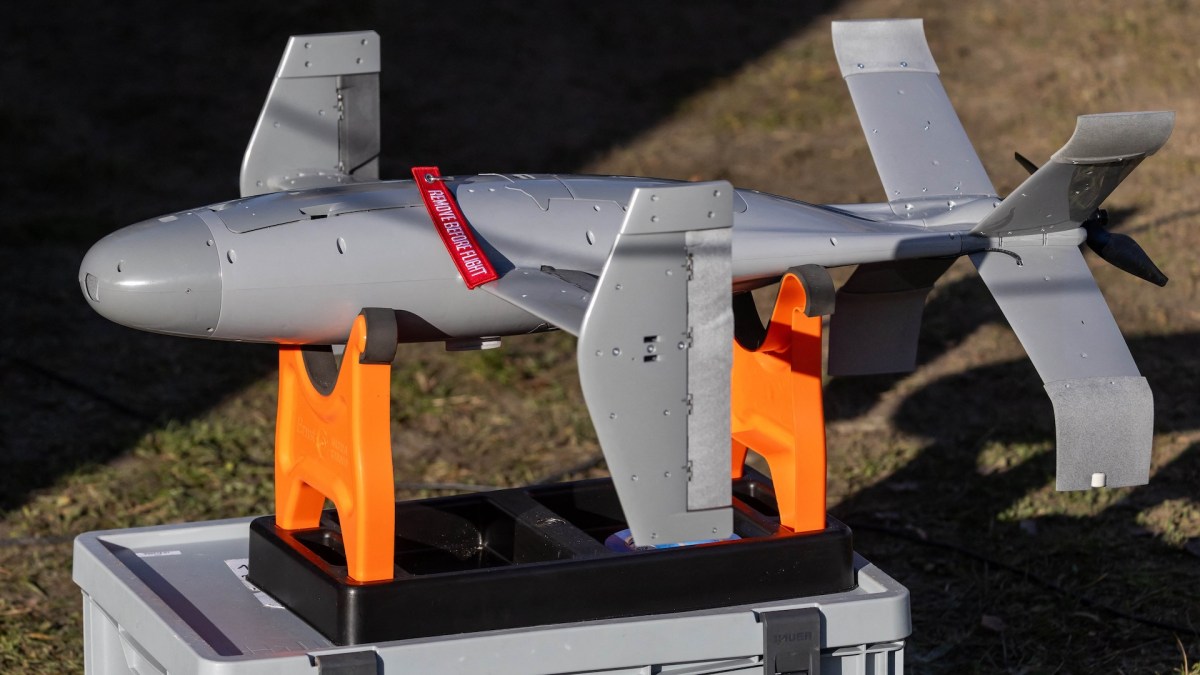
The Merops is a small, relatively low-cost counter-UAS system designed to rapidly intercept long-range, one-way attack drones in flight. It was originally developed under the U.S.-backed Project Eagle initiative, with contributions from Swift Beat, a company associated with former Google CEO Eric Schmidt. The system uses Surveyor drones as airborne interceptors, with onboard sensors to track targets and the ability to operate autonomously or under remote control. The interceptors can destroy enemy unmanned aircraft through direct impact or a proximity-detonated explosive warhead.
The interceptor was initially brought to the Army’s attention after drone incursions involving two NATO partners prompted a senior commander to demand an urgent response. The system was not part of the commander’s original acquisition plan, Hill explained, but its demonstrated performance in Ukraine made it a compelling candidate.
“He said, ‘I want this capability in the hands of our partners within 14 days,’” Hill recalled. “Everyone looked around the room, and he looked over at me, and I nodded my head like, ‘We’ll figure it out.’”
The Army did not quite meet that deadline. Hill said acquisition personnel and soldiers went into the theater to evaluate the capability, ultimately getting it into the hands of NATO partners within approximately 21 or 22 days.
That initial effort has since expanded. Hill said the Army procured additional Merops systems in partnership with the Joint Interagency Task Force, which procured 13,000 of the interceptors. The effort also progressed from providing the capability to NATO partners to supplying mobile Merops firing teams to a second theater — presumably U.S. Central Command (CENTCOM).
In CENTCOM, the U.S. military has been confronting the threat posed by Iran’s Shahed-136 and other one-way attack drones, which have been used in barrages against American and allied forces and installations in the Middle East. Army Secretary Daniel Driscoll has previously highlighted Merops as a particularly attractive option for countering such threats because of its relatively low cost and the speed with which it can be acquired.
You can watch Driscoll’s testimony on Merops at the 36-minute mark of the video belo w:
During congressional testimony, Driscoll said the Army was able to purchase 13,000 Merops interceptors within approximately eight days after the conflict with Iran began. He put the cost at about $15,000 per interceptor, with the potential for that figure to fall below $10,000 as production scales. In a separate interview with Bloomberg , he suggested larger orders could eventually push the price down to between $3,000 and $5,000.
U.S. Secretary of the Army Daniel Driscoll poses for a photo after signing a Merops counter-unmanned aerial system in Ansbach, Germany. U.S. Army photo by Sgt. 1st Class Jacob Kohrs
Shahed drones have been estimated to cost tens of thousands of dollars apiece, while traditional air defense interceptors are far more expensive. Using comparatively inexpensive drones to defeat them can improve the economics of air defense while preserving more sophisticated interceptors for threats that require them.
Ukraine has employed Merops alongside domestically produced interceptor drones to counter Russian Shahed/Geran one-way attack drones. The system’s battlefield use has helped demonstrate the potential of a new class of air defense weapons designed to defeat these kinds of drones without relying exclusively on costly surface-to-air missiles.
The thermal infrared targeting system of a Merops displays a green target lock box milliseconds before intercepting a Hornet mid-range strike drone during a Perennial Autonomy drone demonstration for 2nd Marine Division on Marine Corps Air Ground Combat Center, Twentynine Palms, California, July 28, 2026. U.S. Marine Corps/Courtesy photo illustration
However, Hill cautioned that success in Ukraine does not automatically mean a system will perform equally well in every operational environment.
“On the Merops, it absolutely was influenced by [Ukraine]. I mean, that’s where it came from. That’s where we saw the capability,” he said. “But that’s one of the things where the employment of the system really matters.”
A Merops drone is prepared for flight during a Perennial Autonomy drone demo on Range 220 as part of Service Level Training Exercise 4-26 on Marine Corps Air Ground Combat Center, Twentynine Palms, California, July 28, 2026. U.S. Marine Corps photo by Lance Cpl. Carla Perez Ramirez
Hill noted that the system’s effectiveness will vary depending on where it is used, including differences between desert environments and the urban areas where it has operated in Ukraine. The objective, he said, is to get the capability into the Army’s inventory so commanders can make informed decisions about how and where to use it.
“Once we get it into our hands, now we can make a decision in Europe. Where does it go? Do I even need it?” Hill said. “It’s getting it in our hands. So that was the key for the Merops. The speed of getting it, then we can make the decision of how we employ it.”
That approach reflects a broader change in how the Army wants to manage emerging technology. Rapid fielding is important, but the service also wants to avoid acquiring a capability for an urgent operational need only to leave it without a clear path toward long-term funding, production, and support.
Hill said G-TEAD’s process is designed to involve the organizations that will eventually take responsibility for a capability from the outset. Program acquisition executives, or PAEs, are involved early, while the Army’s test and evaluation community and soldiers provide feedback as the system is assessed. The goal is to identify a transition partner upfront rather than wait until after an initial fielding effort to determine who will take ownership.
A U.S. Army soldier carries a component of the Merops counter-drone system during a live-fire demonstration at the Deba training grounds in Subcarpathian Voivodeship, Poland, on November 18, 2025. Photo by Artur Widak/NurPhoto
“We want to make sure that we’re giving commanders capability that we know works,” Hill said.
He described the directorate’s standard process as a 180-day effort, with the objective of reaching a decision on whether a capability should become an Army program within that period. The Merops effort, at 142 days, moved faster than that target.
The process is also intended to address what acquisition officials often call the ‘valley of death’: the gap between getting an emerging capability into the hands of operational units and the point at which a program office takes over and provides the funding and contracting structure needed to scale it.
“We will work to fill that valley of death gap between the time that we put capability into the hands of units and the time that the PM picks it up and actually [provides funding],” Hill said. “There’s a gap there. So we can do that intermediate scaling portion before it fully transitions.”
A U.S. Army soldier launches an interceptor drone, part of the Merops counter-drone system, during a live-fire demonstration at the Deba training grounds in Poland. Photo by Artur Widak/NurPhoto via Getty Images
The effort builds on the Army’s wider push to streamline acquisition, an issue Driscoll has also emphasized. The Army secretary previously described an old process involving 16 decision-making steps, each with the ability to veto a proposal and send it back through the system. That structure could leave the service waiting two to seven years to purchase a capability.
The Merops experience suggests that some of those delays can be reduced when acquisition professionals work directly with operational units and the organizations responsible for evaluating and sustaining new equipment.
But rapidly acquiring an interceptor is only part of the challenge. The Army must still determine where it offers the greatest value, how it fits into existing air defense architectures, and how to produce and sustain enough systems to meet operational demand.
Low-cost interceptors are also not a replacement for every layer of air defense. They are, however, an increasingly important option against large numbers of relatively inexpensive attack drones, particularly when the alternative is expending missiles worth hundreds of thousands or millions of dollars to defeat each target.
For the Army, Merops is therefore serving two purposes: providing an additional tool against the growing one-way attack drone threat and demonstrating a faster route from an emerging battlefield capability to a formally supported military program.
Contact the author: thomas@thewarzone.com
Comments couldn’t be loaded. Please refresh the page.
发布于美国东部时间2026年10月14日下午5:03
图片来源:WOJTEK RADWANSKI/AFP via Getty Images
美国陆军仅用142天就将“梅罗普斯”(Merops)拦截无人机项目正式启动,这一采购里程碑凸显了陆军加快应对新出现的威胁、并将久经实战考验的能力交付部队和盟军的努力。“梅罗普斯”很快便因其在中东地区防御伊朗“沙赫德-136”(Shahed-136)单向攻击弹药的轰炸而备受赞誉。
在华盛顿特区举行的美国陆军协会 (AUSA) 年度大会上,陆军全球战术优势采购局 (G-TEAD) 局长克里斯托弗·希尔上校发表讲话,TWZ 也出席了此次大会。希尔上校将 Merops 行动描述为“我们在需要时如何快速行动的一个例子”。
2025年11月,一名波兰士兵在波兰利帕附近为一架“梅罗普斯”无人机打包降落伞。美国陆军第52防空旅中士路易斯·加西亚摄。
Merops 是一款小型、成本相对较低的反无人机系统,旨在快速拦截飞行中的远程单向攻击无人机。该系统最初由美国支持的“鹰计划”(Project Eagle)研发,并得到了与谷歌前首席执行官埃里克·施密特(Eric Schmidt)有关联的 Swift Beat 公司的贡献。该系统使用 Surveyor 无人机作为空中拦截器,配备机载传感器以跟踪目标,并能够自主或远程操控。拦截器可以通过直接撞击或近炸引爆的爆炸弹头摧毁敌方无人机。
拦截器最初引起陆军注意,是因为两起涉及北约伙伴国的无人机入侵事件促使一位高级指挥官要求紧急应对。希尔解释说,该系统并非指挥官最初的采购计划,但它在乌克兰展现出的卓越性能使其成为一个极具吸引力的候选方案。
希尔回忆说:“他说,‘我希望我们的合作伙伴在14天内掌握这项能力。’大家环顾四周,他看了我一眼,我点点头,表示‘我们会想办法的。’”
陆军未能完全按时完成任务。希尔表示,采购人员和士兵前往战区评估了相关能力,最终在大约21到22天内将装备交付给了北约伙伴国。
最初的努力此后有所扩展。希尔表示,陆军与联合跨部门特遣部队合作采购了更多“梅洛普斯”拦截系统,后者采购了13000枚拦截弹。这项工作也从向北约伙伴国提供能力发展到向第二个战区(据推测是美国中央司令部)提供移动式“梅洛普斯”射击小组。
在中央司令部,美军一直在应对伊朗“沙赫德-136”和其他单向攻击无人机构成的威胁。这些无人机曾被用于对美国及其盟军在中东的部队和设施进行密集攻击。陆军部长丹尼尔·德里斯科尔此前曾强调,由于其成本相对较低且采购速度快,美军的“多用途作战系统”(Merops)是应对此类威胁的理想选择。
您可以在下方视频的第 36 分钟处观看 Driscoll 在 Merops 上的证词:
在国会作证时,德里斯科尔表示,在与伊朗的冲突爆发后大约八天内,陆军就采购了13000架梅洛普斯拦截机。他估计每架拦截机的成本约为15000美元,随着产量的扩大,价格有可能降至10000美元以下。在接受彭博社的另一次采访中,他暗示,更大的订单最终可能会将价格降至3000至5000美元之间。
美国陆军部长丹尼尔·德里斯科尔在德国安斯巴赫签署了一套“梅罗普斯”(Merops)反无人机系统后拍照留念。美国陆军一级军士长雅各布·科尔斯摄。
据估计,沙赫德无人机的单价高达数万美元,而传统的防空拦截器则要昂贵得多。使用相对廉价的无人机来拦截它们,既能提高防空系统的经济效益,又能将更先进的拦截器留给真正需要的威胁。
乌克兰已将“梅罗普斯”(Merops)防空系统与国产拦截无人机配合使用,以对抗俄罗斯的“沙赫德”(Shahed)/“格朗”(Geran)单向攻击无人机。该系统的实战应用展现了一种新型防空武器的潜力,这种武器无需完全依赖昂贵的地对空导弹即可击落此类无人机。
2026年7月28日,在加利福尼亚州二十九棕榈海军陆战队空地作战中心,一架Merops无人机的热红外瞄准系统在拦截一架“大黄蜂”中程攻击无人机前几毫秒,屏幕上显示出绿色目标锁定框。此次演示是为美国海军陆战队第二师进行的“常年自主”无人机演示。(美国海军陆战队/供图)
然而,希尔警告说,在乌克兰取得成功并不意味着该系统在所有作战环境中都能同样出色地运行。
“梅罗普斯系统绝对受到了乌克兰的影响。我的意思是,它起源于那里。我们也是在那里看到了它的能力,”他说。“但这正是系统运用真正重要的地方之一。”
2026年7月28日,在加利福尼亚州二十九棕榈海军陆战队空地作战中心220号靶场,一架Merops无人机正在进行飞行准备,这是“常年自主无人机”演示活动的一部分,该演示活动是“军种级别训练演习4-26”的一部分。美国海军陆战队下士卡拉·佩雷斯·拉米雷斯拍摄。
希尔指出,该系统的效能会因使用地点而异,包括沙漠环境和在乌克兰运行的城市地区之间的差异。他说,目标是让陆军掌握这项能力,以便指挥官能够就如何以及在何处使用它做出明智的决策。
“一旦我们拿到它,我们就可以在欧洲做出决定了。它该往哪里去?我真的需要它吗?”希尔说。“关键在于拿到它。所以这对梅罗普斯计划来说至关重要。尽快拿到它,我们就能决定如何使用它。”
这种做法反映了陆军在管理新兴技术方面更广泛的转变。快速部署固然重要,但陆军也希望避免为了满足紧急作战需求而获取某种能力,却最终导致该能力缺乏明确的长期资金、生产和支持路径。
希尔表示,G-TEAD的流程旨在让最终负责该项能力的组织从一开始就参与其中。项目采购主管(PAE)会尽早介入,而陆军的测试与评估机构和士兵则会在系统评估过程中提供反馈。其目标是在初期就确定过渡合作伙伴,而不是等到初步部署工作完成后再决定由谁来负责。
2025年11月18日,在波兰喀尔巴阡山省德巴训练场举行的实弹演习中,一名美国陆军士兵携带“梅罗普斯”(Merops)反无人机系统的一个组件。照片由Artur Widak/NurPhoto拍摄。
希尔说:“我们希望确保我们赋予指挥官的能力是我们知道行之有效的。”
他将该部门的标准流程描述为180天,目标是在该期限内决定某项能力是否应成为陆军项目。而梅罗普斯项目的推进速度更快,仅用了142天。
该流程还旨在解决采购官员经常所说的“死亡谷”:即从将新兴能力交付给作战部队到项目办公室接管并提供扩大该能力所需的资金和合同结构之间的差距。
希尔说:“我们将努力弥合能力交付部队到总理真正落实拨款之间的这段‘死亡谷’。这中间存在一个缺口。因此,我们可以在全面过渡之前完成这个中间阶段的规模化推广。”
在波兰德巴训练场举行的实弹演习中,一名美国陆军士兵发射了一架拦截无人机,该无人机是“梅罗普斯”(Merops)反无人机系统的一部分。照片由Artur Widak/NurPhoto通过Getty Images提供。
这项举措建立在陆军简化采购流程的更广泛努力之上,德里斯科尔也曾强调过这个问题。这位陆军部长此前曾描述过一套包含16个决策步骤的旧流程,每个步骤都有权否决提案并将其退回重审。这种结构可能导致陆军需要等待两到七年才能采购到所需的能力。
Merops 的经验表明,当采购专业人员直接与作战单位和负责评估和维护新设备的组织合作时,可以减少一些延误。
但迅速获得拦截机仅仅是挑战的一部分。陆军仍需确定其价值所在,如何将其融入现有的防空体系,以及如何生产和维持足够的系统以满足作战需求。
低成本拦截器并不能取代所有防空层级。然而,面对数量众多、价格相对低廉的攻击型无人机,它们正日益成为一种重要的应对选择,尤其是在需要耗费数十万甚至数百万美元的导弹才能击落每个目标的情况下。
因此,对于陆军而言,Merops 具有两个目的:提供对抗日益增长的单向攻击无人机威胁的额外工具,并展示从新兴战场能力到正式支持的军事计划的更快途径。
联系作者:thomas@thewarzone.com
评论加载失败,请刷新页面。