Stan Lee Fought The Nazis As A U.S. Army Playwright During WWII斯坦·李二战期间曾作为美国陆军剧作家与纳粹作战
The comic book icon thought of his military service as among his proudest moments and it showed in his work in the decades that followed.
新闻视频
By Joseph Trevithick
Updated Dec 1, 2019 7:09 AM EST
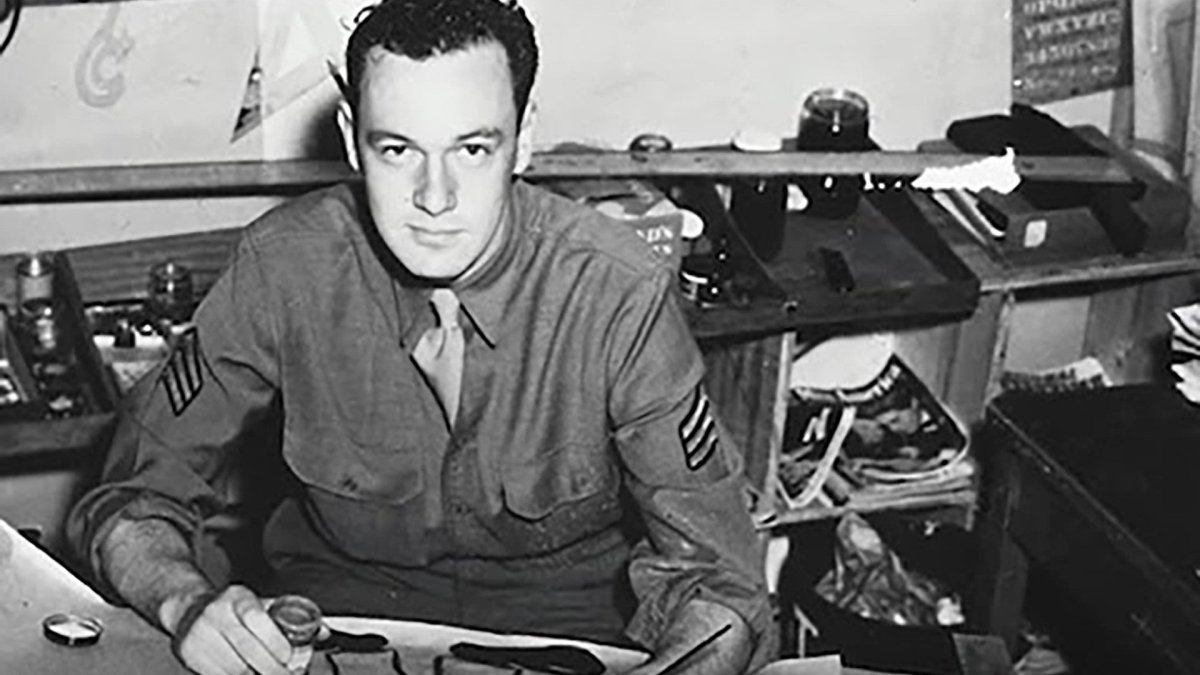
Legendary comic book writer Stan Lee has passed away at the age of 95. Though most fondly remembered for co-creating world-recognized characters such as Spider-Man and Iron Man , and contributed to the storylines of dozens of others, including Captain America , Lee was also a proud U.S. Army Signal Corps veteran who wrote film scripts and the text of other training and recruitment material during World War II. His work afterward, and that of Marvel , the company where he was editor in chief for decades, continued to serve as a recruiting tool and otherwise often presented positive images of the U.S. military to the masses.
Born Stanley Martin Lieber in New York City, New York in 1922 to Romanian-born Jewish immigrants, Lee reportedly enjoyed writing from an early age and graduated early from DeWitt Clinton High School in the Bronx in 1939. He then went on to join the Federal Theatre Project , a federally funded arts program that U.S. President Franklin D. Roosevelt had originally created during the Great Depression as part of the Works Progress Administration (WPA).
Through family connections, Lee secured a job at Timely Comics, initially performing menial duties for the staff there. In 1940, however, as the Nazis continued to their rampage in Europe, he got his first writing assignment with a filler text story in Captain America Comics #3 .
Both the character and the storyline are notable. The very first issue of the series had shown the titular Captain American punching Nazi dictator Adolf Hitler in the face. The comic was dated March 1941, but actually hit newsstands more than a year before the Japanese attack on Pearl Harbor in Hawaii that drew the United States formally into World War II. The #3 issue also introduced the character’s iconic star-adorned circular shield.
The United States was not at war with Germany, or its Axis allies, when Captain American Comics #1 came out. Stan Lee’s first comic book writing would appear in the third issue., Timely/Marvel Comics
Joe Simon , who created Captain America along with Jack Kirby , later made it clear that the character was an overtly political creation . He explained his intent was to make clear his objections both to the Nazis and their supporters, including in the United States , as well as isolationists who argued for the United States to avoid getting embroiled in the expanding war.
Simon and Kirby both left Timely in late 1940 over disputes with publisher Martin Goodman, who in turn named Lee as the interim top editor. After the United States entered World War II, Lee, who was then only 19, joined the Army, where he was assigned to the Signal Corps.
The legendary Stan Lee later in life., AP
The service initially trained the young Lee to install telephone lines , but eventually discovered his writing experience. He says he was given the job title “playwright” and was one of only nine such individuals in the Army at the time.
Other members of the group, known as the Signal Corps Training Film Division, were or became famous artists, including the Pulitzer Prize-winning William Saroyan , Charles Addams who created The Addams Family , film director Frank Capra , whose work included Mr. Smith Goes to Washington and It’s a Wonderful Life , and Theodor Geisel, who is much better known to the world as prolific children’s author Dr. Seuss . Captain America creators Simon and Kirby also ended up in the military, though the two served in the Coast Guard and Army infantry, respectively.
Lee isn’t being apocryphal about the playwright job description, either. At the time, the U.S. Army had a formal Military Occupation Classification, code 288, for this position. The entry from Technical Manual 12-427 , Military Occupational Classification of Enlisted Personnel , dated 1944, describes it as follows:
“Writes scenarios and scripts for theatrical, radio, or motion picture productions for entertainment or instruction of military personnel, or for publicity purposes. Creates plots and sequences with instructional narrative, or adapts fictional, nonfictional, or historical material to dramatic form. Bears in mind the characteristics of the medium for which he is writing and forms his presentation and script accordingly. Indicates desired camera procedure, method of presentation, sound effects, and backgrounds. Civilian experience in writing or adapting scripts or scenarios for radio, stage, or motion pictures required.”
“Writes scenarios and scripts for theatrical, radio, or motion picture productions for entertainment or instruction of military personnel, or for publicity purposes.
Creates plots and sequences with instructional narrative, or adapts fictional, nonfictional, or historical material to dramatic form. Bears in mind the characteristics of the medium for which he is writing and forms his presentation and script accordingly. Indicates desired camera procedure, method of presentation, sound effects, and backgrounds.
Civilian experience in writing or adapting scripts or scenarios for radio, stage, or motion pictures required.”
The official entry on Playwright, Military Occupation Classification Code 288, from the 1944 Technical Manual 12-427, Military Occupational Classification of Enlisted Personnel ., US Army
Lee definitely had those qualifications and it’s hardly surprising the Army decided to put him in that role. “I wrote training films, I wrote film scripts, I did posters, I wrote instructional manuals. I was one of the great teachers of our time!” he said in one interview in 2016 .
After World War II ended, Lee returned to his job at Timely, which evolved into Marvel in 1961. He remained editor-in-chief until 1972, at which time he succeeded Martin Goodman as publisher.
Captain America had been a popular character during World War II, but disappeared from Timely’s regular cast by the end of the 1950s. Stan Lee, working for what had become Marvel, was involved in revitalizing the character in the 1960s. Lee’s own Spider-Man, among the other characters he co-created, has remained a particularly well known comic book icon, as well. “He’s become our Mickey Mouse,” Lee once said of the web-shooting superhero.
Lee is remembered for working to advance various social justice causes through his medium, including creating Black Panther , the first mainstream black superhero, and the X-Men , which tackled issues of diversity and inclusivity, in the 1960s. He never shied away from addressing hot-button topics, either, with multiple Spider-Man comics in that decade referencing the Vietnam War , student protests against that war , other forms of political corruption and activism , and other contemporary controversial topics.
He always remained proud of his Army service, too. “This is one of my proudest moments,” Lee said at the annual Emerald City Comicon in Seattle, Washington in 2017, where he received a lifetime membership to the Signal Corps Regimental Association and an honorary membership to the 2nd Battalion, 3rd Infantry Regiment, which is stationed at nearby Joint Base Lewis-McChord. “Excelsior!” he added, his signature catchphrase.
Marvel, along with license holders in charge of turning the comics into movies, have even established formal relationships with the U.S. military over the years. One of the more recent examples of this was a tie-in with the U.S. Army and 2011’s X-Men: First Class . The upcoming film Captain Marvel , the alter-ego of U.S. Air Force Colonel Carol Danvers in the comics and the movie, looks set to continue reinforcing the link between the Marvel universe and America’s armed forces, if informally in this case.
“The world always needs heroes, whether they’re superheroes or not,” Lee said in 2016 . “Since time immemorial there were stories and legends about evil people who had superpowers and some human being had to find a way to conquer them.”
Stan Lee was, without a doubt, a cultural force whose influence will continue to be felt in the United States and around the world for decades to come. As the United States observes Veterans Day , it seems worth remembering Lee’s patriotism and service, as well.
Comments couldn’t be loaded. Please refresh the page.
作者:约瑟夫·特雷维西克
更新于美国东部时间2019年12月1日上午7:09
传奇漫画编剧斯坦·李逝世,享年95岁。他最广为人知的成就是与人共同创作了蜘蛛侠和钢铁侠等世界知名漫画角色,并参与了包括美国队长在内的数十个其他漫画角色的故事创作。此外,李还是一位令人敬佩的美国陆军通信兵老兵,二战期间曾为美国陆军撰写电影剧本和其他训练及征兵资料。战后,他及其担任主编数十年的漫威漫画公司继续发挥着重要的征兵作用,并经常向大众展现美国军队的正面形象。
李原名斯坦利·马丁·利伯,1922 年出生于纽约州纽约市,父母是罗马尼亚出生的犹太移民。据报道,他从小就喜欢写作,并于 1939 年提前从布朗克斯的德威特·克林顿高中毕业。之后,他加入了联邦戏剧计划,这是一个联邦政府资助的艺术项目,最初由美国总统富兰克林·罗斯福在大萧条时期作为工程振兴署 (WPA) 的一部分而创建。
通过家族关系,李在及时漫画公司找到了一份工作,起初是做一些杂务。然而,1940年,随着纳粹在欧洲的肆虐,他获得了第一份编剧工作,为《美国队长》漫画第3期撰写一篇填充文字故事。
无论是角色还是故事情节都十分引人注目。该系列的第一期就展现了主角美国队长一拳打在纳粹独裁者阿道夫·希特勒脸上的画面。虽然漫画的出版日期标注为1941年3月,但实际上它比日本偷袭珍珠港事件早了一年多,而珍珠港事件正是美国正式卷入第二次世界大战的导火索。第三期还首次出现了美国队长标志性的星形圆形盾牌。
《美国队长》漫画第一期发行时,美国并未与德国或其轴心国交战。斯坦·李的漫画编剧处女作出现在第三期。(Timely/Marvel Comics)
与杰克·柯比共同创作美国队长的乔·西蒙后来明确表示,这个角色带有明显的政治色彩。他解释说,他的意图是表达他对纳粹及其支持者(包括美国境内的支持者)以及主张美国避免卷入不断扩大的战争的孤立主义者的反对。
1940年末,西蒙和柯比因与出版商马丁·古德曼发生争执而离开Timely出版社,古德曼随后任命李为临时主编。美国加入二战后,当时年仅19岁的李应征入伍,被分配到陆军通信兵团。
传奇人物斯坦·李晚年照片。(美联社)
最初,军队训练年轻的李安装电话线,但最终发现了他的写作才能。他说,他被授予“剧作家”的头衔,当时军队里只有九个人拥有这样的头衔。
该小组被称为信号兵训练电影部,其他成员中不乏知名艺术家,例如普利策奖得主威廉·萨洛扬、创作了《亚当斯一家》的查尔斯·亚当斯、执导过《史密斯先生到华盛顿》和《生活多美好》等影片的电影导演弗兰克·卡普拉,以及更为人熟知的儿童文学作家苏斯博士。创作了《美国队长》的西蒙和柯比最终也加入了军队,不过两人分别在海岸警卫队和陆军步兵服役。
李对剧作家这一职业的描述并非凭空捏造。当时,美国陆军确实为这一职位制定了正式的军事职业分类代码288。1944年版的技术手册12-427《士兵军事职业分类》中对此的描述如下:
“为戏剧、广播或电影制作撰写剧本和场景,用于娱乐、军事人员培训或宣传目的。创作包含教学叙事的剧情和情节,或将虚构、非虚构或历史素材改编成戏剧形式。充分考虑所创作媒介的特点,并据此调整呈现方式和剧本。标明所需的拍摄手法、呈现方式、音效和背景。要求具备为广播、舞台或电影撰写或改编剧本或场景的民用经验。”
“为戏剧、广播或电影制作编写剧本和场景,用于娱乐、军事人员培训或宣传目的。
创作情节和序列,融入教学叙事,或将虚构、非虚构或历史素材改编成戏剧形式。充分考虑所创作媒介的特点,并据此调整呈现方式和剧本。标明所需的拍摄手法、呈现方式、音效和背景。
需具备为广播剧、舞台剧或电影撰写或改编剧本或场景的民间经验。
剧作家这一职业的官方条目,其军事职业分类代码为288,出自1944年美国陆军技术手册12-427《士兵军事职业分类》。
李绝对具备这些资格,所以陆军决定让他担任这个职务也就不足为奇了。“我编写过训练影片,写过电影剧本,做过海报,写过教学手册。我曾是我们那个时代最伟大的教官之一!”他在2016年的一次采访中说道。
二战结束后,李回到 Timely 工作,该公司于 1961 年发展成为漫威。他一直担任总编辑,直到 1972 年接替马丁·古德曼成为出版人。
美国队长在二战期间曾风靡一时,但在20世纪50年代末期便从Timely漫画公司的常规角色阵容中消失了。斯坦·李当时效力于后来的漫威漫画公司,并在20世纪60年代参与了该角色的复兴。李创作的蜘蛛侠,以及他参与创作的其他角色,也一直是家喻户晓的漫画偶像。“他已经成了我们的米老鼠,”李曾这样评价这位蛛网发射超级英雄。
人们铭记李通过他的艺术媒介推动各种社会正义事业,包括在20世纪60年代创作了第一个主流黑人超级英雄黑豹,以及探讨多样性和包容性问题的X战警。他也从不回避敏感话题,在那个年代的多部蜘蛛侠漫画中都提到了越南战争、学生反战抗议、其他形式的政治腐败和激进主义,以及其他当代争议性话题。
他始终对自己的军旅生涯感到自豪。“这是我最引以为豪的时刻之一,”李在2017年于华盛顿州西雅图举行的翡翠城动漫展上说道。当时,他被授予信号兵团协会终身会员资格,以及驻扎在附近刘易斯-麦科德联合基地的第3步兵团第2营荣誉会员资格。“精益求精!”他补充道,这是他标志性的口号。
漫威及其负责将漫画改编成电影的版权持有者多年来一直与美国军方保持着正式的合作关系。最近的一个例子是2011年与美国陆军合作推出的《X战警:第一战》。即将上映的电影《惊奇队长》中,惊奇队长(漫画和电影中美国空军上校卡罗尔·丹弗斯的另一个身份)似乎将继续加强漫威宇宙与美国武装部队之间的联系,尽管这次的合作形式较为非正式。
“世界总是需要英雄,无论他们是不是超级英雄,”李在2016年说道。“自古以来,就有关于拥有超能力的邪恶之人的故事和传说,而总有一些人类需要找到战胜他们的方法。”
毫无疑问,斯坦·李是一位文化巨擘,他的影响力将在未来几十年继续在美国乃至全世界持续存在。值此美国纪念退伍军人节之际,我们也应该铭记李的爱国情怀和为国奉献的精神。
评论加载失败,请刷新页面。