Dutch Navy to equip fleet with Destinus C-UAS interceptor drones荷兰海军将为舰队配备Destinus C-UAS拦截无人机
The Royal Netherlands Navy plans to equip its fleet with a new counter-UAS capability from defense firm Destinus.
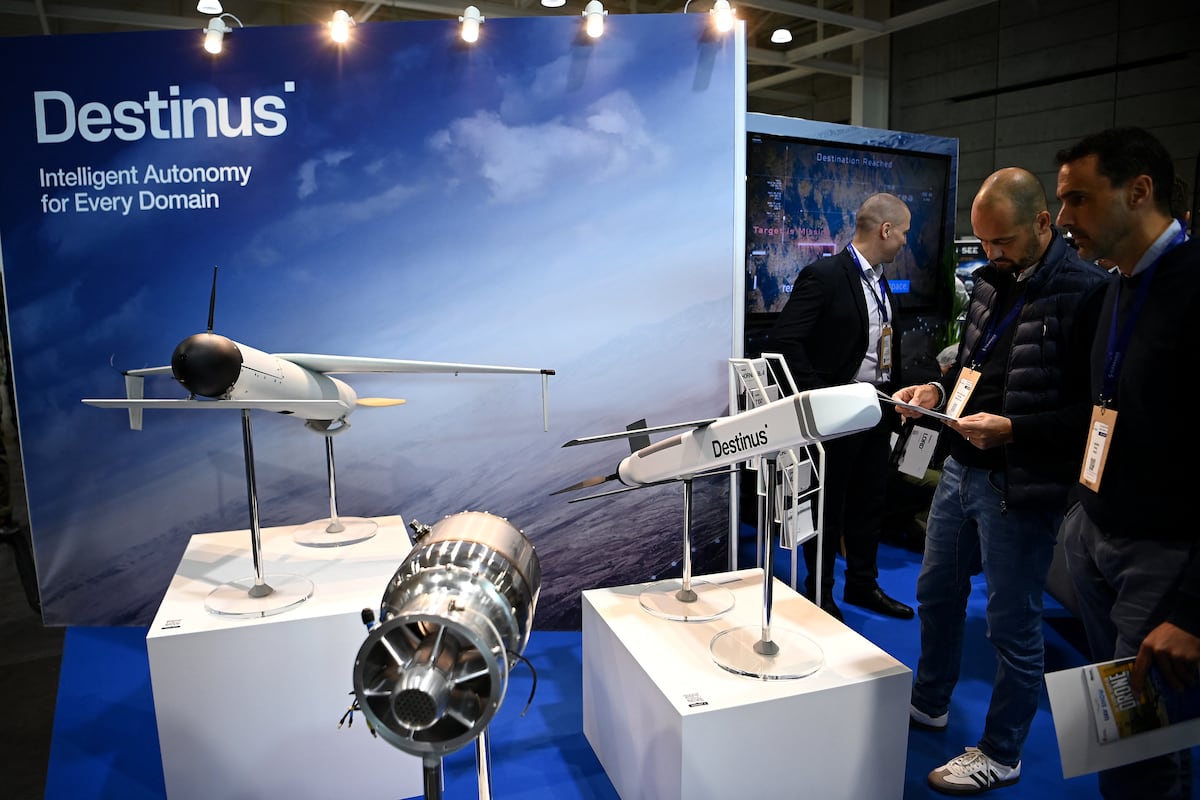
PARIS — The Royal Netherlands Navy plans to equip its fleet with a new counter-UAS capability based on interceptor drones from defense firm Destinus to improve protection of its warships against drone attacks.
Destinus will develop a kinetic counter-UAS capability for the Navy based on its Hornet B2 interceptor, the company said in an emailed statement late Monday. The program will include delivery of the interceptors, integration with several warships and support towards a possible initial operating capability, with the program slated for completion in the second quarter of 2027.
“The threat of drones at medium range is increasing,” the Dutch Ministry of Defence said in a statement on Monday . “That’s clear from both operational analyses as well as the current threat picture during maritime operations. Sailing units therefore need additional means to effectively defend themselves in fleets.”
Ukraine has been using low-cost interceptor drones to defeat one-way attack UAVs, offering a potential solution for Western navies that have found themselves firing expensive missiles at relatively cheap Houthi drones in the Red Sea. The U.S. Navy has already installed launchers for Raytheon’s Coyote interceptor on Arleigh Burke-class destroyers.
The new system will be an addition to existing armaments, the Dutch MoD said. The system will consist of a base station and a launch platform that can fire a drone interceptor, and the C-UAS solution will continue to be developed through testing, the ministry said.
“The program addresses the growing requirement for scalable naval protection against low-cost, high-volume aerial threats,” Destinus said.
The company said an earlier version of the interceptor, the Hornet B1, is already in serial production. The system consists of an interceptor launched from a sealed canister by a rocket booster, before deploying its wings and transitioning to electric-powered cruise flight.
The interceptor is designed to intercept one-way attack systems using electro-optical and infrared sensing and AI-based processing for the terminal phase, at a cost per engagement “far below that of traditional interceptor missiles,” according to Destinus.
“Low-cost aerial threats have inverted the economics of naval air defense: no navy can sustainably trade multimillion-euro missiles against low-cost threats arriving at volume,” Destinus CEO Mikhail Kokorich said in a statement. “Hornet B2 answers this with a different architecture.”
The Dutch Navy will contribute direct operational expertise throughout the development and evaluation process, shaping capability requirements and system specifications, Destinus said. That will reduce the need for adaptation after system development, according to the company.
Rudy Ruitenberg is a Europe correspondent for Defense News. He started his career at Bloomberg News and has experience reporting on technology, commodity markets and politics.
巴黎——荷兰皇家海军计划为其舰队配备基于国防公司Destinus的拦截无人机的新型反无人机系统能力,以提高其军舰抵御无人机攻击的能力。
Destinus公司周一晚间在一份电子邮件声明中表示,将基于其“大黄蜂”B2拦截机为美国海军开发动能反无人机系统(UAS)能力。该项目将包括交付拦截机、与多艘军舰进行集成,并支持其最终具备初始作战能力,预计将于2027年第二季度完成。
荷兰国防部周一在一份声明中表示:“中程无人机的威胁正在增加。这一点从作战分析以及当前海上行动中的威胁形势中都显而易见。因此,舰队需要额外的手段来有效防御自身。”
乌克兰一直在使用低成本拦截无人机来对抗单向攻击无人机,这为西方海军提供了一种潜在的解决方案。西方海军在红海地区不得不使用昂贵的导弹来对抗相对廉价的胡塞武装无人机。美国海军已经在阿利·伯克级驱逐舰上安装了雷神公司“郊狼”拦截无人机的发射装置。
荷兰国防部表示,这套新系统将作为现有武器装备的补充。该系统由一个基站和一个发射平台组成,发射平台可发射无人机拦截器。国防部还表示,反无人机系统解决方案将通过测试持续改进。
“该计划旨在满足日益增长的、可扩展的海军防护需求,以应对低成本、高数量的空中威胁,”德斯蒂努斯说。
该公司表示,拦截机的早期版本“大黄蜂B1”已投入批量生产。该系统由一枚拦截机组成,拦截机由火箭助推器从密封发射筒中发射,随后展开机翼并转为电动巡航飞行。
据 Destinus 公司称,该拦截器旨在利用光电和红外传感以及基于人工智能的末端处理技术来拦截单向攻击系统,每次交战的成本“远低于传统拦截导弹”。
“低成本空中威胁颠覆了海军防空的经济格局:没有哪支海军能够持续地用数百万欧元的导弹来对抗数量庞大的低成本威胁,”Destinus公司首席执行官米哈伊尔·科科里奇在一份声明中表示。“Hornet B2以不同的架构应对了这一挑战。”
Destinus公司表示,荷兰海军将在整个研发和评估过程中提供直接的作战经验,从而影响能力需求和系统规范的制定。该公司认为,这将减少系统开发完成后进行调整的必要性。
鲁迪·鲁伊滕贝格是《防务新闻》的欧洲记者。他的职业生涯始于彭博新闻社,拥有报道科技、大宗商品市场和政治方面的经验。