Fast-flying Shahed drones spur new class of interceptors快速飞行的“沙赫德”无人机催生了新型拦截器
Drone tech company Powerus eyes rocket or jet-powered interceptors as the next product target.
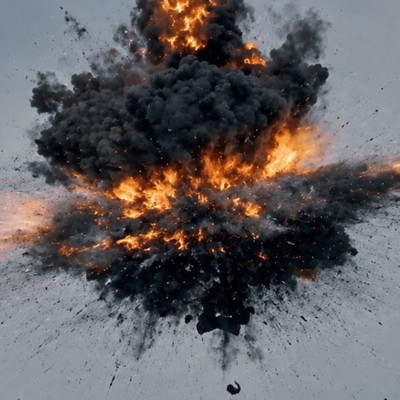
Drone tech company Powerus eyes rocket or jet-powered interceptors as the next product target.
WASHINGTON— A surge in Russia’s use of jet-powered Shahed drones in Ukraine has spurred the need for super fast interceptors to defeat them. And it’s a problem U.S.-based dronemaker Powerus hopes to solve.
“We constantly need to move ahead of the threat. The next threat that we see to get in front of is the jet-powered Shahed drones,” Brett Velicovich, cofounder and president of the dronemaker Powerus, told Defense One . “Jet-powered Shaheds are very difficult to defeat because of how fast they are, and so to defeat those, we need jet-powered interceptors. So that is one of the things that we're looking at…to be able to fly an interceptor at 600 kilometers per hour, 700 kilometers per hour. That's going to require a lot more automation. It's going to require a lot more R&D.”
Newer versions of Shahed drones propelled by jet engines have increasingly been appearing on the Russian-Ukrainian battlefield in recent months , pushing Ukraine to fortify its air defenses . Those fast flying Shaheds require interceptors that can match those speeds— around 370 mph , or 600 kilometers per hour . Other versions of the Shahed fly just over 100 mph. There’s also concern that other security risks could crop up as other nations adopt the newer Shaheds.
Powerus is just about a year old and has former Pentagon and first Trump administration officials on its board.
Velicovich doesn’t have a target date for developing its rocket or jet-powered interceptor, but the goal is to move quickly.
“I spend a lot of time in Ukraine. There's a good chance that by the end of this year, the majority of Russian drones that are sent into downtown Kyiv will be jet-powered,” he said, “so we really need to move at that timeline.”
But churning out rocket- or jet-propelled interceptors at the same rate as the upgraded Shahed drones can be costly and difficult.
“They can build these things for $20,000-$30,000, and they can turn them out in massive, massive quantities. And so, to do that in an interceptor is very difficult,” Velicovich said. “But the technology is getting cheaper and cheaper, so we'll find a solution for that I think pretty soon. The entire industry is racing to figure that out.”
Powerus, which recently went public, has been busy in recent months.
The Rock Hill, S.C.-based company unveiled its fully autonomous interceptor, Guardian 3, during the Association of the U.S. Army’s annual conference here. The anti-drone tech is the latest addition to a family of interceptors, including the semiautonomous Guardian 2 and remotely piloted Guardian 1.
“Guardian 3 takes that final terminal phase of a manual operator out of the loop, and it is fully automated, similar to how you might fire a Patriot missile. The difference between us and the Patriot missiles is that…you can build these Guardian 3 systems in the thousands very easily,” Velicovich said.
The company aims to produce 5,000 interceptors per month by November, with an ultimate goal of being able to deliver 10 times that.
“We want to get to that point where it's just massive, massive scale because these things are a lot like artillery rounds, and we need to build them like artillery rounds. So we need more companies out there that have the industrial capacity…to turn these things out,” he said.
Also at the conference, Powerus signed a deal with Parsons on the showroom floor to pair its radar systems with Guardian interceptors to detect oncoming drone threats.
Earlier this year, the Air Force tapped Powerus in an $82 million deal for counterdrone systems, which includes the Guardian family of interceptors. The company has also branched out to international buyers, striking an unspecified deal with the Pakistan army for unmanned aerial systems.
NEXT STORY: Defense Business Brief: Wrapping up AUSA
无人机技术公司 Powerus 将火箭或喷气式拦截器视为下一个产品目标。
华盛顿——俄罗斯在乌克兰大量使用喷气式“沙赫德”无人机,促使乌克兰迫切需要超高速拦截器来击败它们。而总部位于美国的无人机制造商Powerus公司希望能够解决这个问题。
“我们必须始终领先于威胁。我们接下来需要应对的威胁是喷气式动力沙赫德无人机,”无人机制造商Powerus的联合创始人兼总裁布雷特·维利科维奇(Brett Velicovich)告诉Defense One。“喷气式沙赫德无人机速度极快,很难被击败,因此我们需要喷气式拦截机来对抗它们。这就是我们正在研究的方向之一……如何让拦截机以每小时600公里、700公里的速度飞行。这将需要更高的自动化程度,也需要更多的研发投入。”
近几个月来,新型喷气式“沙赫德”(Shahed)无人机越来越多地出现在俄乌战场上,迫使乌克兰加强防空能力。这些高速飞行的“沙赫德”无人机需要能够与之匹敌的拦截机——时速约为370英里(约600公里)。其他型号的“沙赫德”无人机飞行速度仅略高于100英里/小时。此外,人们还担心,随着其他国家也开始装备新型“沙赫德”无人机,可能会出现其他安全风险。
Powerus 成立至今仅一年左右,其董事会成员包括前五角大楼官员和特朗普政府首批官员。
Velicovich公司没有为研发其火箭或喷气式拦截器设定目标日期,但目标是尽快推进。
“我经常去乌克兰。很有可能到今年年底,派往基辅市中心的俄罗斯无人机大部分都将是喷气式无人机,”他说,“所以我们真的需要按时采取行动。”
但是,要以与升级后的“沙赫德”无人机相同的速度生产火箭或喷气式拦截机,成本可能很高,而且难度很大。
“他们可以用两三万美元造出这些东西,而且可以大规模生产。所以,要在拦截器上实现这一点非常困难,”维利科维奇说。“但这项技术越来越便宜,所以我认为我们很快就能找到解决方案。整个行业都在竞相解决这个问题。”
最近上市的 Powerus 公司近几个月来一直很活跃。
这家总部位于南卡罗来纳州罗克希尔的公司在美国陆军协会年会上发布了其全自动拦截器“守护者3号”。这款反无人机技术是该公司拦截器系列的最新成员,该系列还包括半自主的“守护者2号”和遥控的“守护者1号”。
“Guardian 3系统省去了人工操作的最后阶段,实现了完全自动化,类似于发射爱国者导弹的方式。我们与爱国者导弹的区别在于……Guardian 3系统可以非常轻松地批量生产,”Velicovich说道。
该公司计划到 11 月每月生产 5000 个拦截器,最终目标是实现 10 倍的产量。
他说:“我们希望达到大规模生产的程度,因为这些东西很像炮弹,我们需要像制造炮弹一样制造它们。所以我们需要更多拥有工业能力的公司……来生产这些东西。”
在本次大会上,Powerus 与 Parsons 在展厅签署了一项协议,将其雷达系统与 Guardian 拦截器结合使用,以探测来袭的无人机威胁。
今年早些时候,美国空军与Powerus公司签署了一份价值8200万美元的合同,采购反无人机系统,其中包括Guardian系列拦截器。该公司还拓展了国际市场,与巴基斯坦军方达成了一项未公开的无人机系统采购协议。
下一篇报道:国防商业简报:AUSA 总结