Lithuania’s defense minister on reading Trump, the cruelty of mines立陶宛国防部长谈特朗普及其对地雷残酷性的看法
"We are going to have mines on our territory, but they will either be Russian ... or our own, where we will know where they are," said Dovilė Šakalienė.
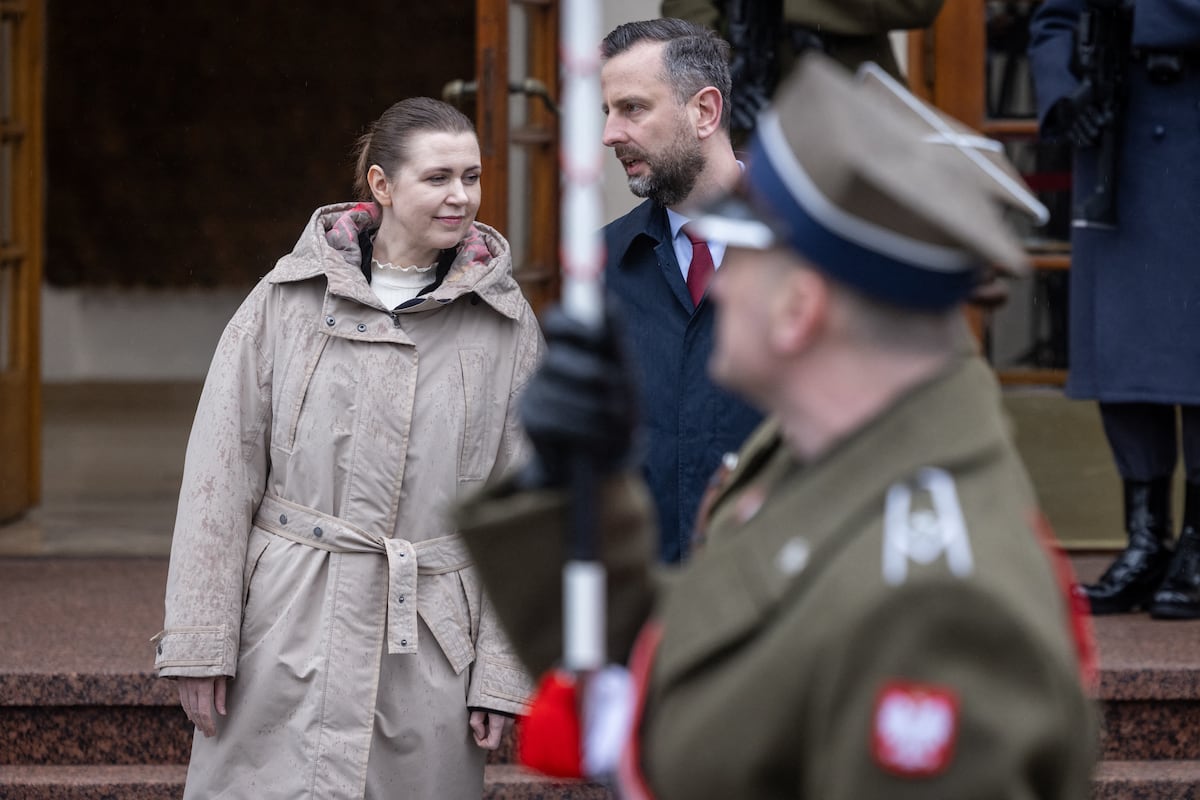
VILNIUS, Lithuania — Dovilė Šakalienė has been serving as the Lithuanian Minister of National Defense since 2024. Previously a psychologist, journalist and lawmaker, she has spearheaded a number of reforms within Lithuania’s security sector, including new legal amendments aimed at significantly shortening procedures for foreign defense companies to invest in the Baltic state.
She has been an advocate for raising the country’s defense spending , with plans to spend 5.25% of its gross domestic product on the military next year. The official has also placed a key importance on supporting Ukraine, where in 2025 Lithuania’s pledged commitments to the war-torn country are worth approximately €110 million ($124 million), a number that Šakalienė wants to increase.
In an interview with Defense News, she discussed the priorities of the Lithuanian military sector, future defense cooperation with the United States, navigating the Trump presidency, leaving the Ottawa Convention, and her security assessment of Russia’s threat to Europe.
This interview was edited for length and clarity.
Lithuania is currently in a phase of revamping its armed forces. When considering ongoing NATO or European Union defense projects, which ones would you say are the most urgent for the growth of Lithuania’s arsenal?
I’ll say very frankly — Europe really is really re-arming or I would say re-building its armament capabilities and we [Lithuania] are also re-building our armed forces. Currently, the continent is at the stage where in almost every domain, we have projects that are urgent and we have acquisitions that are well for a lack of a better term ‘burning.’
I do not want to distinguish one or another project as more critical while some not. For Lithuania, our main priority regarding the armed forces is rebuilding our first national division.
We had an inauguration a couple of months ago of the re-establishment of that division, which we expect to be the core of our land forces. Hence for that, we need land capabilities such as new maneuver and indirect fire support, electronic warfare, chemical, biological, radiological and nuclear, military engineering, ISTAR equipment, and enablers. We are executing [these] acquisitions.
The next priority for us is the development of our defense industry, both for the sake of enhancing our readiness at a national level and strengthening our ability to defend ourselves and hopefully deter – so that maybe we will not actually need to be on the battlefield – but also to boost our economy.
Europe is old. Europe has a lot of regions that are basically depopulated and we have also undergone this transition to deindustrialize. Lithuania is no exception. For me, it is a goal working with my colleagues in government and ministers, to ensure that we can repopulate some of these regions and breathe in a little bit of life in Lithuania’s defense industry.
Have business or military cooperation between Lithuania and the United States been affected by the uncertainty and volatility that has emerged since the Trump administration took office?
The first term and administration [2017-2021] of President Donald Trump was extremely beneficial to Lithuania. He has put more boots on the ground than any presidents before him or after him.
We are extremely proud to be advocates of Ukraine and we are going to continue to be. We have actually allocated more than the promised 0,25% of our GDP to Ukraine assistance last year and we are going to continue this year.
However, we have also been known as advocates of the U.S. and we are also going to continue to do that. The U.S. is a vital component of the security architecture of the whole NATO bloc. And even though some narratives were very complicated and very concerning, and still are, two main messages have not changed through these few difficult months. The first being that the U.S. is not going to leave NATO. That is crucial if we want to maintain the current world order, which is already very fragile.
So you’ve had indications within discussions with your American counterparts that this is not going to happen?
That was very clearly messaged both publicly and personally by President Trump and members of his administration that his country is not going to leave NATO. The second message that has not changed is that their commitment to protect Poland and the Baltic states is [still] there, and in general commitment is there to deliver on this part.
Therefore, what we also try to do is to somehow stabilize the level of emotional assessment and look at what exactly is happening. And currently it is that the U.S. is saying that the burden is not even. They are still the biggest contributor to NATO security compared to the rest of the bloc. Which you know is a bit unfair.
Whereas if we compare economically, European Union states are not contributing what they should and if we look a bit wider at the Europe level and add some additional countries, it’s even worse.
What they [U.S. counterparts] are saying to us is: “We are not going to abandon you, we are going to aid you. But we’re not going to defend you instead of yourself.” For us, in Lithuania, this is good enough. For us, this is something that we understand and that is justified, and we have been trying to persuade our colleagues all over Europe, especially in southern and western parts of the continent, to invest in defense more. In that, we are sort of partners with the U.S. in saying, “Guys, money on the table now please.” This is really urgent.
Regarding our acquisitions, we do have a very diverse acquisitions portfolio. 20% comes from the U.S., but then 80% is from everywhere else. We have systems from France, Germany, Norway, Poland and are now in the final negotiations about the CV90 – several battalions worth of them – with Sweden.
We see a very good possibility to cooperate with the American defense industry. I’ve had wonderful meetings with companies from whom we acquire from and with whom we want to further develop industrial cooperation with, or to ensure that our companies become part of their supply chain.
I’ve had very good talks with the leadership of Lockheed Martin, AM-General, and RTX – they are all showing a big interest in working with us. Because we do buy quite enough from them, [it could] make sense to have [some of their] production lines or production of certain components here in Lithuania. Also because we are really streamlining our legislative processes to be enabling to decrease certain processes from years to a matter of days. We are continuing to do this and there will be new and additional changes.
How do you assess the current security situation in Europe regarding Russian threats, four years into the war in Ukraine and looking ahead? Are you happy with the pace at which Lithuania is approaching defense initiatives such as border protection, among other things?
I think we are now moving at a good speed — although I would like to move faster. We left the cluster munition convention last year and we are leaving the Ottawa Convention that bans anti-personnel mines. We had the second vote in parliament regarding this and will also have the third and final one this week for denouncing that convention.
While for some it may seem cruel, for me it is a necessity. Because we are going to have mines on our territory, but they will either be Russian mines, where we won’t know where they are and they will be in large quantities and may kill a lot of our citizens. Or it will be our own mines where we will know where they are placed, and they do have a very good deterrence effect on Russian soldiers.
For me, this is not only about buying certain things but also sending strategic messages and working together within regions. Over the last few months, I had a lot of intense and sometimes complicated discussions [about this] with my colleagues from other countries, the five of us who have the longer border with Russia or with Belarus which is just a platform for the Russian Army. The results are great.
For this process to be even faster and better, I want us to make more joint procurement projects and I also want us to be able to finally persuade the whole EU that protection of the east and northern border is not our individual business.
If war breaks out, in any single place, the whole kingdom is going to flood. Therefore, for our colleagues in Portugal, Italy, Hungary — it is as relevant as to us. The economic stability of Europe would be done. Financial markets would fall and plummet. Nobody would be able to keep their current lifestyle. It is much cheaper to build good border protection and reinforcing it with anti-tank and anti-personnel mines as well as certain land-based entrapments.
Difficult times sometimes need difficult decisions and we are going to make them. Regarding if I am happy with the speed — I feel like some politicians still do not really hear the military. Yes of course, we are a democratic bloc and civil control is necessary. But not being able to hear well what the military has to say is still a factor of risk. All military men and women [in Lithuania and in allied states] I have spoken to have a very clear understanding of where we stand, what is at risk and what cost we may have to pay.
For many politicians, it seems that their issue is not so much about this. Some are still living in alternative realities.
I think we really have to start the countdown — you know Russia has never really kept to any schedule. We have to imagine the worst-case scenario for us to be prepared. This is not a mistake that can be corrected. This is not a possibility to get an extended deadline.
When I am talking with my counterparts, we say let’s take the worst possible example. For instance, if the negotiations – in my opinion it would be more precise to call it an attempt – at negotiating with Russia by the U.S. end badly, or if sanctions are lifted and the Russian military industry is sped up and its armed forces reforms are fasten — then we do not have those 3 to 5 years.
We may have 2 to 3 years. I’d like to think that we could move even faster to ramp up our capabilities. I have moved development of my national division from 15 years to five years and I am still not happy with that. I still want to move faster. Urgency is the key word here.
Elisabeth Gosselin-Malo was a Europe correspondent for Defense News. She covers a wide range of topics related to military procurement and international security, and specializes in reporting on the aviation sector. She is based in Milan, Italy.
立陶宛维尔纽斯——多维莱·沙卡列涅自 2024 年起担任立陶宛国防部长。她曾是一名心理学家、记者和立法者,在她领导了立陶宛安全领域的一系列改革,包括旨在大幅缩短外国国防公司在波罗的海国家投资程序的新的法律修正案。
她一直倡导提高国家国防开支,计划明年将国内生产总值的5.25%用于军事支出。这位官员还高度重视对乌克兰的支持,立陶宛承诺到2025年将向这个饱受战争蹂躏的国家提供约1.1亿欧元(1.24亿美元)的援助,而沙卡列涅希望增加这一数额。
在接受《防务新闻》采访时,她讨论了立陶宛军事部门的优先事项、未来与美国的防务合作、如何应对特朗普总统任期、退出《渥太华公约》以及她对俄罗斯对欧洲构成威胁的安全评估。
为了篇幅和清晰度,本次采访内容经过编辑。
立陶宛目前正处于军队重组阶段。考虑到正在进行的北约或欧盟防务项目,您认为哪些项目对立陶宛军火库的发展最为迫切?
坦白地说,欧洲确实在进行大规模的军备重建,或者更确切地说,是在重建其军备能力,而我们(立陶宛)也在重建我们的武装力量。目前,欧洲大陆几乎在所有领域都处于这样一个阶段:我们有许多项目亟待推进,也有许多采购项目迫在眉睫,用一个不太恰当的词来形容就是“迫在眉睫”。
我不想区分哪个项目更重要,哪个项目不那么重要。对立陶宛而言,我们在武装部队方面的首要任务是重建我们的第一个国家师。
几个月前,我们举行了该师重建的就职典礼,我们期望它能成为陆军的核心力量。因此,我们需要陆军具备相应的能力,例如新的机动和间接火力支援、电子战、化学、生物、放射性和核作战、军事工程、情报、监视、目标获取和侦察(ISTAR)设备以及相关保障措施。我们正在执行这些采购工作。
接下来,我们的首要任务是发展国防工业,这既是为了提高国家层面的战备水平,增强自卫能力,并希望能够起到威慑作用——这样我们或许就不需要真正上战场了——也是为了促进经济发展。
欧洲历史悠久,许多地区人口稀少,我们也经历了去工业化的转型。立陶宛也不例外。对我而言,与政府同僚和部长们共同努力的目标是,确保这些地区人口回流,并为立陶宛的国防工业注入新的活力。
自特朗普政府上台以来,立陶宛和美国之间的商业或军事合作是否受到了不确定性和动荡的影响?
唐纳德·特朗普总统的第一个任期(2017-2021年)对立陶宛极为有利。他向立陶宛派遣的地面部队比他之前或之后的任何一位总统都多。
我们为能够支持乌克兰而感到无比自豪,并将继续这样做。事实上,去年我们拨给乌克兰的援助资金超过了承诺的国内生产总值0.25%,今年我们将继续保持这一比例。
然而,我们一直以来都是美国的支持者,而且我们将继续这样做。美国是整个北约集团安全架构的重要组成部分。尽管一些说法非常复杂且令人担忧,而且现在依然如此,但在过去的几个月里,有两个主要信息始终未变。首先,美国不会退出北约。如果我们想要维护当前本已十分脆弱的世界秩序,这一点至关重要。
所以,你在与美国同行的讨论中已经得到一些迹象,表明这件事不会发生?
特朗普总统及其政府成员已通过公开和私下方式非常明确地传达了美国不会退出北约的信息。第二个未变的信息是,美国保护波兰和波罗的海国家的承诺依然存在,并且总体上会履行这一承诺。
因此,我们也在努力稳定各方的情绪,客观地分析究竟发生了什么。目前的情况是,美国认为各方承担的责任并不均衡。与其他北约成员国相比,美国仍然是北约安全的最大贡献者。这多少有些不公平。
然而,如果我们从经济角度进行比较,欧盟国家并没有做出应有的贡献;如果我们把目光放得更远,从欧洲层面来看,再加上一些其他国家,情况就更糟了。
他们(美国同行)对我们说的是:“我们不会抛弃你们,我们会帮助你们。但我们不会代替你们自己去保护你们。”对我们立陶宛来说,这已经足够了。我们理解这一点,也认为这是合理的。我们一直在努力说服欧洲各地的同行,特别是欧洲南部和西部地区的同行,加大国防投入。在这方面,我们和美国是合作伙伴,都在说:“伙计们,现在就把钱拿出来吧。”这真的非常紧迫。
关于我们的采购,我们的采购组合非常多元化。其中20%来自美国,其余80%来自其他国家。我们拥有来自法国、德国、挪威和波兰的系统,目前正在与瑞典就CV90(相当于几个营的装备)进行最终谈判。
我们看到了与美国国防工业合作的绝佳机会。我与一些公司进行了卓有成效的会谈,这些公司既是我们目前的采购来源,也是我们希望进一步发展产业合作的对象,或者我们希望确保我们的公司能够成为他们供应链的一部分。
我与洛克希德·马丁公司、AM-General公司和RTX公司的领导层进行了非常良好的会谈——他们都对与我们合作表现出浓厚的兴趣。由于我们从他们那里采购的商品数量相当可观,因此将他们的一些生产线或特定零部件的生产转移到立陶宛是明智之举。此外,我们正在大力简化立法流程,力求将某些流程从数年缩短至数天。我们将继续推进这项工作,未来还将推出新的改进措施。
您如何评价当前欧洲在俄罗斯威胁下的安全形势?乌克兰战争已经持续四年,展望未来,您如何看待这一形势?您对立陶宛在边境保护等国防举措方面取得的进展速度是否满意?
我认为我们现在的进展速度不错——虽然我希望速度更快。我们去年退出了集束弹药公约,现在也即将退出禁止杀伤人员地雷的《渥太华公约》。议会已经就此进行了第二次投票,本周还将进行第三次也是最后一次投票,以决定是否退出该公约。
虽然有些人可能觉得这很残酷,但对我来说却是必要的。因为我们的领土上将会埋设地雷,要么是俄罗斯的地雷,我们不知道它们在哪里,而且数量众多,可能会造成大量平民伤亡;要么是我们自己的地雷,我们清楚它们的位置,而且它们对俄罗斯士兵确实具有非常有效的威慑作用。
对我而言,这不仅仅是采购某些物资的问题,更是传递战略信息和区域合作的问题。过去几个月,我与来自其他国家的同事就此进行了许多深入且有时颇为复杂的讨论。我们五个国家与俄罗斯或白俄罗斯接壤,而白俄罗斯恰恰是俄罗斯军队的跳板。讨论成果显著。
为了让这一进程更快、更好,我希望我们开展更多联合采购项目,我也希望我们最终能够说服整个欧盟,保护东部和北部边境并非我们各自的事务。
如果战争在任何一处爆发,整个王国都将遭受洪水侵袭。因此,对于我们在葡萄牙、意大利、匈牙利的同行来说,这与我们自身息息相关。欧洲的经济稳定将不复存在。金融市场将崩盘。人们将无法维持现有的生活方式。建设完善的边境防御体系,并辅以反坦克地雷、反步兵地雷以及一些陆基陷阱,要经济得多。
艰难时期有时需要做出艰难的决定,而我们将会做出这些决定。至于我对行动速度是否满意——我觉得有些政客仍然没有真正听取军方的意见。当然,我们是一个民主阵营,文官统治是必要的。但是,无法充分听取军方的意见仍然是一个风险因素。我接触过的所有军人(包括立陶宛和盟国的军人)都非常清楚我们目前的处境、面临的风险以及我们可能要付出的代价。
对许多政客来说,这似乎并非他们真正关心的问题。有些人仍然生活在另一个世界里。
我认为我们真的必须开始倒计时了——你知道,俄罗斯从来就没真正遵守过任何计划。我们必须设想最糟糕的情况才能做好准备。这不是一个可以弥补的错误。我们不可能获得延期。
当我与同行交谈时,我们会说,让我们举一个最糟糕的例子。例如,如果美国与俄罗斯的谈判——在我看来,更准确地说是一次尝试——以失败告终,或者如果制裁被解除,俄罗斯军工产业加速发展,军队改革也加快步伐——那么我们就没有那三到五年的时间了。
我们或许还有两到三年的时间。但我认为我们可以加快速度,提升自身能力。我已经将我所在国家部门的发展周期从15年缩短到了5年,但我仍然不满意。我仍然希望速度更快。紧迫性是关键所在。
伊丽莎白·戈斯林-马洛曾任《防务新闻》欧洲通讯员。她的报道涵盖军事采购和国际安全等广泛领域,尤其擅长航空领域的报道。她常驻意大利米兰。