Singapore to step up surveillance of three infectious diseases from Oct 31新加坡将从10月31日起加强对三种传染病的监测
Singapore steps up surveillance of CCHF, Lassa fever and Marburg virus disease from Oct 31 under infectious diseases law. Read more at straitstimes.com.
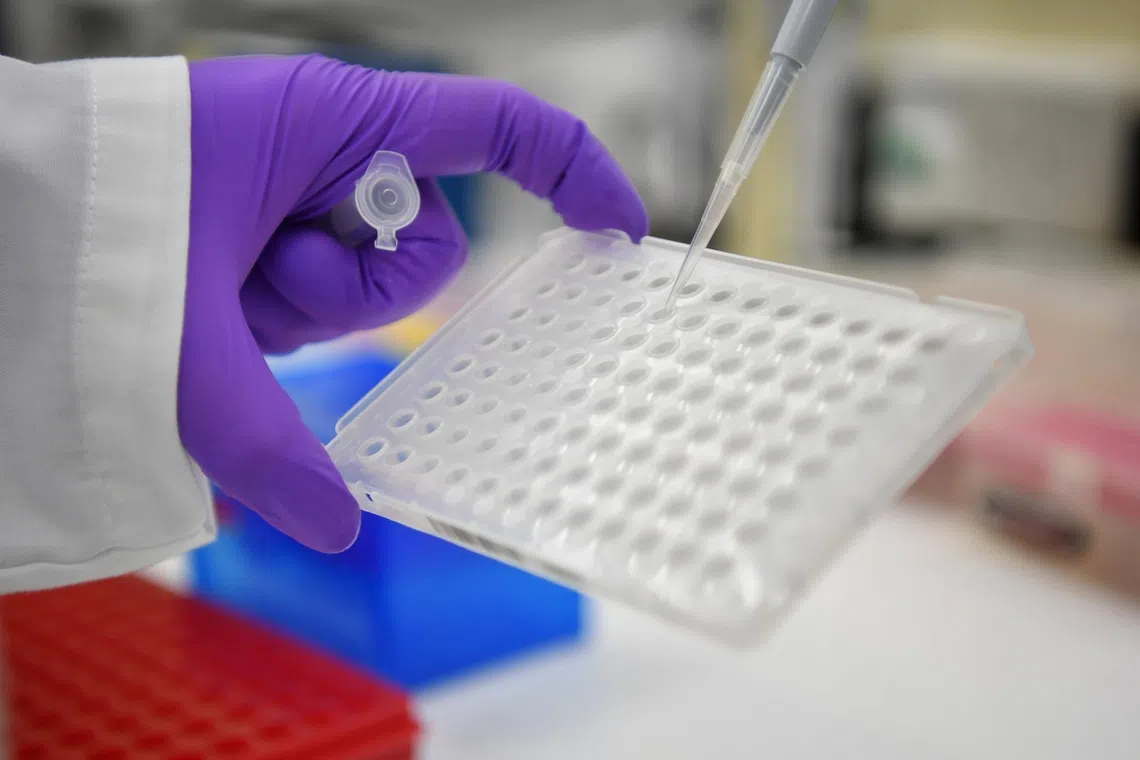
Crimean-Congo haemorrhagic fever, Lassa fever and Marburg virus disease will be added to the list of infectious diseases.
ST PHOTO: CHONG JUN LIANG
Published Oct 19, 2026, 05:00 AM
Updated Oct 19, 2026, 05:00 AM
SINGAPORE – Singapore has stepped up surveillance of three potentially deadly diseases that have no approved vaccines or antiviral treatments, with medical practitioners required to report all cases to the authorities from Oct 31.
These diseases are Crimean-Congo haemorrhagic fever (CCHF), Lassa fever and Marburg virus disease (MVD).
The Communicable Diseases Agency (CDA) said it has been monitoring them for some time “as all three diseases are viral haemorrhagic fevers that can cause severe illness and have the potential for human-to-human transmission”.
The diseases could have fatality rates of up to 50%, according to the World Health Organization (WHO).
They will be added to the Infectious Diseases Act’s (IDA) list of infectious diseases, following the amendment of IDA and its related regulations in September by the Ministry of Health (MOH).
This means that all medical practitioners such as doctors, as well as clinical laboratories, are legally required to notify the authorities of all confirmed as well as suspected cases.
Although the risk posed by these diseases to Singapore remains low, the latest moves will ensure the nation is prepared to respond when necessary, said a CDA spokeswoman in response to queries from The Straits Times.
The notification of cases will support early detection and a timely public health response, which could include measures such as isolation of cases and activation of contact tracing, she added.
The WHO website states that there is currently no specific treatment or vaccine approved for any of the diseases, though there is ongoing vaccine development for Lassa fever and MVD.
Diseases with high fatality rates
The WHO information showed that fatality rates of the three diseases could go as high as 50%.
CCHF can cause severe viral haemorrhagic fever outbreaks, with a fatality rate of up to 40%.
It is transmitted primarily through tick bites, contact with infected livestock, as well as close contact with the blood, secretions or other bodily fluids of infected people.
There is sudden onset of symptoms, such as fever, muscle ache, dizziness, sore eyes and photophobia (sensitivity to light), as well as sharp mood swings and confusion. Severely ill patients may experience rapid kidney deterioration, sudden liver failure or pulmonary failure.
Lassa fever has an overall fatality rate of 1%, rising to at least 15% for those hospitalised with severe illness.
It is more concerning for pregnant women as foetal death rates can go beyond 80% in the third trimester and maternal death rates can exceed 30%.
The virus is mainly transmitted through food or items contaminated with rodent urine or faeces, and possibly human to human.
About 80% of those infected have no or mild symptoms such as sore throat, muscle pain, nausea, vomiting and diarrhoea.
Severe cases may suffer from facial swelling, fluid in the lung cavity, bleeding from the mouth, nose, vagina or gastrointestinal tract, and low blood pressure.
Even after recovery, up to 25% of patients reported sudden hearing loss, and most of them never regained their hearing.
As for MVD, the virus is transmitted by a type of fruit bat known as rousettus aegyptiacus or between people, and the average fatality rate is around 50%, said WHO.
Symptoms include sudden onset of high fever, severe headache, and muscle aches and pains. Some may experience bleeding from the nose, gums and vagina, as well as confusion, irritability and aggression.
The CDA spokeswoman said: “While there has been no change to the risk level from these three diseases, which currently remains low, they have been added to the IDA to strengthen our overall surveillance and preparedness efforts.”
She reiterated that CDA continuously monitors the global and local infectious disease situation, so as to detect and respond to infectious disease threats early.
“As part of our preparedness efforts, CDA periodically reviews and updates the list of infectious diseases under the IDA to ensure that Singapore remains ready to respond to infectious disease risks,” she said.
Asked whether Singapore’s current border control measures could keep these diseases at bay, she said the measures already cover detection.
These measures include the Electronic Health Declaration card, which requires incoming travellers, including returning residents, to declare their health status and travel history.
Medical assessment is also available at points of entry for travellers who show symptoms and have travelled to specific affected areas.
Number of dangerous infectious diseases rises to 8
The various legislative amendments made by MOH included amending the Second Schedule of the IDA, which pertains to the list of “dangerous infectious diseases”.
With the addition of the three diseases, the list will grow to a total of eight diseases.
The five dangerous diseases currently listed are Ebola, the Middle East respiratory syndrome coronavirus infection (MERS-CoV), plague, severe acute respiratory syndrome (SARS) and yellow fever.
CDA said its weekly bulletin will include the three newly listed diseases from November. The bulletin reports the number of new cases and polyclinic attendances for various infectious diseases in Singapore.
The previous amendment to the Second Schedule was in 2024, when Covid-19 was delisted as a dangerous infectious disease.
Communicable Diseases Agency
克里米亚-刚果出血热、拉沙热和马尔堡病毒病将被列入传染病清单。
《海峡时报》照片:梁崇俊
发布于 2026 年 10 月 19 日上午 5:00
更新于2026年10月19日凌晨5:00
新加坡——新加坡加强了对三种可能致命的疾病的监测,这三种疾病目前尚无获批的疫苗或抗病毒疗法。从10月31日起,医疗从业人员必须向当局报告所有病例。
这些疾病包括克里米亚-刚果出血热(CCHF)、拉沙热和马尔堡病毒病(MVD)。
传染病机构(CDA)表示,他们已经监测这三种疾病一段时间了,“因为这三种疾病都是病毒性出血热,可引起重症,并有可能在人与人之间传播”。
世界卫生组织(世卫组织)表示,这些疾病的死亡率可能高达 50%。
根据卫生部 (MOH) 于 9 月份对传染病法 (IDA) 及其相关法规的修订,这些疾病将被添加到传染病法 (IDA) 的传染病清单中。
这意味着所有医疗从业人员(如医生)以及临床实验室都有法律义务向有关部门报告所有确诊病例和疑似病例。
新加坡国防军发展署(CDA)一位女发言人在回应《海峡时报》的询问时表示,尽管这些疾病对新加坡构成的风险仍然很低,但最新的举措将确保国家在必要时做好应对准备。
她补充说,病例通报将有助于早期发现和及时采取公共卫生应对措施,包括隔离病例和启动接触者追踪等措施。
世界卫生组织网站指出,目前尚无针对这些疾病的特效疗法或疫苗获得批准,但拉沙热和微血管病的疫苗正在研发中。
高致死率疾病
世界卫生组织的信息显示,这三种疾病的死亡率可能高达 50%。
克里米亚-刚果出血热可引起严重的病毒性出血热暴发,死亡率高达 40%。
它主要通过蜱虫叮咬、接触受感染的牲畜以及与感染者的血液、分泌物或其他体液密切接触传播。
症状突然出现,例如发热、肌肉酸痛、头晕、眼睛酸痛和畏光,以及情绪剧烈波动和意识混乱。重症患者可能出现肾功能迅速恶化、突发性肝功能衰竭或肺功能衰竭。
拉沙热的总体死亡率为 1%,重症住院患者的死亡率至少为 15%。
对于孕妇来说,这更加令人担忧,因为在妊娠晚期,胎儿死亡率可能超过 80%,孕产妇死亡率可能超过 30%。
该病毒主要通过被啮齿动物尿液或粪便污染的食物或物品传播,也可能在人与人之间传播。
约 80% 的感染者没有症状或只有轻微症状,如喉咙痛、肌肉疼痛、恶心、呕吐和腹泻。
严重病例可能出现面部肿胀、肺腔积液、口腔、鼻腔、阴道或胃肠道出血以及低血压。
即使康复后,仍有高达 25% 的患者报告出现突发性听力丧失,而且其中大多数人再也没有恢复听力。
世界卫生组织表示,至于MVD病毒,该病毒可通过一种名为埃及果蝠(Rousettus aegyptiacus)的果蝠传播,也可在人与人之间传播,平均死亡率约为50%。
症状包括突发高烧、剧烈头痛和肌肉酸痛。部分患者可能出现鼻出血、牙龈出血和阴道出血,以及意识混乱、易怒和攻击性行为。
CDA发言人表示:“虽然这三种疾病的风险等级目前仍然很低,但为了加强我们的整体监测和准备工作,我们已将它们添加到IDA中。”
她重申,CDA持续监测全球和本地传染病形势,以便及早发现和应对传染病威胁。
“作为我们防范措施的一部分,CDA会定期审查和更新IDA下的传染病清单,以确保新加坡始终做好应对传染病风险的准备,”她说。
当被问及新加坡目前的边境管制措施能否阻止这些疾病的传播时,她表示这些措施已经涵盖了检测。
这些措施包括电子健康申报卡,该卡要求入境旅客(包括返乡居民)申报其健康状况和旅行史。
对于出现症状且曾前往特定疫区的旅客,入境口岸也提供医疗评估。
危险传染病数量增至8种
卫生部进行的各种立法修订包括修订《传染病法》第二附表,该附表涉及“危险传染病”清单。
加上这三种疾病,疾病总数将增加到八种。
目前列出的五种危险疾病是埃博拉病毒、中东呼吸综合征冠状病毒感染(MERS-CoV)、鼠疫、严重急性呼吸综合征(SARS)和黄热病。
社区发展署表示,其每周疫情简报将从11月起纳入新增的三种传染病。该简报报告新加坡各类传染病的新增病例数和综合诊所就诊人数。
上一次对第二附表进行修订是在 2024 年,当时新冠肺炎被从危险传染病名单中移除。
传染病机构