New health guidelines: Osteoporosis screening, earlier breast cancer scan recommended最新健康指南:建议进行骨质疏松症筛查,并尽早进行乳腺癌筛查
New osteoporosis and cancer screening guidelines recommend risk-based assessments and updated age criteria to improve early detection and treatment in Singapore. Read more at straitstimes.com.
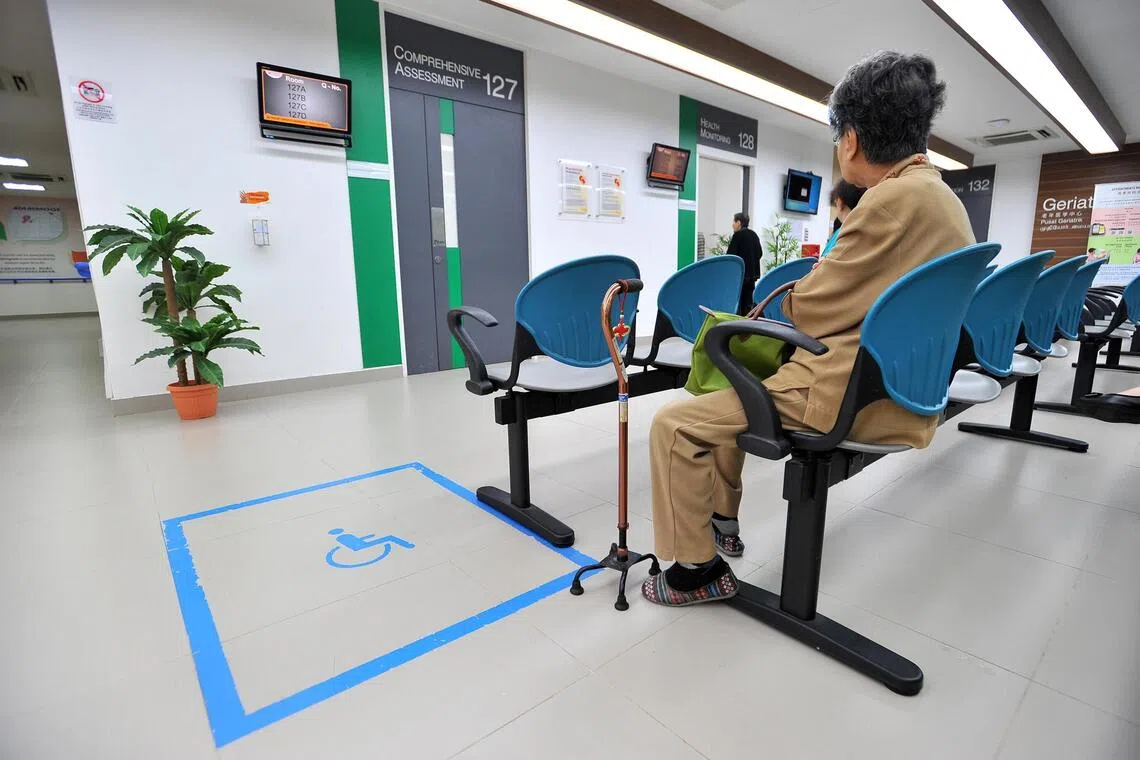
Women are recommended to self-assess their osteoporosis risk from age 50. Those with high risk should undergo a bone mineral density scan.
ST PHOTO: LIM YAOHUI
Published Sep 07, 2026, 05:00 AM
Updated Sep 07, 2026, 05:00 AM
New local guidelines recommend osteoporosis screening for women from age 50 and men from 65, with formal risk assessment and five-year screening intervals.
Breast cancer screening now advised annually from age 40 to 74; lung cancer screening age range expanded; hypertension screening recommended yearly.
Singapore Cancer Society plans a new fund in 2027 to help low-income individuals cover follow-up costs after positive cancer screenings.
SINGAPORE – Women from age 50 and men from age 65 are recommended to undergo osteoporosis screening and risk assessment , under new guidelines from local clinicians.
Previously, there were no screening recommendations for the condition for the general population.
Earlier breast cancer screening for women is also among the new recommendations in the latest report by the Screening Test Review Committee (STRC), issued earlier in 2026.
Screening is now recommended every year for women aged 40 to 49, and every two years for age 50 to 74 if they are without any symptoms and of normal risk.
It was previously advised for women between 50 and 69 to have a mammogram done every two years, if they are in the same risk category.
Spotting the tumours earlier would be helpful, as younger women tend to suffer from more aggressive breast cancers.
Other cancers and metabolic conditions, such as diabetes, also have their screening guidelines updated.
The Ministry of Health (MOH) said it is currently reviewing the recommendations, before deciding if they would be incorporated under the Healthier SG screening programme.
Its review and assessment also determine if subsidies will be provided for the recommended screenings.
STRC is chaired by Chia Kee Seng, founding dean of the National University of Singapore’s Saw Swee Hock School of Public Health, and comprises 16 local clinicians.
It last reviewed local screening guidelines in 2019.
When reviewing screening recommendations, the STRC considers current clinical evidence, including local and overseas clinical guidelines.
It also looks into current best practices and seeks input from experts or specialist groups under the Academy of Medicine, Singapore.
Other key new recommendations include screening for hypertension (high blood pressure) at least once a year, even for those with normal blood pressure, as the condition is increasingly prevalent across most age groups.
Earlier lung cancer screening for those at high risk is also recommended, to start from 50 instead of 55, and up to 80 instead of 74.
Osteoporosis traditionally associated with women
Osteoporosis – a disease characterised by an increased fracture risk because of the deterioration of bone tissue – has its screening guidelines according to age and frequency formalised for the first time.
It is traditionally associated with women who face a higher risk because of hormonal changes during menopause.
The STRC recommends women to self-assess their osteoporosis risk from age 50 or post-menopause, whichever is earlier. Women enter post-menopause after 12 consecutive months without a menstrual period.
The risk of Asian women can be estimated based on a score derived by deducting the person’s weight in kilogrammes from her age.
A score of less than zero denotes low risk, 0 to 20 denotes moderate risk, while over 20 denotes high risk.
A bone mineral density scan is recommended for those with high risk, or moderate risk coupled with other risk factors such as having menopause before age 45 or concurrently having diseases such as diabetes and hyperthyroidism.
The STRC’s recommended screening frequency is once every five years.
Health Minister Ong Ye Kung said in March that MOH is looking into how Healthier SG can support women to go for more frequent bone density tests.
For men, the need for a bone density test is based on self-assessment according to a similar set of risk factors, such as having other diseases, or if they smoke or lack regular exercise.
There is currently no evidence-based osteoporosis risk assessment scoring for men.
Starting from age 65, they are recommended to assess their osteoporosis risk every five years.
This is because their fracture risk increases progressively from that age on, as they will experience bone loss and declining bone mineral density.
Osteoporosis often went undiagnosed in elderly men with chronic conditions until they suffered bone fractures , a local study by SingHealth Polyclinics showed.
MOH does not track the local prevalence of osteoporosis.
MOH reviewing recommendations
MOH told The Straits Times that it is reviewing the STRC’s recommendations, which were published in February.
“Where updates to screening policies are required, these are implemented progressively and communicated publicly when ready,” said an MOH spokesman.
Explaining why such recommendations from expert groups do not automatically become written policies, the spokesman said: “This is part of an established process, between what is primarily a clinical recommendation and eventual adoption, which also takes into account policy and implementation considerations.”
An example of a recommendation not incorporated as a Healthier SG screening is the use of colonoscopy to screen for colorectal cancer.
Both the faecal immunochemical test (FIT) and colonoscopy are recommended by the STRC for screening of those aged 50 and above.
MOH decided to include only FIT under Healthier SG screening. It considered that FIT screening was non-invasive and more accessible to the public, and that hospitals would be under significant strain if they had to offer colonoscopy as a national-level screening programme.
Currently, Singapore citizens enrolled with Healthier SG are eligible to receive special subsidies for specific recommended screenings, such as cervical and colorectal cancer screening at their enrolled clinic.
All eligible tests and one follow-up consultation, if required, would be fully subsidised.
New cancer screening fund
Affordability of screening and follow-up checks is one of the seven gaps in a patient’s journey to fight cancer identified by the Singapore Cancer Society following a research study in 2025.
To this end, the society is setting up a new cancer screening fund with monies from public, corporate and philanthropic donations. It will be rolled out in the first quarter of 2027.
The aim is to support around 1,000 CHAS blue and orange cardholders in the first year of operations, covering their out-of-pocket costs for follow-up tests and consultations, if they have been screened positive for breast, colorectal or cervical cancer.
“Financial barriers should not prevent anyone from receiving life-saving care,” said the society.
建议女性从50岁开始进行骨质疏松风险自我评估。高风险人群应进行骨密度扫描。
ST 照片:林耀辉
发布于 2026 年 9 月 7 日上午 5:00
更新于2026年9月7日上午5:00
当地新指南建议对 50 岁及以上的女性和 65 岁及以上的男性进行骨质疏松症筛查,并进行正式的风险评估,筛查间隔为五年。
建议 40 至 74 岁人群每年进行乳腺癌筛查;扩大肺癌筛查年龄范围;建议每年进行高血压筛查。
新加坡癌症协会计划在 2027 年设立一项新基金,以帮助低收入人士支付癌症筛查结果呈阳性后的后续费用。
新加坡——根据当地临床医生发布的新指南,建议 50 岁及以上的女性和 65 岁及以上的男性接受骨质疏松症筛查和风险评估。
此前,对于普通人群,并没有针对该疾病的筛查建议。
筛查测试审查委员会 (STRC) 于 2026 年初发布的最新报告中,也提出了新的建议,其中包括对女性进行更早的乳腺癌筛查。
目前建议 40 至 49 岁的女性每年进行一次筛查,50 至 74 岁的女性如果没有任何症状且风险正常,则建议每两年进行一次筛查。
此前建议,50 至 69 岁的女性,如果属于同一风险类别,应每两年进行一次乳房 X 光检查。
及早发现肿瘤会很有帮助,因为年轻女性往往更容易患上侵袭性更强的乳腺癌。
其他癌症和代谢性疾病(如糖尿病)的筛查指南也已更新。
卫生部表示,目前正在审查这些建议,然后再决定是否将其纳入“更健康的SG”筛查计划。
其审查和评估还将决定是否为建议的筛查提供补贴。
STRC 由新加坡国立大学苏瑞福公共卫生学院创始院长谢启生担任主席,由 16 位本地临床医生组成。
该机构上一次审查当地筛查指南是在 2019 年。
在审查筛查建议时,STRC 会考虑当前的临床证据,包括本地和海外的临床指南。
它还研究了当前的最佳实践,并向新加坡医学科学院的专家或专业团体征求意见。
其他重要的新建议包括每年至少进行一次高血压筛查,即使是血压正常的人也应如此,因为高血压在大多数年龄组中越来越普遍。
对于高危人群,建议更早开始肺癌筛查,从 50 岁而不是 55 岁开始,最高年龄从 74 岁提高到 80 岁。
传统上认为骨质疏松症多发于女性。
骨质疏松症是一种因骨组织退化而导致骨折风险增加的疾病,其筛查指南首次根据年龄和频率正式制定。
传统上,它与更年期激素变化导致的较高风险女性有关。
STRC建议女性从50岁或绝经后(以较早者为准)开始进行骨质疏松风险自我评估。女性连续12个月没有月经后即进入绝经期。
亚洲女性的风险可以根据一个分数来估算,该分数是通过用年龄减去体重(公斤)得出的。
得分低于零表示风险低,0 到 20 表示风险中等,而高于 20 表示风险高。
对于高风险人群,或中等风险人群,以及同时存在其他风险因素的人群,例如 45 岁之前绝经或同时患有糖尿病和甲状腺功能亢进等疾病的人群,建议进行骨密度扫描。
STRC建议的筛查频率为每五年一次。
卫生部长王乙康在3月份表示,卫生部正在研究“更健康的新加坡”计划如何支持女性更频繁地进行骨密度测试。
对于男性而言,是否需要进行骨密度测试取决于根据类似风险因素进行的自我评估,例如是否患有其他疾病,或者是否吸烟或缺乏规律运动。
目前尚无基于证据的男性骨质疏松风险评估评分。
从 65 岁开始,建议每五年评估一次骨质疏松风险。
这是因为从这个年龄开始,随着骨质流失和骨矿物质密度下降,他们的骨折风险会逐渐增加。
新加坡保健集团综合诊所的一项本地研究表明,骨质疏松症在患有慢性疾病的老年男性中常常得不到诊断,直到他们发生骨折。
卫生部不追踪当地骨质疏松症的患病率。
卫生部审查建议
卫生部告诉《海峡时报》,他们正在审查科学审查委员会2月份发布的建议。
卫生部发言人表示:“如果需要更新筛查政策,我们会逐步实施,并在准备就绪后向公众公布。”
发言人解释说,专家组提出的此类建议不会自动成为书面政策,他说:“这是既定流程的一部分,介于主要基于临床建议和最终采纳之间,同时也会考虑政策和实施方面的因素。”
一项未被纳入“更健康的SG筛查”建议的例子是使用结肠镜检查来筛查结直肠癌。
STRC建议对50岁及以上人群进行粪便免疫化学测试(FIT)和结肠镜检查进行筛查。
卫生部决定仅将粪便免疫化学检测(FIT)纳入“健康新加坡”筛查计划。卫生部认为,FIT筛查属于非侵入性筛查,更易于公众接受;如果将结肠镜检查作为国家级筛查项目,医院将面临巨大压力。
目前,已注册“健康新加坡”(Healthier SG)计划的新加坡公民有资格获得特定推荐筛查的特别补贴,例如在其注册诊所进行的宫颈癌和结直肠癌筛查。
所有符合条件的检查以及一次必要的后续咨询都将获得全额补贴。
新癌症筛查基金
新加坡癌症协会在 2025 年进行的一项研究发现,筛查和后续检查的费用是患者抗癌过程中七个差距之一。
为此,该协会正在利用公众、企业和慈善捐款设立一个新的癌症筛查基金。该基金将于2027年第一季度推出。
该计划的目标是在运营的第一年为大约 1,000 名 CHAS 蓝色和橙色卡持有者提供支持,如果他们的乳腺癌、结直肠癌或宫颈癌筛查结果呈阳性,则支付他们后续检查和咨询的自付费用。
该协会表示:“经济障碍不应阻止任何人获得救命的治疗。”