Commentary: ASEAN’s quiet work before the next deadly disaster评论:东盟在下一次致命灾难发生前默默开展的工作
ASEAN often gets criticised for the political crises it cannot resolve. The work it puts into preparing for major disasters is less visible, say Lim Junli and Ian Li from the S Rajaratnam School of International Studies.
新闻视频
ASEAN often gets criticised for the political crises it cannot resolve. The work it puts into preparing for major disasters is less visible, say Lim Junli and Ian Li from the S Rajaratnam School of International Studies.
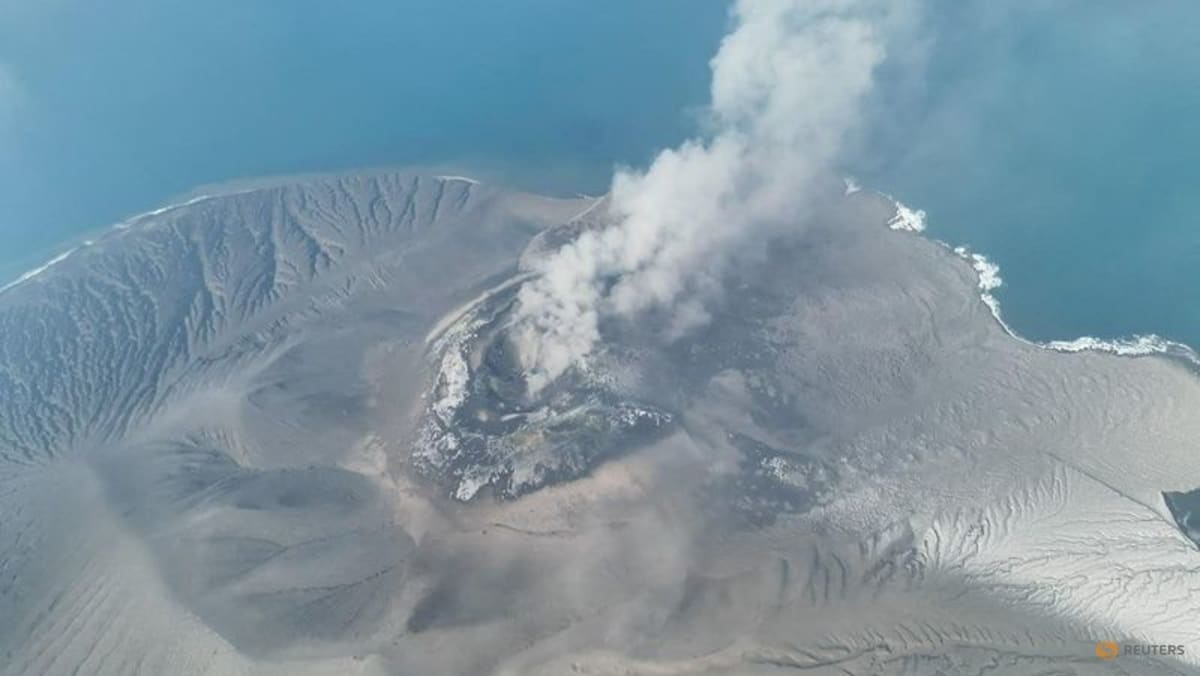
A drone view shows Mount Anak Krakatau spewing hot ash during an eruption, in South Lampung, Lampung province, Indonesia on Sep 5, 2026. (Photo: Center for Volcanology and Geological Hazard Mitigation/Handout via Reuters)
This audio is generated by an AI tool.
SINGAPORE: An earthquake and a volcanic eruption simultaneously occurring, then a tsunami. That is not the set-up to a new disaster film, but the hypothetical scenario faced by the militaries of 19 countries in a September field training exercise. Held in Banten, Indonesia, Exercise Trident Resolve (XTR) took place just 40km away from Mount Anak Krakatau which erupted three weeks earlier .
And while the 11-member Association of Southeast Asian Nations (ASEAN) has at times been criticised for its ineffectiveness in resolving regional political crises, such exercises demonstrate that ASEAN has the ability to mobilise resources and international partners for humanitarian assistance and disaster relief (HADR), if called upon.
Disasters respect no borders. The 2004 Indian Ocean tsunami , one of the most significant disasters triggered by a natural hazard to hit the region, directly impacted at least 14 countries and claimed the lives of over 200,000 people from 38 countries. More recently, the floods at the Nepal-Tibet border affected citizens from at least 34 countries.
More than 40 per cent of global disasters triggered by natural hazards occur within the Asia-Pacific. As extreme weather events become more frequent and destructive, these will be one of the most pertinent threats to Southeast Asia.
CNA Games Guess Word Crack the word, one row at a time Buzzword Create words using the given letters Mini Sudoku Tiny puzzle, mighty brain teaser Mini Crossword Small grid, big challenge Word Search Spot as many words as you can Show More Show Less
The region’s densely populated coastal areas are expected to grow in the coming years. As climate change outpaces capacities to adapt and mitigate, the human cost in the event of a future disaster will likely be extremely high – not only in significant harm to life and property, but also the inevitable displacement of large segments of the affected population.
COUNTRIES CANNOT ALWAYS COPE ALONE
A major disaster can overwhelm any one country’s ability to respond, especially when those expected to help are themselves affected.
Following the Türkiye-Syria earthquakes in 2023, the needs on the ground were vast and immediate: Survivors needed urgent medical attention. Every minute counted in search and rescue efforts to locate those trapped in the rubble. Those displaced from their homes required emergency shelter, food, water and clothing, while more vulnerable groups such as pregnant women, children and the disabled needed special attention and supplies.
Efforts had to be undertaken simultaneously across at least 10 cities. Based on known fault lines, preparation had only been made with a smaller geographical area of damage, with neighbouring municipalities and provinces expected to contribute to emergency assistance.
But the unanticipated scale of the earthquake meant that those expected to help ended up needing help instead.
MORE HELP ONLY WORKS IF COORDINATED
When devastation far exceeds domestic capacity, international assistance becomes crucial. But more is not enough unless everybody can work together effectively.
Military assistance is often required to scale up relief operations swiftly. However, coordinating multilateral military assistance comes with its challenges.
Inherent differences in practices, hardware and culture between militaries may affect interoperability, making the whole less than the sum of its parts.
For example, militaries might not share the same standard operating procedures and terminology for the reporting of information. Their communications equipment might also be plugged into different channels. All these and any language barrier would hinder the flow of information.
And if an efficient and meaningful response to a large-scale disaster requires civil-military cooperation at the local, national and international levels, it must be prepared and practised well before it is called upon. Relevant parties must build collective capacity, develop operational experience, and strengthen trust and understanding.
This is what ASEAN and its partners practise through exercises like XTR.
XTR was distinguished by the establishment of the Multinational Coordination Centre (MNCC), led by Indonesia and supported by the Changi Regional HADR Coordination Centre that is run by the Singapore Armed Forces (SAF).
The MNCC was the nerve-centre for the entire operation, where military responders shared information and coordinated planning. Liaison officers from all participating countries were on standby to ensure that requests for the deployment of their respective military assets received home approval in a timely manner.
The MNCC also worked in coordination with civilian entities such as the United Nations Office for the Coordination of Humanitarian Affairs (UN OCHA). To fulfil its role of tying everything together into a single unified response, it made use of SAF’s OPERA communication tool and information-sharing platform.
So even though communities are likely to face widespread transport and communications disruptions, the MNCC can piece together a picture of what is happening on the ground, identify urgent needs and coordinate assistance accordingly.
FILE - Homes sit damaged in the aftermath of flash flooding along the Trishuli River in the Trishuli Bazaar area of Nuwakot district, Nepal, Aug. 30, 2026. (AP Photo/Rajesh Kumar Singh, File)
ADAPTING COOPERATION TO NEW THREATS
While digital technology has helped to enhance disaster relief, it has also created new vulnerabilities. If coordination is the most important ingredient for achieving mission success in a complex operating environment, the systems that enable coordination must be protected.
This is why the ASEAN Defence Ministers’ Meeting-Plus' (ADMM-Plus) Expert Working Group (EWG) on Cyber Security was included in this inaugural iteration of XTR.
A potential breakdown mid-operation to the OPERA system would be catastrophic, leaving teams spread across a chaotic disaster zone isolated and essentially forced to work blind. So while some soldiers were out in the field, others were conducting daily cyber assessments to ensure that systems and networks are sufficiently hardened, especially in the case that there is a malicious cyber actor trying to cause further instability by disrupting the relief efforts.
Perhaps more crucially, significant efforts have been made to ensure cyber hygiene, and to sieve out mis- and dis-information. For example, AI-generated videos falsely depicted the scale and location of devastation following the earthquake in Myanmar in March 2025, making aid delivery more challenging when credible information was already perceived to be scarce.
One highly encouraging feature of XTR was that 19 countries participated, meaning that every member state of the ADMM-Plus including China, Russia and the United States took part despite broader geopolitical tensions.
ASEAN’s reputation as a neutral convener allowed it to bring together disparate actors, even those with trust deficits. At a time when multilateral cooperation is called into question, initiatives like XTR lay the quiet groundwork to help Southeast Asians when the need arises.
Lim Junli is a Research Fellow with the Humanitarian Assistance and Disaster Relief Programme and Ian Li is a Research Fellow with the Military Studies Programme. Both programmes are part of the Institute of Defence and Strategic Studies (IDSS) at the S. Rajaratnam School of International Studies (RSIS), Nanyang Technological University, Singapore.
An automated curation of our top stories to start your day.
Get our pick of top stories and thought-provoking articles in your inbox
Stay updated with notifications for breaking news and our best stories
Join our channel for the top reads for the day on your preferred chat app
东盟经常因其无法解决的政治危机而受到批评。但S·拉惹勒南国际关系学院的林俊利和伊恩·李表示,东盟在应对重大灾害方面所做的准备工作却鲜为人知。
2026年9月5日,无人机拍摄的画面显示,位于印度尼西亚楠榜省南楠榜的喀拉喀托火山喷发时,喷涌出滚烫的火山灰。(图片:火山学和地质灾害减灾中心/路透社提供)
这段音频由人工智能工具生成。
新加坡:地震和火山同时爆发,随后海啸袭来。这并非一部灾难片的场景,而是19个国家军队在9月份举行的一次野外训练演习中模拟的情景。此次名为“三叉戟决心”(Trident Resolve,简称XTR)的演习在印度尼西亚万丹省举行,距离三周前爆发的喀拉喀托之子火山仅40公里。
尽管由 11 个成员国组成的东南亚国家联盟(东盟)有时因在解决地区政治危机方面效率低下而受到批评,但此类演习表明,如果需要,东盟有能力调动资源和国际伙伴进行人道主义援助和灾害救援(HADR)。
灾难不分国界。2004年印度洋海啸是该地区最严重的自然灾害之一,直接影响了至少14个国家,并夺去了来自38个国家超过20万人的生命。最近,尼泊尔-西藏边境的洪水也影响了至少34个国家的公民。
全球超过40%的自然灾害发生在亚太地区。随着极端天气事件日益频繁且破坏性更大,这将成为东南亚面临的最严峻威胁之一。
CNA游戏 猜词游戏 逐行破解单词 流行词游戏 用给定的字母组成单词 迷你数独 小小谜题,挑战你的大脑 迷你填字游戏 小方格,大挑战 单词搜索 尽可能多地找出单词 显示更多 显示更少
预计未来几年,该地区人口稠密的沿海地区人口将继续增长。由于气候变化的速度超过了适应和减缓气候变化的能力,未来一旦发生灾害,人员伤亡可能极其惨重——不仅会造成生命和财产的重大损失,而且受灾人口的大量流离失所也难以避免。
国家不可能总是独自应对一切。
重大灾难可能会超出任何一个国家的应对能力,尤其是当那些本应提供帮助的人自身也受到影响时。
2023年土耳其-叙利亚地震后,灾区需求巨大且迫在眉睫:幸存者急需医疗救助;搜救工作分秒必争,力求找到被困在废墟中的人员;流离失所者需要紧急住所、食物、水和衣物;而孕妇、儿童和残疾人等弱势群体则需要特别关注和物资援助。
救援工作必须在至少10个城市同时进行。根据已知的断层线,救援准备工作仅针对较小范围的受灾地区展开,预计邻近的市、县和省份将提供紧急援助。
但地震规模远超预期,导致原本应该提供帮助的人最终反而需要帮助。
更多帮助只有在协调一致的情况下才能发挥作用
当灾害严重程度远远超出国内应对能力时,国际援助就显得至关重要。但除非各方能够有效合作,否则仅仅增加援助是不够的。
为迅速扩大救援行动规模,往往需要军事援助。然而,协调多边军事援助也面临着诸多挑战。
各国军队在实践、硬件和文化方面固有的差异可能会影响互操作性,使整体小于各部分之和。
例如,不同军队在信息报告方面可能没有统一的标准操作程序和术语。他们的通信设备也可能接入不同的频道。所有这些因素,以及任何语言障碍,都会阻碍信息的流通。
如果应对大规模灾害需要地方、国家和国际层面的军民合作,那么这种合作必须在需要之前做好充分的准备和演练。相关各方必须建立集体能力,积累实战经验,并加强互信和理解。
这就是东盟及其伙伴通过 XTR 等演习所实践的内容。
XTR 的显著特点是建立了多国协调中心 (MNCC),该中心由印度尼西亚领导,并得到了新加坡武装部队 (SAF) 运营的樟宜地区人道主义援助和灾害救援协调中心的支持。
多国联合指挥中心(MNCC)是整个行动的神经中枢,各军事响应人员在此共享信息并协调计划。所有参与国的联络官均随时待命,以确保各自军事力量的部署请求能够及时获得本国批准。
MNCC还与联合国人道主义事务协调厅(人道协调厅)等民间机构协调合作。为了履行其将所有资源整合为统一应对措施的职责,它使用了SAF的OPERA通信工具和信息共享平台。
因此,即使社区可能面临大范围的交通和通信中断,MNCC 也能拼凑出当地正在发生的事情的全貌,确定紧急需求并相应地协调援助。
(档案照片)2026年8月30日,尼泊尔努瓦科特县特里苏里集市地区,特里苏里河沿岸房屋在突发洪水后损毁。(美联社照片/拉杰什·库马尔·辛格,档案照片)
调整合作方式以应对新威胁
数字技术在提升灾害救援能力的同时,也带来了新的安全隐患。在复杂的作战环境中,协调是任务成功的关键要素,因此,保障协调系统的正常运行至关重要。
这就是为什么东盟国防部长扩大会议(ADMM-Plus)网络安全专家工作组(EWG)被纳入XTR的首次迭代的原因。
OPERA系统在行动过程中一旦发生故障,后果将不堪设想,届时分散在混乱灾区的救援队伍将与外界隔绝,基本上只能盲目工作。因此,当一些士兵在前线作战时,另一些士兵则每天进行网络安全评估,以确保系统和网络得到充分加固,尤其是在恶意网络攻击者试图通过破坏救援工作来制造进一步动荡的情况下。
或许更为关键的是,人们已做出重大努力来确保网络安全,并甄别虚假信息和错误信息。例如,2025年3月缅甸地震后,人工智能生成的视频错误地描绘了灾情的规模和地点,这使得在可靠信息本就匮乏的情况下,援助物资的运送更加困难。
XTR 的一个非常令人鼓舞的特点是,共有 19 个国家参加,这意味着尽管地缘政治紧张局势加剧,但包括中国、俄罗斯和美国在内的 ADMM-Plus 的每个成员国都参加了会议。
东盟作为中立召集者的声誉使其能够将各方力量聚集在一起,即便这些力量之间存在信任危机。在多边合作备受质疑的当下,像“跨区域合作机制”(XTR)这样的倡议正在默默地为东南亚国家在必要时提供帮助奠定基础。
林俊利是人道主义援助和灾害救援项目的研究员,李彦是军事研究项目的研究员。这两个项目都隶属于新加坡南洋理工大学拉惹勒南国际研究院(RSIS)的国防与战略研究所(IDSS)。
每天清晨,我们都会自动为您推送最热门的新闻资讯,助您开启美好的一天。
订阅我们的邮件,即可获取精选热点新闻和引人深思的文章。
订阅通知,第一时间获取突发新闻和精彩报道。
加入我们的频道,即可在您常用的聊天应用上获取当日热门文章。