Consumers can put pressure on haze-linked firms by buying green-labelled products: Experts专家表示,消费者可以通过购买绿色标签产品来向与雾霾相关的企业施压。
But retailers also have a part to play, and stronger government intervention is needed, they added. Read more at straitstimes.com.
新闻视频
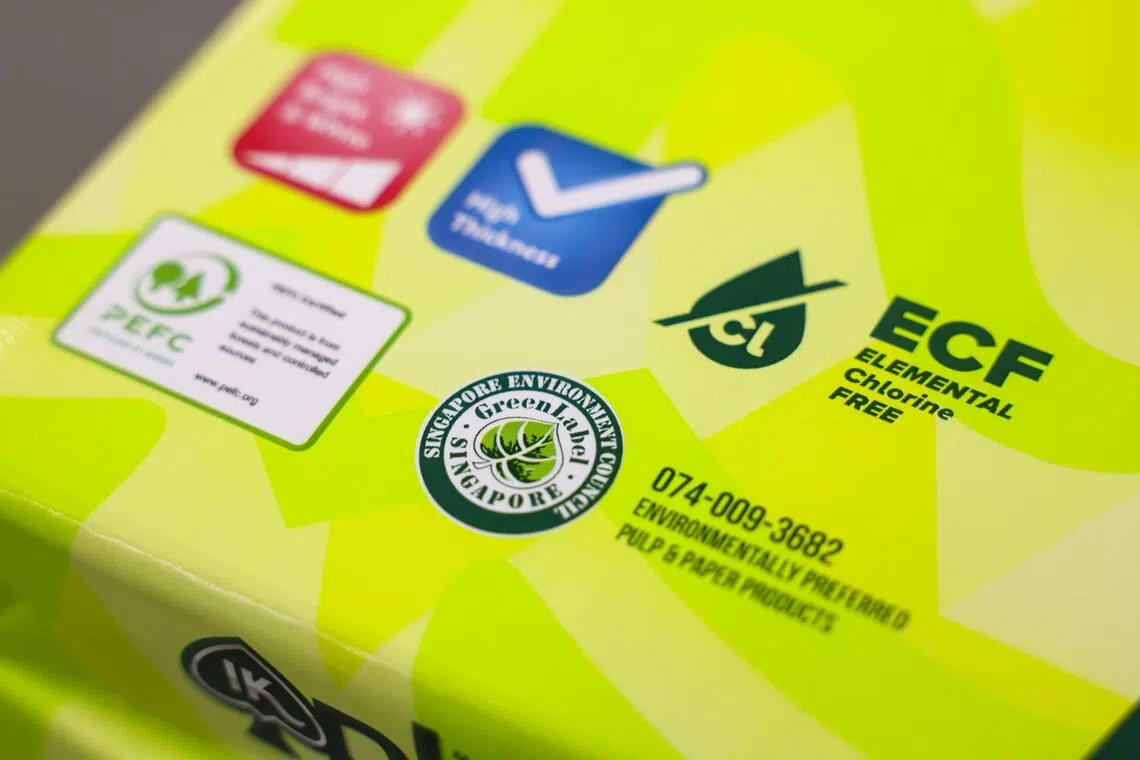
It means boycotting products without green labels, which indicate whether a company has sustainable land use practices, such as not clearing land by fire.
Published Oct 20, 2026, 05:55 PM
Updated Oct 20, 2026, 05:55 PM
SINGAPORE – Singapore residents affected by the haze cannot directly douse the flames in Indonesia causing the pollution, but they can exert pressure on errant firms behind the fires by voting with their wallets, experts said.
“This makes it so that burning costs money,” said Nanyang Technological University (NTU) associate professor of accounting Kelvin Law.
On Oct 19, the Singapore Environment Council (SEC) issued Asia Pulp & Paper (APP) a Notice of Temporary Restrictions on the company’s green label.
APP, one of Indonesia’s largest pulp and paper companies which sells paper products in the Singapore market, is linked to four companies given legal notices by the Singapore government for having operations tied to the haze.
SEC said it may suspend APP’s green label if its additional reporting is unable to demonstrate that strengthened monitoring, fire prevention and suppression measures have been implemented effectively.
Green labelling converts complex scientific information into simple comprehensive symbols, which help people understand how their daily consumer habits have longer-term environmental impacts, said economist Seck Tan, an associate professor at the Singapore Institute of Technology.
Such labels are “a specific call to action on being environmentally responsible”, he added.
The enhanced green label SEC launched in 2017 requires certified pulp and paper companies to implement measures to manage peatlands, reduce the risk of fires and manage any fires that break out.
Certified companies must also pledge that zero-burning occurs on their plantations, as well as demonstrate full traceability from plantation to mill, covering all stages of the production chain.
While the certification cannot guarantee that fires will never occur, it requires companies to adopt best practices and invest adequate resources to prevent fires and manage any outbreak, said SEC’s executive director Cheang Kok Chung.
As Tan put it: “When producers are made to account for the environmental damage they cause, and consumers have credible information to guide their choices, market forces can help drive more sustainable production.
“Ultimately, environmentally damaging practices must carry an economic cost.”
Green labels are a supply chain tool and consumers can pressure the companies by using these labels, said Law from NTU.
But Tan noted that purchasing decisions are still influenced by factors such as price, availability, convenience and trust in the certification.
And, as Singapore is only one of many markets, consumers’ actions may have a limited impact on companies’ bottom line.
So, Law added, retailers also have a role to play in ensuring haze-linked products are not on shelves here.
Major retailers can ask the suppliers to tell them which mills and plantations their paper and palm oil products come from, and compare the mills and plantations to the public satellite data for fires, he said.
“They can track the suppliers much more easily than any one consumer can… They have the resources to do so, or to engage experts who can. They can also help smaller shops do the same,” he said.
In 2015, supermarket chains such as FairPrice and Sheng Siong pulled APP products, such as the Paseo brand of toilet and facial tissues, off their shelves when the company’s green label was suspended amid a severe haze that blanketed Singapore.
APP was blamed then for the haze as it had allowed fires to burn within forestry concessions managed by its long-term wood suppliers.
In response to queries from The Straits Times, a FairPrice Group spokesperson said that it is closely monitoring developments related to the regional haze situation and has proactively engaged relevant suppliers to seek clarification on reported concerns and the measures being taken to address them.
“We will continue to assess credible information, including findings from the relevant authorities, and review our next steps as appropriate,” said the spokesperson.
ST has asked Sheng Siong, Giant, Cold Storage and Prime Supermarket whether they carry any products from the errant firms that have been issued notices in 2026.
APP products, such as those under the brand Paseo, are still sold at some supermarkets and online retailers, according to ST’s checks on Oct 19 and 20.
‘More than a consumer issue’
As useful as environmental labelling schemes are for socially conscious consumers who are willing to boycott errant companies, Singapore Management University’s associate professor of urban sustainability Terry Van Gevelt said in reality, there are too many labelling schemes out there.
This can create decision-making fatigue and can lead to consumers just tuning labels out entirely, he added.
Besides the enhanced green label – which does not apply to palm oil products – administered by SEC, there is also the Roundtable of Sustainable Palm Oil (RSPO) which provides international certification for sustainably sourced palm oil, covering products such as cooking oil, food and cosmetics.
Other certifications include those from international non-profit organisation Forest Stewardship Council (FSC) as well as Programme for the Endorsement of Forest Certification (PEFC), where both are watchdogs for responsible forestry management practices.
The Forest Stewardship Council label seen on a pack of tissue paper at a Fairprice outlet. ST PHOTO: JASEL POH
The Forest Stewardship Council label seen on a pack of tissue paper at a Fairprice outlet.
SIT’s Tan noted that labelling schemes should be supported by clearer public education to explain what a green label actually certifies, its limitations and the environmental consequences of the choices made.
But focusing too much on green labels and consumer choices “risks fundamentally obscuring where the actual responsibility lies”, said Van Gevelt.
“In 2015, those products disappeared from supermarkets because the authorities stepped in. It was top-down institutional enforcement, not a grassroots consumer boycott, that removed those items.
“This highlights the core issue – transboundary haze is simply not a consumer issue. It is a high-level, systemic crisis of land management, corporate financing, and cross-border regulatory enforcement.
“This is exactly why high-level mechanisms like Singapore’s 2014 Transboundary Haze Pollution Act were created . Solving the haze requires actors at the very top – governments, multinational agribusinesses, and the financial institutions backing them – to take action ,” Van Gevelt added.
The recent legal notices were issued under Singapore’s Transboundary Haze Pollution Act (THPA). Those guilty under the Act can be fined up to $100,000 a day, capped at a total of $2 million.
Stronger government intervention is necessary, agreed Associate Professor Zhang Weina of the National University of Singapore (NUS) Business School , given the transborder scale and complexity of the haze problem .
This includes greater enforcement of existing regulations, appropriate penalties for Singapore-based companies found responsible, and greater transparency regarding companies participating in haze-generating activities, she said.
Senior Minister K. Shanmugam on Oct 19 warned recalcitrant firms not to underestimate the Government’s determination to take action and vowed to use “every legal and regulatory lever” at Singapore’s disposal in confronting companies linked to the region’s choking haze.
He warned firms that they cannot hide behind complex corporate structures, nor attempt to shirk responsibility simply because the burning plantations are located in Indonesia while they are based in Singapore.
Government agencies are considering legal, regulatory and economic measures to exert pressure on these companies where it matters, including on their bottom lines, access to financing and standing with investors, he said.
Lawrence Loh, director of the National University of Singapore’s Centre for Governance and Sustainability, said that investors of these companies will also have to play critical roles and apply pressure when needed.
“Shareholder pressures may well be the final key to unlock the recurrent haze problem as they do have the power to change management’s relentless pursuit of profits,” he said.
Chin Hui Shan is a journalist covering the environment beat at The Straits Times.
这意味着抵制没有绿色标签的产品,绿色标签表明一家公司是否拥有可持续的土地利用方式,例如不使用火烧的方式清理土地。
发布于 2026 年 10 月 20 日下午 5:55
更新于2026年10月20日下午5:55
新加坡——专家表示,受雾霾影响的新加坡居民虽然无法直接扑灭印尼造成污染的火焰,但他们可以通过消费选择向纵火的肇事企业施压。
“这样一来,焚烧就需要花钱了,”南洋理工大学(NTU)会计学副教授凯尔文·劳说道。
10 月 19 日,新加坡环境理事会 (SEC) 向亚洲浆纸业 (APP) 发出临时限制通知,限制该公司的绿色标签。
APP是印尼最大的纸浆和造纸公司之一,在新加坡市场销售纸制品。该公司与四家公司有关联,这四家公司因与雾霾相关的业务而被新加坡政府发出法律通知。
美国证券交易委员会表示,如果APP的补充报告无法证明其加强的监测、防火和灭火措施已得到有效实施,则可能会暂停APP的绿色标签认证。
新加坡理工大学副教授、经济学家陈锡成表示,绿色标签将复杂的科学信息转化为简单易懂的符号,帮助人们了解他们的日常消费习惯如何对环境产生长期影响。
他补充说,这样的标签是“对环境责任的具体行动呼吁”。
SEC 于 2017 年推出的增强型绿色标签要求获得认证的纸浆和造纸公司采取措施管理泥炭地,降低火灾风险,并管理任何发生的火灾。
获得认证的公司还必须承诺在其种植园内不进行任何焚烧,并证明从种植园到工厂的完整可追溯性,涵盖生产链的所有阶段。
SEC执行董事张国忠表示,虽然该认证不能保证火灾永远不会发生,但它要求公司采取最佳实践并投入足够的资源来预防火灾和控制任何火灾爆发。
正如谭所说:“当生产者被要求对他们造成的环境破坏负责,并且消费者有可靠的信息来指导他们的选择时,市场力量可以帮助推动更可持续的生产。
“归根结底,破坏环境的做法必然会带来经济代价。”
南洋理工大学的罗教授表示,绿色标签是一种供应链工具,消费者可以通过使用这些标签向企业施压。
但谭指出,购买决定仍然会受到价格、供应情况、便利性和对认证的信任等因素的影响。
而且,由于新加坡只是众多市场之一,消费者的行为对公司的盈利可能影响有限。
因此,劳补充说,零售商也有责任确保与雾霾相关的产品不会出现在这里的货架上。
他说,大型零售商可以要求供应商告知他们纸张和棕榈油产品来自哪些工厂和种植园,并将这些工厂和种植园与公开的卫星火灾数据进行比较。
他说:“他们追踪供应商比任何消费者都容易得多……他们有资源这样做,或者可以聘请专家来做这件事。他们还可以帮助小型商店做到这一点。”
2015 年,新加坡遭遇严重雾霾,APP 公司的绿色标签被暂停使用,导致 FairPrice 和 Sheng Siong 等连锁超市将 APP 的产品(如 Paseo 品牌的厕纸和面巾纸)下架。
当时,APP被指责造成了雾霾,因为它允许其长期木材供应商管理的林业特许经营区内发生火灾。
针对《海峡时报》的询问,职总平价集团发言人表示,公司正密切关注区域雾霾情况的发展,并已主动与相关供应商接洽,以澄清有关报道的担忧以及为解决这些问题而采取的措施。
发言人表示:“我们将继续评估可信信息,包括相关部门的调查结果,并酌情审查我们的下一步措施。”
海峡时报已询问昇菘超市、巨人超市、冷藏超市和普莱姆超市,它们是否销售任何来自2026年已收到通知的违规公司的产品。
据《海峡时报》10月19日和20日的调查显示,一些超市和在线零售商仍在销售Paseo等品牌的APP产品。
“这不仅仅是消费者问题”
新加坡管理大学城市可持续发展副教授特里·范·格维尔特表示,尽管环境标签计划对有社会意识、愿意抵制违规公司的消费者来说很有用,但实际上,标签计划太多了。
他还补充说,这会导致消费者在做决定时感到疲劳,并可能导致消费者完全忽略标签信息。
除了由 SEC 管理的增强型绿色标签(不适用于棕榈油产品)之外,还有可持续棕榈油圆桌会议 (RSPO),它为可持续来源的棕榈油提供国际认证,涵盖食用油、食品和化妆品等产品。
其他认证包括国际非营利组织森林管理委员会 (FSC) 和森林认证认可计划 (PEFC) 的认证,这两个组织都是负责任的森林管理实践的监督机构。
在一家 Fairprice 超市的包装纸巾上可以看到森林管理委员会 (FSC) 的标签。(海峡时报照片:Jasel Poh)
在 Fairprice 超市的一包纸巾上看到了森林管理委员会的标签。
新加坡理工大学的谭指出,标签制度应该辅以更清晰的公众教育,以解释绿色标签的实际认证内容、其局限性以及所做选择对环境的影响。
范·格维尔特表示,过分关注绿色标签和消费者的选择“可能会从根本上掩盖真正的责任所在”。
“2015年,这些产品从超市消失,是因为当局介入了。是自上而下的制度性执法,而不是基层消费者的抵制,才使得这些商品下架。”
“这凸显了问题的核心——跨境雾霾根本不是消费者的问题。它是土地管理、企业融资和跨境监管执法方面的高层次、系统性危机。”
“这正是新加坡2014年《跨境烟霾污染法》等高级别机制设立的原因。解决烟霾问题需要最高层级的参与者——政府、跨国农业企业以及支持它们的金融机构——采取行动,”范·格维尔特补充道。
最近发出的法律通知是根据新加坡的《跨境烟霾污染法》(THPA)发出的。违反该法者每天最高可被处以10万新元的罚款,罚款总额最高可达200万新元。
新加坡国立大学商学院副教授张维娜也认为,鉴于雾霾问题的跨界规模和复杂性,政府有必要采取更有力的干预措施。
她表示,这包括加强现有法规的执行力度,对被认定负有责任的新加坡公司处以适当的处罚,以及提高参与产生雾霾活动的公司的透明度。
10月19日,高级部长尚穆根警告那些不服从政府规定的公司不要低估政府采取行动的决心,并誓言要动用新加坡所能掌握的“一切法律和监管手段”来对抗与该地区令人窒息的雾霾有关的公司。
他警告各公司,他们不能躲在复杂的公司结构背后,也不能仅仅因为燃烧的种植园位于印度尼西亚而公司总部设在新加坡就试图推卸责任。
他说,政府机构正在考虑采取法律、监管和经济措施,在关键方面向这些公司施加压力,包括影响它们的盈利能力、融资渠道和投资者关系。
新加坡国立大学治理与可持续发展中心主任罗文胜表示,这些公司的投资者也将发挥关键作用,并在必要时施加压力。
他说:“股东的压力很可能是解决反复出现的雾霾问题的最终关键,因为他们确实有能力改变管理层对利润的无情追求。”
Chin Hui Shan是《海峡时报》负责环境报道的记者。