State Department orders staff to call AI ‘super intelligence’美国国务院命令工作人员将人工智能称为“超级智能”。
An internal cable from the agency extends Trump’s terminology change to emails, speeches, websites and official titles.
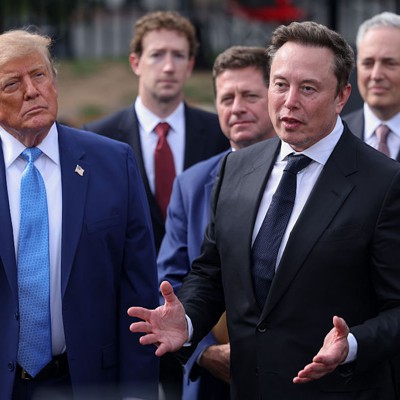
SpaceXAI CEO Elon Musk speaks to reporters as Donald Trump looks on outside the White House on Sept. 29, 2026. Tierney L. Cross/Pool/For The Washington Post via Getty Images
An internal cable from the agency extends Trump’s terminology change to emails, speeches, websites and official titles.
David DiMolfetta and Jory Heckman
The State Department has instructed personnel to replace “artificial intelligence” with “Super Intelligence” in official communications and rename its AI-related programs and systems, bringing President Donald Trump’s terminology change into the daily work of U.S. diplomacy, according to two people familiar with the matter and contents of an unclassified cable obtained by Government Executive and Nextgov/FCW .
The cable — dated Monday and addressed to the entire department — tells staff to use “Super Intelligence,” or “SI,” in new letters, emails, public messages, websites, reports, remarks and policy documents, subject to legal exceptions. Existing material should be updated when staff next revise it.
“All official titles and the names of Department governance bodies, systems, platforms, inventories, and programs must use SI in place of AI,” the cable states.
The instructions implement Trump’s Sept. 29 executive order , which directed executive agencies to adopt the new terminology across official communications. The cable shows how that broad instruction is being translated into specific requirements for diplomats and the department’s internal operations.
The order says the wording should reflect the advancing capabilities and promise of American technology. For now, however, it defines “Super Intelligence” as the same technologies and systems covered by the existing statutory definition of AI. In computing science, super intelligence is defined differently than the generative artificial intelligence technologies used today.
In recent weeks, administration officials had previously discussed the terminology change with certain State bureaus, people familiar with the matter said. But the cable appears to be the first organization-wide directive outlining where the new language must be used. The Associated Press previously reported such communications with State’s international organizations bureau.
The transition, while expected for some time, is significant because it would change how U.S. diplomats describe the fast-evolving technology in policy documents and discussions with overseas counterparts.
Foreign organizations retain their own names in internal writings. The cable specifically tells employees not to change references to China’s World Artificial Intelligence Cooperation Organization, even as the department replaces the term in its own materials.
The notice also spells out several exceptions to the replacement rule. Employees must preserve language required by law and existing legal citations, including quotations from statutes, regulations, treaties and other legal instruments. Contracts and grants are also excluded, pending further guidance.
Previously published documents, cables and archived web pages should not be revised or reissued solely to change the terminology, it adds. The instructions also preserve the published titles of existing presidential actions, programs and organizations, such as America’s AI Action Plan, unless the department provides further direction.
One program has already changed names. The cable says the American AI Exports Program is now the American SI Exports Program, citing an earlier State Department cable. The program’s public website already uses that name to describe its work helping American companies sell technology overseas.
For staff handling international agreements or departmental rules, the cable directs questions about terminology to the appropriate policy or legal office.
The vocabulary change is already appearing in senior officials’ public remarks. National Cyber Director Sean Cairncross repeatedly referred to AI as “super intelligence” and “SI” during an Oct. 1 discussion on AI safety , following Trump’s order.
Office of Personnel Management CIO Adam Starr also used “SI” in remarks last week , describing efforts to help agencies adopt the technology. Starr said OPM had launched a SuperIntelligence Governance and Adoption Program, or SI GAP, to assist other agencies.
NEXT STORY: The real job of the Army’s new ‘robotics technicians’ is constant adaptation
2026年9月29日,SpaceXAI首席执行官埃隆·马斯克在白宫外接受记者采访,唐纳德·特朗普在旁观看。图片来源:Tierney L. Cross/Pool/For The Washington Post via Getty Images
该机构的一份内部电报显示,特朗普的措辞变化还延伸到了电子邮件、演讲、网站和官方头衔。
大卫·迪莫尔费塔和乔里·赫克曼
据两位知情人士透露,美国国务院已指示工作人员在官方通信中用“超级智能”取代“人工智能”,并重新命名其与人工智能相关的项目和系统,将唐纳德·特朗普总统的术语变更带入美国外交的日常工作中。该消息来自《政府高管》和 Nextgov/FCW 获得的一份非机密电报。
这份日期为周一、发给整个部门的电报指示员工在新的信函、电子邮件、公开信息、网站、报告、发言和政策文件中使用“超级智能”(Super Intelligence,简称SI),但法律规定的例外情况除外。现有材料在下次修订时应进行更新。
电报中指出:“所有官方头衔以及部门治理机构、系统、平台、清单和程序的名称都必须使用 SI 代替 AI。”
这些指令旨在落实特朗普9月29日签署的行政命令,该命令指示各行政机构在所有官方文件中采用新的术语。这份电报展示了如何将这一宽泛的指令转化为针对外交官和国务院内部运作的具体要求。
该行政命令指出,措辞应体现美国科技不断进步的能力和前景。然而,目前它将“超级智能”定义为与现有人工智能法定定义所涵盖的技术和系统相同的技术和系统。在计算机科学领域,超级智能的定义与当今使用的生成式人工智能技术有所不同。
据知情人士透露,近几周来,政府官员曾与国务院某些部门讨论过术语变更事宜。但这份电报似乎是首份全机构范围的指令,明确规定了新术语的使用范围。美联社此前曾报道过国务院国际组织局的类似沟通。
虽然这一转变在一段时间内是可以预期的,但它意义重大,因为它将改变美国外交官在政策文件和与海外同行的讨论中描述快速发展的技术的方式。
外国组织在内部文件中保留了自己的名称。这份电报明确指示员工,即使该部门在自己的文件中已经替换了“世界人工智能合作组织”这一名称,也不得更改提及中国的相关内容。
该通知还列出了替换规则的几项例外情况。员工必须保留法律要求的语言和现有的法律引证,包括法规、条例、条约和其他法律文书中的引文。合同和拨款也暂不适用,具体情况尚待进一步指导。
该指令还补充道,此前已发布的文档、电报和存档网页不应仅仅为了更改术语而进行修订或重新发布。此外,除非国务院另行指示,否则现有总统行动、计划和组织的已发布名称(例如“美国人工智能行动计划”)应予以保留。
其中一个项目已经更名。电报称,美国人工智能出口计划(American AI Exports Program)现已更名为美国系统集成出口计划(American SI Exports Program),并援引了国务院早前的一份电报。该计划的官方网站已使用新名称来描述其帮助美国公司向海外销售技术的工作。
对于负责处理国际协议或部门规章的员工,电报会将有关术语的问题转交给相应的政策或法律部门。
这种用词上的变化已经体现在高级官员的公开讲话中。在特朗普下达命令后,国家网络安全总监肖恩·凯恩克罗斯在10月1日关于人工智能安全的讨论中,多次将人工智能称为“超级智能”和“SI”。
美国人事管理局首席信息官亚当·斯塔尔上周在讲话中也使用了“超级智能”(SuperIntelligence,简称SI)一词,他描述了帮助各机构采用这项技术的努力。斯塔尔表示,人事管理局已启动了超级智能治理与应用计划(SI GAP),以帮助其他机构。
下一篇报道:陆军新“机器人技术人员”的真正工作是不断适应