Finland Plans To Build A Million Landmines As Russian Threat Looms芬兰计划埋设一百万枚地雷,以应对俄罗斯的威胁
Helsinki is moving to restart domestic production of once-outlawed anti-personnel mines as Russia rebuilds its military posture along NATO’s northern flank. Helsinki is moving to restart domestic production of once-outlawed anti-personnel mines as Russia rebuilds its military posture along NATO’s northern flank.
Published Oct 20, 2026 4:53 PM EDT
Photo by Alessandro RAMPAZZO / AFP via Getty Images
NATO member Finland is preparing to reintroduce anti-personnel landmines into its military arsenal, with a contract for around one million examples due to be signed soon, following the country’s withdrawal from the Ottawa Convention that aims to eliminate these weapons. The move comes as Helsinki looks to strengthen its territorial defenses against a longstanding Russian threat and the prospect of a larger Russian military presence along its eastern border in the years ahead.
Finland’s withdrawal from the treaty, which prohibits the use, stockpiling, production, and transfer of anti-personnel mines, took effect on January 10 of this year. Reflecting growing concern among NATO’s eastern-flank members about Russia’s military posture and the lessons of the war in Ukraine, Poland, Lithuania, Latvia, and Estonia have also moved to leave the convention.
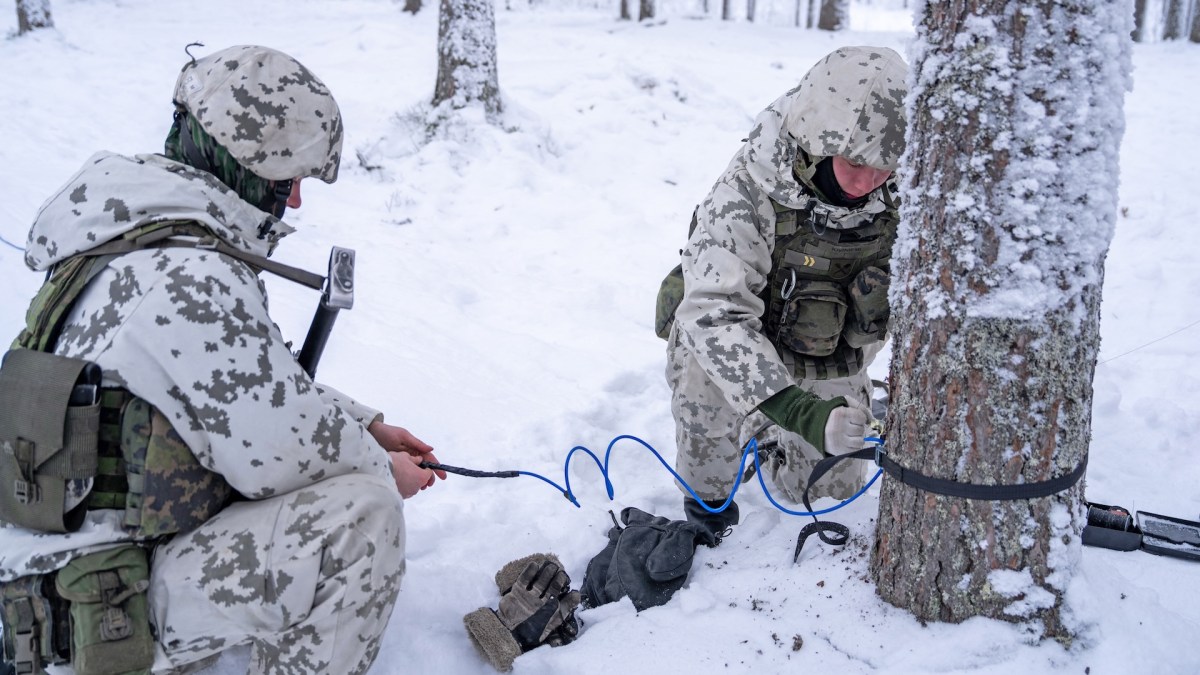
Two Finnish conscripts wearing winter camouflage uniforms walk through the snow-covered forest while installing anti-personnel mines during a media day event at the Kainuu Brigade, a Finnish Army unit in Kajaani, Finland, on February 3, 2026. Photo by Alessandro RAMPAZZO / AFP
Mines have, for many centuries, been used to complicate an attacker’s movement, slow operations, and force troops to devote time and resources to clearing obstacles. Anti-personnel mines, in particular, have long been employed in defensive campaigns, but they come with significant humanitarian risks. They can kill or maim civilians long after hostilities end, which has seen them fall foul of international humanitarian law in many countries — at least when those nations don’t see a realistic risk of invasion.
It is a measure of how badly the European security environment has deteriorated that anti-personnel mines are back on the agenda.
The Finnish Defense Forces previously said that discussions with the domestic defense industry and preparations to train military personnel would begin early this year. It has now announced that the project seeks two different types of anti-personnel mines, of Finnish manufacture.
The two weapons will comprise a modern tube mine activated by a tripwire trigger, and a pressure-activated step mine. In the future, more technically advanced mines may also be procured, including cluster-type mines of the kind deployed by Russia in Ukraine. In general, anti-personnel mines have been very widely used by both sides in that conflict, with Kyiv notably receiving them as part of U.S. air packages, as you can read about here . Neither the United States nor Russia are signatories of the Ottawa Convention.
A Russian MON-50 anti-personnel mine captured by the Armed Forces of Ukraine. Photo by Thierry Monasse/Getty Images
“The aim is for production of the new anti-personnel mines to begin in Finland in 2028,” said Col. Riku Mikkonen, inspector of engineers for the Finnish Army Command.
“We have a materials procurement project underway, which is currently in the preparatory and market review phase. At the same time, we are drawing up the technical specifications for the mines,” Mikkonen added. “We will soon move on to the stage where we issue requests for tenders, so that we can eventually proceed to a competitive tendering process and conclude contracts.”
Colonel Riku Mikkonen looks on during a media day event at the Kainuu Brigade in Kajaani, Finland on February 3, 2026. Photo by Alessandro RAMPAZZO / AFP
At this point, no contracts have been signed. However, once the procurement effort is underway, the Finnish Defense Forces are set to return their anti-personnel mine stockpile to what it was before acceding to the Ottawa Convention in 2012.
The first new mines and associated training equipment are expected to become available during 2027. Ultimately, all conscripts will be trained to employ anti-personnel mines. The total cost of the project is around $110 million, with the last of the mines scheduled to be delivered in the 2030s.
Helsinki has stressed that it does not intend to lay anti-personnel mines during peacetime. Mikkonen said the weapons would be used only under emergency conditions.
A Finnish soldier at Vuosanka near Kajaani during a major exercise on NATO’s border with Russia on December 3, 2025. Photo by Owen Humphreys/PA Images via Getty Images
Finland’s decision reflects a national defense philosophy that has long been shaped by direct experience with Soviet aggression. The Soviet Union invaded Finland in 1939, beginning the Winter War, and fought another conflict with the country from 1941 to 1944. Finland lost territory but preserved its independence, subsequently maintaining conscription, a large trained reserve, and a defense strategy built around making any invasion costly.
Russia’s full-scale invasion of Ukraine in 2022 reinforced Finnish concerns that major conventional warfare in Europe remained a realistic possibility. Finland joined NATO in April 2023, and the country shares a little over 800 miles of border with Russia.
Finland’s defensive approach traditionally emphasizes rapid mobilization to defend national territory and delay a much larger attacking force until reinforcements can arrive. The role of anti-personnel mines in that scenario is clear, being sown to slow down infantry movements and hamper advances through vulnerable areas. Their disproportionate effect, at least in theory, is especially relevant for a country with a relatively tiny population compared to the length of its border.
At the same time, anti-personnel mines would form only one part of a much broader defensive system incorporating artillery, airstrikes, engineering obstacles, fortifications, and reserve forces. It should be noted that Finland also has a considerable armory of anti-tank and anti-vehicle mines, most of which are of local manufacture.
Virginia Army National Guard soldiers train on multiple techniques for both the hasty and deliberate emplacement of anti-tank mines with trainers from the Finnish Army’s Karelia Brigade during Exercise Arctic Forge 25, on February 22, 2025, near Kouvola, Finland. U.S. Army National Guard photos by Staff Sgt. Marc Heaton
In general, Moscow has been restructuring its military command arrangements and starting to establish the foundations for a larger conventional presence across northern Europe.
In 2024, Russia reestablished the Leningrad Military District, an apparent response to Finland’s and Sweden’s subsequent entry into NATO.
The Leningrad Military District is responsible for a strategically important region that covers the approaches to St. Petersburg, areas bordering Finland, and territory extending toward the Arctic. Its reestablishment gives Russia a dedicated command structure for managing forces facing NATO across this northern sector.
Russian servicemen take part in a rehearsal for the Victory Day parade in downtown St. Petersburg on June 20, 2020. Photo by OLGA MALTSEVA/AFP via Getty Images
While significant, the creation of a military district does not necessarily generate additional combat power.
Russia’s war in Ukraine continues to drain resources in terms of personnel, equipment, logistics, and more.
Nevertheless, Moscow’s longer-term plans point toward a substantial expansion of its ground forces and military infrastructure in areas facing Finland and the wider NATO alliance.
A central element of Russia’s reorganization is the formation of the 44th Army Corps in the Republic of Karelia, near Finland’s eastern border. The corps was established in 2024 as part of the wider effort to strengthen Russia’s military presence in the northwest.
Russia’s wider military development also encompasses the Kola Peninsula and approaches to the Arctic, where facilities support the Northern Fleet and its strategic nuclear submarine force .
Satellite imagery last year showed construction at the Lupche-Savino garrison near Kandalaksha, including facilities intended to accommodate an artillery brigade and at least part of an engineering brigade. The location is approximately 70 miles east of Finland’s border.
Earlier this year, a separate report by the Finnish Yle media outlet found that the Russian military was expanding a base in the town of Novaya Vilga to hold as many as 6,000 Russian troops. It is located about 100 miles from the Finnish border.
Breaking News: Where exactly is Russia building its massive new military garrison? 🛰️ For the first time, a completely new base is going up behind Finland's eastern border, set to hold up to 6,000 soldiers. Take a look at the first satellite data: https://t.co/IuZerZRyeQ #russia pic.twitter.com/2UvQXheaAP — Mika Mäkeläinen (@Mikareport) June 10, 2026
Breaking News: Where exactly is Russia building its massive new military garrison? 🛰️ For the first time, a completely new base is going up behind Finland's eastern border, set to hold up to 6,000 soldiers. Take a look at the first satellite data: https://t.co/IuZerZRyeQ #russia pic.twitter.com/2UvQXheaAP
For Finland, the situation could change dramatically if the war in Ukraine winds down, and the Russian military assembles in greater strength closer to its borders.
Finland’s Military Intelligence Review 2026 assesses that Russia’s military reforms have not yet significantly increased its capabilities in its immediate vicinity. But it still anticipates a substantial increase in Russian military capabilities as circumstances permit and identifies Finland as a major direction for future force development after the war.
A ceasefire or settlement in Ukraine would not automatically enable Russia to launch a major offensive against Finland. A ceasefire could ease the immediate military pressure on Russia while still creating a serious economic and political challenge for the Kremlin. Russia’s wartime spending has sustained defense-sector production and employment, but winding that spending down risks exposing structural weaknesses.
With a ceasefire or settlement, Moscow would still need to rebuild units, replace equipment, replenish personnel, and establish the logistical capacity to sustain large-scale operations. However, there are indications that this is already happening, at least to a degree.
Recent imagery analysis indicates , for example, a significant buildup of newly delivered Russian armor, including new T-90M tanks, at the 22nd Central Tank Reserve Base, located around 450 miles from the Finnish border.
Mind you, the 22nd with T-90Ms, BTR-82As and BMP-3ms (and maybe BREMs) is just the latest storage depot beign refilled. There's also the 80th mainly with 2S19s and the 374th near the Finnish border with 2S43s and 2S44s since 2025… — Jompy (@Jonpy99) October 15, 2026
Mind you, the 22nd with T-90Ms, BTR-82As and BMP-3ms (and maybe BREMs) is just the latest storage depot beign refilled. There's also the 80th mainly with 2S19s and the 374th near the Finnish border with 2S43s and 2S44s since 2025…
Finland’s planned acquisition of anti-personnel mines fits into a broader effort to prepare for a potential future conflict. Prominent in the minds of Finnish — and other Nordic — defense planners is the fact that Russia is rebuilding the command structures and infrastructure needed to support a larger military presence near NATO’s northern frontier , even as the war in Ukraine limits its immediate ability to do so.
Contact the author: thomas@thewarzone.com
Comments couldn’t be loaded. Please refresh the page.
发布于美国东部时间2026年10月20日下午4:53
图片来源:Alessandro RAMPAZZO / AFP via Getty Images
北约成员国芬兰正准备重新在其军事武库中引入杀伤人员地雷,预计很快将签署一份约一百万枚地雷的合同。此前,芬兰退出了旨在消除此类武器的《渥太华公约》。此举正值赫尔辛基寻求加强其领土防御,以应对俄罗斯长期存在的威胁,以及未来几年俄罗斯在其东部边境可能扩大军事存在的风险。
芬兰退出禁止使用、储存、生产和转让杀伤人员地雷的条约,于今年1月10日生效。北约东翼成员国日益担忧俄罗斯的军事态势以及乌克兰战争的教训,波兰、立陶宛、拉脱维亚和爱沙尼亚也已采取行动退出该条约。
2026年2月3日,在芬兰卡亚尼的凯努旅(芬兰陆军部队)举行的媒体日活动中,两名身穿冬季迷彩服的芬兰新兵在白雪皑皑的森林中穿行,同时安装反步兵地雷。照片由Alessandro RAMPAZZO/法新社提供。
几个世纪以来,地雷一直被用来阻碍进攻方的行动,延缓其作战进程,并迫使部队耗费时间和资源清除障碍。特别是反步兵地雷,长期以来一直被用于防御作战,但它们也带来了严重的人道主义风险。即使敌对行动结束后很久,它们仍可能造成平民伤亡,因此在许多国家,它们违反了国际人道主义法——至少在这些国家认为不存在实际入侵风险的情况下是如此。
杀伤人员地雷再次被提上议程,这表明欧洲安全环境已经恶化到何种程度。
芬兰国防军此前曾表示,与国内国防工业的磋商以及军事人员培训准备工作将于今年年初启动。如今,芬兰国防军宣布,该项目旨在采购两种不同类型的芬兰制造的杀伤人员地雷。
这两种武器将包括一种由绊线触发的现代化管状地雷和一种压力触发式阶梯地雷。未来,可能还会采购技术更先进的地雷,包括俄罗斯在乌克兰部署的那种集束地雷。总的来说,冲突双方都广泛使用了杀伤人员地雷,值得注意的是,基辅方面还收到了美国空投的此类地雷,详情请见此处。美国和俄罗斯均未签署《渥太华公约》。
一枚由乌克兰武装部队缴获的俄制MON-50型反步兵地雷。图片来源:Thierry Monasse/Getty Images
芬兰陆军司令部工程师督察里库·米科宁上校表示:“我们的目标是让新型反步兵地雷于 2028 年在芬兰开始生产。”
“我们正在开展一个材料采购项目,目前正处于准备和市场调研阶段。与此同时,我们正在制定矿山的技术规范,”米科宁补充道。“我们很快就会进入发布招标邀请书的阶段,以便最终开展竞争性招标流程并签订合同。”
2026 年 2 月 3 日,里库·米科宁上校在芬兰卡亚尼凯努旅举行的媒体日活动中观看。照片由 Alessandro RAMPAZZO / 法新社拍摄
目前尚未签署任何合同。然而,一旦采购工作启动,芬兰国防军将把其杀伤人员地雷库存恢复到2012年加入《渥太华公约》之前的水平。
首批新型地雷及相关训练设备预计将于2027年交付使用。最终,所有应征入伍人员都将接受使用反步兵地雷的训练。该项目总成本约为1.1亿美元,最后一批地雷计划于2030年代交付。
赫尔辛基方面强调,和平时期不打算布设杀伤人员地雷。米科宁表示,这些武器只会在紧急情况下使用。
2025年12月3日,在北约与俄罗斯边境卡亚尼附近的沃桑卡,一名芬兰士兵正在参加一次大规模演习。照片由欧文·汉弗莱斯/PA Images via Getty Images提供。
芬兰的决定体现了其长期以来深受苏联侵略直接经验影响的国防理念。1939年,苏联入侵芬兰,发动了冬季战争;1941年至1944年,苏联又与芬兰爆发了另一场战争。芬兰虽然失去了部分领土,但保住了独立,此后一直实行征兵制,拥有一支训练有素的庞大后备力量,并制定了一套旨在使任何入侵都付出高昂代价的防御战略。
俄罗斯在2022年全面入侵乌克兰,加剧了芬兰的担忧,即欧洲爆发大规模常规战争仍然是一个现实的可能性。芬兰于2023年4月加入北约,该国与俄罗斯接壤,边界线略长于800英里。
芬兰的防御策略历来强调快速动员以保卫国土,并拖延规模更大的进攻部队,直至援军抵达。在这种情况下,反步兵地雷的作用显而易见,它们被埋设以减缓步兵行进速度,并阻碍敌军通过易受攻击的地区。至少在理论上,地雷的这种不成比例的效果对于芬兰这样一个人口相对较少、国土面积却很长的国家来说尤为重要。
与此同时,杀伤人员地雷只是一个更为庞大的防御体系的一部分,该体系还包括火炮、空袭、工程障碍、防御工事和预备役部队。值得注意的是,芬兰也拥有相当数量的反坦克地雷和反车辆地雷,其中大部分是芬兰本土制造的。
2025年2月22日,在芬兰科沃拉附近举行的“北极锻造25”演习中,弗吉尼亚州国民警卫队士兵在芬兰陆军卡累利阿旅教官的指导下,训练多种反坦克地雷的快速和谨慎布设技术。美国陆军国民警卫队照片,摄影:马克·希顿中士
总的来说,莫斯科一直在重组其军事指挥安排,并开始为在北欧建立更大规模的常规军事存在奠定基础。
2024年,俄罗斯重建了列宁格勒军区,这显然是对芬兰和瑞典随后加入北约的回应。
列宁格勒军区负责一个具有重要战略意义的区域,该区域涵盖通往圣彼得堡的要道、与芬兰接壤的地区以及延伸至北极的领土。其重建使俄罗斯拥有了一个专门的指挥机构,用于管理在该北部地区与北约对峙的部队。
2020年6月20日,俄罗斯军人在圣彼得堡市中心参加胜利日阅兵彩排。图片来源:OLGA MALTSEVA/AFP via Getty Images
虽然设立军事区意义重大,但这并不一定能产生额外的战斗力。
俄罗斯在乌克兰的战争持续消耗着人力、装备、后勤等方面的资源。
然而,莫斯科的长期计划表明,其地面部队和军事基础设施将在芬兰和更广泛的北约联盟对面的地区大幅扩张。
俄罗斯重组的核心内容之一是在靠近芬兰东部边境的卡累利阿共和国组建第44军。该军于2024年成立,是俄罗斯加强其在西北地区军事存在的更广泛努力的一部分。
俄罗斯更广泛的军事发展还包括科拉半岛和通往北极的通道,那里的设施为北方舰队及其战略核潜艇部队提供支持。
去年的卫星图像显示,坎达拉克沙附近的卢普切-萨维诺驻军正在进行建设,其中包括旨在容纳一个炮兵旅和至少部分工程旅的设施。该地点位于芬兰边境以东约70英里处。
今年早些时候,芬兰广播公司Yle的一份独立报告发现,俄罗斯军方正在扩建位于新维尔加镇的一个基地,该基地可容纳多达6000名俄罗斯士兵。该基地距离芬兰边境约100英里。
突发新闻:俄罗斯究竟在哪里建造其庞大的新军事基地?🛰️ 这是俄罗斯首次在芬兰东部边境附近建造一座全新的军事基地,预计可容纳多达6000名士兵。查看首批卫星数据:https://t.co/IuZerZRyeQ #russia pic.twitter.com/2UvQXheaAP — Mika Mäkeläinen (@Mikareport) June 10, 2026
突发新闻:俄罗斯究竟在哪里建造其庞大的新军事基地?🛰️ 这是俄罗斯首次在芬兰东部边境附近建造一座全新的军事基地,预计可容纳多达6000名士兵。查看首批卫星数据:https://t.co/IuZerZRyeQ #russia pic.twitter.com/2UvQXheaAP
对于芬兰来说,如果乌克兰战争逐渐平息,俄罗斯军队在其边境附近集结更多兵力,那么局势可能会发生巨大变化。
芬兰发布的《2026年军事情报评估报告》指出,俄罗斯的军事改革尚未显著提升其在周边地区的军事能力。但报告仍然预测,随着形势的允许,俄罗斯的军事能力将大幅提升,并指出芬兰是战后俄罗斯未来军事发展的重要方向之一。
乌克兰停火或达成协议并不会自动使俄罗斯能够对芬兰发动大规模进攻。停火可以缓解俄罗斯面临的直接军事压力,但同时也会给克里姆林宫带来严峻的经济和政治挑战。俄罗斯的战时开支维持了国防领域的生产和就业,但削减这些开支可能会暴露其结构性缺陷。
即使达成停火或和解,莫斯科仍然需要重建部队、更换装备、补充人员,并建立维持大规模军事行动所需的后勤保障能力。然而,有迹象表明,这种情况至少在一定程度上已经出现。
例如,最近的图像分析表明,在距离芬兰边境约 450 英里的第 22 中央坦克储备基地,大量新交付的俄罗斯装甲车辆,包括新型 T-90M 坦克,正在集结。
请注意,拥有T-90M、BTR-82A和BMP-3M(可能还有BREM)的第22个弹药库只是最新一个正在补充弹药的仓库。此外,还有主要装备2S19的第80个弹药库,以及自2025年以来位于芬兰边境附近、装备2S43和2S44的第374个弹药库…… — Jompy (@Jonpy99) 2026年10月15日
请注意,拥有T-90M、BTR-82A和BMP-3M(可能还有BREM)的第22弹药库只是最新一个正在补充弹药的仓库。此外,还有主要装备2S19的第80弹药库,以及自2025年以来位于芬兰边境附近、装备2S43和2S44的第374弹药库……
芬兰计划采购杀伤人员地雷,这是其为应对未来潜在冲突而采取的更广泛举措的一部分。芬兰以及其他北欧国家的国防规划者都非常关注这样一个事实:尽管乌克兰战争限制了俄罗斯近期在北约北部边境附近部署更大规模军事力量的能力,但俄罗斯仍在重建指挥结构和基础设施,以支持其在北约北部边境附近更大规模的军事存在。
联系作者:thomas@thewarzone.com
评论加载失败,请刷新页面。