F-15 Eagle Pilot Explains Exactly How He Downed Three Migs During Two WarsF-15“鹰”式战斗机飞行员详细讲述了他在两次战争中击落三架米格战机的经过
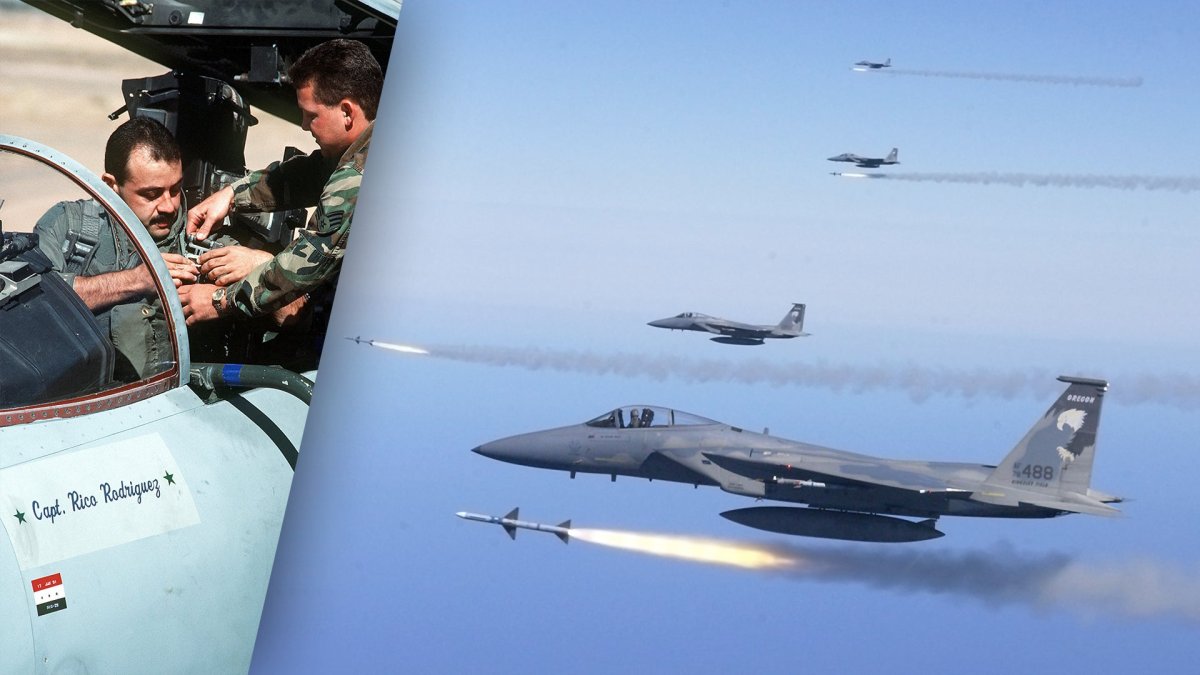
Cesar “Rico” Rodriguez gives a remarkable account of how he brought down three enemy fighters, two during Desert Storm and one during Allied Force.
Updated Nov 27, 2020 6:35 PM EST
Retired U.S. Air Force F-15C Eagle pilot Colonel Cesar “Rico” Rodriguez has an incredible story to tell. In his 26-year service career, he played important roles in two major air wars. Remarkably, it’s almost 30 years since “Rico,” who still goes by his Air Force callsign, first sat in the cockpit of his McDonnell Douglas F-15 Eagle ready to go to war on a sweltering night in Tabuk, Saudi Arabia. Operation Desert Storm was the first chapter in his incredible story. “Rico” and his fellow Eagle “drivers” etched one of the most fearsome reputations in combat aviation as an invincible band of lethal airborne enemy aircraft slayers. Of the 32 air-to-air kills by Eagles of that war, two were his.
He was part of the 58th Tactical Fighter Squadron (TFS), and strapped to his jet were four live AIM-7M Sparrow radar-guided air-to-air missiles and four shorter-range AIM-9M Sidewinders. Eight years later he would fly another fully armed F-15 into combat, this time with new weapons and upgraded systems, in the skies over Kosovo as part of Operation Allied Force. Here he would notch up his third kill.
Today, he recounts his extraordinary experiences in the cockpit of the Eagle to help new recruits understand the importance of training and striving for excellence. It was what prepared him when he went into combat at very short notice. Rodriguez and his fellow Eagle pilots knew instinctively what to do, a fact that he emphasized in his exclusive interview with The War Zone .
The path to the Eagle cockpit
Speaking from his office in Tucson, Arizona, “Rico” tells us how he always dreamed of flying F-15 Eagles, but that he was still honored to initially be awarded a place on a Basic Course learning how to fly the A-10 Thunderbolt II . “I got to fly some very complex and demanding missions as an A-10 pilot in Korea for two years. I had almost 900 hours of “Hog” flying in that time — which is pretty amazing.”
When he subsequently went back to Holloman Air Force Base in New Mexico as an instructor for lead-in fighter training, he did so with an eye on the prize of an F-15 cockpit. “I started to add more air-to-air backseat rides in the T-38 during CT [Continuation Training] with former F-15 pilots and we could fly against F-15s from the squadron across the street at Holloman. It really helped me to build my three-dimensional situational awareness picture of the air-to-air mission using my eyes and ears. It helped me immensely when I eventually got selected to go to Tyndall [Air Force Base, Florida] to start a short F-15 transition course.”
“The F-15C is a very complex weapons system. I was able to employ the training I’d already established, but now as a young F-15 pilot,” he continued. “When you start to apply the intricacies of HOTAS [Hands-On Throttle And Stick] controls and the physical demands of flying a jet without a G limiter, plus adding the visual feed of the radar and the audio lead of the radar warning receiver, then you can start understanding how to max-perform the Eagle.”
An F-15C pilot eases back from a tanker during a mission in the Middle East., U.S. Air Force/MSgt Larry Reid Jr.
“Rico” completed Eagle school and joined the 58th TFS, the “Gorillas,” at Eglin Air Force Base, Florida, in 1989. He then began working through his Mission Qualification Training. This is the process junior pilots must work through on an operational unit to progress from being a wingman, through two-ship lead, four-ship lead, and ultimately become a mission commander.
“Little by little I started to feel more comfortable in the jet,” he says. When “Rico” arrived at the 58th TFS, the squadron commander Lieutenant Colonel Francis “Paco” Geisler had assembled an impressive team that was stacked with weapons officers and a huge amount of collective experience. “We had a very strong squadron, both in terms of hours and capability. It included Captains John ‘JB’ Kelk, Rick ‘Kluso’ Tollini, and Robert ‘Cheese’ Graeter. The mindset was that we were going to be the baddest guys in the air — it was never a cakewalk.”
In the summer of 1990, Rodriguez led a detachment to Gulfport, Mississippi, in support of some Missouri Air National Guard F-4E Phantom IIs that were on their squadron’s “fini” deployment before transitioning to the Eagle. “We had eight jets and a full maintenance contingent there for a week. It was the final day and we did an 8-v-16 air-to-air mission — it was their take on World War Three! We did everything to give them a chance to see what the F-15 could do and that last day was full-up beyond visual range — all the handcuffs were off!”
“When we landed we had planned one heck of a party, but the crew chiefs came over to my jet and said they’d received word from Eglin that we weren’t to party. As a matter of fact, we had to pack our bags and get back home that evening.”
“They put the tanks back on the jets and we left for Eglin, taking off into the approaching sunset.”
“We all flew straight-in approaches, and as I rolled down the runway I looked right and could see huge activity all over our flight line — I’d never seen it so alive in my life. It was wall-to-wall F-15s armed with live [AIM-7] Sparrows and AIM-9M [Sidewinders].”
“Once we got to the squadron building we were told that we’d been put on deployment orders. The CO said: “We don’t have a date yet, but go home and put yourselves into crew rest.”
A pair of 33rd Tactical Fighter Wing F-15Cs fly with a Royal Saudi Air Force F-5E during Operation Desert Shield., U.S. Air Force/SrA Chris Putnam
On Aug. 2, 1990, Saddam Hussein’s Iraq invaded Kuwait. U.S. President George H. W. Bush ordered ground, sea, and air forces to Southwest Asia to stabilize the region and persuade Saddam to withdraw his invasion force. For “Rico” and the rest of the 58th TFS, it was a tense time. “We sat tight and did a lot of mission study plus briefings relative to the Iraqi air order of battle and GBAD [Ground-Based Air Defenses]. We were tweaking our tactics based on the threat intel we had.”
“Paco” Geisler had turned the “Gorillas” over to Lieutenant Colonel William “Tonic” Thiel — but not before he’d assembled a team that was fully prepared and ready to go to war.
Heading to Saudi Arabia
Thiel was notified shortly after the Iraqi invasion of Kuwait that his squadron was tasked to deploy and he was ready to send 769 personnel and 24 F-15C Eagles. “Rico” picks up the story:
“They informed us there would be two Eagle squadrons deploying; us and F-15s from Langley [Air Force Base, Virginia]. When we planned the deployment a big hurricane was building in the Atlantic Ocean, which meant the northern route around Greenland and the United Kingdom was out for us. So they built a huge tanker bridge literally right around the Equator so we could go the long way to Saudi Arabia. There were several spots on that bridge where if we couldn’t take gas from the tanker, the only option was to bail-out near a boat in the Atlantic.”
A lot of that Atlantic crossing involved flying in bad weather. As we hit the eastern Atlantic we refueled over the Strait of Gibraltar, staring straight at the rising sun. Our last tanker bracket was over Egypt and from there we headed into Saudi Arabia.
An F-15C pilot from the 58th Tactical Fighter Squadron inspects an AIM-9M prior to launching from Eglin AFB at the start of Operation Desert Shield., U.S. Air Force/SSgt Taylor
It was late August, and really hot when we landed. From the time I strapped into the jet at Eglin until I got out in Tabuk it was about 22 hours — it was one of those days that never ended, people had to be literally craned out of the cockpits.
We put birds on alert within 48 hours of arriving and were manning alert CAPs [Combat Air Patrols] and undertaking a couple of ATOs [Air Tasking Orders]. Initially, it wasn’t 24/7 CAPs; we flew when some kind of high-value asset was in the air. It took a little while before we set up round-the-clock ops around the AOR [Area Of Responsibility]. We saw the Iraqis launch [MiG-25] Foxbats and they were our main concern in the Desert Shield phase ahead of the main Operation Desert Storm. They executed their launch profiles really nicely. If we didn’t exercise “Grinder” tactics properly we wouldn’t be at the right altitude to take a shot at them — we might need to turn before the Iraqi border.
“Grinder” involved us having one group of F-15s “hot” [radar pointing at the target] and one group “cold” [flying away from the target]. We had to grind ourselves back far enough, with enough distance, so that when it looked there was a true commit from them across the border, we could jettison our tanks and climb into the high 50s [nearly 60,000 feet] and have a high enough Mach number to launch our AIM-7s. It took time for us to talk to the E-3 AWACS to help us get to the right shoot box should the opportunity present itself.
Flying as two-ships and four-ships presented one of the true lessons of Desert Storm — pairing up your teams. It was a myth that we had more than enough pilots, we didn’t, but we needed experience in the teams. By pairing us up in combat it gave us the flexibility to fly whatever schedule was given to us. Once the war kicked off, all the wingmen were at least two-ship flight lead, so they could become number three if required.
An F-15C down low over the desert carrying live AIM-7 Sparrows and AIM-9M Sidewinders., U.S. Air Force
Only on one occasion did we break up our pairs. The four-ship meant we could fly any mission — Offensive Counter Air [OCA] and Defensive Counter Air [DCA] and if we were on the ground, one could act as the SOF [Supervisor Of Flying], one could sit “Top Three” — on the ops desk — and the other two could help with the mission planning cell.”
Eagles into the storm
At midnight on Jan. 17, 1991, the assembled Eagles both at Tabuk, and the jets from Langley at Dhahran, Saudi Arabia, joined forces on the first night of Operation Desert Storm with a surprise attack over Baghdad. Their mission was to clear the skies of Iraqi fighters over the capital and open a “lane” for the strike force.
The first wave of missions saw Captain “JB” Kelk from the “Gorillas” claim the first aerial “kill” of the war for the Eglin Eagles, downing a MiG-29 Fulcrum with an AIM-7 Sparrow. That same night, Captain Rhory “Hoser” Draeger and U.S. Marine Corps exchange officer Captain Charles “Sly” Magill took out a pair of MiG-29s near Baghdad before Captain “Cheese” Graeter then claimed two Dassault Mirage F1s.
F-15Cs from the 1st Tactical Fighter Wing deployed to Dhahran, Saudi Arabia., U.S. Air Force
“Rico” takes up the story:
“I flew the very last mission of Desert Shield before we moved into Desert Storm. We got a couple of hours of sleep and came in to fly a couple of DCA missions on day one. On Jan. 19, again I was on DCA in the western sector [flying F-15C 85-0114], protecting the high-value assets in what was known as HVACAP, but then me and my wingman Captain Craig “Mole” Underhill were switched to OCA. A strike package was supposed to be supported by the Langleys, but they had to weather-cancel. So they scrambled F-15s from Tabuk to be the OCA four-ship, led by Rick Tollini. The mission commander said to leave a two-ship DCA in the CAP and take two DCA birds forward to become the post-strike OCA for the strike package. “Mole” and I went to the tanker, got on the frequency with Rick, and his four-ship for the final briefing from the mission commander — it was a push.
We were on the tanker still pressing north when Tollini and his flight engaged a variety of threats. They ended up getting two “kills” in the early stage of the push. They ended up jettisoning their external fuel tanks, which meant they no longer had enough gas to get to the target area and then come home. So, the mission commander committed the group forward with “Mole” and I at the tail-end to climb up and start building a radar picture in front of the strike package — taking the role of lead OCA.
As we built that radar picture we had one unknown contact extremely far in the north and west. Then eventually we developed a second contact northeast and east, which was the closest to us and originated out of the Baghdad area. As we were proceeding forward on track we handed over the western contacts to our AWACS controller to monitor, we were going to put our radars into the eastern group. As we started to commit on that group, elements of our strike package were starting to hit their targets. The eastern group came at us in what we call a Res [resolution] Cell, meaning we couldn’t break them out at the long-range with our radar.
Eventually, we could see it was a two-ship, slightly echelon formation, to the north-northwest, and as we got close they went from close to a tactical formation. Then, low and behold they executed the tactic that all of our Red Flag exercise debriefs had told us about. There were known blind zones in our mechanically-scanned radar and these guys went into the notch at exactly the right range, so we lost our locks on them for a while. As they started to “drag” [give the impression they were leaving the engagement], we picked them up again. We were now inside the Sparrow WEZ [Weapon Engagement Zone], but if we were going to take a shot we were going to have to follow them for a long time [to support guidance of the missile]. The MiGs went into a “beam” maneuver [perpendicular to our track] and held it for what felt like 15 secs, then turned and “dragged” again. They weren’t in afterburner, and we were coming out of high altitude, so we could have easily run them down. Meanwhile, the last striker called “Millertime,” meaning he was going to drop, so OCA was technically no longer required.
An F-15C drops away from the tanker during a Combat Air Patrol during Desert Storm., U.S. Air Force
Just as I was about to call for “Mole” and I to abort, we got a radio call from the AWACS who said: “Citgo, pop-up contacts 330 for 8.” That was the bearing and range off of my jet, which put them in the 9-9:30 clock position for me. It was outside my radar field-of-view so I snapped to heading 330 — I don’t remember reaching down and jettisoning my fuel tanks, but I did.
As I turned my jet was immediately enveloped in vapor around the wings. “Mole” saw this and my fuel tanks flying off, and he initially thought that I’d been hit. I rolled out on 330 with my auto guns system on and boom, I got a lock right at eight miles. Very quickly I started to do an identification “matrix” on the threat [to find out what it was]. However, I immediately knew that this was not going to be valid because we had rules of engagement that required anything inside of 10 miles to be visually identified. The rules were written like this due to our ability with the radar in certain scenarios to “see” the F-117 Nighthawk . In hindsight, the way you write that is: when you are operating with an F-117, or at night in conjunction with an F-117, if you have a lock inside of 10 miles you have to identify it. It was re-written the next day.
Even when the fighter gave me a hostile lock it still wasn’t sufficient grounds to take a shot based on the ROE. I started thinking defensively, talking to “Mole” to get him to do his “matrix.” He was outside of 10 miles and could, therefore, meet the full intent, plus he had augmentation from an RC-135 Rivet Joint electronic warfare aircraft, which helped him out. I came out of 30,000 feet, rolled the airplane inverted and pointed my nose at the ground, dispensing chaff to decoy the threat away me, and my main aim was to get below his radar field of view and into the ground clutter.
As I passed through 5,000 feet I became concerned about hitting the ground, so I leveled off under 1,000 feet. I could see his lock on my RWR. [I found out later that between the Rivet Joint and my electronic warfare that his radar was being jammed appropriately and as a result he couldn’t employ any of his weapons against me]. When “Mole” finished up and got confirmation of the target being hostile, he took a shot.
I looked over my left shoulder and saw his Sparrow come off the jet and pull towards my high six o’clock. It stopped burning and I was straining to see the target. The smoke trail from his missile was a bit like a pointer. I took the trailing edge and followed it, and there I found the MiG-29, about three miles off my right wing. “Mole’s” missile hit him smack in his face and it turned the aircraft into what looked like a huge sparkler in the sky under the high noon sun. I called “splash one,” and as I did the AWACS came back: “second group north 10.”
We had a couple of options. The AWACS was notoriously about three miles off in their range estimations. So it could have been 13 miles or seven miles. We could have turned south and never seen the contact, but we decided to turn north. “Mole” was up in the high 20s and I was down very low. We would force the fighter to commit to one of us. As it turned out he didn’t lock either of us and on seeing him it allowed me to do a vertical lead turn on him from low to high to visually confirm him as hostile.
There were times it looked like an F-15, times it looked like an F/A-18, and it wasn’t until I passed about 50 feet off of his left wing that I was able to confirm it was a brown and green MiG-29 with the Iraqi flag on the fins. I started to gain some angles on him and the dogfight ensued. First merge I had angles on him. The next time at the 180-degree point of the circle I’d gained 90 degrees of angles on him, but I didn’t have a clear shot.
The engagement started at 8,000 feet and it was coming downhill fast. By the time I got my closure rate under control on the outside of the circle I was then coming back to the inside to get a sweet shot. He was at about 400 feet and I was 600-700 feet above the desert. I pulled to the inside of the circle to put my ASE [Aeronautic Steering Engagement] on him. That’s the aiming section for the AIM-7. There’s a dot in the HUD [Head-Up Display] and if you put the dot inside the ASE, you had a valid shot. I was still about 1,400 feet behind the MiG, but I wasn’t thinking about using the gun. He suddenly rolled inverted from 300 feet and started a Split-S maneuver, and of course, that wasn’t going to work for him. He hit the desert floor and ended up tumbling in a big fireball.
This Iraqi MiG-29 was destroyed on the ground during Operation Desert Storm., U.S. Air Force/SSgt Jose Otero
I got back together with “Mole” and we headed back to the tanker. Unbeknown to me, when my body reaches a level of adrenaline in a life and death situation I go into a severe series of tremors and shakes. So when we came out of this fight and got on the tanker to get some gas I thought it was time to start relaxing. I suddenly started to feel significant vibrations, and at first, I thought it was something wrong with the jet. I let go of the stick and grabbed the towel racks [hand grab rails on the canopy arch] and the jet leveled off and all was fine. It felt like forever, but was probably only a minute or so of serious convulsions going through my body. I didn’t think anything of it and certainly didn’t tell the flight doc!
As we were coming home I said to “Mole” that I thought it was the right time to do a low approach, kick in the burners and do an aileron roll. As it turned out, we got a pretty good ass-chewing from our wing commander for that hot-dogging. Back on the flight line I remember my crew chief wondering how I had managed to get a “kill” with all my missiles still on the jet!
We debriefed as a pair with the intel team and the mission planning cell for the report that went to CENTCOM [U.S. Central Command] and we were back flying the very next day. Celebration wasn’t really part of the calculation. We didn’t really see each other from the other four-ships. After “JB” and “Cheese” got their “kills” on night one, I don’t remember seeing them for almost a week. We used to say we operated on “leadership by sticky notes.” That’s how any congratulations were communicated — via a note stuck to our flight gear in life support.”
Over the next few days, “Rico” and his associated four-ship flew a mixture of planned and alert scramble missions. He takes up the story:
“Typically we were flying two or three times a day. If you were on alert, you tried to get a little sleep. Generally, the flow was to get between four and six hours of sleep in between each working day. On Jan. 26, I was flying “114” again and that day it was really only the F-15Cs and the high-value assets like the AWACS that were up — the weather was terrible. That day was the first time I’d changed my wingman. Our formation was led by Captain Rhory Draeger, with Captain Tony “Kimo” Schiavi, myself as number three and my wingman was Captain Bruce “Roto” Till.
We were way up north of Baghdad when we got a radio call that there was activity in the area of H2 Air Base, which was way out to the west. Rhory re-formed us in the traditional “Wall-of-Eagles.” We were very high, and I thought we’d never see anything that we’d be able to shoot at, but our AN/APG-63 radar had no problem “seeing” through the weather, and we could fire AIM-7s through the clouds as well.
Rodriguez straps into F-15C 85-0114 at Tabuk with his first MiG-29 “kill” already painted under his name., U.S. Air Force/TSgt Fernando Serna
About 25 miles from where we’d calculated the merge would take place we saw a huge sucker hole in the clouds and could see the ground. We all dived through it and came out at around 15,000 feet. We continued to dive down to around 10,000 feet while tracking the Iraqi fighters that were flying a very low level at about 400 knots, navigating along a major highway in a Vic formation [one aircraft leading, with one on either side in echelon]. As soon as we came through the clouds I could see through my target detection (TD) box in the HUD a small dot that little by little built into the silhouette of a MiG-23 Flogger.
We “sorted” the target group in F-15 standard procedure, which means the flight lead takes the enemy leader, the number two takes the northern contact and I took the southern guy, while the number four pilot searched around us [for any other contacts]. We were completing our ID “matrix” when we received information from the AWACS that a U.K. Special Operations guy out in the desert had earlier visually confirmed three MiG-23s were moving on the flight line at H2. He’d passed the information to the E-3 crew with the proper authentication — so we had a human intelligence, as well as our own electronic identification. We also found out later, via the special ops guy, that one of the MiG pilots was a cousin of Saddam Hussein.
With the targets confirmed, Rhory took his shot and I saw the missile come off the rail and quickly accelerate down toward the desert floor. It leveled off at around 50 feet — the same altitude as the MiGs. “Kimo” fired his Sparrow and then I fired mine. The first missile appeared to pass the lead MiG, but soon it became apparent that it had flown close enough to do some kind of damage as the jet started turning and trailing smoke, before catching fire. Rhory pulled off to the north and uncaged a Sidewinder ready to hit him again, but as he did the MiG blew up.
An AIM-7 Sparrow streaks away from an F-15., U.S. Air Force/TSgt Michael Ammons
In the meantime, the two Iraqi wingmen checked south and in doing so heated up the intercept with our missiles. Nearly simultaneously both missiles hit their respective targets and both MiGs crashed either side of the highway in two huge fireballs.
I suspect the MiGs never knew we were there until the leader was hit. They had flown a comms-out launch and were using the road to navigate their way to Baghdad to get fuel before continuing onwards to Iran, where a lot of Iraq’s fighter aircraft had fled.
This intercept continues to be used in the training environment as what people call “the classic.” We used minimum communication, we had near-perfect radar synchronization in the four-ship for sorting and targeting the MiGs. People who have heard the [cockpit recorder] tapes always ask how Rhory and I remained so calm as we got ready to shoot missiles? I tell them that there’s a certain calmness there because we’d both been there before — for both Rhory and I these were our second kills.”
Rodriguez says that as the war progressed, the F-15C’s prowess led to more pilots becoming keen to put their training into practice and claim more aerial victories. It was what he called “MiG-itis.” Overall the 58th TFS claimed 16 aerial victories in Operation Desert Storm, more than any other unit. With 32 overall “kills,” the F-15C had proved its ability to surgically target and eliminate the enemy fighters with impunity.
Col Rick Parsons was the commander of the 33rd Tactical Fighter Wing during Desert Storm and he claimed a “kill” on February 7, 1991., U.S. Air Force/Don S. Montgomery
The third “kill” — Operation Allied Force
NATO launched Operation Allied Force in 1999 in response to Serbian President Slobodan Milosevic’s campaign of “ethnic cleansing” of Kosovar Albanians. Although NATO Secretary-General Javier Solana did not authorize airstrikes against Serbia until Jan. 30, the USAF had already worked up several potential air campaigns.
When it was finally decided, Allied Force was to be an operation designed to force Milosevic’s withdrawal from Kosovo. With the use of ground troops rejected by NATO, an air campaign was designed to focus on the Serbian air defense systems and otherwise employ strikes against Serbian military targets.
The first attacks of the campaign began on the night of Mar. 24, 1999, as aircraft from 13 member countries, including U.S. Air Force B-52s and B-2s, launched the initial phase of attacks under what the U.S. military called Operation Noble Anvil. “Rico” takes up the story.
An F-15C from the 493rd Fighter Squadron takes on fuel at night during Operation Allied Force., U.S. Air Force
“I was by now a Lieutenant Colonel as the 48th Fighter Wing’s Chief of Safety, and flew F-15Cs with the resident 493rd Fighter Squadron, the “Grim Reapers.” We deployed as the only F-15C squadron to support the operation. We didn’t have the airplanes or the manpower to truly support all the ATOs [Air Tasking Orders] that were being contemplated for Allied Force, so it was literally a case of needing to get everyone downrange.
The wing commander deployed me as Chief of Safety and as a mission commander, and four-ship flight leader. We took jets from our home base at RAF Lakenheath, U.K. to Cervia Air Base, Italy, and we also had jets deployed to Turkey that we moved a couple of weeks before the war was projected to kick off to give us a complement of 22 Eagles.
In the latter stages of Desert Storm, the 58th TFS had been the first unit to receive the new AIM-120 Advanced Medium-Range Air-to-Air Missile [AMRAAM]. It had been on the drawing board and we’d trained some tactics before the war. Compared to the standard of the jets that we flew in Desert Storm, the F-15C had moved on significantly. Post-Desert Storm we had worked with industry and requested some upgrades. Now we all had AMRAAM, plus some changes to the cockpit because we found that we were flying some really long missions. That included things like improving the HOTAS to avoid having to reach around the cockpit too much, but we still didn’t have a data-link or Night Vision Goggles.
Once settled in Italy, we started flying Initially in the DCA role, but that eventually evolved into full-up combat operations. We generally had three main areas of operations. One in the north along the Hungarian border. One in the center abeam the capital Belgrade, and one to the south where all the atrocities were taking place and where most of the strikers were going. So there we were tasked to maintain open flight lanes for them.
An F-15C from the 493rd Fighter Squadron flies alongside a MiG-29 from the Slovak Air Force., U.S. Air Force/TSgt Brad Fallin
Serbian air activity was sporadic, but it indicated to us that we were dealing with a far more mature threat than we had seen in Iraq, especially with the Integrated Air Defense Systems [IADS] they were employing. You might be on CAP in an area you thought didn’t have an IADS, then all of a sudden your RWR would light up like a Christmas tree and you’d have a different Surface-to-Air-Missile [SAM] indication in every quadrant!
For the opening night of the campaign, I was in F-15C 86-0169, which we called “The Love Machine.” As we got to our jets at Cervia, our intelligence officer came out to provide us with an updated Electronic Order of Battle. It included details of two MiG-29s that been seen in Belgrade, but were no longer there.
From a tactical perspective, it didn’t change our planning — we were prepared to fight a highly maneuverable target set with an all-aspect radar and infra-red-guided missile. But it was great situational awareness for us because the general thinking was that the Serbian MiG-29s were only interested in protecting the capital.
We launched across the Mediterranean and hooked a left turn up the Adriatic. The flight lead and his number two were on the western side, with me and my wingman to the east. Our plan was to get to our point of protection near Montenegro and set up an east-to-west corridor for the strikers to start going in. It also coincided that it in a straight line from our lane was the town of Pristina, where Slatina Air Base had underground storage for aircraft.
I was flying from south to north and I could see between the mountain peaks an occasional radar blip for a contact that was moving northbound, but I could never lock it up. The aircraft seemed to be hiding in the mountains while trying to build some situational awareness with his ground-controlled intercept operator so they could snap him onto a vector to go against the leading edge of the strike package we were protecting. Once he started to climb above the ridgeline at around 11,000 feet, he became a clear target.
I locked him up at about 50 miles from me. I tried to engage my AWACS controller, but he was a little perplexed and not quite as prepared as he should have been. He was asking more questions than he was providing answers. As I was monitoring and tracking it, it came to a point where it was no longer in our best interests to let this guy go unchallenged. I’d done everything an F-15 could do to positively identify the target, and I was 99.9% sure it was a MiG-29 and that it had come out of Slatina, but the current rules of engagement specified that the AWACS had a vote in the identification “matrix.” When it became clear he couldn’t get his vote to me in time, I took the shot.
The AMRAAM shot was beyond 35 miles, and about the time I took it, my wingman started to get locked-up by SAMs in the area, so I cleared him off to the west. The missile appeared to be guiding well and I didn’t feel I needed to take a second shot. As it was counting down in the HUD with five seconds until impact I got my eyes on the bearing and range of the threat and began to move away from the SAMs — by now some of the indications I had in my cockpit indicated full lock and I was sure they were getting really close to shooting some missiles at me.
Sure enough, the timer indicated zero and to the split second the fireball ensued at about 15 miles in my two o’clock position. It was a dark night and it was like they’d suddenly turned all the lights on in a row of stadiums at once, with the explosion reflected against the snow-covered mountains.
Having downed a MiG-29, Rodriguez then supported B-2s in a strike on Serbian positions., U.S. Air Force/MSgt Matthew Plew
The MiG-29 “splash” occurred about seven minutes into our 50-minute VUL. We also had a follow-on 20-minute VUL to protect a flight of B-2s that were coming in from the south. Once all the strikers exiting the area, we were the last to leave.”
The 493rd FS notched up four “kills” during Allied Force, with Captain Mike Shower claiming a MiG-29 as it got airborne from Batajnica Air Base on the opening night, followed by Captain Jeff Hwang who claimed a double MiG-29 “kill” on Mar. 26.
Rodriguez subsequently moved to Headquarters, Air Combat Command, and was then promoted to full Colonel, moving to Mountain Home Air Force Base, Idaho, to become the deputy Operations Group Commander. He retired from the USAF in 2003 after 26 years, having accumulated some 1,700 flight hours in the F-15. He has worked for Raytheon since 2006 and is now the Vice President for Global Requirements and Capability in the Middle East for Raytheon Missiles and Defence.
The two “kill’ markings are still proudly carried on F-15C 85-0114, which is now assigned to the 44th Fighter Squadron., U.S. Air Force/SrA Giovanni Sims
His incredible combat record makes him one of only three post-Vietnam triple “MiG-killers,” and the only one of these to have claimed them in two separate campaigns. He concludes:
“Being a fighter pilot is still the most dangerous profession in the world. When you’re in that zone as a young Captain with 300 hours under your belt, you truly feel like you are a part of that jet. Seeing ‘114’ still on operations , currently deployed to the Middle East as part of the 44th Fighter Squadron out of Kadena Air Base, Japan, she looks like the same bird on the outside, but internally she is very different.
F-15Cs today fly with a new Active Electronically Scanned Array [AESA] radar, a Fighter Data-Link, and the Sniper Advanced Targeting Pod to allow them to visually identify targets at long-range. Her maintenance team is taking great care of her.
Back then and to this day, the F-15C is what I call a ‘badass machine’ that can own the sky with the right training and maintenance supporting her.”
Contact the author: jamie@thedrive.com
Comments couldn’t be loaded. Please refresh the page.
更新于美国东部时间2020年11月27日下午6:35
美国空军退役F-15C“鹰”式战斗机飞行员塞萨尔·“里科”·罗德里格斯上校有着一段令人难以置信的故事。在他26年的服役生涯中,他参与了两场重大空战,并扮演了重要角色。令人惊叹的是,距离“里科”(他至今仍使用空军呼号)第一次坐进麦克唐纳·道格拉斯F-15“鹰”式战斗机的座舱,准备在沙特阿拉伯塔布克一个闷热的夜晚投入战斗,已经过去了近30年。“沙漠风暴”行动是他传奇故事的第一章。“里科”和他的战友们驾驶着“鹰”式战斗机,在空战航空史上留下了令人闻风丧胆的印记,他们是一群所向披靡的空中杀手。在那场战争中,“鹰”式战斗机共击落32架敌机,其中两架就是他击落的。
他隶属于第58战术战斗机中队(TFS),他的战机上挂载着四枚实弹AIM-7M“麻雀”雷达制导空空导弹和四枚射程更短的AIM-9M“响尾蛇”导弹。八年后,他驾驶着另一架满载武器的F-15战机,这次配备了新型武器和升级系统,在科索沃上空参与了“盟军行动”。在那里,他取得了第三次击落敌机的战果。
如今,他讲述自己在鹰式战斗机驾驶舱内的非凡经历,旨在帮助新兵理解训练和追求卓越的重要性。正是这些经历让他能够在接到紧急任务后迅速投入战斗。罗德里格斯和他的鹰式战斗机战友们凭着本能就知道该怎么做,这一点他在接受《战区》独家专访时也强调过。
通往鹰式战斗机驾驶舱的路
“里科”在亚利桑那州图森市的办公室接受采访时告诉我们,他一直梦想驾驶F-15鹰式战斗机,但最初能获得A-10雷电II攻击机基础飞行课程的名额,他仍然感到非常荣幸。“作为一名A-10飞行员,我在韩国执行了两年非常复杂且要求极高的任务。在那段时间里,我的‘猪’(A-10的昵称)飞行时间接近900小时——这真是太棒了。”
后来,他回到新墨西哥州的霍洛曼空军基地担任战斗机飞行员入门训练教官,心中始终怀揣着驾驶F-15战斗机的梦想。“在继续训练期间,我开始增加乘坐T-38教练机进行空对空后座飞行训练的机会,与一些前F-15飞行员一起,我们可以与霍洛曼基地街对面中队的F-15战机进行对抗飞行。这极大地帮助我运用眼耳构建了空对空作战的三维态势感知图。这对我最终被选中前往佛罗里达州廷德尔空军基地参加F-15短期过渡课程起到了至关重要的作用。”
“F-15C 是一款非常复杂的武器系统。我能够运用之前积累的训练经验,但现在作为一名年轻的 F-15 飞行员,”他继续说道,“当你开始掌握 HOTAS(手不离杆操纵系统)的复杂操作,以及驾驶没有过载限制器的喷气式飞机所面临的身体挑战,再加上雷达的视觉信息和雷达告警接收器的音频信号,你才能真正理解如何最大限度地发挥‘鹰’式战斗机的性能。”
一名F-15C飞行员在中东执行任务期间从加油机上缓缓降落。(美国空军/中士拉里·里德二世摄)
“里科”完成鹰级飞行员学校的训练后,于1989年加入驻扎在佛罗里达州埃格林空军基地的第58战术战斗机中队(绰号“大猩猩”)。随后,他开始接受任务资格训练。这是初级飞行员在作战部队中必须经历的过程,从僚机飞行员逐步晋升为双机编队指挥官、四机编队指挥官,最终成为任务指挥官。
“我渐渐地开始适应喷气式飞机了,”他说。当“里科”抵达第58战术战斗机中队时,中队长弗朗西斯·“帕科”·盖斯勒中校组建了一支实力雄厚的队伍,其中不乏武器专家,且拥有丰富的集体经验。“我们中队实力非常强劲,无论从飞行小时数还是作战能力来看都是如此。队员包括约翰·“JB”·凯尔克上尉、里克·“克鲁索”·托利尼上尉和罗伯特·“奶酪”·格雷特上尉。我们的目标是成为空中最强悍的战友——但这绝非易事。”
1990年夏天,罗德里格斯率领一支分遣队前往密西西比州格尔夫波特,支援密苏里州空中国民警卫队的一些F-4E“鬼怪II”战斗机。这些飞机当时正处于该中队换装F-15“鹰”式战斗机前的最后一次部署。“我们派出了八架战机和一支完整的维护队伍在那里待了一周。最后一天,我们进行了一次8对16的空对空演习——这简直就是他们眼中的第三次世界大战!我们竭尽所能让他们见识F-15的威力,最后一天更是进行了超视距空战——我们彻底放开了手脚!”
“我们着陆后原本计划好好庆祝一番,但机组长们来到我的飞机旁,说他们接到埃格林空军基地的通知,不让我们开派对。事实上,我们当晚就得收拾行李回家了。”
“他们把油箱装回喷气式飞机上,然后我们就飞往埃格林空军基地,迎着渐近的夕阳起飞了。”
“我们都采用了直线进近,当我滑行到跑道上时,我向右看去,看到整个飞行线上一片繁忙景象——我这辈子都没见过这么热闹的景象。到处都是装备了实弹[AIM-7]麻雀导弹和AIM-9M[响尾蛇导弹]的F-15战斗机。”
“我们到达中队大楼后,被告知已被下达部署命令。指挥官说:‘我们还没有确定日期,但你们先回家休息吧。’”
在“沙漠盾牌行动”期间,两架美国空军第33战术战斗机联队的F-15C战斗机与一架沙特皇家空军的F-5E战斗机一同飞行。(美国空军/高级空军士兵克里斯·普特南摄)
1990年8月2日,萨达姆·侯赛因的伊拉克入侵科威特。美国总统乔治·H·W·布什下令向西南亚派遣陆海空三军,以稳定该地区局势并劝说萨达姆撤回入侵部队。对于“里科”和第58战术战斗机中队的其他成员来说,那是一段紧张的时期。“我们严阵以待,做了大量的任务研究,并听取了关于伊拉克空军作战序列和地面防空系统(GBAD)的简报。我们根据掌握的威胁情报不断调整战术。”
“帕科”盖斯勒将“大猩猩”部队移交给了威廉“托尼克”蒂尔中校——但在此之前,他已经组建了一支准备充分、随时可以投入战斗的队伍。
前往沙特阿拉伯
伊拉克入侵科威特后不久,蒂尔就接到通知,他的中队奉命部署,他已准备好派出769名人员和24架F-15C“鹰”式战斗机。“里科”接着讲述了这个故事:
“他们通知我们将会有两个鹰式战斗机中队部署;一个是我们,另一个是来自弗吉尼亚州兰利空军基地的F-15战斗机中队。当我们计划部署时,大西洋上正在形成一场大型飓风,这意味着绕过格陵兰岛和英国的北部航线对我们来说行不通了。所以他们在赤道附近架设了一座巨大的油轮桥,这样我们就可以绕远路飞往沙特阿拉伯。这座桥上有好几个地方,如果我们无法从油轮上补充燃料,唯一的选择就是在大西洋上找艘船跳伞。”
横跨大西洋的航程中,我们大部分时间都在恶劣天气下飞行。进入东大西洋后,我们在直布罗陀海峡上空加油,当时正对着冉冉升起的太阳。我们最后一次加油是在埃及上空,之后我们飞往沙特阿拉伯。
在“沙漠盾牌行动”开始时,美国空军第58战术战斗机中队的一名F-15C飞行员在埃格林空军基地发射AIM-9M导弹前进行检查。(美国空军/泰勒中士)
当时是八月下旬,我们降落时天气非常炎热。从我在埃格林空军基地系好安全带坐进飞机到在塔布克下飞机,大约花了22个小时——那一天仿佛永无止境,人们不得不被吊车从驾驶舱里吊出来。
抵达后48小时内,我们就让所有飞机进入警戒状态,并投入战斗空中巡逻(CAP)任务,同时执行了几项空中任务指令(ATO)。最初,我们并非全天候执行战斗空中巡逻任务;只有在空中出现高价值目标时,我们才会出动。我们花了一段时间才在责任区(AOR)周围建立起全天候作战能力。我们看到伊拉克人起飞了米格-25“狐蝠”战斗机,在“沙漠盾牌”行动阶段,也就是“沙漠风暴”行动开始之前,它们是我们的主要威胁。它们的起飞编队非常精准。如果我们没有正确运用“研磨机”战术,我们就无法达到合适的攻击高度——我们可能需要在伊拉克边境之前就转向。
“磨机”战术是指我们派出一组F-15战机处于“热”状态(雷达指向目标),另一组处于“冷”状态(远离目标)。我们必须磨机后撤足够远的距离,这样当敌方真正发起攻击时,我们就可以抛弃副油箱,爬升到50英尺(近6万英尺)的高度,获得足够的马赫数来发射AIM-7导弹。我们还需要花时间与E-3预警机进行沟通,以便在机会出现时能够快速找到合适的射击位置。
双机编队和四机编队飞行展现了“沙漠风暴”行动的一大真谛——团队协作的重要性。认为我们飞行员数量绰绰有余的说法纯属无稽之谈,事实并非如此,我们需要的是经验丰富的团队。通过在战斗中将我们两两编队,我们能够灵活地执行任何既定的飞行计划。战争爆发后,所有僚机飞行员至少都具备双机编队飞行队长的资格,因此必要时他们可以担任三号机长。
一架F-15C战斗机低空飞越沙漠,携带实弹AIM-7“麻雀”和AIM-9M“响尾蛇”导弹。(美国空军)
我们只有一次拆散了两人一组的搭档。四架飞机意味着我们可以执行任何任务——进攻性空中反击[OCA]和防御性空中反击[DCA],如果我们在地面,一人可以担任飞行主管[SOF],一人可以坐在“前三名”——作战指挥台——另外两人可以协助任务规划小组的工作。
老鹰飞入风暴
1991年1月17日午夜,在“沙漠风暴”行动的第一夜,驻扎在塔布克的“鹰”式战斗机和来自沙特阿拉伯达兰兰利空军基地的战机汇合,对巴格达发动了突袭。他们的任务是清除首都上空的伊拉克武装分子,为打击部队开辟一条“通道”。
在第一波任务中,“大猩猩”中队的“JB”凯尔克上尉为埃格林空军基地的“鹰”式战斗机取得了战争中的首次空战战果,他用一枚AIM-7“麻雀”导弹击落了一架米格-29“支点”战斗机。当晚,罗里·“霍瑟”·德雷格上尉和美国海军陆战队交换军官查尔斯·“斯莱”·马吉尔上尉在巴格达附近击落了两架米格-29战斗机,随后“奶酪”·格雷特上尉又击落了两架达索幻影F1战斗机。
美国空军第一战术战斗机联队的F-15C战斗机部署至沙特阿拉伯达兰。
《里科》接续了这个故事:
“在沙漠风暴行动开始前,我执行了沙漠盾牌行动的最后一次任务。我们睡了几个小时,第一天就飞了几次空中支援任务。1月19日,我又一次在西部战区执行空中支援任务(驾驶F-15C 85-0114),负责保护被称为HVACAP的高价值资产。但随后我和我的僚机克雷格·“鼹鼠”·安德希尔上尉被调去执行空中支援任务。原本兰利基地应该支援一个打击编队,但由于天气原因取消了任务。于是他们从塔布克紧急起飞F-15战机组成四机空中支援编队,由里克·托利尼率领。任务指挥官指示在空中支援编队中保留两架战机,然后派出两架战机作为打击编队的后续空中支援编队。“鼹鼠”和我上了加油机,和里克以及他的四机编队通过无线电进行了最后一次任务简报——推一下。
我们当时还在加油机上继续向北推进,这时托利尼和他的飞行小队遭遇了各种威胁。在推进初期,他们就击落了两架敌机。之后,他们不得不抛弃外部油箱,这意味着他们没有足够的燃料飞到目标区域并返回基地。于是,任务指挥官命令小队向前推进,我和“鼹鼠”则在队伍末尾,爬升到高空,开始在攻击编队前方建立雷达图像——我担任了领头作战指挥员的角色。
在构建雷达图像的过程中,我们在极北偏西方向发现了一个未知目标。随后,我们在东北偏东方向发现了第二个目标,这个目标距离我们最近,来自巴格达地区。我们继续沿航线前进,并将西侧目标的监视任务移交给预警机管制员,同时准备将雷达部署到东侧目标群。当我们开始集中火力攻击该目标群时,我们的打击编队开始命中目标。东侧目标群以我们称之为“分辨率单元”(Res Cell)的形式向我们袭来,这意味着我们的雷达无法在远距离上将其分辨出来。
最终,我们看到对方是两架战机,呈略微梯形的编队,位于西北偏北方向。随着我们靠近,他们从近距离编队转变为战术编队。然后,不出所料,他们执行了我们在“红旗”军演所有汇报中都提到的战术。我们的机械扫描雷达存在已知的盲区,而这两架战机恰好在合适的距离进入了盲区,因此我们一度失去了对他们的锁定。当他们开始“拖行”(看起来像是要脱离交战)时,我们又重新锁定了他们。此时我们已经进入了“麻雀”导弹的武器交战区,但如果我们要发射导弹,就必须长时间跟踪他们(以辅助导弹制导)。米格战机进行了一次“横扫”(垂直于我们的航迹)机动,并保持了大约15秒,然后转向并再次“拖行”。他们当时没有开启加力燃烧室,而我们正从高空下降,所以我们本来可以轻易地击落他们。与此同时,最后一架攻击机呼叫了“米勒时间”,这意味着他要跳伞了,因此从技术上讲,不再需要使用机载空气控制(OCA)了。
在“沙漠风暴”行动期间的一次战斗空中巡逻中,一架F-15C战斗机脱离了加油机。(美国空军)
正当我准备呼叫“鼹鼠”和我中止任务时,我们收到了预警机的无线电呼叫:“Citgo,发现330方向的弹出目标,距离8点。” 那是我飞机的方位和距离,对我来说,他们大概在9点到9点半的位置。他们超出了我的雷达视野,所以我迅速转向330方向——我不记得自己是否伸手抛弃了副油箱,但我确实这么做了。
我转弯时,我的喷气式飞机机翼周围立刻被蒸汽笼罩。“鼹鼠”看到了这一幕,我的副油箱也飞了出去,他一开始以为我被击中了。我打开自动机炮系统,以330度角滑行,砰的一声,我在八英里处锁定了一个目标。我迅速开始对威胁目标进行识别,以确定它的身份。然而,我立刻意识到这样做行不通,因为我们的交战规则规定,任何在十英里以内的目标都必须进行目视识别。之所以这样规定,是因为在某些情况下,我们的雷达能够“看到”F-117“夜鹰”战斗机。事后看来,规则应该这样表述:当你与F-117协同作战,或者在夜间与F-117协同作战时,如果你在十英里以内锁定了一个目标,你就必须对其进行识别。第二天,规则就被修改了。
即使敌机锁定了我,根据交战规则,这仍然不足以构成开火的理由。我开始采取防御策略,与“鼹鼠”通话,让他执行“矩阵”操作。他当时距离我10英里以外,因此能够完全执行目标指示,而且他还得到了RC-135“铆钉联合”电子战飞机的支援。我下降到3万英尺的高度,翻转飞机,机头朝下,释放箔条干扰以迷惑敌机,我的主要目标是进入敌机的雷达视野范围之外,并融入地面杂波中。
当我飞越5000英尺高度时,我开始担心会撞地,于是将高度降至1000英尺以下。我能看到他锁定了我的雷达告警接收机(RWR)。[后来我才知道,由于“铆钉接头”系统和我的电子战系统,他的雷达受到了有效的干扰,因此他无法对我使用任何武器]。当“鼹鼠”完成任务并确认目标是敌方后,他开火了。
我回头看了一眼左肩,看到他的麻雀导弹从喷气式飞机上脱落,朝我六点钟方向飞来。它停止燃烧,我努力辨认目标。他导弹留下的烟迹有点像个指针。我顺着烟迹的后缘追踪,终于找到了那架米格-29,它离我的右翼大约三英里。“鼹鼠”的导弹正中目标,在正午的阳光下,那架飞机就像天空中一个巨大的烟火。我喊道“溅射一号”,就在这时,预警机回复道:“第二大队,北10号。”
我们当时有几个选择。预警机的测距出了名的不准,误差通常在三英里左右。所以实际距离可能是十三英里,也可能是七英里。我们本来可以向南飞,但那样可能永远也看不到目标,不过我们决定向北飞。“鼹鼠”当时在二十几英里的高度,而我则飞得很低。这样可以迫使敌机锁定我们其中一人。结果证明,他并没有锁定我们中的任何一人,而当我看到他时,我得以从低空到高空进行垂直转向,从而目视确认他是敌机。
有时它看起来像F-15,有时又像F/A-18,直到我飞到距离它左翼大约50英尺的地方,才确认它是一架棕绿色涂装、尾翼上印有伊拉克国旗的米格-29。我开始逐渐拉近与它的距离,空战随即展开。第一次交锋时,我掌握了它的角度。第二次交锋,在圆周运动的180度角处,我获得了90度的角度,但仍然没有清晰的射击角度。
交战始于8000英尺高空,而且很快就进入了下坡状态。当我控制好在圆圈外的接近速度后,我又回到了圆圈内,准备进行一次漂亮的射击。当时他的高度大约在400英尺,而我则在沙漠上方600到700英尺处。我拉到圆圈内,准备使用ASE(航空转向瞄准)瞄准他。ASE是AIM-7导弹的瞄准区域。HUD(抬头显示器)上会有一个点,如果这个点落在ASE范围内,就说明可以进行有效射击。我当时仍然落后米格大约1400英尺,但我并没有打算使用机炮。他突然从300英尺的高度翻滚倒飞,并开始进行Split-S机动,当然,这对他来说并不奏效。他坠落在沙漠地面上,最终化作一团巨大的火球翻滚而下。
这架伊拉克米格-29战斗机在“沙漠风暴”行动期间被地面摧毁。(美国空军/中士何塞·奥特罗)
我和“鼹鼠”重新会合,然后我们返回了加油机。我当时并不知道,在生死攸关的时刻,肾上腺素飙升时,我的身体会剧烈颤抖。所以,当我们结束这场搏斗,登上加油机准备加油时,我以为是时候放松一下了。突然,我感到剧烈的震动,起初我以为是飞机出了问题。我松开操纵杆,抓住座舱盖上的扶手,飞机随即平稳下来,一切恢复正常。感觉好像过了很久,但实际上可能只是一分钟左右剧烈的抽搐。我当时没在意,当然也没告诉飞行医生!
返航途中,我对“鼹鼠”说,我觉得是时候低空进近,打开加力燃烧室,再来个副翼滚转了。结果,我们因为这番炫技被联队长狠狠训了一顿。回到停机坪后,我记得我的机务长很纳闷,我飞机上还挂着那么多导弹,是怎么“击落”敌机的!
我们两人一组,与情报小组和任务规划小组进行了汇报,这份报告随后提交给了中央司令部(美国中央司令部)。第二天我们就又飞了回去。我们根本没心思庆祝。其他四架飞机上的飞行员我们几乎都没怎么见面。“JB”和“Cheese”在第一晚就“击落”了目标之后,我记得差不多一个星期都没见到他们。我们以前常说,我们的运作方式是“用便利贴来领导”。所有祝贺都是通过这种方式传达的——把纸条贴在生命维持系统的飞行装备上。
接下来的几天里,“里科”和他的四架战机执行了计划内和紧急起飞的混合任务。他接着讲述了事情的经过:
“通常我们一天要飞两到三次。如果处于警戒状态,就得尽量挤出一点时间睡觉。一般来说,每天工作之间要睡四到六个小时。1月26日,我又一次驾驶“114”号机,那天只有F-15C和像预警机这样的高价值装备在执勤——天气非常糟糕。那天是我第一次更换僚机。我们的编队由罗里·德雷格上尉领队,托尼·“基莫”·斯基亚维上尉,我排在第三位,我的僚机是布鲁斯·“罗托”·蒂尔上尉。”
我们当时在巴格达以北很远的地方,突然接到无线电呼叫,说H2空军基地附近有动静,那个基地在更西边。罗里让我们重新列队成传统的“雄鹰队形”。我们当时飞得很高,我以为根本看不到任何可以射击的目标,但我们的AN/APG-63雷达穿透了厚厚的云层,毫无障碍,我们甚至能透过云层发射AIM-7导弹。
罗德里格斯在塔布克空军基地登上F-15C 85-0114战斗机,他击落的第一架米格-29战机的“战果”已在他名字下方喷涂完毕。(美国空军/技术军士费尔南多·塞尔纳摄)
距离我们预估的汇合地点大约25英里时,我们看到云层中出现了一个巨大的空洞,可以看到地面。我们全机俯冲穿过,出来时高度大约在15000英尺。我们继续下降到大约10000英尺,同时追踪着那些以大约400节的速度在一条主要公路上以V字形编队(一架飞机领头,两侧各一架飞机呈梯队排列)低空飞行的伊拉克战斗机。我们刚一穿过云层,我就透过平视显示器(HUD)上的目标探测框(TD)看到一个小点,它逐渐显现出一架米格-23“鞭挞者”战斗机的轮廓。
我们按照F-15的标准程序对目标群进行了“分类”,这意味着领队负责盯防敌方首领,二号机负责盯防北面目标,我负责盯防南面目标,而四号机飞行员则在我们周围搜索其他目标。我们正在完成目标识别“矩阵”时,从预警机那里收到消息,一名在沙漠中的英国特种作战人员早些时候目视确认了三架米格-23战斗机正在H2机场的跑道上移动。他已将信息通过适当的身份验证传递给了E-3预警机机组——因此我们既有人力情报,也有我们自己的电子识别信息。后来,我们还从那位特种作战人员那里得知,其中一名米格飞行员是萨达姆·侯赛因的表亲。
目标确认后,罗里发射了导弹,我看到导弹脱离轨道,迅速加速坠向沙漠地面。它在大约50英尺的高度保持水平飞行——与米格战机的高度相同。“基莫”发射了他的麻雀导弹,然后我也发射了我的。第一枚导弹似乎越过了领头的米格战机,但很快我们就发现它飞得足够近,足以造成某种损伤,因为那架喷气式飞机开始转弯并拖着浓烟,然后起火了。罗里向北转向,并放出一枚响尾蛇导弹准备再次攻击,但就在这时,米格战机爆炸了。
一枚AIM-7“麻雀”导弹从一架F-15战斗机旁疾驰而去。(美国空军/技术军士迈克尔·阿蒙斯摄)
与此同时,两架伊拉克僚机向南侦察,此举加剧了我方导弹的拦截。几乎同时,两枚导弹击中了各自的目标,两架米格战机坠毁在公路两侧,化作两团巨大的火球。
我怀疑米格战机直到领头机被击中才发现我们的存在。他们执行了一次通信中断任务,正利用这条公路前往巴格达加油,然后再继续飞往伊朗,伊拉克的许多战斗机都逃到了那里。
这次拦截行动至今仍被用作训练中的“经典案例”。我们尽量减少通信,四架飞机的雷达同步近乎完美,便于对米格战机进行定位和瞄准。听过座舱录音的人总是问我,我和罗里在准备发射导弹时为何如此冷静?我告诉他们,那种冷静源于我们俩都经历过类似的情况——对我和罗里来说,这都是我们的第二次击落战机。
罗德里格斯说,随着战争的推进,F-15C的卓越性能促使更多飞行员渴望将训练成果付诸实践,取得更多空战胜利。他称之为“米格狂热症”。在“沙漠风暴”行动中,第58战术战斗机中队共取得16次空战胜利,超过其他任何部队。F-15C总共击落32架敌机,证明了其精准打击并无懈可击的能力。
里克·帕森斯上校是“沙漠风暴”行动期间第33战术战斗机联队的指挥官,他声称于1991年2月7日击落了一架敌机。(美国空军/唐·S·蒙哥马利摄)
第三次“击杀”——盟军行动
1999年,北约发起“盟军行动”,以回应塞尔维亚总统斯洛博丹·米洛舍维奇对科索沃阿尔巴尼亚人的“种族清洗”行动。尽管北约秘书长哈维尔·索拉纳直到1月30日才授权对塞尔维亚进行空袭,但美国空军此前已制定了数项潜在的空袭计划。
最终确定后,“盟军行动”旨在迫使米洛舍维奇从科索沃撤军。由于北约拒绝使用地面部队,因此设计了一场空袭行动,重点打击塞尔维亚的防空系统,并对塞尔维亚的军事目标进行其他打击。
这场军事行动的首次袭击始于1999年3月24日晚,来自13个成员国的飞机,包括美国空军的B-52和B-2轰炸机,发动了美军称之为“高贵铁砧行动”的第一阶段袭击。《里科》讲述了这段故事。
美国空军第493战斗机中队的一架F-15C战斗机在“盟军行动”期间夜间加油。
“那时我已经是第48战斗机联队的安全主管,军衔是中校,驾驶F-15C战斗机,隶属于驻扎在那里的第493战斗机中队,绰号‘死神’。我们是唯一一支部署到战区的F-15C中队,负责支援这次行动。我们没有足够的飞机和人力来真正支持盟军正在考虑的所有空中任务指令(ATO),所以当时的情况就是必须尽快把所有人都派到前线。”
联队指挥官指派我担任安全主管、任务指挥官和四机编队飞行队长。我们从位于英国莱肯希思皇家空军基地的母港起飞战机前往意大利切尔维亚空军基地,同时我们还向土耳其部署了部分战机,在预计战争爆发前几周就完成了部署,使我们拥有了22架“鹰”式战斗机。
在“沙漠风暴”行动后期,第58战术战斗机中队是第一个接收新型AIM-120先进中程空空导弹(AMRAAM)的部队。这种导弹在战前就已经在研发阶段,我们也进行了一些战术训练。与我们在“沙漠风暴”行动中使用的战机相比,F-15C的性能有了显著提升。“沙漠风暴”行动结束后,我们与工业界合作,申请了一些升级。现在我们所有战机都配备了AMRAAM导弹,同时由于我们发现经常执行超长任务,座舱也进行了一些改进。这些改进包括改进HOTAS操纵系统,以避免操作人员频繁地在座舱内移动手臂,但我们仍然没有配备数据链和夜视镜。
在意大利安顿下来后,我们开始执行飞行任务。最初是负责防空任务,但后来逐渐演变为全面作战行动。我们通常有三个主要作战区域:北部沿匈牙利边境;中部靠近首都贝尔格莱德;以及南部,那里是所有暴行的发生地,也是大多数袭击者的目的地。因此,我们的任务是为他们保持畅通的飞行航线。
美国空军第493战斗机中队的一架F-15C战斗机与斯洛伐克空军的一架米格-29战斗机并排飞行。(美国空军/技术军士布拉德·法林摄)
塞尔维亚的空中活动虽然零星,但这表明我们面临的威胁比在伊拉克遇到的要成熟得多,尤其是他们使用的综合防空系统(IADS)。你可能正在一个你认为没有IADS的区域执行空中巡逻任务,然后突然间你的雷达告警接收器(RWR)像圣诞树一样亮了起来,每个象限都出现了不同的地对空导弹(SAM)警报!
战役首夜,我驾驶的是F-15C 86-0169,我们管它叫“爱情机器”。抵达切尔维亚机场后,我们的情报官出来给我们提供了一份最新的电子作战序列。序列中包含了之前在贝尔格莱德出现的两架米格-29的详细信息,但后来发现它们已经不在了。
从战术角度来看,这并没有改变我们的计划——我们早已准备好用全方位雷达和红外制导导弹打击高机动性目标。但这极大地提升了我们的态势感知能力,因为普遍认为塞尔维亚的米格-29战斗机只对保卫首都感兴趣。
我们飞越地中海,然后左转进入亚得里亚海。长机和副机在西侧,我和我的僚机在东侧。我们的计划是抵达黑山附近的掩体,建立一条东西走向的通道,供攻击机发起进攻。巧合的是,从我们的航线直线飞向普里什蒂纳市,那里有斯拉蒂纳空军基地的地下飞机库。
我当时正从南向北飞行,偶尔能在山峰间看到雷达屏幕上出现一个向北移动的目标,但我始终无法锁定它。那架飞机似乎藏身于山中,试图与地面拦截操作员建立一些态势感知,以便他们能迅速调整方向,攻击我们正在保护的打击编队的前沿。当他爬升到大约11000英尺(约3350米)的高度,越过山脊线时,就成了一个清晰的目标。
我在距离他大约50英里处锁定了他。我试图联系我的预警机指挥官,但他似乎有些困惑,准备也不够充分。他问的问题比给出的答案还多。随着我不断监控和追踪,情况逐渐变得不容乐观,我们不能再放任他逍遥法外了。我已经尽我所能,用F-15战斗机所能做的一切来准确识别目标,并且有99.9%的把握确定那是一架米格-29,而且是从斯拉蒂纳空军基地起飞的。但是,现行的交战规则规定,预警机在目标识别“矩阵”中拥有投票权。当预警机无法及时将投票权传递给我时,我扣动了扳机。
AMRAAM导弹的射程超过35英里,就在我发射导弹的同时,我的僚机开始被该区域的地空导弹锁定,所以我让他向西撤离。导弹的制导似乎很顺利,我觉得没必要再发射一次。当HUD上显示距离命中还有五秒时,我迅速观察了威胁的方位和距离,并开始远离地空导弹——此时,座舱内的一些指示显示目标已被完全锁定,我确信他们正在向我发射导弹。
果然,计时器归零,就在那一刻,大约15英里外,也就是我两点钟方向的位置,出现了一团火球。那是一个漆黑的夜晚,就像一排体育场的灯光突然同时亮起,爆炸的光芒映照在白雪皑皑的山峦上。
罗德里格斯击落一架米格-29战斗机后,支援B-2轰炸机对塞尔维亚阵地进行打击。(美国空军/中士马修·普卢)
米格-29的“突袭”发生在我们50分钟的垂直警戒飞行(VUL)开始大约7分钟后。之后我们又进行了一次20分钟的垂直警戒飞行,以保护从南方飞来的B-2轰炸机编队。所有攻击机撤离后,我们是最后离开的。
第 493 战斗机中队在“盟军”演习期间取得了四次“击落”战果,其中迈克·肖尔上尉在首演之夜击落了一架从巴塔伊尼察空军基地起飞的米格-29,随后杰夫·黄上尉在 3 月 26 日击落了两架米格-29。
罗德里格斯随后调任空战司令部总部,之后晋升为上校,并调往爱达荷州芒廷霍姆空军基地担任作战大队副指挥官。他在空军服役26年后于2003年退役,累计驾驶F-15战斗机飞行约1700小时。自2006年起,他一直在雷神公司工作,现任雷神导弹与防御公司中东地区全球需求与能力副总裁。
这两枚“击落”标志仍然骄傲地保留在F-15C 85-0114战斗机上,该机现隶属于第44战斗机中队。(美国空军/高级空军士兵乔瓦尼·西姆斯)
他惊人的战斗记录使他成为越战后仅有的三位击落三架米格战机的“三连击”飞行员之一,也是其中唯一一位在两次不同的战役中都取得过这一成就的飞行员。他总结道:
“战斗机飞行员仍然是世界上最危险的职业。当你作为一名年轻的机长,飞行时间达到300小时时,你会真正感受到自己与那架战机融为一体。看到‘114’号战机仍在执行任务,目前作为驻扎在日本嘉手纳空军基地的第44战斗机中队的一员部署在中东,她外表看起来和以前一样,但内在却截然不同。”
如今的F-15C战斗机配备了新型有源相控阵雷达(AESA)、战斗机数据链和“狙击手”先进瞄准吊舱,使其能够远距离目视识别目标。她的维护团队对她呵护有加。
无论过去还是现在,F-15C 都是我所说的“超级战机”,只要有正确的训练和维护,它就能称霸天空。
联系作者:jamie@thedrive.com
评论加载失败,请刷新页面。