US blockade of Iran will be major military endeavor, experts say专家称,美国对伊朗的封锁将是一项重大的军事行动。
The U.S. military has not offered basic details yet about the blockade, including how many U.S. warships will enforce it.
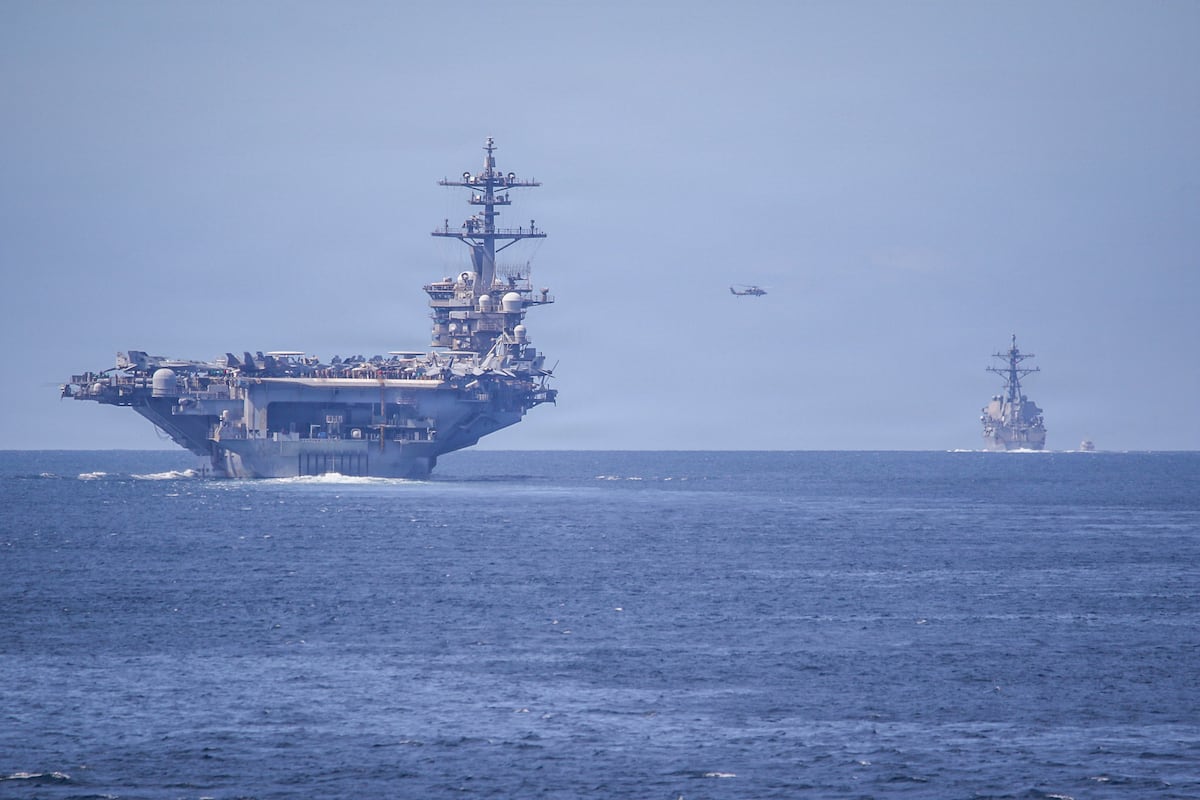
A U.S. naval blockade of Iran is a major, open-ended military endeavor that could trigger fresh retaliation from Tehran and put tremendous strain on an already fragile ceasefire , experts say.
President Donald Trump , in a social media post after no deal emerged from peace talks this weekend in Islamabad , said the U.S. Navy “will begin the process of BLOCKADING any and all Ships trying to enter, or leave, the Strait of Hormuz .”
The U.S. military’s Central Command later said the blockade will only apply to ships going to or from Iran, including all Iranian ports on the Arabian Gulf and Gulf of Oman. It will take effect on Monday at 10 a.m. in Washington, CENTCOM said.
Trump also said U.S. forces would interdict vessels that have paid tolls to Iran, even if those ships are now in international waters.
“No one who pays an illegal toll will have safe passage on the high seas,” Trump wrote on Truth Social.
The ultimate goal, Trump said, would be to pressure Iran to end its effective closure of the strait, a choke point for about 20% of the world’s oil, to all but the countries that secure safe passage from Tehran.
If Trump’s strategy succeeds, he would eliminate Iran’s greatest point of leverage in negotiations with the United States and clear the strait again for global trade, potentially lowering oil prices. But a blockade, experts say, is an act of war that requires an open-ended commitment of a significant number of warships.
“Trump wants a quick fix. The reality is, this mission is difficult to execute alone and likely unsustainable over the medium to long-term,” said Dana Stroul, a former senior Pentagon official during the Biden administration now at The Washington Institute for Near East Policy.
The U.S. military has not offered basic details yet about the blockade, including how many U.S. warships will enforce it, whether warplanes will be used and whether any Gulf allies will assist in the effort. Central Command declined to respond to requests for comment.
With enough warships, the U.S. Navy could set up a blockade that intimidates many commercial tankers from trying to power through with Iranian oil, experts say.
Cargo ships in the Gulf, near the Strait of Hormuz, as seen from the UAE, March 11, 2026. (Reuters)
But would the United States be prepared to board and seize — or even damage or sink — ships that try to break the blockade? What if they carry oil for China, a major power, or U.S. partners such as India or South Korea?
And what would Iran do? Retired Adm. Gary Roughead, a former chief of U.S. naval operations, cautioned that Iran could fire on ships in the Gulf or attack infrastructure of the Gulf states that host U.S. forces.
“I honestly believe that if we begin to do it, that Iran will have some kind of a reaction,” Roughead said.
Iran’s threats to shipping have caused global oil prices to skyrocket about 50% since the U.S. and Israel launched the war on Feb. 28.
Trump said on Sunday that the price of oil and gasoline may remain high in the United States through November’s U.S. midterm elections, which could see Trump’s Republicans lose control of the U.S. Congress if there is a public backlash. The war has already been unpopular.
Frustrated by Iran’s refusal to end the war on his terms, Trump on Sunday also floated the possibility of a resumption of U.S. strikes inside Iran, citing missile factories as one possibility.
U.S. Senator Mark Warner of Virginia, the ranking Democrat on the Senate Intelligence Committee, questioned the strategy, noting Iran could send speedboats to mine the strait or put bombs against tankers.
“How is that going to ever bring down gas prices?” Warner asked on CBS’s “Face the Nation.”
Thousands of U.S. military strikes have severely weakened Iran’s military. But analysts say Tehran has emerged from the conflict as a vexing problem for Washington, with a more hardline leadership and a buried stockpile of highly enriched uranium.
Trump threatened on Sunday that “any Iranian who fires at us, or at peaceful vessels, will be BLOWN TO HELL!”
Iran’s Revolutionary Guards responded with a statement warning that military vessels approaching the strait will be considered a ceasefire breach and dealt with harshly and decisively, underlining the risk of a dangerous escalation.
Stroul said the crisis will require a long-term, international effort to resolve.
“Over the long run, this will need to be resolved through diplomacy and international political will,” she said.
专家表示,美国对伊朗的海上封锁是一项重大且没有结束日期的军事行动,可能会引发德黑兰新的报复行动,并给本已脆弱的停火协议带来巨大压力。
在伊斯兰堡周末举行的和平谈判未能达成协议后,美国总统唐纳德·特朗普在社交媒体上发帖称,美国海军“将开始封锁任何试图进入或离开霍尔木兹海峡的船只”。
美国中央司令部随后表示,封锁仅适用于往返伊朗的船只,包括阿拉伯湾和阿曼湾的所有伊朗港口。中央司令部称,封锁将于周一上午10点(华盛顿时间)生效。
特朗普还表示,即使船只目前位于国际水域,美国军队也会拦截向伊朗缴纳过路费的船只。
“任何支付非法通行费的人都无法在公海上安全通行,”特朗普在 Truth Social 上写道。
特朗普表示,最终目标是向伊朗施压,迫使其结束对霍尔木兹海峡的实际封锁。霍尔木兹海峡是全球约 20% 石油的咽喉要道,除那些确保从德黑兰安全通行的国家外,其他所有国家都无法通过。
如果特朗普的策略成功,他将消除伊朗在与美国谈判中最大的筹码,并重新开放霍尔木兹海峡,促进全球贸易,从而有可能降低油价。但专家指出,封锁是一种战争行为,需要大量军舰长期驻守。
“特朗普想要快速解决问题。但现实是,这项任务很难独自完成,而且从中长期来看也难以持续,”拜登政府时期五角大楼高级官员、现任华盛顿近东政策研究所的达纳·斯特鲁尔表示。
美国军方尚未公布封锁行动的基本细节,包括将有多少艘美国军舰参与执行封锁、是否会动用战机以及海湾盟国是否会协助行动。中央司令部拒绝回应置评请求。
专家表示,如果美国海军拥有足够的军舰,就可以建立封锁线,威慑许多试图强行运载伊朗石油的商用油轮。
2026年3月11日,从阿联酋拍摄的霍尔木兹海峡附近海湾的货船。(路透社)
但是,如果船只试图突破封锁,美国是否准备好登船扣押,甚至损坏或击沉它们?如果这些船只运载的是中国(一个大国)或美国盟友(如印度或韩国)的石油呢?
伊朗会怎么做?美国海军前作战部长、退役海军上将加里·鲁格黑德警告说,伊朗可能会向海湾地区的船只开火,或者攻击驻有美军的海湾国家的基础设施。
“我真心相信,如果我们开始这样做,伊朗会做出某种反应,”鲁格黑德说。
自美国和以色列于 2 月 28 日发动战争以来,伊朗对航运的威胁导致全球石油价格飙升约 50%。
特朗普周日表示,美国的石油和汽油价格可能在11月美国中期选举前一直居高不下,如果民众对此反应强烈,特朗普领导的共和党可能会失去对美国国会的控制权。这场战争已经不得人心。
由于伊朗拒绝按照他的条件结束战争,特朗普感到沮丧,周日他还提出了恢复美国对伊朗境内目标进行打击的可能性,并指出导弹工厂是其中一个可能的目标。
美国参议院情报委员会首席民主党议员、弗吉尼亚州参议员马克·沃纳对这一战略提出质疑,指出伊朗可能会派出快艇在海峡布雷或向油轮投放炸弹。
“这样做怎么能降低汽油价格呢?”华纳在哥伦比亚广播公司(CBS)的“面对国家”节目中问道。
数千次美军空袭严重削弱了伊朗的军事力量。但分析人士指出,德黑兰在冲突后已成为华盛顿的一个棘手问题,其领导层更加强硬,并且还拥有大量埋藏在地下的高浓缩铀。
特朗普周日威胁说:“任何向我们或和平船只开火的伊朗人,都将被炸到地狱去!”
伊朗革命卫队发表声明回应称,任何靠近海峡的军舰都将被视为违反停火协议,并将受到严厉而果断的处置,强调了局势危险升级的风险。
斯特鲁尔表示,这场危机需要长期的国际努力才能解决。
“从长远来看,这需要通过外交手段和国际政治意愿来解决,”她说。