Singapore’s global investment talent push faces bigger test: Can it propel locals into top roles?新加坡的全球投资人才战略面临更大考验:它能否帮助本地人才晋升到高层职位?
Singapore hopes anchoring top overseas talent here will deepen the local asset management industry and strengthen the pipeline of homegrown professionals.
新闻视频
Singapore hopes anchoring top overseas talent here will deepen the local asset management industry and strengthen the pipeline of homegrown professionals.
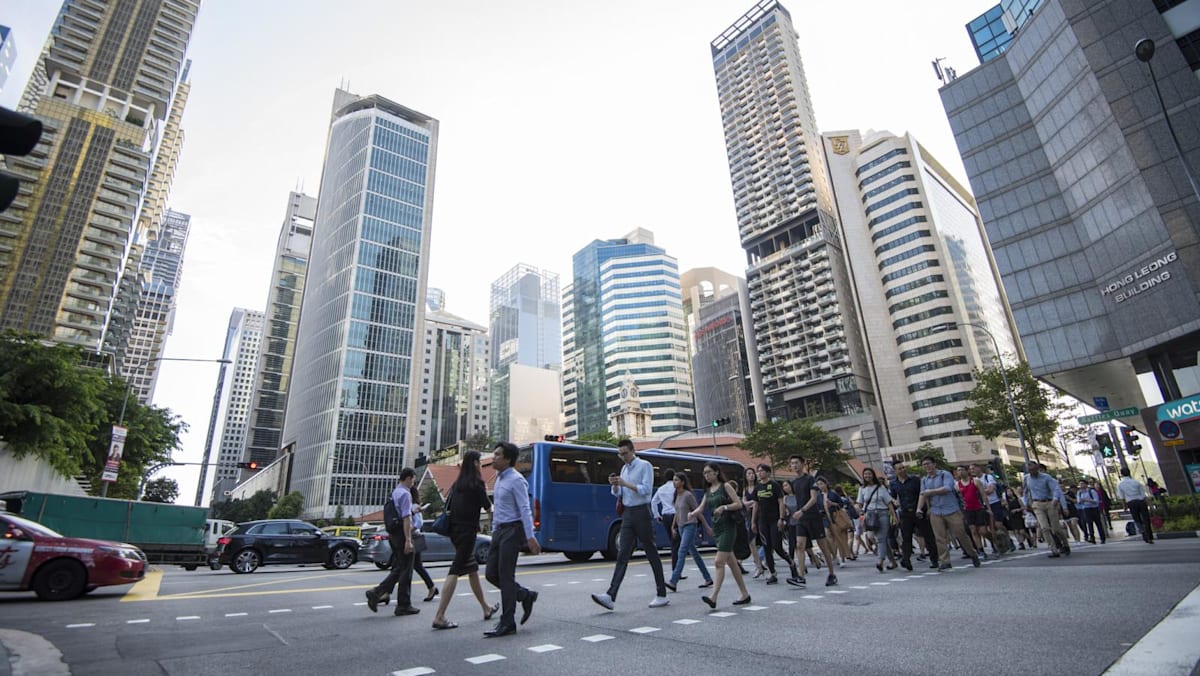
Office workers walking on the streets of the Central Business District in Singapore. (File photo: iStock)
This audio is generated by an AI tool.
SINGAPORE: The success of Singapore’s push to attract top global investment professionals may ultimately hinge on more than the jobs they create, observers say. Industry watchers believe the bigger test is whether their expertise helps Singaporeans move into more senior roles. Singapore hopes anchoring top overseas talent here will deepen the local asset management industry and strengthen the pipeline of homegrown professionals.
TALENT BEYOND THE TOP
Mr Kher Sheng Lee, co-head for Asia Pacific at the Alternative Investment Management Association, likened senior investment professionals such as portfolio managers to “race car drivers”. But a much larger team sits behind each driver. “The jobs are in the garage, the corporate offices, the research labs,” he said. These include analysts, traders, risk and compliance professionals, as well as operations and technology teams. A broader ecosystem of fund administrators, prime brokers, lawyers and auditors also supports their work. Singapore’s asset management industry employs close to 25,000 people, about 80 per cent of whom are locals. Observers say the issue is not a general shortage of finance professionals, but a scarcity of talent at the very top – people with specialised expertise and long investment track records. Financial centres around the world are competing for the same small pool. “The talent we're looking at is very scarce. Scarcity at the very top of the game is a global challenge,” said Mr Lee, adding that financial centres such as New York and London face the same challenge. Investing requires not only technical skill but also the temperament to make difficult calls under pressure, he said. “You're making judgment calls with other people's savings, their investments. That's a very important heavy obligation.” Such qualities can take years – and several market cycles – to develop, he added. “That's why these people are highly sought after.” Singapore’s strategy is to bring some of these experienced professionals here, then build teams and investment activities around them. Professor Lawrence Loh of the Department of Strategy and Policy at the National University of Singapore (NUS) Business School described the approach as “anchor first and then multiply after”. “We are not looking at just them as persons. In fact, we are looking at the whole sector, the whole value chain or pipeline,” he said.
TURNING EXPOSURE INTO ADVANCEMENT
But analysts say the payoff for Singapore workers should not be measured by job numbers alone. A key test is whether locals working alongside these global professionals gain the experience and exposure needed to advance in their own careers. Mr Khairil Baharudin, a senior professional at the Institute for Human Resource Professionals, said this type of learning can be difficult to replicate through formal training. “You learn from sitting alongside someone who has managed through several market cycles,” he said. “You see how they assess risk, how they make decisions when markets are volatile, and how they exercise judgment when there isn't an obvious answer. So this is quite different from simply sending someone for another training programme.” While training remains important, exposure, mobility, progression and succession are stronger indicators of whether genuine capability transfer is taking place, said Mr Khairil. This could mean Singaporeans gaining greater exposure to investment decisions, taking on increasingly complex portfolios and eventually moving into regional, global or leadership roles.
Get our pick of top stories and thought-provoking articles in your inbox
Stay updated with notifications for breaking news and our best stories
Join our channel for the top reads for the day on your preferred chat app
新加坡希望通过吸引海外顶尖人才来深化本地资产管理行业,并加强本土专业人才的储备。
新加坡中央商务区的上班族走在街上。(图片来源:iStock)
这段音频由人工智能工具生成。
新加坡:观察人士表示,新加坡吸引全球顶尖投资专业人士的努力能否成功,最终可能不仅仅取决于他们创造了多少就业机会。业内人士认为,更大的考验在于,这些人才的专业知识能否帮助新加坡人晋升到更高级别的职位。新加坡希望通过吸引海外顶尖人才,深化本地资产管理行业的发展,并增强本土专业人才的储备。
超越巅峰的人才
另类投资管理协会亚太区联席主管李克胜先生将投资组合经理等高级投资专业人士比作“赛车手”。但每位“车手”背后都凝聚着一个庞大的团队。“他们的工作遍布车库、公司办公室和研究实验室,”他说道。这些团队包括分析师、交易员、风险和合规专家,以及运营和技术团队。此外,基金管理人、主经纪商、律师和审计师等更广泛的专业人士也为他们的工作提供支持。新加坡的资产管理行业雇佣了近25,000名员工,其中约80%是本地居民。观察人士指出,问题不在于金融专业人士普遍短缺,而在于顶尖人才的匮乏——即拥有专业知识和长期投资业绩的人才。世界各地的金融中心都在争夺同一批稀缺人才。“我们正在寻找的人才非常稀缺。顶尖人才的短缺是一个全球性的挑战,”李先生说道,并补充说,纽约和伦敦等金融中心也面临着同样的挑战。他表示,投资不仅需要技术技能,还需要在压力下做出艰难决策的沉着冷静。“你是在用别人的积蓄和投资做判断,这是一项非常重要且重大的责任。”他补充说,这些素质需要数年时间——以及几个市场周期——才能培养出来。“这就是为什么这些人如此抢手。”新加坡的策略是引进一些经验丰富的专业人士,然后围绕他们组建团队并开展投资活动。新加坡国立大学商学院战略与政策系教授罗荣文(Lawrence Loh)将这种方法描述为“先锚定,后倍增”。他说:“我们不仅仅关注他们个人,实际上,我们关注的是整个行业、整个价值链或整个投资渠道。”
将曝光转化为进步
但分析人士指出,衡量新加坡员工的回报不应仅仅以就业数量来衡量。关键在于,与这些全球专业人士共事的本地员工能否获得职业发展所需的经验和视野。新加坡人力资源专业人士协会(Institute for Human Resource Professionals)高级专业人士凯里尔·巴哈鲁丁先生表示,这种学习方式很难通过正规培训获得。“与经历过多个市场周期的管理者一起工作,你会学到很多东西,”他说道,“你会看到他们如何评估风险,如何在市场波动时做出决策,以及如何在没有明显答案的情况下做出判断。这与简单地把人送去参加另一个培训项目截然不同。”凯里尔先生表示,虽然培训仍然重要,但视野拓展、流动性、晋升和继任计划才是衡量真正能力转移是否发生的更有效指标。这意味着新加坡人将获得更多参与投资决策的机会,承担日益复杂的投资组合,并最终晋升到区域、全球或领导岗位。
订阅我们的邮件,即可获取精选热点新闻和引人深思的文章。
订阅通知,第一时间获取突发新闻和精彩报道。
加入我们的频道,即可在您常用的聊天应用上获取当日热门文章。