A $180 loan, a $1,040 demand: the debt traps ensnaring domestic workers一笔180美元的贷款,却要偿还1040美元:家政工人深陷债务陷阱
Debt traps ensnare domestic workers in Singapore as loansharks and instalment shops drive up repayments and harass employers. Read more at straitstimes.com.
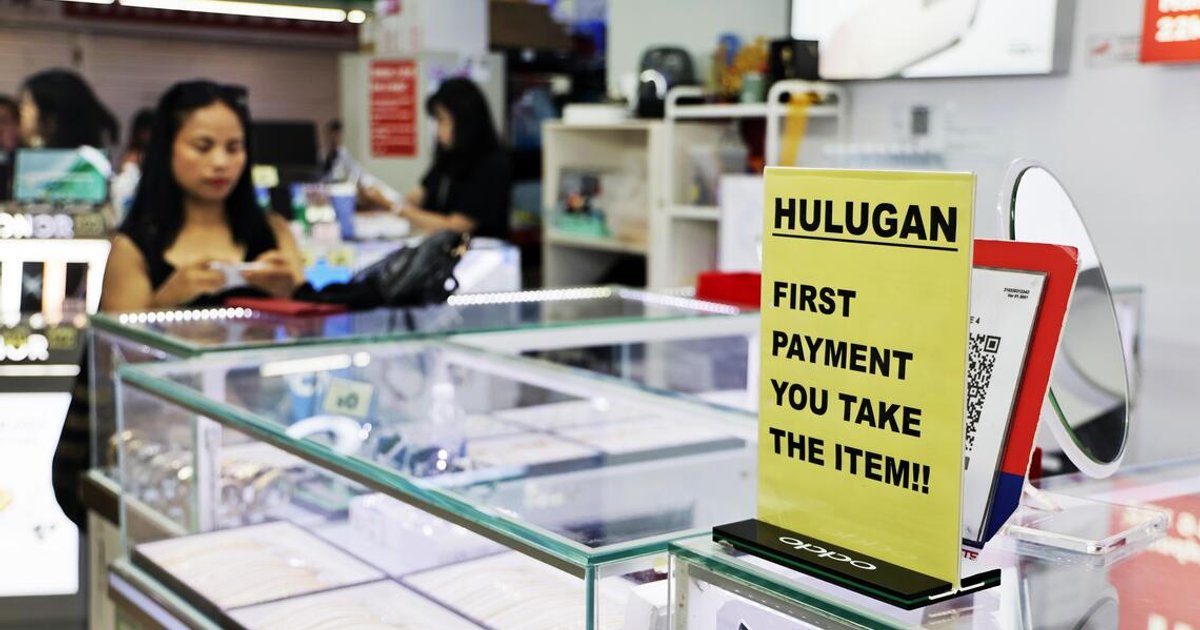
A shop advertising Hulugan – a buy-now-pay-later retail service – in Lucky Plaza.
ST PHOTO: KELVIN CHNG
Published Oct 25, 2026, 05:00 AM
Updated Oct 25, 2026, 05:00 AM
Domestic workers can fall into debt through loansharks, instalment shops and pawned goods. Small loans grow fast, and workers often hide the problem from employers.
Mary was threatened after her helper Lucy was linked to a $180 loan that became $1,040. The lenders used her work permit details and scared her into paying for peace.
Experts say the problem is widespread but under-reported. They want better data, stronger checks on “hulugan” shops, and more help for workers and employers.
It was National Day evening. Retired kindergarten operator Mary (not her real name) and her husband were watching the parade on TV when her phone started ringing incessantly.
She ignored the first few calls from the unfamiliar Malaysian number, but they kept coming. Assuming it was urgent, she finally answered.
The woman on the line recited Mary’s full name and identity card number and claimed to represent a moneylending company. She demanded payment for an outstanding debt.
“I didn’t owe anyone any money at all, so I just hung up,” Mary recalls. Immediately, calls from other numbers came in rapid succession. As soon as she declined one, another rang. Then came the WhatsApp messages.
One message from a Philippine number read: “Your helper say she clear today her loan. Now your helper still no reply lei... I ****ing ask my people go up ar your house.”
Mary’s domestic worker Lucy (not her real name), had flown back to the Philippines to visit her sick father. She had worked for Mary’s family for four years. Mary had always thought of Lucy, 51, as a competent worker and great cook.
Mary had dropped her off at the airport just days before, and was not expecting Lucy back for another two weeks.
The loan sharks claimed over the messages that Lucy had borrowed $180, and, along with interest, the debt had ballooned to $1,040.
They sent over images of Lucy’s work permit that also included Mary’s full name, IC number and her home address.
“The scary part is they knew there was porpor (an elderly woman) living in the house,” she says, referring to her 90-year-old mother.
Mary called Lucy to confront her about the debt. The helper denied taking any money, claiming she had only inquired about a loan.
“Then how did the loan shark get a picture of your work permit?” Mary pressed.
Shortly after, Lucy stopped replying and blocked her number. Meanwhile, the loan shark’s threats escalated, all the way into the early morning.
“I woke up at 3am, literally crying, afraid that I’d find paint splashed on my gate the next morning,” Mary recalls.
For foreign domestic workers (FDWs) who need cash urgently, borrowing can take several forms: a purchase on instalment that can be pawned for money, an informal loan, or a loan from an unlicensed lender. The costs can mount quickly. Employers may discover the problem only when creditors contact or threaten them, as Mary did.
How many FDWs face such debts is unknown. Singapore had 323,800 migrant domestic workers by June 2026, according to the Ministry of Manpower (MOM), but no public agency publishes a count of those in debt.
The last worker-specific figures show about 460 reports involving unlicensed moneylending from 2013 to September 2018. The 3,172 cases of unlicensed moneylending harassment recorded nationwide in 2025 cover all victims, not just domestic workers.
A route to ready cash
Many workers support relatives back home on modest wages. Starting base salaries here typically range from $550 to $650 a month, according to FDW matching portal HelperChoice.
“A lot of them experience intense guilt because they are away from their families,” says Billy Lee, a pastor and executive director of Blessed Grace Social Services (BGSS), an agency assisting indebted foreign workers. “They find it hard to say no to any financial request from home.”
Pastor Billy Lee assists foreign domestic workers in negotiating with creditors. ST PHOTO: GAVIN FOO
Pastor Billy Lee assists foreign domestic workers in negotiating with creditors.
In July 2019, Singapore tightened loan regulations for foreign workers earning less than $10,000 a year, cutting the total amount they could borrow from licensed moneylenders from $1,500 to $500. The Law Ministry said the move was to “address social issues arising from these moneylending activities”.
Lee says workers in need of larger sums have also turned to shops offering goods on instalment. A worker can buy jewellery or a mobile phone with little to no cash upfront, pawn or sell it, then send the proceeds home. The debt to the shop, with its interest rates , remains.
At Lucky Plaza, a popular gathering place for Filipino domestic workers on their days off, The Straits Times counted six licensed moneylenders, five pawnshops, seven remittance centres, and more than 20 jewellery and mobile phone shops advertising hulugan , the Tagalog term for instalment plans.
The density of services under one roof means a worker can buy an item on credit with no cash upfront, pawn it for cash and remit the money home in a single visit.
“The retail shops have taken the place of the licensed moneylenders,” says Lee.
At Lucky Plaza, there are many shops advertising hulugan, the Tagalog term for instalment plans. ST PHOTO: KELVIN CHNG
At Lucky Plaza, there are many shops advertising hulugan, the Tagalog term for instalment plans.
The shift began in 2019 after the licensed lending cap took effect. Immediately after the restrictions kicked in, BGSS saw an influx of 200 to 300 workers seeking urgent help. The caseload kept rising, with roughly 100 new individuals seeking help each week.
Soon, a new model took root across retail and jewellery stores. Operating legally, these businesses function as high-interest credit lenders through instalment sales models.
“Retail shops target them because FDWs are good customers: they repay because they are afraid of being sent back,” says Lee. “It’s a good business.”
Standard contracts reviewed by ST revealed steep mark-ups. In one case, a 22K gold necklace weighing 2.96g cost $1,320, payable over five months. Each late instalment incurred a further $90 charge. When the worker pawned the necklace at the pawnshop, it fetched $430.
Many workers also do not realise the true cost of falling behind on instalments until it is too late.
A retail shop in Lucky Plaza that offers “hulugan”, where a customer buys a big-ticket item by paying in instalments. ST PHOTO: KELVIN CHNG
A retail shop in Lucky Plaza that offers “hulugan”, where a customer buys a big-ticket item by paying in instalments.
Wendy, 34, a Filipino domestic worker who came to Singapore in 2024, found this out the hard way. She needed $300 for her son’s school fees and bought a piece of gold on instalment from a jewellery shop in Lucky Plaza.
She made the first two monthly payments before her savings ran out. Desperate to cover the shortfall, she borrowed $280 from an online lender who turned out to be an unlicensed loan shark.
After she missed a payment, she says, the loan shark charged an $80 deferment fee every five days. The fees did not reduce what she owed. When she stopped paying that too, they messaged her incessantly and even sent cash-on-delivery food orders to her employer’s house, an apparent tactic to pressure her by bringing her debt to her employer’s attention.
Loan sharks and their tactics
Dorothy’s experience – which has left her unable to eat or focus on her job caring for an elderly couple in Singapore – shows how a worker can accumulate different kinds of debt while trying to meet one family emergency.
The 37-year-old Filipina came to Singapore in 2017 to support her three teenage children and her mother. Estranged from her husband, who gives little financial help, she is the family’s main breadwinner.
When her father was unexpectedly hospitalised in June, she bought jewellery on instalment from two Lucky Plaza shops and pawned it to send money home. She still needed more. An acquaintance introduced her to another Filipino domestic worker, who offered her a loan.
A family emergency led Dorothy (not her real name), a foreign domestic worker, to fall into a spiral of debt. ST PHOTO: GAVIN FOO
A family emergency led Dorothy (not her real name), a foreign domestic worker, to fall into a spiral of debt.
Dorothy borrowed $450 from the woman and handed over her passport as collateral. “It was a big mistake,” she says.
She repaid the $450, plus $200 in interest, within a month. She then borrowed another $1,350 from the same woman. According to Dorothy, interest pushed the amount demanded to more than $2,000, to be paid within three months.
“ If I borrow, I settle. I can pay every month, but I can’t pay the interest,” she says.
When she asked for the interest to be waived, the lender grew hostile and told her to meet her at Toa Payoh Police Station. Dorothy showed up, but the lender never appeared and ignored her calls subsequently.
After talking to friends at church, she suspected the woman was collecting debts for a loan shark. The domestic workers who borrowed money never met the lenders. Dorothy also learnt that the woman was holding several workers’ passports, including hers.
Pastor Billy Lee (right) and cell group leader Monette speaking with foreign domestic workers struggling with debt during a support session on Oct 11. ST PHOTO: GAVIN FOO
Pastor Billy Lee (right) and cell group leader Monette speaking with foreign domestic workers struggling with debt during a support session on Oct 11.
Lee says he encounters about 10 Filipino domestic workers each month who have borrowed from loan sharks. He describes approaches made in person at workers’ weekend gathering places such as Lucky Plaza or Peninsula Plaza, and through social media. Some lenders, he says, first befriend workers and then recruit them to introduce other borrowers.
Others obtain work permit images, employer details or access to workers’ social media accounts, which can be used to contact or shame people who fall behind in their repayments.
In recent years, traditional physical harassment has increasingly shifted towards digital harassment, such as bulk SMS spamming, messaging employers and social media intimidation.
In one example of workers being drawn into such operations, police charged a 43-year-old domestic worker in February 2024 with using her TikTok account to promote illegal loans.
Dorothy eventually sought out Lee, who helped her file a police report. He says the lender has not responded to his attempts to contact her. Dorothy’s employer and family do not know about the loan.
“I cannot hide this for long,” she says, her eyes welling up.
If her passport is not returned, she says, she plans to tell them and approach MOM. She fears she could be sent back home.
The debt reaches home
That fear can give a lender another means of pressure: contacting the employer.
“They’re also hoping that when employers get harassed, they’ll pay off the debt,” Lee explains.
Mary faced that decision as calls and messages threatened her family. After consulting friends who had dealt with similar threats, she transferred the $1,040 demanded by the callers to a local bank account they supplied. She says she has not heard from them since.
“$1,040 is a small price to pay for peace of mind,” she says.
Mary initially resisted filing a police report, fearing retaliation, as the syndicate had her IC number and home address. But after talking to her family, she changed her mind and filed one.
As Mary cleared out Lucy’s room, she also found instalment slips from when Lucy had bought gold necklaces from jewellery shops in City Plaza and Lucky Plaza.
In September, two men turned up on her doorstep looking for Lucy, who remains uncontactable. The following week, she received a letter from MOM informing her that her helper’s permit had been revoked, and she is not allowed to work here.
According to Lee, the FDW debt crisis is widespread and under-reported. BGSS’ experience, he says, suggests that workers seeking help often have more than one creditor.
His group currently has 10 to 15 open cases, with each domestic worker owing on average two to four jewellery shops, “and that’s not including the loan sharks”.
“The problem persists because people are filling the gap since 2019 to exploit them,” adds Lee, who often redirects non-Filipino domestic workers to other churches or social service agencies.
He reckons that lenders and shops can count on employers paying to stop harassment, then recovering the sum through wage deductions. The problem will not be fully understood without better data and agency intervention, he adds.
“Go to all these shops and open up the books, and you can see the list of their clients who are FDWs. I’m sure it’s a long list,” he says.
Lee urges the Law Ministry, MOM and the Competition and Consumer Commission of Singapore (CCCS) to audit retail businesses that offer hulugan .
BGSS had written to CCCS about what it regards as unfair practices, particularly high instalment prices.
The commission replied that businesses are generally free to set prices according to their circumstances and that it has no power to regulate those prices.
MOM says it takes a serious view of migrant domestic workers borrowing from unlicensed moneylenders. A spokesperson says those who do so will have their work passes revoked and be barred from employment in Singapore. The ministry says it covers financial management and the consequences of illegal borrowing in its settling-in programme, WhatsApp channel and guidebooks, alongside financial literacy courses run by non-governmental organisations.
“Employers are also encouraged to highlight the risks and consequences of borrowing from unlicensed moneylenders and to encourage their migrant domestic workers to adopt prudent money management practices,” adds the spokesperson.
Meanwhile, financial education charities like Aidha are working to build financial resilience among domestic workers before they fall into debt traps.
The organisation offers courses ranging from financial goal setting, basic budgeting, needs-versus-wants distinctions and emergency funds, to more advanced financial decision-making and entrepreneurship. One free course helps domestic workers understand debt.
“A big part of that course is actually helping them understand the dangers of loan sharks, how to spot loan sharks. So we do see this as a critical area, and we do try and support better understanding in those areas,” says Aidha chief executive Jacqueline Loh.
She cites the case of a domestic worker who answered a Facebook loan ad and shared her phone number and other personal identification details. She had not wanted to take a loan, but loan sharks immediately transferred money to her, then demanded interest.
“It’s just an example of how easy it is to be deceived,” she says.
Education alone, Lee says, cannot overcome a worker’s fear of losing her job or upsetting her employer. He wants workers to feel they are able to raise a financial problem early and employers to know where to seek help.
Some employers, he says, will offer an advance or help a worker find support when they understand the situation.
“Being more empathetic will definitely benefit both employers and workers,” he says.
What he hopes most is for employers to see organisations like his as a first call, not a last resort.
“My wish is that agencies like us, who help domestic workers resolve their debt issues, become more widely known, so that employers can call us,” he says.
“There’s actually no avenue for employers right now. They don’t know what to do.”
Moneylending - illegal
幸运广场内一家店铺正在宣传 Hulugan(一种先买后付的零售服务)。
《海峡时报》摄影:KELVIN CHNG
发布于2026年10月25日 上午5:00
更新于2026年10月25日上午5:00
家政工人可能因高利贷、分期付款和典当物品而负债累累。小额贷款累积迅速,而工人往往会向雇主隐瞒这个问题。
玛丽的帮手露西与一笔180美元的贷款有关,这笔贷款最终变成了1040美元,之后玛丽受到了威胁。放贷者利用了露西的工作许可信息,恐吓她交出钱财以求安宁。
专家表示,这个问题普遍存在,但未被充分报道。他们希望获得更完善的数据,加强对“hulugan”(非法集资)店铺的监管,并为工人和雇主提供更多帮助。
那天是国庆节的晚上。退休幼儿园园长玛丽(化名)和她的丈夫正在电视上看游行,这时她的手机开始不停地响个不停。
她一开始没接那个陌生的马来西亚号码打来的电话,但电话接踵而至。她以为是紧急情况,最终还是接了起来。
电话那头的女子报出了玛丽的全名和身份证号码,并声称自己代表一家放贷公司。她要求玛丽偿还一笔未偿债务。
“我根本没欠任何人钱,所以就挂断了电话,”玛丽回忆道。话音刚落,其他号码的来电就接踵而至。她刚挂断一个,另一个就响了。接着,WhatsApp消息也纷至沓来。
一条来自菲律宾号码的信息写道:“你的帮佣说她今天还清了贷款。现在你的帮佣还是没有回复……我真想让我的人上你家去。”
玛丽家的佣人露西(化名)飞回菲律宾探望生病的父亲。她为玛丽家工作了四年。玛丽一直认为51岁的露西工作能力强,厨艺也很棒。
玛丽几天前刚把她送到机场,预计露西还要两周才能回来。
高利贷者通过短信声称露西借了 180 美元,加上利息,债务已经膨胀到 1040 美元。
他们发来了露西的工作许可证照片,照片中还包括玛丽的全名、身份证号码和家庭住址。
“可怕的是,他们明明知道房子里住着一位老妇人,”她指的是她90岁的母亲。
玛丽打电话给露西,质问她关于债务的事。露西否认拿过钱,声称她只是询问过贷款的事。
“那高利贷者是怎么拿到你工作许可证照片的?”玛丽追问道。
不久之后,露西停止回复并拉黑了对方的号码。与此同时,高利贷者的威胁不断升级,一直持续到凌晨。
“我凌晨三点醒来,哭了起来,害怕第二天早上会发现大门上被人泼了油漆,”玛丽回忆道。
对于急需用钱的外籍家庭佣工来说,借贷方式多种多样:分期付款购买商品后可典当;非正式贷款;或向无牌放贷机构借款。这些费用会迅速累积。雇主可能只有在债权人联系或威胁他们时才会发现问题,就像玛丽的情况一样。
目前尚不清楚有多少外籍家庭佣工面临此类债务。新加坡人力部(MOM)的数据显示,截至2026年6月,新加坡共有323,800名外籍家庭佣工,但没有任何公共机构公布负债人数。
最新的针对劳动者的数据显示,从 2013 年到 2018 年 9 月,涉及无牌放贷的报告约有 460 起。2025 年全国记录的 3172 起无牌放贷骚扰案件涵盖所有受害者,而不仅仅是家政工人。
一条获取现金的途径
许多务工人员靠微薄的收入养家糊口。据外籍家庭佣工匹配网站HelperChoice的数据显示,这里的起薪通常在每月550至650美元之间。
“他们中的许多人因为远离家人而感到深深的内疚,”比利·李说道。他是“蒙福恩典社会服务中心”(BGSS)的牧师兼执行主任,该机构致力于帮助负债累累的外籍劳工。“他们很难拒绝来自家乡的任何经济请求。”
牧师比利·李协助外籍家庭佣工与债权人谈判。(海峡时报摄影:加文·傅)
比利·李牧师帮助外籍家政工人与债权人进行谈判。
2019年7月,新加坡收紧了年收入低于1万新元的外国劳工的贷款规定,将他们可从持牌放贷机构借款的总额从1500新元削减至500新元。新加坡律政部表示,此举是为了“解决这些放贷活动引发的社会问题”。
李说,一些急需用钱的工人也转向了提供分期付款的商店。他们可以几乎不用预付现金就能购买珠宝或手机,然后典当或出售,再把所得款项寄回家。但欠商店的债务及其利息仍然存在。
在菲律宾家政工人休息日经常聚集的幸运广场,《海峡时报》统计到有 6 家持牌放贷机构、5 家当铺、7 家汇款中心,以及 20 多家珠宝和手机店都在宣传“hulugan”(塔加洛语,意为分期付款计划)。
一处屋檐下集中了各种服务,这意味着工人可以一次性赊购商品而无需预付现金,然后将其典当换取现金并汇款回家。
李说:“零售商店已经取代了持牌放贷机构。”
在幸运广场,许多商店都在宣传“hulugan”,这是塔加洛语中“分期付款”的意思。ST 摄影:KELVIN CHNG
在幸运广场,有很多商店都在宣传“hulugan”,这是塔加洛语中“分期付款计划”的意思。
这一转变始于2019年持牌贷款上限生效之后。限制措施实施后,BGSS立即涌入了200至300名寻求紧急援助的工人。此后,求助人数持续攀升,每周约有100名新求助者。
很快,一种新的模式在零售和珠宝店中扎根。这些企业合法经营,通过分期付款销售模式充当高息信贷放贷机构。
李说:“零售商之所以瞄准她们,是因为外籍家庭佣工是优质顾客:她们会因为害怕被遣返而偿还消费。这是一门好生意。”
《海峡时报》审查的标准合同显示,商品价格存在高额加价。例如,一条重2.96克的22K金项链售价1320美元,分五个月支付。每逾期一次,就要额外收取90美元的滞纳金。当工人将项链典当到当铺时,只换来了430美元。
许多工人直到为时已晚才意识到拖欠分期付款的真正代价。
幸运广场一家提供“分期付款”服务的零售店,顾客可以分期支付购买高价商品。(海峡时报摄影:KELVIN CHNG)
幸运广场的一家零售店提供“hulugan”服务,顾客可以通过分期付款购买高价商品。
34岁的菲律宾籍家庭佣工温迪于2024年来到新加坡,她对此深有体会。她需要300美元支付儿子的学费,于是在幸运广场的一家珠宝店分期付款购买了一件黄金饰品。
她还清了前两个月的月供,之后积蓄就用完了。为了弥补资金缺口,她绝望地从一家网上贷款机构借了280美元,结果发现这家机构是个无牌高利贷者。
她说,在她错过一次还款后,高利贷者每五天收取80美元的延期费。这些费用并没有减少她的欠款。当她停止支付这笔费用后,他们便不停地给她发信息,甚至还给她雇主家送外卖,显然是为了通过让她雇主注意到她的债务来向她施压。
高利贷及其伎俩
多萝西的经历——导致她无法进食或集中精力照顾新加坡的一对老年夫妇——表明,一名工人在努力应对家庭紧急情况时,可能会积累各种各样的债务。
这位37岁的菲律宾女子于2017年来到新加坡,以养活她的三个十几岁的孩子和母亲。她与丈夫分居,丈夫很少提供经济支持,她是家里的主要经济支柱。
六月份父亲意外住院后,她从幸运广场的两家商店分期付款购买了珠宝,然后典当以筹集资金寄回家。但她仍然缺钱。一位熟人介绍她认识了另一位菲律宾女佣,这位女佣愿意借钱给她。
一场家庭紧急情况导致外籍女佣多萝西(化名)陷入债务危机。ST PHOTO:GAVIN FOO
一场家庭紧急情况导致外籍家政工人多萝西(化名)陷入了债务危机。
多萝西向那名女子借了450美元,并用护照作抵押。“这是个大错误,”她说。
她在一个月内偿还了450美元本金和200美元利息。之后,她又向同一个女人借了1350美元。据多萝西说,利息使借款金额超过了2000美元,需要在三个月内还清。
“如果我借钱,我会按时还款。我可以每月还款,但我付不起利息,”她说。
当她要求免除利息时,放贷人态度恶劣,让她到大巴窑警察局见面。多萝西去了,但放贷人却杳无音讯,之后也一直不接她的电话。
与教会的朋友交谈后,她怀疑这名女子是高利贷的收债人。那些借钱的家政工人从未见过放债人。多萝西还得知,这名女子持有好几名工人的护照,其中也包括她自己的。
10月11日,牧师比利·李(右)和小组组长莫内特在一次互助会上与一些负债累累的外籍家庭佣工交谈。(海峡时报摄影:加文·福)
10 月 11 日,牧师 Billy Lee(右)和小组组长 Monette 在一次支持会议上与身负债务的外籍家庭佣工交谈。
李先生说,他每个月都会遇到大约10名向高利贷借钱的菲律宾家政工人。他描述了这些放贷者如何在周末工人聚集的场所(例如幸运广场或半岛广场)当面拉拢她们,以及通过社交媒体进行引荐。他说,有些放贷者会先与工人交朋友,然后招募她们去介绍其他借款人。
其他人则会获取工作许可证照片、雇主详细信息或工人的社交媒体帐户,这些信息可用于联系或羞辱拖欠还款的人。
近年来,传统的肢体骚扰越来越多地转向数字骚扰,例如群发垃圾短信、向雇主发送信息和社交媒体恐吓。
例如,有工人被卷入此类活动,警方在 2024 年 2 月指控一名 43 岁的家政工人利用其 TikTok 账户宣传非法贷款。
多萝西最终找到了李,李帮她报了警。李说,他多次尝试联系贷款方,但都没有得到回应。多萝西的雇主和家人都不知道这笔贷款。
“我瞒不住这件事了,”她说着,眼眶里噙满了泪水。
她说,如果护照不归还,她打算告诉他们并向外交部反映情况。她担心自己会被遣返回国。
债务最终会波及家庭。
这种恐惧可能会让贷款人有另一种施压手段:联系雇主。
李解释说:“他们还希望,当雇主受到骚扰时,他们会偿还债务。”
玛丽面临着这样的抉择:她的家人不断接到威胁电话和短信。在咨询了有过类似遭遇的朋友后,她将对方索要的1040美元转到了他们提供的当地银行账户。她说,此后她再也没有收到过他们的消息。
“花1040美元换来安心感,这点钱不算什么,”她说。
玛丽起初不愿报警,担心遭到报复,因为犯罪团伙掌握了她的身份证号码和家庭住址。但与家人商量后,她改变了主意,报了警。
玛丽在清理露西的房间时,还发现了露西在城市广场和幸运广场的珠宝店购买金项链时的分期付款凭证。
九月份,两名男子出现在她家门口寻找露西,但至今仍联系不上她。一周后,她收到人力部来信,通知她家佣许可证已被吊销,她不得在此工作。
李表示,外籍家庭佣工债务危机普遍存在,但并未得到充分报道。他说,BGSS的经验表明,寻求帮助的佣工往往面临不止一个债权人。
他的团队目前有 10 到 15 个未结案件,每个家庭佣工平均欠两到四家珠宝店的钱,“这还不包括高利贷”。
李补充说:“这个问题一直存在,因为自 2019 年以来,有人填补了这个空缺来剥削她们。”他经常将非菲律宾籍家政工人转介到其他教会或社会服务机构。
他认为,贷款机构和商家可以指望雇主先花钱制止骚扰行为,然后再通过扣除工资的方式收回这笔钱。他还补充说,如果没有更完善的数据和机构的介入,这个问题就无法得到充分的了解。
“你去这些店里翻翻账簿,就能看到他们的客户名单,上面肯定有很多外籍家庭佣工。我敢肯定名单很长,”他说。
李敦促律政部、人力部和新加坡竞争与消费者委员会(CCCS)对提供“hulugan”(一种新加坡传统赌博形式)的零售企业进行审计。
BGSS曾致函CCCS,反映其认为不公平的做法,特别是过高的分期付款价格。
委员会回应称,企业一般可以根据自身情况自由定价,委员会无权监管这些价格。
人力部表示,对移工向无牌放贷者借款的行为高度重视。发言人称,此类借贷者的工作准证将被吊销,并被禁止在新加坡就业。人力部表示,其安家计划、WhatsApp频道和指南手册中均涵盖了财务管理以及非法借贷的后果,此外,非政府组织也开设了金融知识课程。
发言人补充说:“我们也鼓励雇主强调向无牌放贷者借钱的风险和后果,并鼓励其外籍家庭佣工采取谨慎的理财方式。”
与此同时,像 Aidha 这样的金融教育慈善机构正在努力提高家政工人的财务韧性,防止她们陷入债务陷阱。
该机构提供的课程涵盖广泛,从财务目标设定、基础预算、区分必需品和非必需品、应急基金,到更高级的财务决策和创业技能,应有尽有。其中一门免费课程专门帮助家政工人了解债务问题。
“这门课程的很大一部分内容实际上是帮助他们了解高利贷的危害,以及如何识别高利贷者。所以我们确实认为这是一个至关重要的领域,我们也努力帮助他们更好地了解这些领域,”Aidha首席执行官Jacqueline Loh说道。
她举了一个例子:一名家政工人回应了Facebook上的贷款广告,并提供了她的电话号码和其他个人身份信息。她原本并不想贷款,但高利贷者立即给她转账,然后开始索要利息。
“这只是一个例子,说明人们是多么容易被欺骗,”她说。
李表示,单靠教育无法消除员工对失去工作或惹恼雇主的恐惧。他希望员工能够及早提出财务问题,也希望雇主知道该向谁寻求帮助。
他说,有些雇主在了解情况后,会提供预支款项或帮助员工寻求支持。
“多一些同理心肯定会对雇主和员工都有好处,”他说。
他最希望的是,雇主们能把像他这样的机构视为首选,而不是最后的选择。
他说:“我希望像我们这样帮助家政工人解决债务问题的机构能够被更多人知道,这样雇主就可以联系我们了。”
“目前雇主们确实没有办法。他们不知道该怎么办。”
放贷——非法