Scammed, shaken, and starting over被骗,心神不宁,一切重新开始
Singapore domestic worker Bayani rebuilds her finances after a scam and aims for a healthcare career with Aidha support. Read more at straitstimes.com.
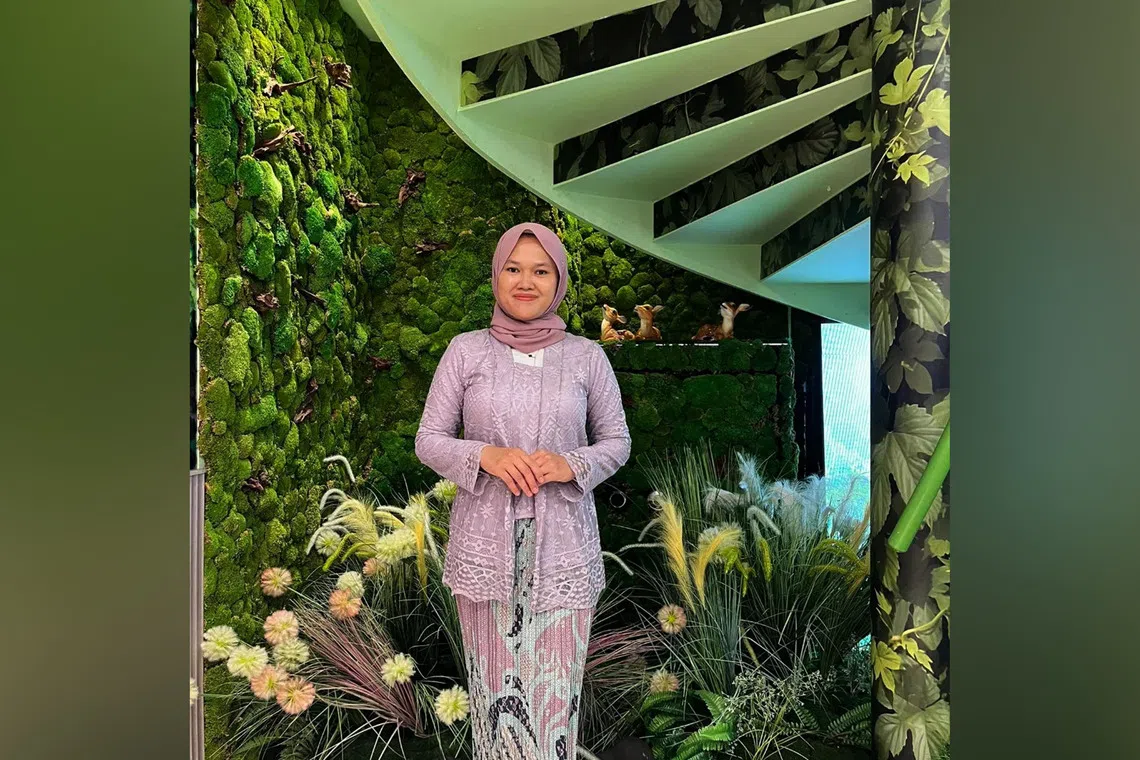
Nur Bayani took financial literacy lessons with Aidha, a charity empowering migrant domestic workers and low-income women.
PHOTO: COURTESY OF NUR BAYANI
Published Oct 25, 2026, 05:00 AM
Updated Oct 25, 2026, 05:00 AM
Bayani left Indonesia to work in Singapore, learnt money skills at Aidha, opened a shop at home, and later saved enough to support her family.
A fake online broker stole her US$1,000 investment, leaving her stressed and depressed. The pandemic then closed her shop and forced her back to Singapore.
She rebuilt her life with a kinder employer, gained a caregiving diploma, and now advises other domestic workers to avoid scams and plan for the future.
Nur Bayani was 23 when she left Indonesia in 2011 to work as a domestic worker in Singapore. Her parents could no longer afford her school fees, and she needed to help support her siblings.
Working for a family with two young children, she struggled to adjust.
“It was the first time I had ever been in a foreign country, facing a different culture and speaking a different language,” she recalls in Indonesian.
She was shy, unsure of her English and knew little about managing money.
“I did not even dare to have a dream or goal for myself,” she says.
That changed in 2018, when she enrolled at Aidha – a charity empowering migrant domestic workers and low-income women through sustainable wealth creation – which offers financial literacy and self-development courses. At classes twice a month, she improved her English, learnt to manage money and began saving. She also drew up a business plan.
Using her savings, she opened a warung , or roadside shop, in her hometown of Ponorogo in East Java. She partnered with an ice cream company to sell treats near a primary school and managed the shop from Singapore. The proceeds helped support her family and buy land where she planted coffee and acacia trees.
By the time the Covid-19 pandemic hit, Bayani had saved about $5,000. She returned to Indonesia for good and got married.
The couple invested US$1,000 (S$1,280) of her savings through an overseas online broker. Within three months, the platform showed their portfolio had grown to US$5,000. They planned to use the profit to buy a car, but when they tried to withdraw the money, they discovered that the platform was a scam.
“We did not know what to do. I felt like I had hit rock bottom after pouring all our family’s savings into the platform. I was stressed and depressed,” says Bayani.
The pandemic compounded their troubles. Jobs dried up, her shop closed when schools shut, and she sold her farm at a loss. To get by, the couple borrowed from a sibling working in Taiwan.
Unwilling to keep relying on family, they decided Bayani would return to Singapore. In 2023, she began another stint as a domestic worker.
She was homesick and struggled with an unsupportive employer. Eventually, she sought a transfer.
“To me, mental health is very important,” she says.
Her new employer was an elderly man with pancreatic cancer.
“I took care of him like I would for my own father,” she says.
When he asked how she spent her Sundays, she told him about her courses at Aidha and her ambition to work in healthcare. He sponsored her caregiving diploma and gave her a two-month salary advance of $1,000 to invest in new ventures.
Over the following year, Bayani and her husband saved $7,000 and invested it in a local mining venture. She continues to set aside half her monthly income to grow the business.
“To me, failure is feedback. I use it to become better in the future,” she says.
After her employer died, she moved to another family. She has a year left on her contract, after which she hopes to use her diploma to apply for work in a nursing home.
Today, she is an Aidha ambassador, encouraging fellow domestic workers to manage their money and avoid financial traps.
“For domestic workers who just arrived in Singapore, it’s very common to fall for scams,” she says, citing peers targeted by unlicensed moneylenders on social media.
She urges those in financial trouble to speak openly with their employers before turning to lenders.
“If I really need money, I prefer to have an honest conversation with my employer.”
At Aidha, she also teaches domestic workers to set boundaries when relatives back home ask for more than they can afford.
“Most domestic workers send everything they earn back home without planning for their own future or growing their savings,” she says.
“Being a domestic worker does not have to be the end goal. You can have dreams and a future, too.”
Moneylending - illegal
努尔·巴亚尼参加了由 Aidha 提供的金融知识课程,Aidha 是一家致力于帮助外来家政工人和低收入妇女的慈善机构。
照片:由努尔·巴亚尼提供
发布于2026年10月25日 上午5:00
更新于2026年10月25日上午5:00
巴亚尼离开印度尼西亚前往新加坡工作,在 Aidha 学习了理财技能,在家乡开了一家商店,后来攒够了钱来养家糊口。
一名假冒的网上经纪人骗走了她1000美元的投资,让她倍感压力和沮丧。之后,疫情又导致她的店铺倒闭,迫使她返回新加坡。
她找到了一位更友善的雇主,重建了自己的生活,获得了护理文凭,现在她建议其他家政工人避免上当受骗,并为未来做好规划。
2011年,23岁的努尔·巴亚尼离开印度尼西亚前往新加坡做家政工人。她的父母无力承担她的学费,她也需要帮助养活兄弟姐妹。
她在一个有两个年幼孩子的家庭工作,很难适应。
“那是我第一次来到国外,面对不同的文化,说着不同的语言,”她用印尼语回忆道。
她性格腼腆,英语不好,而且不太会理财。
“我甚至不敢为自己设定梦想或目标,”她说。
2018年,她的生活发生了改变。当时她加入了Aidha——一家致力于通过可持续财富创造赋能外来家政工人和低收入女性的慈善机构——该机构提供金融知识普及和自我提升课程。她每月上两次课,提高了英语水平,学会了理财,并开始储蓄。她还制定了一份商业计划。
她用积蓄在东爪哇省波诺罗戈镇的家乡开了一家路边小店(warung)。她与一家冰淇淋公司合作,在小学附近售卖冰淇淋,并远程管理店铺。店铺的收益帮助她养家糊口,并购买了土地,种植了咖啡树和相思树。
新冠疫情爆发时,巴亚尼已经攒下了大约5000美元。她最终回到了印度尼西亚,并结了婚。
这对夫妇通过一家海外在线经纪商投资了她1000美元(约合1280新元)的积蓄。三个月内,平台显示他们的投资组合已增值至5000美元。他们计划用这笔钱买车,但当他们试图提现时,却发现这个平台是个骗局。
“我们不知道该怎么办。把全家的积蓄都投入到这个平台后,我感觉自己跌入了谷底。我压力很大,也很沮丧,”巴亚尼说道。
疫情加剧了他们的困境。工作机会锐减,学校停课后她的店铺也关门了,她还亏本卖掉了农场。为了维持生计,这对夫妇不得不向在台湾工作的兄弟姐妹借钱。
由于不愿继续依赖家人,他们决定让巴亚尼返回新加坡。2023年,她再次开始做家政工人。
她非常想家,而且雇主也不支持她。最终,她申请了调职。
“对我来说,心理健康非常重要,”她说。
她的新雇主是一位患有胰腺癌的老人。
“我像对待自己的父亲一样照顾他,”她说。
当他问起她周日如何度过时,她告诉他自己在艾达学院的课程以及她想从事医疗保健工作的愿望。他资助她攻读护理文凭,并预支了她两个月的工资1000美元,让她投资新的事业。
在接下来的一年里,巴亚尼和她的丈夫攒下了7000美元,并将其投资到当地的一家矿业公司。她至今仍然每月拿出收入的一半来发展这项业务。
“对我来说,失败是一种反馈。我利用失败来让自己在未来做得更好,”她说。
原雇主去世后,她搬到了另一户人家。她的合同还有一年到期,之后她希望凭借自己的文凭申请在养老院工作。
如今,她担任 Aidha 大使,鼓励其他家政工人管理好自己的钱财,避免陷入财务陷阱。
“对于刚到新加坡的家政工人来说,落入骗局是很常见的,”她说道,并举例说,一些同行在社交媒体上成为无牌放贷者的目标。
她敦促那些遇到财务困难的人在向贷款机构求助之前,先与雇主坦诚沟通。
“如果我真的需要钱,我更愿意和雇主坦诚沟通。”
在 Aidha,她还教导家政工人,当家里的亲戚提出超出她们承受能力的要求时,如何设定界限。
“大多数家政工人把她们挣的所有钱都寄回家,没有为自己的未来做打算,也没有积蓄,”她说。
“做家政工人并非人生的最终目标。你也可以拥有梦想和未来。”
放贷——非法