Vendors’ push to drone-proof vehicles with nets goes beyond Ukraine供应商推动用网子防止无人机袭击车辆的举措已超出乌克兰范围。
Netting and cages have proven effective in Ukraine in keeping warheads from penetrating vehicle walls.
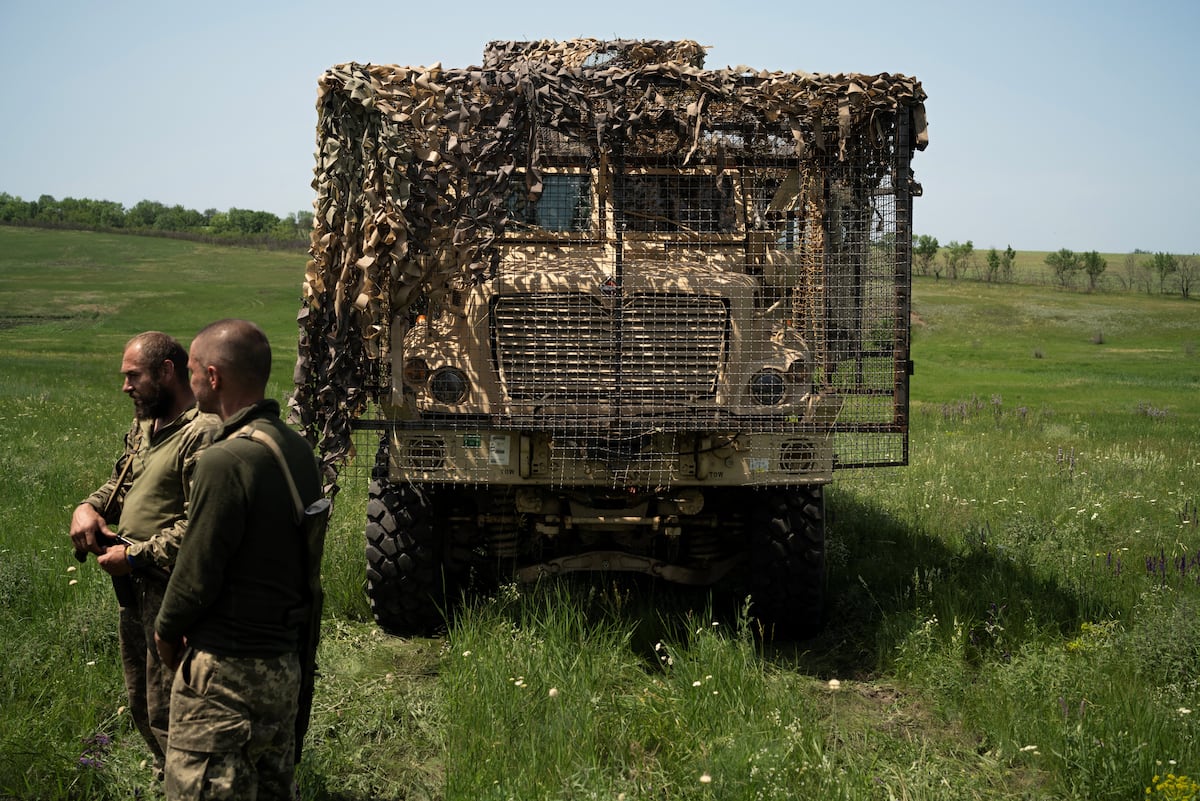
MILAN — The widespread use of anti-drone netting on armored vehicles to protect against low-altitude drone attacks in Ukraine is driving defense manufacturers in different locales to develop their own cloaks.
Among them is United Arab Emirates-based TAC Armored Vehicles, which recently rolled out its new TAC-Q-Net, a lightweight “cable mesh” designed to defend against low-altitude drone strikes.
The Emirati company released a picture showing a Jedi armored personnel carrier equipped with the countermeasure, reminiscent of other improvised vehicle protection systems seen on the battlefield in Ukraine. These have included everything from metal cages to flexible nets.
It is intended to serve as an additional physical barrier, preventing direct contact with the vehicle or causing drones to deflect.
The use of cable mesh, netting and similar protective systems on vehicles have proven effective in Ukraine. However, experts say that the risk is lower in other parts of the world.
UAE-based TAC Armored Vehicles has developed a Q-NET anti-drone net kit fitted on its Jedi armored vehicle, designed to counter low-altitude drone threats. (TAC photo)
“The UAE faces a much lower probability of encountering FPV threats within the country itself, but both environments — Ukraine’s humidity and Abu Dhabi’s dry, sandy conditions — present challenges to the robustness of the system and will require maintenance,” Federico Borsari, non-resident fellow at the Center for European Policy Analysis, said.
He highlighted that the utility of the cable mesh is primarily to provide last-resort protection against drones, complementing other countermeasures — it will not, by itself, make a vehicle drone-proof.
“It’s also important to note that the effectiveness of the mesh or netting declines with multiple strikes; if the second or third drones do not disable the vehicle, the fourth or fifth ones are even more likely to succeed,” he said.
A highly-proficient drone pilot could exploit the gaps and holes that connect parts of the netting and strike these parts of the vehicle, Borsari added.
Other manufacturers offering similar systems include British company QinetiQ, which developed its Q-Net over a decade ago. Using a net design, the technology was first deployed in Afghanistan in 2010 and is used on over 14,000 platforms in active combat to protect lightly armored vehicles against rocket-propelled grenades.
Elisabeth Gosselin-Malo was a Europe correspondent for Defense News. She covers a wide range of topics related to military procurement and international security, and specializes in reporting on the aviation sector. She is based in Milan, Italy.
米兰——乌克兰广泛使用防无人机网保护装甲车辆免受低空无人机袭击,这促使不同地区的国防制造商开发自己的隐形装置。
其中包括总部位于阿拉伯联合酋长国的 TAC 装甲车辆公司,该公司最近推出了新型 TAC-Q-Net,这是一种轻型“电缆网”,旨在防御低空无人机袭击。
这家阿联酋公司发布了一张照片,照片显示一辆“绝地武士”(Jedi)装甲运兵车配备了这种反制措施,让人联想起在乌克兰战场上出现的其他简易车辆防护系统。这些系统种类繁多,从金属笼到柔性网,应有尽有。
它的目的是作为额外的物理屏障,防止与车辆直接接触或使无人机偏转。
在乌克兰,车辆上使用缆绳网、防护网和类似防护系统已被证明是有效的。然而,专家表示,在世界其他地区,这种风险较低。
总部位于阿联酋的TAC装甲车辆公司为其Jedi装甲车开发了一款名为Q-NET的反无人机网套件,旨在应对低空无人机威胁。(TAC供图)
“阿联酋在国内遭遇FPV威胁的可能性要低得多,但乌克兰的潮湿环境和阿布扎比干燥多沙的环境都对系统的稳健性提出了挑战,需要进行维护,”欧洲政策分析中心非常驻研究员费德里科·博尔萨里说。
他强调,电缆网的主要作用是提供抵御无人机的最后一道防线,作为其他反制措施的补充——它本身并不能使车辆免受无人机攻击。
“同样重要的是要注意,网或防护罩的有效性会随着攻击次数的增加而降低;如果第二架或第三架无人机没有使车辆瘫痪,那么第四架或第五架无人机就更有可能成功,”他说。
博尔萨里补充说,技术高超的无人机飞行员可以利用连接网状物各部分的缝隙和孔洞,撞击车辆的这些部分。
其他提供类似系统的制造商包括英国公司QinetiQ,该公司十多年前就开发了Q-Net系统。这项采用网状设计的技术于2010年首次在阿富汗部署,目前已应用于超过14000个作战平台,用于保护轻型装甲车辆免受火箭弹袭击。
伊丽莎白·戈斯林-马洛曾任《防务新闻》欧洲通讯员。她的报道涵盖军事采购和国际安全等广泛领域,尤其擅长航空领域的报道。她常驻意大利米兰。