House to hold separate votes on Ukraine, Israel, Taiwan aid众议院将就对乌克兰、以色列和台湾的援助分别进行投票。
The chamber will hold three separate votes on Ukraine, Israel and Taiwan aid bills that mirror legislation the Senate has already passed.
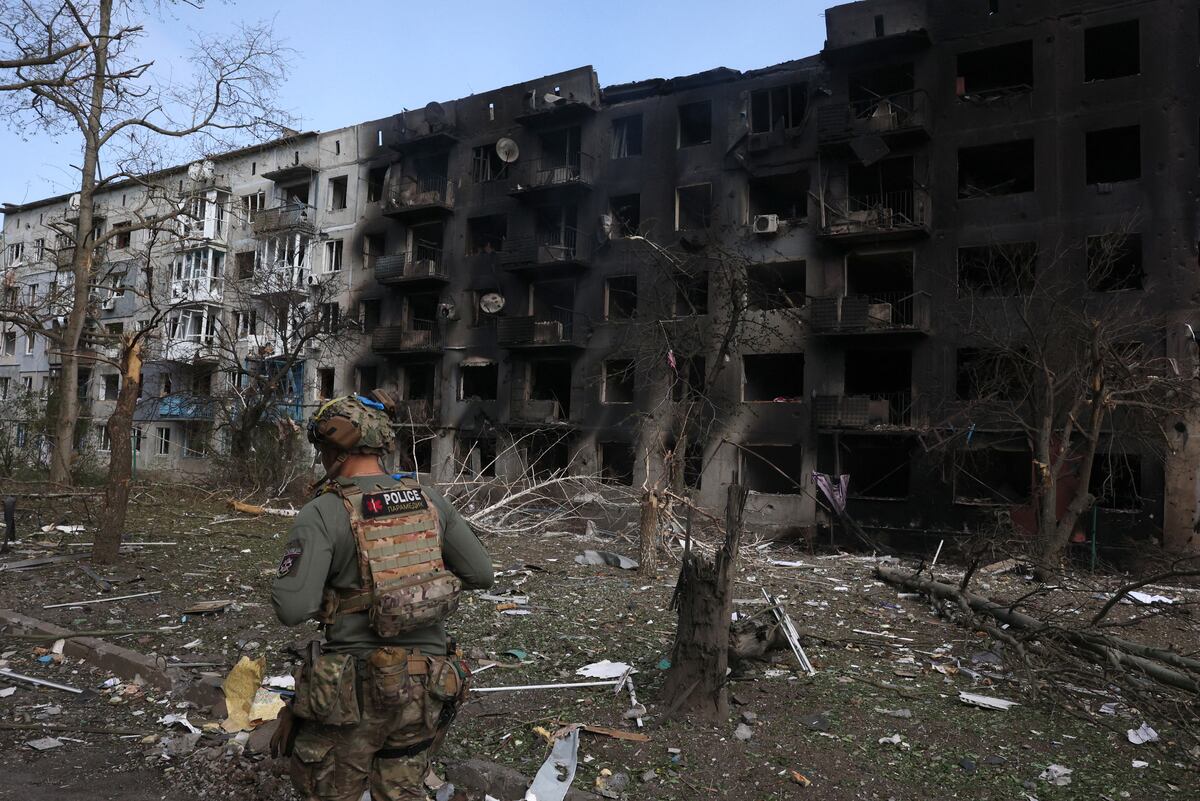
House Republicans on Wednesday released their proposals to fund a massive influx of military aid to Ukraine, Israel and Taiwan, more than six months after President Joe Biden initially submitted his emergency foreign assistance request to Congress.
The roughly $95 billion package is split into three separate bills, but nevertheless it closely mirrors the foreign aid bill the Senate passed 70-29 in February. The House is scheduled to vote on the three bills on Saturday, punting it back to the Senate for another round of votes in the upper chamber.
“Dangers are ever-escalating with tyrannical aggression threatening the free world.” House Appropriations Chairman Tom Cole , R-Okla., said in a statement. “Russia is invading a sovereign neighbor and China is challenging partners in its region. On top of that, we have an all-out conflict in the Middle East where one of our closet allies is under constant attack.”
“I know this to be true: If we don’t help our friends in time of need, soon enough, we won’t have any friends at all. The time is now to act.”
A growing faction of the Republican caucus has become increasingly skeptical of additional aid for Kyiv amid opposition from former President Donald Trump, demanding separate votes on Ukraine and Israel assistance. This prompted House Speaker Mike Johnson, R-La., to split the package up into several different votes.
But the maneuver was not enough to appease the most vocal Ukraine aid opponents in the House Republican caucus, with Reps. Marjorie Taylor Greene, R-Ga., and Thomas Massie, R-Ky., threatening to oust Johnson from the speakership over the vote. A small band of right-wing Republicans ousted former Speaker Kevin McCarthy, R-Calif., in October, plunging the House into weeks of chaos as the party struggled to select a new leader.
Heritage Action, the lobbying arm of the influential conservative think tank, also opposes Ukraine aid and is lobbying against the package. It argued in a Wednesday memo that “any effort to combine the measures before sending them to the Senate undermines the intent to consider the bills on their own merits.”
The supplemental spending package includes $60 billion in security and economic aid for Ukraine, $14 billion in Israel military aid and $4 billion in weapons funding for Taiwan.
The package would unlock funds the Pentagon needs to continue arming Kyiv with $23.2 billion to replenish weapons sent from U.S. stocks and another $13.8 billion to procure advanced equipment through the Ukraine Security Assistance Initiative.
Ukraine in recent months has found itself dangerously low on air defenses, artillery and ammunition needed to thwart Russia’s invasion. Congress has provided a cumulative $113 billion in economic and military support for Ukraine since Russia’s invasion, but the last package it passed was in December 2022 .
Gen. CQ Brown, chairman of the Joint Chiefs, warned defense appropriators in the House on Wednesday that Ukraine could lose its “hard fought gains” without U.S. support.
“The supplemental does three things,” said Brown. “One it supports Ukraine’s ability to defend itself. It puts money into our defense industrial base, not just for Ukraine but for many of our allies and partners because U.S. equipment is valued around the world. And last it shows U.S. leadership.”
The House package also adds a provision directing Biden to transfer long-range Army Tactical Missile Systems to Ukraine – a longstanding priority of pro-Ukraine Republicans like Armed Services Chairman Mike Rogers of Alabama. The Biden administrations transferred medium-range versions of the missile in October , but the longer-range system would allow Ukraine to strike into Russia-occupied Crimea.
The Middle East and Indo-Pacific
Additionally, the package includes $4.4 billion to replenish the thousands of U.S. air-to-ground munitions and artillery shells Israel has dropped in Gaza over the last six months. It has another $4 billion to replenish the Iron Dome and David’s Sling air defense systems to defend against Hamas and Iranian attacks. In addition to the supplemental, Israel receives an annual $3.8 billion per year in U.S. military aid.
“The most important thing that we can do right now is pass a supplemental that will provide us the opportunity to continue to provide security assistance to Israel in the form of air defense inceptors, munitions and things that it critically needs to defend itself,” Defense Secretary Lloyd Austin told the House on Wednesday.
Another $1.9 billion in the package would unlock replenishment funds to arm Taiwan, allowing the Pentagon to rush weapons to the island by drawing down from U.S. stocks the same way it has for Ukraine. Congress passed $300 million in Foreign Military Financing for Taiwan in March as part of the FY24 State Department spending bill. The House bill would give Taiwan an additional $2 billion in Foreign Military Financing as well.
The package also includes $3.3 billion in submarine industrial base funding as the Columbia and Virginia class programs remain behind schedule . Additionally, it provides $2.4 billion for U.S. Central Command to support its operations in the Middle East and another $542 million for U.S. Indo-Pacific Command.
Pentagon comptroller Mike McCord on Wednesday told the House that without the legislation, the Defense Department would have to “reprogram funds” from facilities and equipment maintenance accounts.
“We’ve surged forces in Europe the entire fiscal year to date, maybe in particular in [Central Command] the same way,” said McCord. “We have incurred over $2 billion in operational costs that, if we can’t get the supplemental, will have to be absorbed in the base budget.”
Navy Secretary Carlos Del Toro told the Senate Tuesday that the service is “approaching $1 billion in munitions” expenditures replenishment expenditures as a result of its Red Sea operations to counter attacks from Yemen’s Iran-backed Houthis.
Bryant Harris is the Congress reporter for Defense News. He has covered U.S. foreign policy, national security, international affairs and politics in Washington since 2014. He has also written for Foreign Policy, Al-Monitor, Al Jazeera English and IPS News.
周三,众议院共和党人公布了他们为向乌克兰、以色列和台湾提供大量军事援助的提案,而此时距离乔·拜登总统最初向国会提交紧急对外援助请求已经过去了六个多月。
这项总额约950亿美元的援助计划分为三项法案,但其内容与参议院2月份以70票赞成、29票反对通过的对外援助法案非常相似。众议院计划于周六对这三项法案进行投票,之后将再次交回参议院进行表决。
“随着暴政侵略威胁自由世界,危险正在不断升级。”众议院拨款委员会主席、俄克拉荷马州共和党众议员汤姆·科尔在一份声明中表示。“俄罗斯正在入侵一个主权邻国,中国正在挑战其地区伙伴。除此之外,我们在中东还面临着全面冲突,我们最亲密的盟友之一正遭受持续攻击。”
“我知道这是真的:如果我们不在朋友需要帮助的时候伸出援手,很快我们就会失去所有朋友。现在就是行动的时候了。”
在前总统唐纳德·特朗普的反对下,共和党党团内部越来越多的人对向基辅提供额外援助持怀疑态度,并要求就对乌克兰和以色列的援助进行单独投票。这促使众议院议长、路易斯安那州共和党人迈克·约翰逊将该援助方案拆分成几个不同的投票进行表决。
但这一举措不足以平息众议院共和党党团中最激烈的乌克兰援助反对者,佐治亚州共和党众议员玛乔丽·泰勒·格林和肯塔基州共和党众议员托马斯·马西威胁要就投票结果罢免约翰逊的议长职务。去年10月,一小撮右翼共和党人罢免了前议长、加利福尼亚州共和党众议员凯文·麦卡锡,导致众议院陷入数周混乱,共和党不得不艰难地选出新的领导人。
颇具影响力的保守派智库传统基金会的游说机构“传统行动”也反对对乌克兰的援助,并正在游说反对该援助方案。该机构在周三的一份备忘录中辩称,“任何在将这些措施提交参议院之前将其合并的做法,都破坏了根据法案本身的价值进行审议的初衷。”
补充支出方案包括向乌克兰提供 600 亿美元的安全和经济援助,向以色列提供 140 亿美元的军事援助,以及向台湾提供 40 亿美元的武器资金。
该方案将为五角大楼提供继续武装基辅所需的资金,其中包括 232 亿美元用于补充从美国库存运送的武器,以及另外 138 亿美元用于通过乌克兰安全援助倡议采购先进装备。
近几个月来,乌克兰发现自己防空系统、火炮和弹药严重不足,难以抵御俄罗斯的入侵。自俄罗斯入侵以来,美国国会已累计向乌克兰提供了1130亿美元的经济和军事援助,但最近一次通过援助方案是在2022年12月。
美国参谋长联席会议主席布朗将军周三在众议院警告国防拨款委员会,如果没有美国的支持,乌克兰可能会失去“来之不易的成果”。
布朗说:“这项补充拨款有三个作用。首先,它增强了乌克兰的自卫能力。其次,它为我们的国防工业基地注入资金,这不仅对乌克兰有利,也对我们的许多盟友和伙伴国有利,因为美国装备在世界各地都备受重视。最后,它展现了美国的领导力。”
众议院的方案还增加了一项条款,指示拜登向乌克兰移交远程陆军战术导弹系统——这长期以来一直是亲乌克兰共和党人(例如阿拉巴马州众议院军事委员会主席迈克·罗杰斯)的优先事项。拜登政府已于去年10月移交了中程导弹,但远程系统将使乌克兰能够打击俄罗斯占领的克里米亚地区。
中东和印度洋-太平洋地区
此外,该援助方案还包括44亿美元,用于补充以色列过去六个月在加沙地带投放的数千枚美国空对地弹药和炮弹。另有40亿美元用于补充“铁穹”和“大卫投石器”防空系统,以防御哈马斯和伊朗的袭击。除上述补充援助外,以色列每年还获得38亿美元的美国军事援助。
“我们现在最重要的事情就是通过一项补充法案,这将使我们有机会继续以防空拦截器、弹药以及以色列自卫急需的物资的形式向其提供安全援助,”国防部长劳埃德·奥斯汀周三在众议院表示。
该方案中另有19亿美元将用于补充台湾的军事储备,使五角大楼能够像对付乌克兰那样,从美国库存中调拨武器迅速运往台湾。今年3月,国会通过了2024财年国务院支出法案,其中一项内容是向台湾提供3亿美元的对外军事援助。众议院的法案还将额外向台湾提供20亿美元的对外军事援助。
该方案还包括33亿美元的潜艇工业基地建设资金,因为哥伦比亚级和弗吉尼亚级潜艇项目进度仍然落后于计划。此外,方案还为美国中央司令部提供24亿美元,用于支持其在中东的行动,并为美国印太司令部提供5.42亿美元。
五角大楼主计长迈克·麦科德周三告诉众议院,如果没有这项立法,国防部将不得不“重新安排”设施和设备维护账户中的资金。
麦考德说:“本财年至今,我们一直在欧洲增兵,尤其是在中央司令部,增兵力度可能更大。我们已经产生了超过20亿美元的运营成本,如果我们无法获得补充拨款,这些成本将不得不计入基本预算。”
海军部长卡洛斯·德尔·托罗周二告诉参议院,由于海军在红海开展行动以应对也门伊朗支持的胡塞武装的袭击,海军的弹药补充支出“接近 10 亿美元”。
布莱恩特·哈里斯是《防务新闻》的国会记者。自2014年以来,他一直在华盛顿报道美国外交政策、国家安全、国际事务和政治。他还曾为《外交政策》、《Al-Monitor》、《半岛电视台英语频道》和IPS新闻撰稿。