True Velocity sues Sig Sauer, alleging stolen trade secretsTrue Velocity起诉Sig Sauer,指控其窃取商业机密
True Velocity is suing Sig Sauer, alleging it stole trade secrets used in the weapon design the Army chose for its Next-Generation Squad weapon.
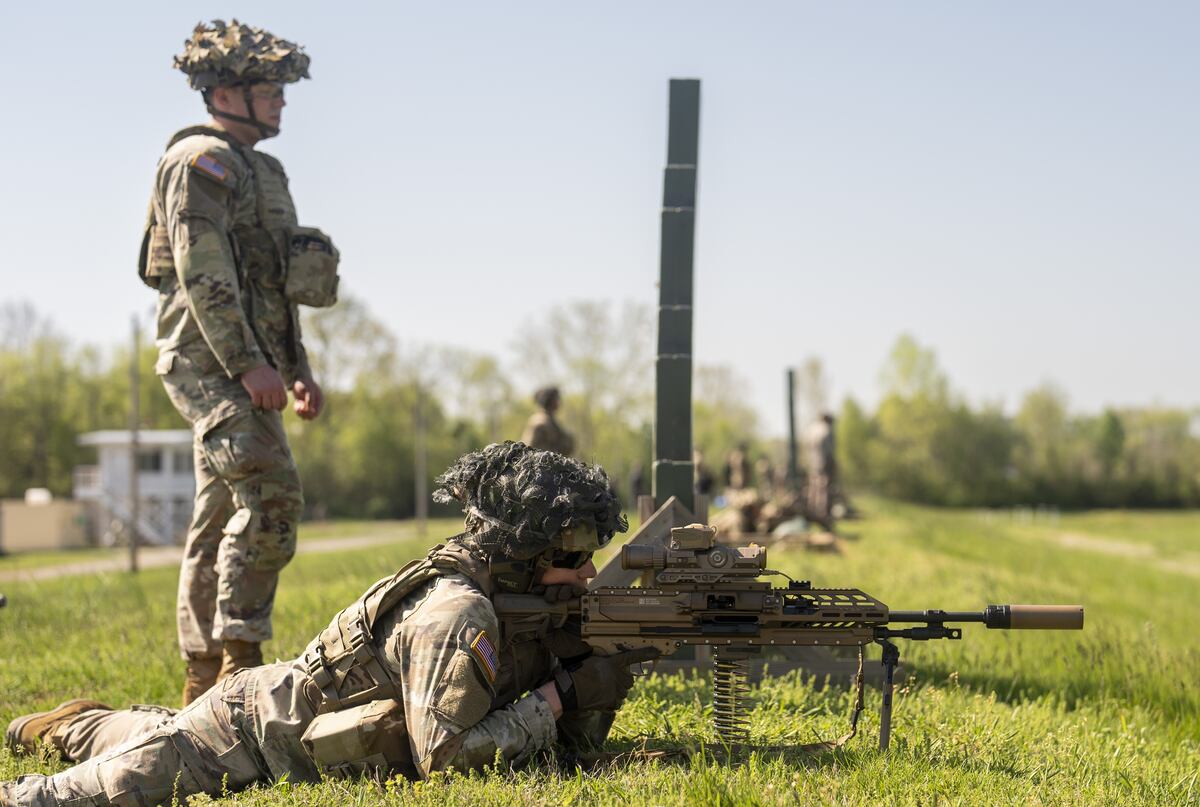
True Velocity and sister company LoneStar Future Weapons sued gunmaker Sig Sauer, alleging the company stole trade secrets.
The companies are competing against each other to produce the U.S. Army’s Next Generation Squad Weapon in a deal worth an estimated $4.5 billion. Sig Sauer won that competition in April 2022 and last month delivered those first weapons to soldiers in the 101st Airborne Division at Fort Campbell, Kentucky.
The complaint, filed April 9 in Vermont Superior Court, lays out True Velocity’s claim that Sig Sauer “brazenly and wrongfully misappropriated Plaintiff’s trade secrets to obtain an unfair competitive advantage.”
LoneStar originally teamed with General Dynamics Ordnance and Tactical Systems in 2021 for the NGSW competition, where GD-OTS transferred its technical data and marketing materials for the Lightweight Medium Machine Gun (known as LWMMG or LMMG) and the Next Generation Squad Weapon (NGSW) to LoneStar.
LoneStar then took over as the prime contractor in the NGSW competition and further design activities of the program.
GD-OTS, over nearly two decades, developed trade secrets through research and development in Vermont at two sites focused on armament systems and vehicle survivability. This included the LWMMG, which “eliminates the gap between the lighter and heavier weapons systems” currently fielded by the U.S. military and allies, the complaint states.
At the heart of the LWMMG is a proprietary “revolutionary mitigation system called Short Recoil Impulse Averaging (SRIA),” according to the complaint.
“Historically, mitigating recoil forces of machine guns require either adding mass to a weapon systems or length to a receiver,” the document says. “The SRIA technology advanced by GD-OTS and Plaintiff reduces recoil without increasing the weapon’s mass or receiver length.”
Following the development of the LWMMG, by the end of 2010, GD-OTS began keeping technical data and marketing materials from the design in a “highly confidential data repository stored on secure servers to which only the [Lightweight Medium Machine Gun] team had access,” the complaint states. Continued development, tests, failures, fixes, and analysis of the technology and designs were kept in this same secure repository, according to the court document.
GD-OTS employees signed agreements stating they would keep the company’s confidential and proprietary information “in strict confidence” and would not “disclose or use that information outside of employment with GD-OTS,” according to the court document.
True Velocity and LoneStar are claiming Sig Sauer “misappropriated” SRIA and LWMMG trade secrets by “aggressively recruiting GD-OTS employees who had spent years designing and developing these technologies and obtaining crucial and highly confidential design data,” according to the court document.
Sig Sauer recruited and hired three key engineers from GD-OTS, with the first hire in the fall of 2013.
In January 2014, Sig Sauer hired a “key GD-OTS engineer,” David Steimke, who had worked at General Dynamics for 19 years and served as the senior principal design engineer at the company’s facility in Vermont.
“During that time, Mr. Steimke was an engineer on nearly every belt-fed machine gun design at GD-OTS,” the complaint states. He was also the original designer on the LWMMG project.
Steimke is now Sig Sauer’s chief engineer.
In December 2017, the Army announced an opportunity to replace its lighter belt-fed machine gun, the M249 Squad Automatic Weapon. Then the Army released a prototype opportunity notice for a next-generation squad automatic rifle in March 2018, which would later become the Army’s NGSW program.
Sig Sauer unveiled its .338-caliber medium machine gun, the Sig SLMAG, as a direct competitor to the LWMMG, made by GD-OTS, in October 2018.
“Before the SIG SLMAG, no other company except for GD-OTS had produced a .338 [Norma Magnum] lightweight medium machine gun,” the complaint states.
GD-OTS employees first began to suspect Sig Sauer’s alleged “wrongful use of its trade secret technology” at a January 2019 International Special Operations Forces Range Day in Las Vegas, Nevada. General Dynamics employees attended a demonstration of the Sig SLMAG and “noted that it appeared to utilize the substantially same SRIA technology developed at GD-OTS before the departure of Mr. Steimke,” the court document noted.
Lawyers for GD-OTS sent a letter to Sig Sauer about the possible use of its proprietary information in the SLMAG in May 2019. Sig Sauer denied using GD-OTS’ secret information in any of its weapons, according to the complaint.
Steimke sent another letter stating he knew he was required to maintain confidentiality of proprietary information and claimed he did not work on machine gun-related products until after the Army came out with its plans for a next-generation weapon competition.
“According to Mr. Steimke’s representations, Sig was able to design and manufacture a competing .338 belt-fed machine gun in less than [18] months when it took GD-OTS more than a decade to develop and mature its impulse averaging and [Lightweight Medium Machine Gun] technology,” the court document states.
True Velocity and LoneStar believe, according to the complaint, that Sig Sauer has used the technology in four belt-fed machine guns it has designed.
The court document also claims that in addition to knowing Sig Sauer had hired former GD-OTS employees, True Velocity also discovered last year that Sig Sauer had “misappropriated confidential GD-OTS information, including proprietary design drawing files as well as critical proprietary data in the [Lightweight Medium Machine Gun] Technical Data and Marketing Materials.”
The lawsuit comes at a time when True Velocity and Sig Sauer are also competing for another U.S. military weapons contract — a .338-caliber medium machine gun for U.S. special operations forces.
The court document notes that both companies have delivered prototype weapons to the U.S. military for evaluation “and a potential production contract to be awarded in the near future,” and “based on information and belief, Sig’s submission incorporates a substantial degree of plaintiff’s impulse averaging and [Lightweight Medium Machine Gun] trade secrets.”
The complaint states True Velocity and LoneStar are seeking a court order to stop Sig Sauer from using its trade secrets and are asking for monetary damages.
“Our intellectual property exists not only to protect the best interests of our stakeholders, but also to form the foundation for a licensing model that would enable us to [share] our technology with honest partners around the world,” Pat Hogan, a True Velocity spokesperson, told Defense News. “Illegal taking and misappropriation of that intellectual property serves as a detriment to that mission and we will not stand by idly as it happens.”
A Sig Sauer spokesperson did not respond to a request for comment by press time.
Jen Judson is an award-winning journalist covering land warfare for Defense News. She has also worked for Politico and Inside Defense. She holds a Master of Science degree in journalism from Boston University and a Bachelor of Arts degree from Kenyon College.
True Velocity 及其姊妹公司 LoneStar Future Weapons 起诉枪支制造商 Sig Sauer,指控该公司窃取商业机密。
这些公司正在竞标生产美国陆军的下一代班组武器,合同价值估计为45亿美元。西格绍尔公司在2022年4月赢得了这场竞标,并于上个月向驻扎在肯塔基州坎贝尔堡的第101空降师士兵交付了首批武器。
该投诉于 4 月 9 日提交至佛蒙特州高等法院,其中列出了 True Velocity 的指控,即 Sig Sauer “肆无忌惮地非法盗用原告的商业秘密,以获取不公平的竞争优势”。
LoneStar 最初于 2021 年与通用动力军械和战术系统公司合作参加 NGSW 竞标,当时 GD-OTS 将其轻型中型机枪(称为 LWMMG 或 LMMG)和下一代班组武器 (NGSW) 的技术数据和营销材料转让给了 LoneStar。
随后,LoneStar 接手了 NGSW 竞赛,成为该项目的主要承包商,并负责该项目的进一步设计活动。
近二十年来,通用动力总成技术公司(GD-OTS)在佛蒙特州的两个研发基地,专注于武器系统和车辆生存能力的研究和开发,并据此开发了商业机密。诉状称,这其中包括轻型中型机枪(LWMMG),该机枪“消除了美国军方及其盟国目前部署的轻型和重型武器系统之间的差距”。
根据起诉书,LWMMG 的核心是专有的“革命性缓解系统,称为短后坐力脉冲平均 (SRIA)”。
文件指出:“历史上,减轻机枪后坐力通常需要增加武器系统的质量或延长机匣长度。而GD-OTS和原告开发的SRIA技术无需增加武器的质量或机匣长度即可降低后坐力。”
诉状称,在轻型中型机枪(LWMMG)研发完成后,到2010年底,通用动力总成技术办公室(GD-OTS)开始将该机枪的设计技术数据和市场推广资料保存在一个“高度机密的数据存储库中,该存储库存储在安全服务器上,只有[轻型中型机枪]团队才能访问”。根据法庭文件,该技术和设计的后续开发、测试、故障记录、修复和分析也保存在这个安全存储库中。
根据法庭文件,GD-OTS 的员工签署了协议,声明他们将“严格保密”公司的机密和专有信息,并且不会“在 GD-OTS 工作之外披露或使用该信息”。
根据法庭文件,True Velocity 和 LoneStar 声称 Sig Sauer 通过“积极招募 GD-OTS 的员工,这些员工多年来一直在设计和开发这些技术,并获得了关键且高度机密的设计数据”,从而“盗用”了 SRIA 和 LWMMG 的商业秘密。
Sig Sauer 从 GD-OTS 招募并聘用了三名关键工程师,第一位工程师于 2013 年秋季入职。
2014 年 1 月,西格绍尔公司聘请了“关键 GD-OTS 工程师”大卫·斯坦克,他曾在通用动力公司工作了 19 年,并担任该公司佛蒙特州工厂的高级首席设计工程师。
起诉书称:“在此期间,斯坦克先生几乎参与了通用动力枪械技术公司(GD-OTS)所有弹链供弹式机枪的设计工作。他也是轻型中型机枪(LWMMG)项目的最初设计者。”
施泰姆克现在是西格绍尔公司的首席工程师。
2017年12月,陆军宣布有机会替换其较轻的弹链供弹式机枪M249班用自动武器。随后,陆军于2018年3月发布了下一代班用自动步枪的原型机采购机会公告,该项目后来发展成为陆军的NGSW(下一代班用自动武器)计划。
2018 年 10 月,西格绍尔公司推出了其 .338 口径中型机枪 Sig SLMAG,作为 GD-OTS 公司生产的 LWMMG 的直接竞争对手。
诉状中写道:“在 SIG SLMAG 之前,除了 GD-OTS 之外,没有其他公司生产过 .338 [诺玛马格南] 轻型中型机枪。”
通用动力作战训练系统公司 (GD-OTS) 的员工最早在 2019 年 1 月于内华达州拉斯维加斯举行的国际特种作战部队靶场日活动上开始怀疑西格绍尔公司“非法使用其商业秘密技术”。法庭文件指出,通用动力公司的员工观看了西格绍尔 SLMAG 的演示,并“注意到它似乎使用了在 Steimke 先生离职前由 GD-OTS 开发的、基本相同的 SRIA 技术”。
2019 年 5 月,GD-OTS 的律师就 SLMAG 可能使用其专有信息一事致函 Sig Sauer。根据诉状,Sig Sauer 否认在其任何武器中使用过 GD-OTS 的秘密信息。
施泰姆克又写了一封信,表示他知道自己有义务对专有信息保密,并声称在陆军公布下一代武器竞赛计划之前,他没有从事过与机枪相关的产品研发工作。
法庭文件指出:“根据斯坦克先生的陈述,西格公司在不到[18]个月的时间内就设计并制造出了与之竞争的.338口径弹链供弹式机枪,而GD-OTS公司却花了十多年时间才开发和完善其脉冲平均和[轻型中型机枪]技术。”
根据诉状,True Velocity 和 LoneStar 认为 Sig Sauer 已在其设计的四款弹链供弹式机枪中使用了该技术。
法庭文件还声称,除了知道 Sig Sauer 雇佣了前 GD-OTS 员工外,True Velocity 去年还发现 Sig Sauer “盗用了 GD-OTS 的机密信息,包括专有设计图纸文件以及[轻型中型机枪]技术数据和营销材料中的关键专有数据”。
这场诉讼发生之际,True Velocity 和 Sig Sauer 也在竞标另一份美国军方武器合同——为美国特种作战部队提供 .338 口径的中型机枪。
法庭文件指出,两家公司都已向美国军方交付了原型武器以供评估,“并有可能在不久的将来授予生产合同”,并且“根据信息和信念,Sig提交的材料包含了原告大量的脉冲平均和[轻型中型机枪]商业秘密”。
诉状称,True Velocity 和 LoneStar 正在寻求法院命令,阻止 Sig Sauer 使用其商业秘密,并要求金钱赔偿。
“我们的知识产权不仅是为了保护利益相关者的最大利益,也是为了构建许可模式的基础,使我们能够与世界各地诚实的合作伙伴分享我们的技术,”True Velocity发言人帕特·霍根告诉《防务新闻》。“非法获取和盗用这些知识产权会损害我们的使命,我们绝不会对此袖手旁观。”
截至发稿时,西格绍尔公司发言人尚未回复置评请求。
珍·贾德森是一位屡获殊荣的记者,为《防务新闻》报道陆地战争。她也曾为《政治报》和《内幕防务》工作。她拥有波士顿大学新闻学硕士学位和凯尼恩学院文学学士学位。