Commentary: Steak, donburi – do non-Singaporean dishes belong in hawker centres?评论:牛排、丼饭——非新加坡菜肴是否应该出现在小贩中心?
Hawker food gives generations of Singaporeans a shared sense of home. But what counts as “local food” in the first place? Food writer Pamelia Chia weighs in.
新闻视频
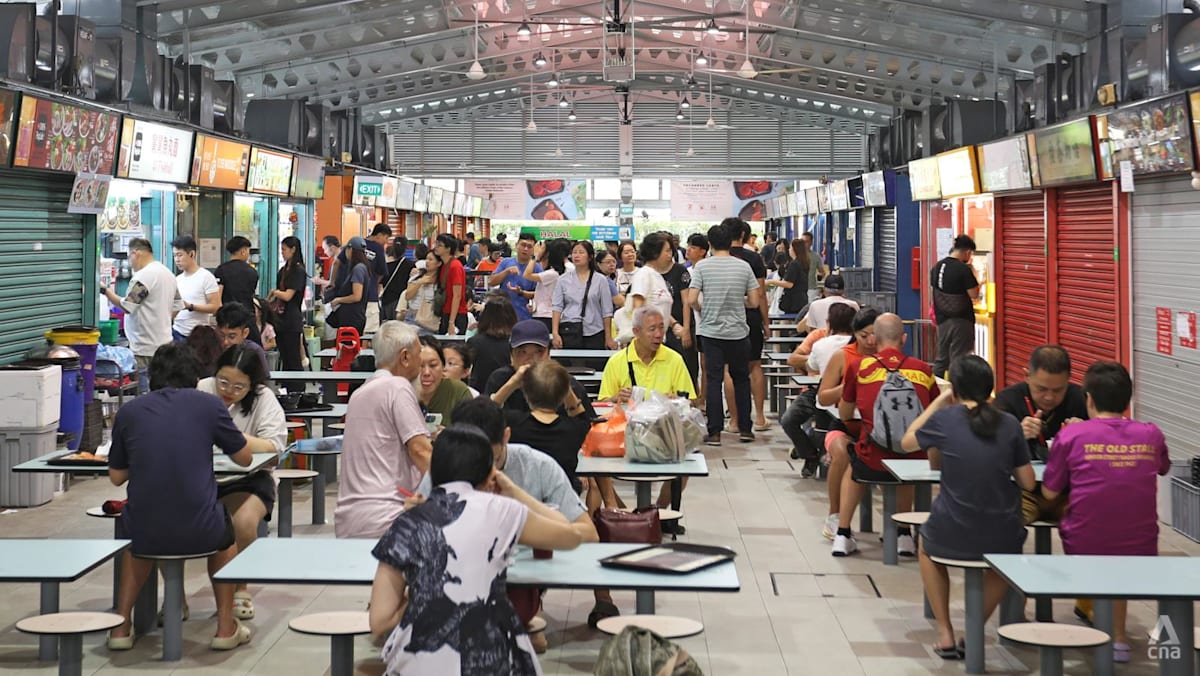
Hawker food gives generations of Singaporeans a shared sense of home. But what counts as “local food” in the first place? Food writer Pamelia Chia weighs in.
Many dishes we consider local specialities draw on traditions beyond our shores. (Photo: CNA/Alyssa Tan)
This audio is generated by an AI tool.
SINGAPORE: Each time I return to Singapore, I make a beeline for a hawker centre for my local favourites: chicken rice, nasi lemak, laksa and more.
Yet, my social media feed increasingly features hawkers selling steak, croque monsieur and donburi – dishes that might have once seemed out of place in a hawker centre or coffeeshop.
For aspiring food entrepreneurs, hawker stalls offer a relatively low-cost way to test a business concept. The sisters behind Butter Town began selling shio pan from a hawker stall , partly because the startup costs were lower than a cafe's. Their success allowed them to establish a commercial kitchen and partner with Japanese-style cafe chain Hvala .
Similarly, former L’Entrecote chefs Visman Selvan and Vera Chionh set up Swag & Sizzle to offer Western dishes at more accessible prices than a conventional restaurant.
CNA Games Guess Word Crack the word, one row at a time Buzzword Create words using the given letters Mini Sudoku Tiny puzzle, mighty brain teaser Mini Crossword Small grid, big challenge Word Search Spot as many words as you can Show More Show Less But this evolution has raised concerns. In 2021, then Non-Constituency Member of Parliament Leong Mun Wai warned that foreign food could come at the expense of local dishes. More recently, MP Jamus Lim (WP-Sengkang) argued that coffee shop and hawker centre operators should have a tenant mix that includes a minimum share of local cuisine and halal options, amid concerns that larger foreign chains could crowd out smaller F&B businesses. Hawker food connects generations of Singaporeans to a shared sense of home. Should hawker food, then, be curated? What exactly counts as “local” food in the first place?
But this evolution has raised concerns. In 2021, then Non-Constituency Member of Parliament Leong Mun Wai warned that foreign food could come at the expense of local dishes.
More recently, MP Jamus Lim (WP-Sengkang) argued that coffee shop and hawker centre operators should have a tenant mix that includes a minimum share of local cuisine and halal options, amid concerns that larger foreign chains could crowd out smaller F&B businesses.
Hawker food connects generations of Singaporeans to a shared sense of home. Should hawker food, then, be curated? What exactly counts as “local” food in the first place?
THE SLIPPERY CONCEPT OF AUTHENTICITY
Culinary purity has never really existed. Many dishes we consider local specialities draw on traditions beyond our shores: Hainanese chicken rice has roots in Hainan, while roti prata derives from Indian paratha. Over time, such foods adapted to local tastes and became part of everyday life.
A dish need not be radically transformed to acquire local significance. Hainanese Western food, for instance, is a familiar fixture in many kopitiams. A plate of chicken chop with fries, baked beans and brown sauce might resemble a meal in the West. Yet, for many Singaporeans, it is a familiar taste of home.
The same could be said of a more recent addition to Singapore’s food scene: mala xiang guo, a dish originating in China that has become a familiar sight in hawker centres. Its foreign origins do not make Singaporeans' attachment to it any less real.
These examples expose the difficulty of drawing a firm boundary between local and foreign food. Curation based on a fixed idea of authenticity assumes that there is a definitive version of hawker food, and risks becoming an exercise in deciding which parts of Singapore's culinary history deserve to be preserved, and which foods are not entitled to belong.
FOREIGN FOODS ARE NOT THE REAL THREAT
In response to Mr Leong's concerns in 2021, then Senior Minister of State for Sustainability and the Environment Amy Khor argued that Singapore’s cosmopolitan nature meant hawker centres would naturally offer a wide variety of foods. The priority, she said, was to ensure they continued providing affordable, delicious food in a clean environment.
But hawker centres are more than a source of cheap, tasty meals. They – and the dishes that are synonymous with them – are an expression of Singapore's shared identity and collective memory. The recognition of Singapore’s hawker culture by UNESCO as intangible cultural heritage in 2020 underscores the importance of keeping it alive.
The more pressing threat may have less to do with what new stalls sell than with whether traditional hawkers can afford to keep selling what they do. As I argued in a previous commentary , customers’ entrenched expectations of what familiar staples should cost leave limited room for price increases.
Some hawkers continue to sell their dishes for less than S$4, a tall order considering rising operating costs. By contrast, a brownie sold at a hawker centre could command more than double that price.
In October, the owners of New Horse Noodles at Chinatown Complex Food Centre announced they were closing their hawker business after five months of running it. The brothers, who were formerly in the finance industry, shared that they were earning substantially less while working around 70 hours a week.
If local stalls close, the problem may lie less with the Korean food stall next door than with the economics of running a traditional hawker business.
Foreign influences can also give traditional dishes a new lease of life. Melvin Chew who runs Jin Ji Teochew Braised Duck & Kway Chap at Chinatown Complex, for instance, has incorporated kway chap flavours into bento offerings. In a 2020 interview I conducted with him, he explained that the dish was losing popularity among younger diners, prompting him to experiment.
For food to remain a living heritage, it must be eaten. Preserving hawker culture therefore means keeping traditions alive in practice, not just protecting them in principle.
A LIVING CULTURE CANNOT BE FROZEN IN TIME
When I think of my fondest memories of Singapore's hawker centres, they are not neatly divided into “local” and “foreign” food.
I remember looking forward to the freshly baked chocolate muffins my aunts would buy every weekend from Shunfu Market. I remember indulging in chicken chop for supper with my piano teacher after night classes. And I remember the incredible lunches I’ve enjoyed at the Sri Lankan hawker stall in Tekka Centre whenever I was in the area.
None of these memories feels less Singaporean because the food originated elsewhere. After all, culture is not defined only by where something came from, but also by how people fold it into their lives.
A hawker selling donburi does not have to mean the death of chicken rice. It may simply be the latest chapter in a food culture that has always been shaped by the outside world – and has repeatedly found a way to make those influences its own.
Pamelia Chia is the author of the cookbooks Wet Market to Table and PlantAsia, and writer of the Singapore Noodles newsletter.
Get our pick of top stories and thought-provoking articles in your inbox
Stay updated with notifications for breaking news and our best stories
Join our channel for the top reads for the day on your preferred chat app
小贩美食赋予了几代新加坡人共同的家的感觉。但究竟什么才算是“本地美食”呢?美食作家帕梅莉亚·谢(Pamelia Chia)对此发表了看法。
许多我们认为的本地特色菜都汲取了海外的传统。(图片:CNA/Alyssa Tan)
这段音频由人工智能工具生成。
新加坡:每次回到新加坡,我都会直奔小贩中心,品尝我最爱的当地美食:鸡饭、椰浆饭、叻沙等等。
然而,我的社交媒体动态中却越来越多地出现小贩售卖牛排、法式火腿奶酪三明治和丼饭——这些菜肴在过去可能在小贩中心或咖啡店里显得格格不入。
对于有志于餐饮创业的人来说,小贩摊位提供了一种成本相对较低的方式来检验商业理念。Butter Town 的创始人姐妹俩最初就是从小贩摊位上售卖盐面包,部分原因在于小贩摊位的启动成本低于咖啡馆。她们的成功使她们得以建立商业厨房,并与日式咖啡连锁店 Hvala 合作。
同样,前 L'Entrecote 餐厅主厨 Visman Selvan 和 Vera Chionh 创办了 Swag & Sizzle 餐厅,以比传统餐厅更实惠的价格提供西式菜肴。
CNA游戏 猜词游戏 逐行破解单词 流行词游戏 用给定的字母组成单词 迷你数独 小谜题,脑力挑战 迷你填字游戏 小方格,大挑战 单词搜索 尽可能多地找出单词 显示更多 显示更少 但这种变化也引发了担忧。2021年,时任非选区议员梁文伟警告说,外国食品可能会以牺牲本地菜肴为代价。最近,盛港选区议员林志蔚(工人党)认为,咖啡店和熟食中心的经营者应该确保租户组合中至少包含一定比例的本地美食和清真食品,因为他担心大型外国连锁店可能会挤占小型餐饮企业的生存空间。小贩美食将几代新加坡人联系在一起,让他们感受到家的温暖。那么,小贩美食是否应该被精心挑选?究竟什么才算是“本地”美食呢?
但这种变化也引发了担忧。2021年,时任非选区议员梁文伟警告说,外国食品可能会以牺牲本地菜肴为代价。
最近,国会议员林志蔚(工人党-盛港)认为,咖啡店和熟食中心的经营者应该确保租户组合中至少包含一定比例的本地美食和清真食品,因为他担心大型外国连锁店可能会挤占小型餐饮企业的生存空间。
小贩美食将几代新加坡人联系在一起,让他们感受到共同的家的感觉。那么,小贩美食是否应该被精心挑选和甄选呢?究竟什么才算是“本地”美食呢?
真实性的模糊概念
真正的美食纯粹性从未存在过。许多我们视为地方特色的菜肴,其实都源自海外的传统:海南鸡饭起源于海南,而印度煎饼则源自印度薄饼。随着时间的推移,这些食物逐渐适应了当地的口味,并融入了人们的日常生活。
一道菜无需彻底改造就能获得本土特色。例如,海南西餐在许多咖啡店里都很常见。一盘鸡扒配薯条、焗豆和棕色酱汁,或许看起来像是西餐。然而,对许多新加坡人来说,这却是熟悉的家乡味道。
新加坡美食界新晋成员麻辣香锅的情况也类似。这道源自中国的菜肴如今已成为小贩中心常见的美食。尽管它来自国外,但这丝毫没有减弱新加坡人对它的喜爱。
这些例子揭示了在本地美食和外来美食之间划清界限的难度。基于固定“正宗”概念的甄选,假定存在一种标准的街头小吃,并有可能演变成一场决定新加坡烹饪历史哪些部分值得保留、哪些食物无权被保留的博弈。
外国食品并非真正的威胁
针对梁先生2021年提出的担忧,时任永续发展及环境部高级政务部长许连碹回应称,新加坡的国际化特性意味着小贩中心自然会提供种类繁多的美食。她表示,当务之急是确保小贩中心继续在清洁的环境中提供价格实惠、美味可口的食物。
但小贩中心不仅仅是提供物美价廉美食的地方。它们——以及与之相关的菜肴——是新加坡共同身份认同和集体记忆的体现。2020年,联合国教科文组织将新加坡小贩文化列入非物质文化遗产名录,这凸显了保护和传承这一文化的重要性。
更紧迫的威胁或许并非在于新摊贩卖什么,而在于传统小贩能否继续维持现状。正如我在之前的评论文章中所述,顾客对熟悉的日常食品价格根深蒂固的预期,限制了价格上涨的空间。
考虑到不断上涨的运营成本,一些小贩仍然坚持以低于4新元的价格出售菜肴,这实属不易。相比之下,在小贩中心出售的一块布朗尼蛋糕的价格可能超过这个价格的两倍。
10月份,位于牛车水综合美食中心的“新马面馆”的老板宣布,在经营五个月后,他们将关闭这家小贩摊位。这对兄弟此前都在金融行业工作,他们表示,每周工作约70个小时,收入却大幅减少。
如果本地摊位倒闭,问题可能不在于隔壁的韩国食品摊,而在于经营传统小贩生意的经济状况。
外来影响也能为传统菜肴注入新的活力。例如,在牛车水大厦经营“金记潮州卤鸭粿汁”的周先生就将粿汁的风味融入了便当中。在2020年我对他进行的一次采访中,他解释说,粿汁这道菜在年轻食客中越来越不受欢迎,这促使他进行创新尝试。
食物要想成为鲜活的文化遗产,就必须被食用。因此,保护小贩文化意味着在实践中传承传统,而不仅仅是在理论上保护它们。
鲜活的文化无法被冻结在时间里。
当我回想起我对新加坡小贩中心的那些美好回忆时,它们并不能简单地分为“本地”食物和“外国”食物。
我记得小时候,每个周末都盼着姑姑们从顺福市场买新鲜出炉的巧克力松饼。我还记得晚上上完钢琴课后,和钢琴老师一起享用鸡扒晚餐。我还记得每次路过竹脚中心附近时,都会去那里的斯里兰卡小吃摊吃午餐,那些美味佳肴总是让我难以忘怀。
即使食物源自别处,这些记忆也丝毫没有失去新加坡特色。毕竟,文化不仅取决于事物的起源,更取决于人们如何将其融入生活。
街头小贩卖盖饭并不意味着鸡饭的消亡。这或许只是饮食文化发展历程中的最新篇章,这种饮食文化一直以来都受到外部世界的影响,并不断找到方法将这些影响融入自身。
Pamelia Chia 是《从菜市场到餐桌》和《亚洲植物》这两本烹饪书的作者,也是新加坡面条通讯的撰稿人。
订阅我们的邮件,即可获取精选热点新闻和引人深思的文章。
订阅通知,第一时间获取突发新闻和精彩报道。
加入我们的频道,即可在您常用的聊天应用上获取当日热门文章。