The chef who trained his boss: A culinary legacy comes full circle at Singapore’s Shisen Hanten师傅培养老板:新加坡四川饭店的烹饪传承画上圆满句号
Hiroaki Suzuki trained under the founder of Japanese-Sichuan restaurant Shisen Hanten before mentoring his grandson, Chen Kentaro. Now, three generations of chefs are coming together for a special dinner in Singapore.
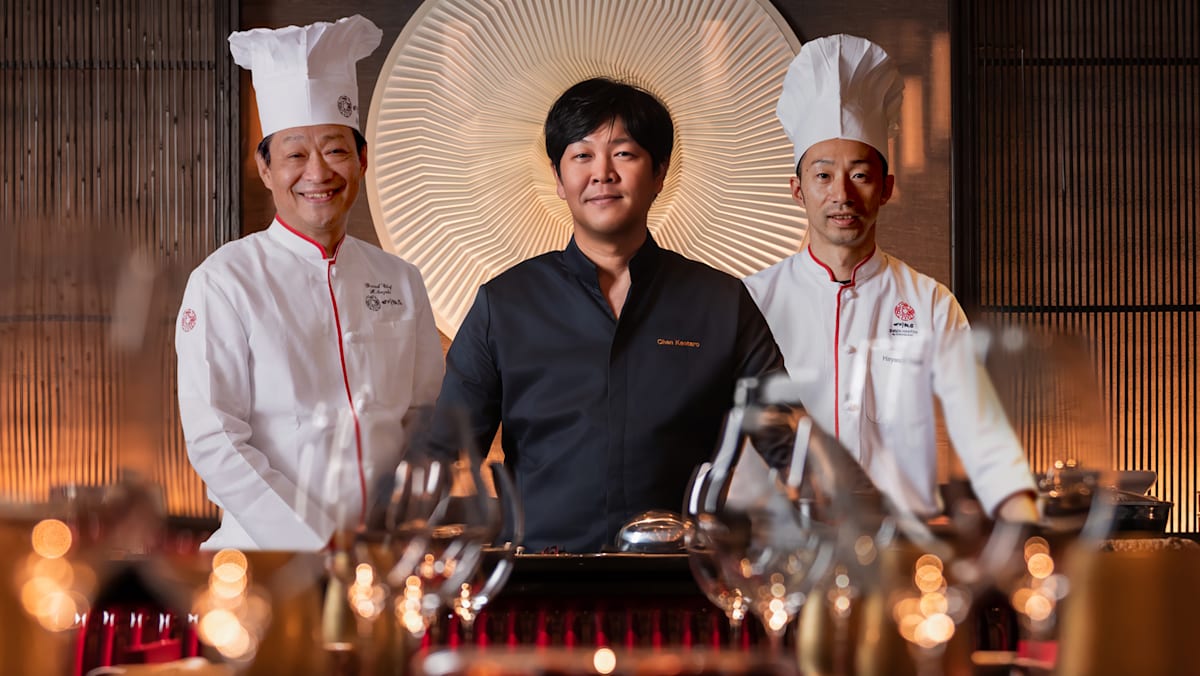
Hiroaki Suzuki trained under the founder of Japanese-Sichuan restaurant Shisen Hanten before mentoring his grandson, Chen Kentaro. Now, three generations of chefs are coming together for a special dinner in Singapore.
Hiroaki Suzuki (left) trained under Shisen Hanten founder Chen Kenmin before mentoring his grandson, Chen Kentaro (centre). Together with Yuya Hayashi (right), they continue the restaurant’s culinary traditions. (Photo: Shisen Hanten by Chen Kentaro)
This audio is generated by an AI tool.
When chef Hiroaki Suzuki joined Shisen Hanten in Tokyo in 1982, he trained under its founder, the late Chen Kenmin, widely regarded as Japan’s “father of Sichuan cuisine”. “He never hid his cooking skills,” the 62-year-old recalled in an email interview with CNA Luxury. Today, Suzuki is the restaurant group’s culinary director in Japan, passing on what he learnt from Kenmin to younger chefs, including the founder’s grandson, Chen Kentaro.
In an interesting reversal of roles, the 46-year-old Kentaro is now Suzuki’s boss, despite having learnt his craft from the older chef. Their relationship is a reminder that in a family business, traditions need not be passed down through bloodlines alone. Long-serving employees like Suzuki can become custodians of the family’s knowledge and values, helping to preserve its legacy across generations.
Come Nov 6, diners in Singapore will have a rare opportunity to taste that legacy when Suzuki and Kentaro join another of their proteges, Yuya Hayashi, for a one-night-only six-hands dinner at Shisen Hanten by Chen Kentaro. Together, the three chefs will present an eight-course menu tracing the evolution of the restaurant’s distinctive Japanese-Sichuan cuisine.
As Shisen Hanten’s culinary director in Japan, Hiroaki Suzuki continues to uphold the exacting standards instilled in him by the restaurant’s founder, Chen Kenmin. (Photo: Shisen Hanten by Chen Kentaro)
Shisen Hanten was founded in 1958, when Chen Kenmin, who had moved from Sichuan to Japan six years earlier, opened the restaurant in Tokyo. There, he developed Chuka Szechwan Ryori, a distinctive style of cooking that combined the bold flavours of Sichuan cuisine with Japanese ingredients and techniques.
His son, the late Chen Kenichi, subsequently expanded the family business and became a household name as one of Japan’s original Iron Chefs. Kentaro, who joined the restaurant at 21, eventually took over the reins, opening Shisen Hanten by Chen Kentaro in Singapore in 2014. The restaurant earned two Michelin stars in 2016 and currently holds one. Through it all, Suzuki has remained a constant presence.
“I have known chef Kentaro since he was a child,” Suzuki recalled. “He loves having fun, has a slightly mischievous side, and is a very playful and cheerful person.”
View this post on Instagram A post shared by Shisen Hanten by Chen Kentaro (@shisenhanten)
A post shared by Shisen Hanten by Chen Kentaro (@shisenhanten)
Kentaro remembers Suzuki as a demanding perfectionist. “What always impressed me most is his uncompromising attitude towards taste,” he said. “Even with the smallest difference in heat, seasoning or flavour, he would always ask, ‘Why did this happen?’ and ‘How can we make it even better?’”
That insistence on understanding why something works has shaped Kentaro’s approach to cooking. “To me, he is much more than a senior chef who taught me cooking techniques. He showed me, through his actions, what it truly means to be a chef of Shisen Hanten.”
For Chen Kentaro, preserving tradition is not about simply reproducing the dishes of the past, but allowing the cuisine to evolve with each new generation of chefs. (Photo: Shisen Hanten by Chen Kentaro)
If Suzuki is a totem of Shisen Hanten’s institutional memory, then 38-year-old Yuya Hayashi offers a glimpse into its future.
Born in China’s Fujian province and raised in Yokohama, Hayashi grew up around his family’s Chinese restaurant. He later trained at culinary school in Japan before joining Shisen Hanten at 25, where he spent six years mastering the basics before being allowed anywhere near the stove. He spent another six years training under Kentaro before relocating to Singapore, where he is now executive sous chef.
The main dining room of Shisen Hanten by Chen Kentaro, which has been serving its distinctive Japanese-Sichuan cuisine in Singapore since 2014. (Photo: Shisen Hanten by Chen Kentaro)
Like Kentaro, Hayashi remembers Suzuki as a formidable teacher. “There is one story I still remember very clearly. I was in my second year at Shisen Hanten in Japan. One day, some guests came to visit our kitchen. I was so caught up with my own work that I failed to greet them properly. After the guests left, chef Suzuki became extremely angry with me and said, ‘Why can’t you greet the guests with energy and enthusiasm? If you can’t even greet the guests properly, then get out of the kitchen!’” he recalled.
That incident speaks to the heart of the Chen family’s guiding principle of saishin kore ai , loosely translated to pouring love and care into cooking for the enjoyment of others. “At that time, as a trainee, I was too inexperienced to fully understand its meaning,” Hayashi said. “However, this lesson has stayed with me throughout my career.”
A TASTE OF TRADITION
An illustrated preview of selected dishes from Shisen Hanten’s eight-course six-hands dinner, including the Phoenix Platter, chicken liver chawanmushi with hairy crab roe soup and wok-fried A5 wagyu sirloin with red peppers. (Illustration: Shisen Hanten by Chen Kentaro)
That philosophy will be on display at the Nov 6 dinner, with dishes that showcase Shisen Hanten’s classical foundations and evolution. Suzuki will prepare the opening Phoenix Platter, an elaborate cold appetiser that highlights his precise knife work and presentation skills, in front of guests.
Other courses include chicken liver chawanmushi with hairy crab roe soup and wok-fried A5 wagyu sirloin with red peppers. There is also a luxurious interpretation of Shisen Hanten’s signature mapo tofu, made with lobster and Sichuan pepper meat sauce.
“At Shisen Hanten, we have never simply continued cooking the same dishes since my grandfather’s generation,” Kentaro explained. “We protect what is important, but at the same time, our cuisine has continued to evolve with each generation, each place and each chef.
“Through the dishes created by the three of us, I hope our guests can feel that tradition is not something we simply preserve. It is something we pass on, evolve, and carry into the future.”
The Six-hands Master and Disciples Dinner takes place on Nov 6, from 7pm to 10pm, at Shisen Hanten by Chen Kentaro, Level 35, Hilton Singapore Orchard.
A single handpicked story that we think you shouldn't miss. Just one a day.
铃木博明曾在日川餐厅四川饭店创始人门下学习厨艺,之后又指导他的孙子陈健太郎。如今,三代厨师齐聚新加坡,共赴一场特别晚宴。
铃木博明(左)曾师从四川饭店创始人陈健民,之后又指导他的孙子陈健太郎(中)。他们与林雄也(右)一起,传承着这家餐厅的烹饪传统。(图片:陈健太郎摄于四川饭店)
这段音频由人工智能工具生成。
1982年,主厨铃木博明加入东京的川菜馆,师从创始人陈建民,后者被誉为日本“川菜之父”。现年62岁的铃木博明在接受CNA Luxury的邮件采访时回忆道:“他从不掩饰自己的厨艺。”如今,铃木博明是川菜馆集团在日本的烹饪总监,将他从陈建民那里学到的技艺传授给年轻一代的厨师,其中包括陈建民的孙子陈健太郎。
有趣的是,46岁的健太郎如今成了铃木的老板,尽管他的厨艺正是师从这位年长的厨师。他们的关系提醒我们,在家族企业中,传统并非只能通过血缘传承。像铃木这样长期服务于家族企业的员工,可以成为家族知识和价值观的守护者,帮助家族的传承代代相传。
11月6日,新加坡的食客将有机会品尝到这份传承。届时,铃木和陈健太郎将携手他们的另一位得意门生林雄也,在陈健太郎的“四川饭店”联袂献上一场仅此一晚的六手联弹晚宴。三位主厨将共同呈现一份八道菜的菜单,追溯这家餐厅独具特色的日川融合菜肴的演变历程。
作为紫泉饭店在日本的烹饪总监,铃木博明始终秉承着餐厅创始人陈健民先生灌输给他的严苛标准。(图片:陈健太郎摄紫泉饭店)
四川饭店创立于1958年,当时陈建民从四川移居日本六年,在东京开设了这家餐厅。在那里,他发展出一种独特的川菜料理风格,将川菜浓郁的风味与日本的食材和烹饪技法相结合。
他的儿子,已故的陈健一,后来将家族生意拓展壮大,并成为日本首批“铁人料理”之一,家喻户晓。21岁时加入餐厅的陈健太郎最终接管了餐厅,并于2014年在新加坡开设了“陈健太郎四川饭店”。该餐厅于2016年荣获米其林二星,目前仍保持着米其林一星的荣誉。一路走来,铃木始终是餐厅不可或缺的一部分。
“我从小就认识健太郎大厨,”铃木回忆道。“他喜欢玩乐,有点调皮,是个非常爱玩爱闹、开朗活泼的人。”
在 Instagram 上查看此帖子 由 Shisen Hanten by Chen Kentaro (@shisenhanten) 分享的帖子
陈健太郎 (@shisenhanten) 分享的石森汉田的帖子
健太郎回忆起铃木时说,他是一位要求极高的完美主义者。“最让我印象深刻的是他对口味毫不妥协的态度,”他说。“即使是火候、调味或味道上最细微的差别,他也会问,‘为什么会这样?’以及‘我们怎样才能做得更好?’”
这种对探究事物运作原理的执着,塑造了健太郎的烹饪理念。“对我而言,他远不止是一位教我烹饪技巧的前辈厨师。他用自己的行动向我展现了成为四川饭店厨师的真正意义。”
在陈健太郎看来,传承传统并非简单地复制过去的菜肴,而是让料理随着每一代厨师的传承而不断发展演变。(图片:陈健太郎摄于四川饭店)
如果说铃木是紫泉饭店机构记忆的象征,那么38岁的林雄也则让我们得以一窥其未来。
林先生出生于中国福建省,在横滨长大,从小就在自家经营的中餐馆里耳濡目染。后来他前往日本的烹饪学校深造,25岁时加入四川饭店,在那里花了六年时间打拼基础,才被允许上厨。之后他又在Kentaro的指导下学习了六年,随后移居新加坡,如今担任行政副主厨。
位于新加坡的“陈健太郎餐厅”(Shisen Hanten by Chen Kentaro)主餐厅,自2014年起便开始供应其独具特色的日式川菜。(图片:陈健太郎餐厅)
和健太郎一样,林也记得铃木是一位令人敬畏的老师。“我至今仍清楚地记得一件事。当时我在日本的紫泉饭店学习第二年。有一天,一些客人来参观我们的厨房。我当时太专注于自己的工作,以至于没有好好地迎接他们。客人离开后,铃木师傅非常生气,对我说:‘你为什么不能热情洋溢地迎接客人?如果你连好好迎接客人都做不到,那就滚出厨房!’”他回忆道。
那件事体现了陈家“用心烹饪,倾注爱与关怀”的经营理念的核心,其含义大致可以理解为将爱与关怀融入烹饪,为他人带来愉悦的体验。“当时我还是个学徒,经验不足,无法完全理解它的含义,”林说道,“然而,这个教训却一直伴随着我的职业生涯。”
传统风味
精选菜肴预览,选自四川饭店八道菜六手料理晚宴,包括凤凰拼盘、鸡肝茶碗蒸配大闸蟹籽汤和红椒A5和牛西冷。(插图:陈健太郎摄,四川饭店)
这一理念将在11月6日的晚宴上得以充分展现,届时将推出一系列菜肴,彰显四川饭店的经典根基及其发展演变。铃木先生将在宾客面前现场烹制开胃菜“凤凰拼盘”,这道精致的冷盘将充分展现他精湛的刀工和摆盘技巧。
其他菜品包括鸡肝茶碗蒸配大闸蟹籽汤和红椒炒A5和牛西冷。此外,还有一道升级版的四川饭店招牌菜麻婆豆腐,加入了龙虾和四川花椒肉酱。
“自祖父那一代以来,四川饭店从来没有简单地重复烹饪同样的菜肴,”健太郎解释说。“我们保护重要的东西,但与此同时,我们的料理也随着每一代人、每一个地方和每一位厨师而不断发展演变。”
“我希望通过我们三人共同创作的菜肴,能让宾客们感受到,传统不仅仅是我们简单地保存下来的东西,更是我们传承、发展并带向未来的东西。”
六手拳师徒晚宴将于 11 月 6 日晚上 7 点至 10 点在新加坡乌节希尔顿酒店 35 楼陈健太郎餐厅举行。
每天一篇,我们精心挑选一篇您不容错过的精彩故事。