No government should fear having opposition in parliament, says former SM Jayakumar前SM Jayakumar表示,任何政府都不应该害怕在议会中遇到反对派。
The former senior minister recalls honing his parliamentary skills, after being “arrowed” by Lee Kuan Yew to field questions from opposition leader JB Jeyaretnam.
新闻视频
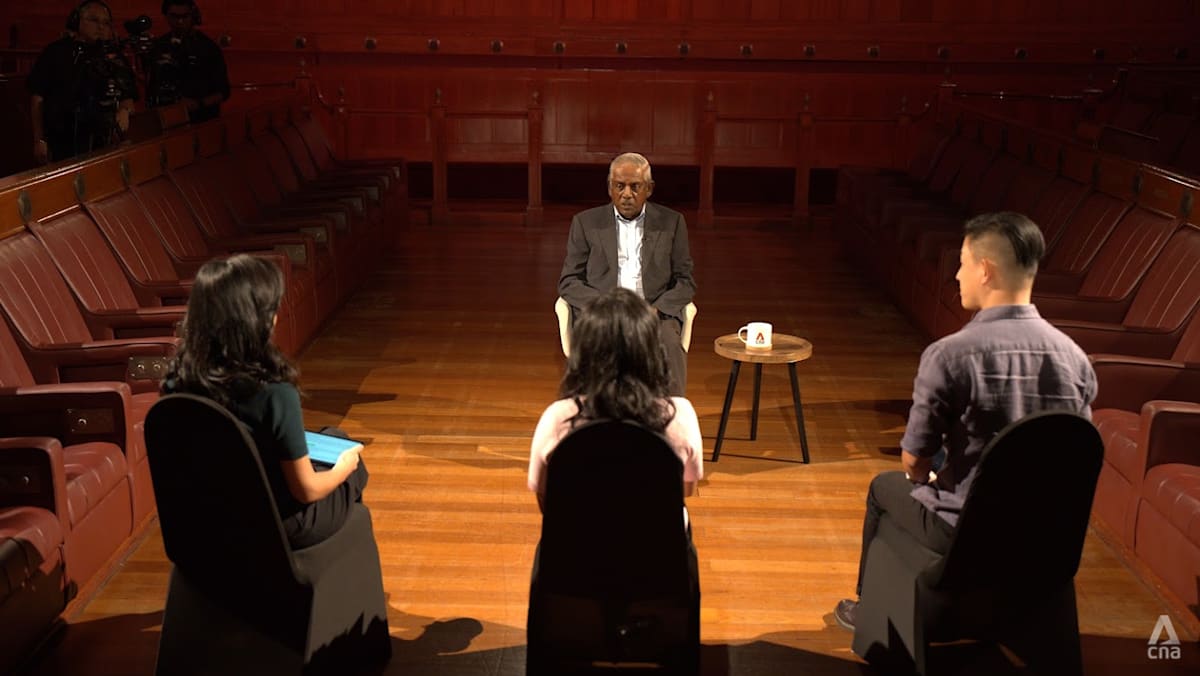
The former senior minister recalls honing his parliamentary skills, after being “arrowed” by Lee Kuan Yew to field questions from opposition leader JB Jeyaretnam.
Former Senior Minister S Jayakumar during an exclusive interview with CNA at The Arts House at the old parliament building on Sep 14, 2026. (Photo: CNA/Timothy De Souza)
This audio is generated by an AI tool.
This is the last of three articles from CNA’s interview with former Senior Minister S Jayakumar, who recently launched his book Creating Three Unique Singapore Laws: An Inside Story. The book chronicles how the elected presidency, Group Representation Constituencies and Non-Constituency Members of Parliament were established through constitutional amendment.
SINGAPORE: Newly appointed as a political office holder in 1981, Professor S Jayakumar was “arrowed” by then-Prime Minister Lee Kuan Yew to field questions in parliament from lone opposition lawmaker JB Jeyaretnam.
The Workers’ Party leader had won the Anson by-election earlier that year to become the first opposition Member of Parliament.
Prof Jayakumar, then minister of state for home affairs and law, said handling Mr Jeyaretnam’s questions improved his parliamentary skills and convinced him that no government should fear having an opposition in the House.
CNA Games Guess Word Crack the word, one row at a time Buzzword Create words using the given letters Mini Sudoku Tiny puzzle, mighty brain teaser Mini Crossword Small grid, big challenge Word Search Spot as many words as you can Show More Show Less Mr Jeyaretnam spoke up more than 40 times, tabling questions on topics such as human rights, law and order, security and punishments. “It had a big effect on me in the sense that I had to be on my toes. You never knew what supplementary questions he was going to ask, where he would be coming from, and I had to do that much greater preparation,” Prof Jayakumar told CNA in an exclusive interview held at the Old Parliament House, now The Arts House, where laws were debated and passed. “The whole experience, I guess, enabled me to hone my skills as a debater and explainer of policies and issues.” It also taught him within a very short span of time how to respond effectively to questions in parliament. “But more importantly, it also made me convinced that the opposition had an effective role in parliament,” he added. “No government should really be scared or afraid of having opposition presence in parliament, and I think it convinced me that it was necessary for the democratic process in Singapore.”
Mr Jeyaretnam spoke up more than 40 times, tabling questions on topics such as human rights, law and order, security and punishments.
“It had a big effect on me in the sense that I had to be on my toes. You never knew what supplementary questions he was going to ask, where he would be coming from, and I had to do that much greater preparation,” Prof Jayakumar told CNA in an exclusive interview held at the Old Parliament House, now The Arts House, where laws were debated and passed.
“The whole experience, I guess, enabled me to hone my skills as a debater and explainer of policies and issues.”
It also taught him within a very short span of time how to respond effectively to questions in parliament.
“But more importantly, it also made me convinced that the opposition had an effective role in parliament,” he added.
“No government should really be scared or afraid of having opposition presence in parliament, and I think it convinced me that it was necessary for the democratic process in Singapore.”
CREATING THE NCMP SCHEME
In his book, Prof Jayakumar wrote that the Non-Constituency Member of Parliament (NCMP) scheme was first mooted to ensure that younger ministers from the ruling People’s Action Party would always have “sparring partners”, as he had in Mr Jeyaretnam.
Today, NCMP seats go to the best-performing losing opposition candidates if fewer than 12 opposition candidates are elected in a General Election. The two current NCMPs are Mr Andre Low and Ms Eileen Chong of the Workers’ Party.
From a debate standpoint, Prof Jayakumar said he never found any difference between facing an elected MP and an NCMP.
“It all depends on how articulate and persuasive that particular opposition member is. The fact that he did not have a constituency, the only difference is he could not say, ‘I've spoken to my constituents and these are the issues they want me to raise’,” he said.
“But quite apart from that, I did not sense any big difference in dealing with NCMP or elected opposition MP.”
When the scheme was introduced, NCMPs could not vote on matters such as constitutional amendments and supply bills. Prof Jayakumar saw “no indication” that this made it harder for the public to accept them as full participants in parliamentary proceedings.
“I don't think people paid attention to the details of what they could vote on, what they could not vote on,” he said.
Deputy Prime Minister and Minister for Defence Tony Tan Keng Yam, Senior Minister Lee Kuan Yew, Prime Minister Goh Chok Tong, and Minister for Law and Foreign Affairs S Jayakumar at the swearing-in of MPs at Parliament House on Mar 25, 2002. (Photo: National Archives of Singapore)
In 1984, the first General Election with the scheme in place, opposition candidates rejected the seats and the positions went unfilled.
“Initially, yes, one or two did not accept. But we did not regret at that time making the amendment, because it was a mechanism that could be defended, that we are prepared to have this mechanism, we are prepared to have opposition in parliament,” said Prof Jayakumar.
He noted that opposition parties have accepted the seats in every General Election since.
“Whatever they may say, they have actually accepted and taken up the opposition NCMP seats,” he said.
In his book, Prof Jayakumar wrote that the scheme also served an “unintended purpose” by letting unsuccessful opposition candidates raise their profiles through parliamentary performances, improving their chances at later elections.
He told CNA he does not see this as a negative development, as it still helps guarantee the number of opposition lawmakers in parliament.
He added that the scheme would remain relevant even if parliament one day had at least 12 elected opposition members. The objective of a minimum opposition presence is achieved whether that number is made up of elected or non-constituency members, he said.
During discussions on the NCMP scheme, the Cabinet relied on a number of “informal indicative votes”, said Prof Jayakumar.
These tracked the constantly shifting views as talks progressed, he said.
“It was still in the spirit of reaching a consensus. But we had to keep track of which option seems to have a greater majority,” said Prof Jayakumar.
While there was no time pressure on pushing the policy across the line, he said “we could not have interminable, non-ending meetings”.
“Don't forget Cabinet also had to discuss so many other major issues of the day. We had to set aside time for this,” he said.
Prof Jayakumar added that deliberations today would take far less time because of advances in communication tools.
“In those days we didn't have email, we didn't have Skype, we didn't have Zoom. So everything had to be done by either physical meetings or through hard copy letters which we cannot imagine today,” he said.
“Just remember that this was in the 80s, and two years at that time may not have been long. Today, probably the NCMP (discussions) would have been concluded within less than a year.”
Get our pick of top stories and thought-provoking articles in your inbox
Stay updated with notifications for breaking news and our best stories
Join our channel for the top reads for the day on your preferred chat app
这位前高级部长回忆说,他曾被李光耀“指派”回答反对党领袖JB Jeyaretnam的质询,从而磨练了自己的议会技巧。
2026年9月14日,前高级部长S Jayakumar在旧国会大厦的艺术中心接受CNA独家专访。(图片:CNA/Timothy De Souza)
这段音频由人工智能工具生成。
这是亚洲新闻台(CNA)对前高级部长S·贾古玛的采访系列文章的最后一篇。贾古玛近期发布了他的新书《缔造新加坡三项独特法律:内幕故事》。该书详细记录了新加坡如何通过宪法修正案设立民选总统制、集选区制和非选区议员制。
新加坡:1981 年,S Jayakumar 教授被任命为政治官员,当时的总理李光耀指派他在国会回答唯一反对派议员 JB Jeyaretnam 的质询。
工人党领袖在那年早些时候赢得了安森补选,成为国会首位反对党议员。
时任内政和法律部国务部长的贾亚库马尔教授表示,处理杰亚雷特南先生的问题提高了他的议会技巧,并让他确信任何政府都不应该害怕在议会中存在反对派。
CNA游戏 猜词游戏 逐行破解单词 流行词游戏 用给定的字母组成单词 迷你数独 小谜题,脑力挑战 迷你填字游戏 小方格,大挑战 单词搜索 尽可能多地找出单词 显示更多 显示更少 杰亚雷特南先生发言超过40次,就人权、法律与秩序、安全和惩罚等议题提出问题。“这对我影响很大,因为我必须时刻保持警惕。你永远不知道他会问什么补充问题,他的出发点是什么,所以我必须做更充分的准备,”杰亚库马尔教授在旧国会大厦(现为艺术大厦)接受CNA独家采访时表示。旧国会大厦曾是辩论和通过法律的地方。“我想,整个经历让我磨练了作为辩论者和政策及问题解释者的技能。” 这也让他迅速学会了如何在议会中有效地回答问题。“但更重要的是,它也让我确信反对党在议会中发挥着有效的作用,”他补充道。 “任何政府都不应该真正害怕或惧怕议会中有反对派的存在,我认为这让我确信,这对于新加坡的民主进程是必要的。”
杰亚勒特南先生发言超过 40 次,提出的问题涉及人权、法律和秩序、安全和惩罚等议题。
“这对我影响很大,因为我不得不时刻保持警惕。你永远不知道他会问什么补充问题,他的出发点是什么,所以我必须做好更充分的准备,”杰亚库马尔教授在旧国会大厦(现为艺术大厦)接受亚洲新闻台独家专访时表示。旧国会大厦曾是辩论和通过法律的地方。
“我想,整个经历让我能够磨练自己作为辩论者和政策及问题解释者的技能。”
它还在很短的时间内教会了他如何有效地回答议会中的问题。
“但更重要的是,这也让我确信反对派在议会中发挥着有效作用,”他补充道。
“任何政府都不应该真正害怕或惧怕议会中有反对派的存在,我认为这让我确信,这对于新加坡的民主进程是必要的。”
创建 NCMP 计划
贾亚库玛教授在他的书中写道,非选区议员(NCMP)制度最初是为了确保执政的人民行动党的年轻部长们总能有“切磋伙伴”,就像他与杰亚雷特南先生的切磋一样。
如今,如果大选中当选的反对党候选人少于12人,则非选区议员席位将授予得票最高的落选反对党候选人。现任两名非选区议员分别是工人党的刘程强先生和庄爱玲女士。
贾亚库马尔教授表示,从辩论的角度来看,他从未发现面对民选议员和面对非选区议员之间有任何区别。
“这完全取决于那位反对派成员的口才和说服力。他没有选区,唯一的区别是他不能说,‘我已经和我的选民沟通过了,这些是他们希望我提出的问题’,”他说。
“但除此之外,我感觉与非选区议员或民选反对党议员打交道并没有什么太大的区别。”
该方案实施之初,非选区议员(NCMP)无权就宪法修正案和拨款法案等事项进行投票。贾亚库马尔教授认为,没有任何迹象表明这会使公众更难接受他们作为议会程序的正式参与者。
他说:“我认为人们并没有关注他们可以投票表决哪些事项,不能投票表决哪些事项的细节。”
2002年3月25日,副总理兼国防部长陈庆炎、国务资政李光耀、总理吴作栋和律政兼外交部长S·贾古玛在国会大厦出席议员宣誓就职仪式。(照片:新加坡国家档案馆)
1984 年,该方案实施后的第一次大选中,反对派候选人拒绝接受这些席位,导致这些职位空缺。
“起初,确实有一两个人不接受。但我们当时并不后悔做出这项修正案,因为这是一个可以捍卫的机制,我们已经准备好接受这个机制,我们也准备好面对议会中的反对意见,”贾亚库马尔教授说道。
他指出,自那以后,反对党在历届大选中都接受了这些席位。
“不管他们怎么说,他们实际上已经接受并就任了反对党非选区议员席位,”他说。
贾亚库马尔教授在他的书中写道,该计划还起到了“意想不到的作用”,让竞选失败的反对派候选人通过议会表现提升知名度,从而提高他们在以后选举中获胜的机会。
他告诉亚洲新闻台,他不认为这是一个负面的发展,因为这仍然有助于确保议会中反对党议员的数量。
他补充说,即使未来议会至少有12名民选反对党议员,该方案仍然有效。他表示,无论这些议员是民选的还是非选区议员,维持最低反对党人数的目标都能实现。
贾亚库马尔教授表示,在讨论非选区议员制度时,内阁依靠了一些“非正式的指示性投票”。
他说,这些记录反映了随着谈判进展而不断变化的观点。
“我们仍然秉持着达成共识的精神。但我们必须密切关注哪个选项似乎获得了更多支持,”贾亚库马尔教授说道。
虽然没有时间压力要推动这项政策通过,但他表示“我们不能没完没了地开会”。
“别忘了内阁当天还要讨论许多其他重大议题。我们必须为此腾出时间,”他说。
贾亚库马尔教授补充说,由于通讯工具的进步,今天的审议所需时间将大大减少。
他说:“那时候我们没有电子邮件,没有Skype,也没有Zoom。所以所有事情都只能通过面对面会议或纸质信件来完成,这在今天是难以想象的。”
“请记住,这是在80年代,当时的两年可能并不算长。如今,非选区多数党(的讨论)可能不到一年就能结束。”
订阅我们的邮件,即可获取精选热点新闻和引人深思的文章。
订阅通知,第一时间获取突发新闻和精彩报道。
加入我们的频道,即可在您常用的聊天应用上获取当日热门文章。