Pentagon tells Europeans to cool their rhetoric on Russia, sources say消息人士称,五角大楼已要求欧洲人缓和对俄罗斯的言辞。
Pentagon officials have in recent weeks asked several NATO countries to tone down their rhetoric regarding the threat posed by Russia, sources told Reuters.
Antoni Slodkowski, Gram Slattery and Andrius Sytas, Reuters
Share on Facebook (Opens in new window) Facebook
Share on X (Opens in new window) X
Share on Bluesky (Opens in new window) Bluesky
Share on Reddit (Opens in new window) Reddit
Share on LinkedIn (Opens in new window) LinkedIn
Share using Native tools Share Copied to clipboard
Share on Mail (Opens in new window) Mail
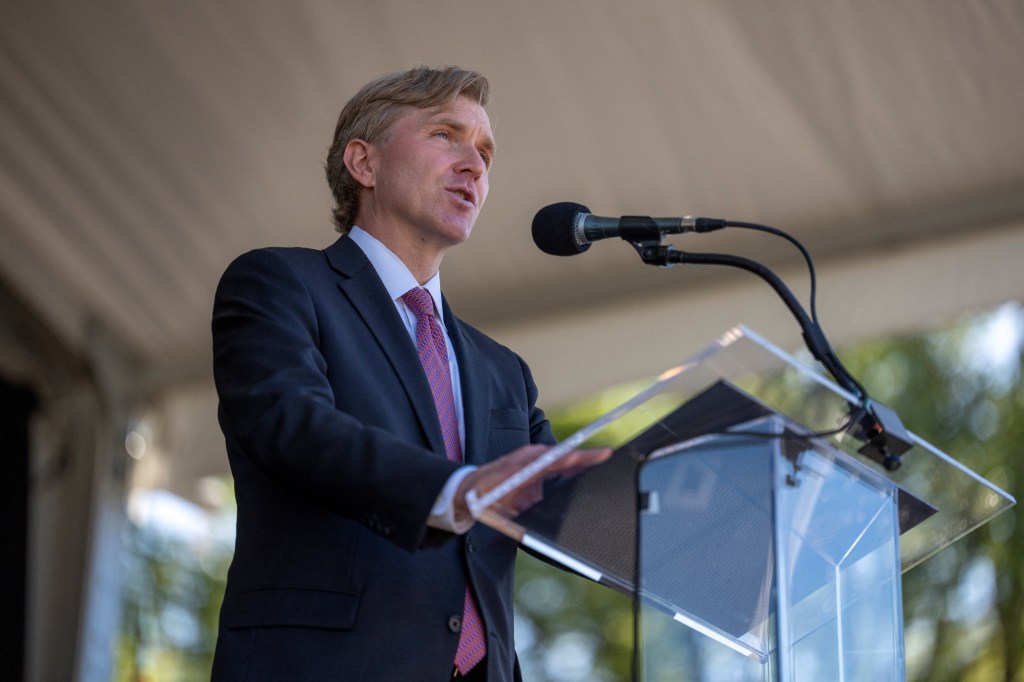
Elbridge Colby, U.S. under secretary of defense for policy, delivers remarks during the Desert Shield and Desert Storm Memorial dedication ceremony in Washington, DC, on Oct. 24, 2026. (Reuters/Daniel Heuer)
Pentagon officials have in recent weeks asked several NATO countries to tone down their rhetoric regarding the threat posed by Russia, arguing that some statements by European leaders and officials have undermined continental security, four people familiar with the matter said.
Among the nations that have received messages urging them to keep public statements in check are Lithuania, Latvia and Estonia, said the people, who spoke on condition of anonymity. It was not clear if the messages, which were delivered in bilateral meetings, were conveyed to other European governments.
The U.S. requests come as the Trump administration restarts an effort to press for a negotiated end to the full-scale war in Ukraine, now well into its fifth year. The latest push has blended incentives for Russia – including sanctions relief – with pressure on Ukraine to halt its attacks on Russian energy infrastructure.
Asked for comment, a Pentagon official said: “Private conversations among allies are just that, so we will not comment on these allegations.”
Among the comments that have drawn U.S. officials’ attention are suggestions by European leaders that Russia is cornered and resorting to increasingly desperate measures as its invasion of Ukraine slows to a crawl, one of the people said.
Pentagon policy chief Elbridge Colby, a key figure in an ongoing review of U.S. troop levels in Europe, was one of the U.S. officials delivering the message, the people said. Reuters could not determine what other officials were involved.
None of the people, who include three European officials and a U.S. official, suggested the advice was communicated in a confrontational manner.
Avoid ‘poking’ Russia
The U.S. messages reflect a debate within NATO regarding how to publicly address the threat of an increasingly assertive Russia.
Some Western officials have argued that emphasizing the threat posed by Moscow could play into the hands of the Kremlin, which they say seeks to sow fear and undermine support for Ukraine.
Others argue European governments must be transparent to show their electorates that sacrifice and resources are needed to keep Moscow at bay. That is especially true as Russia appears to accelerate a covert campaign of sabotage throughout the continent.
Russia has denied that it is pursuing such a campaign.
One of the people familiar told Reuters that Colby told a Baltic official recently that there should be no “poking” directed at the Russians.
The person said Colby pointed to Europeans publicly suggesting that Russia was “cornered like a rat” as an example of unhelpful rhetoric.
It was not clear what specific statement Colby was referring to. However, Estonian Prime Minister Kristen Michal referred to Putin as a “rat in a corner” in late September, suggesting the Russian leader was resorting to sabotage efforts in Europe as Russia had become increasingly bogged down in Ukraine.
“We are helping you. The Americans are there,” said a separate European official, describing the Pentagon’s recent private messaging. “Just don’t be loud. Don’t make noise.”
In a separate recent meeting, the Pentagon urged an Estonian delegation to be “measured” in its communications, according to a person briefed on the encounter, though the person did not say Pentagon officials complained about any specific statement.
The defense ministries of Lithuania, Latvia and Estonia did not respond to requests for comment, while NATO declined to comment.
Moscow tests Europe’s resolve
One of the European officials said that the Pentagon’s advice, while cordial, was baffling, given that intelligence services in the Baltic states have in recent months consistently played down the probability of Russia testing NATO’s mutual defense provisions.
Other NATO intelligence services, by contrast, have publicly warned that Russia could dramatically ramp up its sabotage campaign in the near future.
The Pentagon messages to NATO officials come at a fraught time for European security.
Moscow has recently intensified its campaign of deniable attacks on NATO countries, Western intelligence officials have said.
On Wednesday, German prosecutors said two Belarusians were arrested for allegedly planning to set fire to a building or critical infrastructure facility in the Nuremberg area. In September, the German government blamed Russia for an attempted drone attack at Leipzig/Halle Airport, allegations Moscow has denied.
At the same time, U.S. officials have been discussing potential business deals with Russia as part of the Trump administration’s push for peace in Ukraine. Those efforts have drawn mixed reactions from European officials, many of whom are pushing for the Kremlin’s continued economic isolation.
Pentagon planners, meanwhile, are reviewing Washington’s force posture in Europe, a process that could see a sharp drawdown in America’s troop presence on the continent.
US officials have said European NATO members need to assume more responsibility for their own defense, particularly as the US focuses on threats in the Middle East, Latin America and East Asia.
Antoni Slodkowski、Gram Slattery 和 Andrius Sytas,路透社
分享至 Facebook(在新窗口中打开) Facebook
分享至 X(在新窗口中打开)X
在 Bluesky 上分享(在新窗口中打开)Bluesky
分享到 Reddit(在新窗口中打开)
在领英上分享(在新窗口中打开)领英
使用原生工具分享 已复制到剪贴板
分享至邮件(在新窗口中打开)邮件
2026年10月24日,美国国防部负责政策的副部长埃尔布里奇·科尔比在华盛顿特区举行的“沙漠盾牌”和“沙漠风暴”行动纪念碑落成典礼上发表讲话。(路透社/丹尼尔·休尔摄)
据四位知情人士透露,五角大楼官员最近几周要求几个北约国家缓和有关俄罗斯威胁的言论,理由是欧洲领导人和官员的一些声明破坏了欧洲大陆的安全。
据不愿透露姓名的人士称,立陶宛、拉脱维亚和爱沙尼亚等国已收到敦促其谨慎发表公开言论的信息。目前尚不清楚这些在双边会晤中传达的信息是否已转达给其他欧洲国家政府。
美国提出这些要求之际,特朗普政府重启了旨在通过谈判结束乌克兰全面战争的努力,这场战争已持续五年之久。最新的努力既向俄罗斯提供激励措施(包括解除制裁),又向乌克兰施压,要求其停止对俄罗斯能源基础设施的袭击。
当被问及此事时,一位五角大楼官员表示:“盟友之间的私人谈话仅此而已,因此我们不会对这些指控发表评论。”
一位知情人士表示,引起美国官员注意的评论包括欧洲领导人暗示,随着俄罗斯入侵乌克兰的步伐越来越慢,俄罗斯已被逼入绝境,正在采取越来越孤注一掷的措施。
知情人士透露,五角大楼政策主管埃尔布里奇·科尔比是传达这一信息的美国官员之一,他是正在进行的美国驻欧兵力评估的关键人物。路透社无法确定还有哪些官员参与其中。
包括三名欧洲官员和一名美国官员在内的所有人都表示,他们没有以对抗的方式传达这一建议。
避免“挑衅”俄罗斯
美国发出的信息反映了北约内部关于如何公开应对日益强势的俄罗斯所构成的威胁的辩论。
一些西方官员认为,强调莫斯科构成的威胁可能会正中克里姆林宫的下怀,他们说克里姆林宫试图散布恐惧,破坏对乌克兰的支持。
另一些人则认为,欧洲各国政府必须保持透明,向选民表明,遏制莫斯科需要付出牺牲和资源。鉴于俄罗斯似乎正在加速在整个欧洲大陆开展秘密破坏活动,这一点尤为重要。
俄罗斯否认正在开展此类行动。
一位知情人士告诉路透社,科尔比最近告诉一位波罗的海国家官员,不应该对俄罗斯人进行任何“挑衅”。
该人士表示,科尔比指出,欧洲人公开表示俄罗斯“像老鼠一样被逼到了墙角”,这就是无益言论的例子。
目前尚不清楚科尔比具体指的是哪份声明。然而,爱沙尼亚总理克里斯滕·米哈尔在9月下旬曾将普京比作“角落里的老鼠”,暗示随着俄罗斯在乌克兰问题上陷入越来越深的困境,这位俄罗斯领导人正在欧洲进行破坏活动。
一位欧洲官员在描述五角大楼最近的私下信息时说:“我们正在帮助你们。美国人就在那里。只是别出声,别制造噪音。”
据一位了解此次会面情况的人士透露,在最近的一次单独会晤中,五角大楼敦促爱沙尼亚代表团在沟通方面要“谨慎”,但该人士并未表示五角大楼官员对任何具体声明提出异议。
立陶宛、拉脱维亚和爱沙尼亚国防部均未回应置评请求,而北约拒绝置评。
莫斯科考验欧洲的决心
一位欧洲官员表示,五角大楼的建议虽然友好,但令人费解,因为波罗的海国家的情报机构近几个月来一直淡化俄罗斯试探北约共同防御条款的可能性。
相比之下,其他北约情报机构已公开警告称,俄罗斯可能在不久的将来大幅加强其破坏活动。
五角大楼向北约官员发出的信息正值欧洲安全局势紧张之际。
西方情报官员表示,莫斯科最近加大了对北约国家发动可否认袭击的力度。
周三,德国检察官表示,两名白俄罗斯人因涉嫌策划在纽伦堡地区纵火焚烧建筑物或重要基础设施而被捕。今年9月,德国政府指责俄罗斯企图对莱比锡/哈勒机场发动无人机袭击,但莫斯科否认了这些指控。
与此同时,作为特朗普政府推动乌克兰和平进程的一部分,美国官员一直在与俄罗斯探讨潜在的商业交易。这些努力在欧洲官员中引起了不同的反响,许多欧洲官员坚持继续对克里姆林宫实施经济孤立。
与此同时,五角大楼的规划人员正在审查华盛顿在欧洲的兵力部署,这一过程可能会导致美国在欧洲大陆的驻军大幅减少。
美国官员表示,欧洲北约成员国需要承担更多自身防务责任,尤其是在美国将注意力集中在中东、拉丁美洲和东亚的威胁上之际。