Learnings from Canton Fair从广交会中汲取的经验教训
Canton Fair is celebrating its 70th anniversary, as it was first held in the spring of 1957. It is in its 140th edition because it is held twice a year, known as the Autumn and Spring sessions.
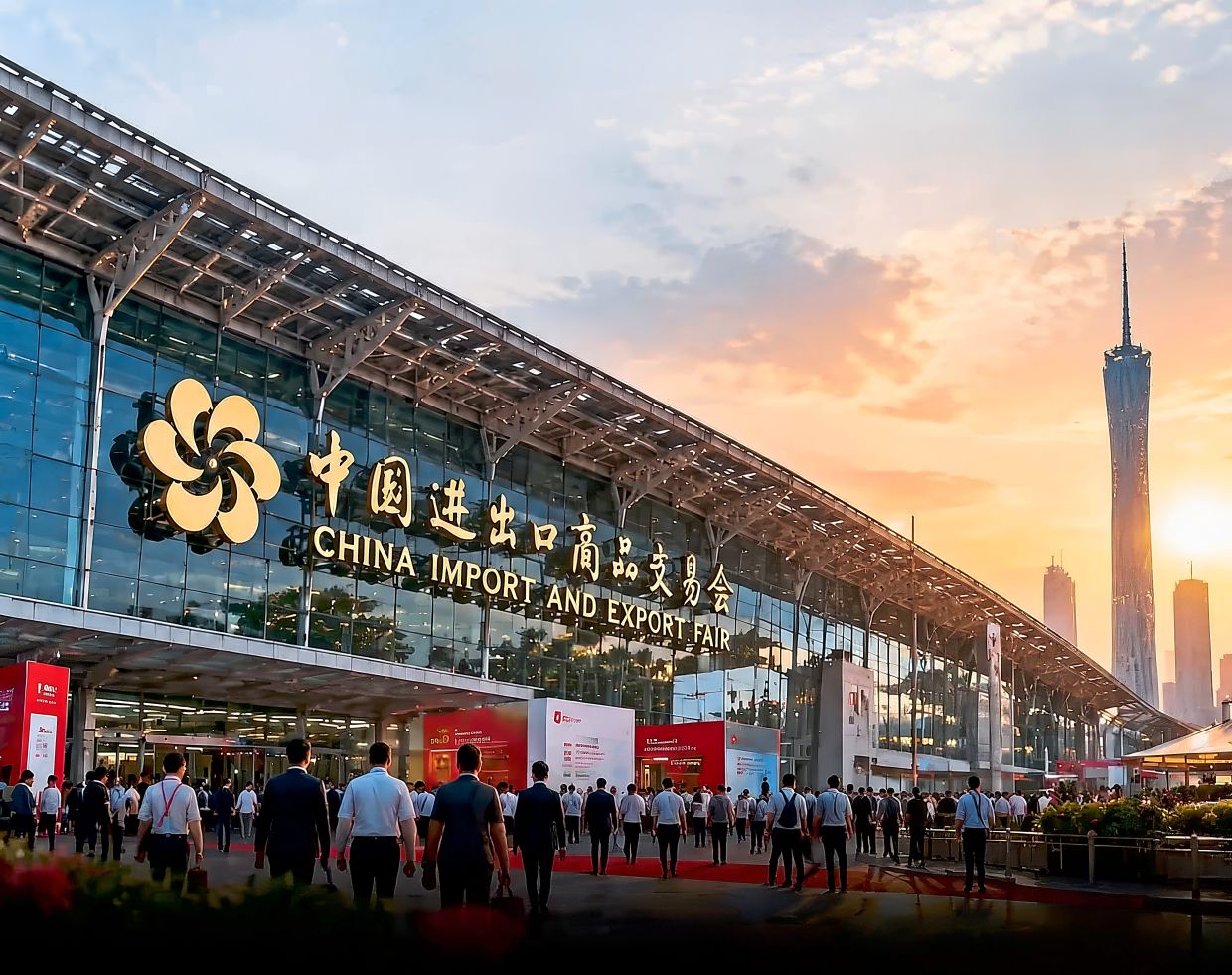
CANTON Fair is celebrating its 70th anniversary, as it was first held in the spring of 1957. It is in its 140th edition because it is held twice a year, known as the Autumn and Spring sessions.
I brought some of my team members to join this year’s Autumn edition. The idea was not only to seek out business opportunities but also to learn about the advancements China has made over the years through the country’s most important trade fair.
I felt visiting the Canton Fair would be a good opportunity to see the real economy for myself, instead of just focusing on the themes of the day, such as artificial intelligence (AI), technology and electric vehicles (EVs).
The fair is deeply rooted due to its remarkable uninterrupted run of over 70 years despite turbulent periods such as the Cultural Revolution, the Covid-19 pandemic (a digital version was conducted), wars, economic meltdowns and others.
From its first debut at China Export Commodities Exhibition Hall in Guangzhou, where China wanted to promote to the world that it had what it takes to become a manufacturer and exporter to other countries, the goal today is to show its capability to be a key player in global trade regardless of sanctions, trade tariffs or economic uncertainty.
The impressive statistics speak for themselves. Canton Fair has grown by leaps and bounds from 1,200 enterprises to over 26,000 enterprises participating today.
In the past, it was largely tea, silk and agricultural produce. Today, it is AI, green technology, robotics, EVs and many others.
Whole-of-government support
While China’s economy has slowed down in the past decade (some would argue it has been a soft-landing recession masked by government interventions and policy support), its businesses and enterprises remain extremely innovative and competitive.
For a trade fair to attract global business visitors, there must be a value proposition. Whether it is innovation, price affordability or simply variety, the recent Canton Fair was truly an eye-opener in terms of its scale and offerings.
In addition to that, what I witnessed was a whole-of-government support and whole-of-city effort to promote the trade fair. From the airport onwards, there were special dedicated lanes and immigration counters for participants like us.
Thereafter, an abundance of special discounts and free gifts from retailers and food and beverage outlets were available across the city to fair participants. A dedicated “super app” with features such as information, meeting rooms and translator bookings has everything in one place.
Even the infrastructure development, coupled with town planning, had the Canton Fair in mind. For instance, the provincial government built the modern Pazhou complex, complete with public transport accessibility, where a massive exhibition venue accommodates 1.55 million sq m of exhibitor space compared with only 13,000 sq m back in 1957.
An interesting anecdote is also the role that the late Premier Zhou Enlai played, as he personally ensured the Canton Fair would continue running twice a year amid the Cultural Revolution, keeping China’s crucial global economic contact point alive during this tumultuous period in history.
This explains how much emphasis the government had placed on trade and commerce, which laid the foundation for today. This is what governments around the world should learn – to facilitate and support but not get in the way of businesses via red tape or bureaucracy.
Observation on youth employment
Despite all the positives, I did notice that China’s economy is not like what it was a few years ago.
Food prices, for one, have come down and, relative to the serving portions, food is so much more affordable than in Malaysia. Luxury shopping has also been impacted, as we saw little foot traffic in high-end shops and foreign brands.
That said, the local Pop Mart and Top Toy stores were crowded with youths and tourists willing to spend on blind boxes containing toy figurines.
Many youths are facing increasing unemployment, graduating from a good university with a degree no longer guaranteeing a solid private-sector job.
The gig economy is keeping things moving, with youths ferrying passengers with Didi (like our Grab), taking odd jobs as salespeople or volunteering at trade fairs, working as promoters in retail stores or even distributing flyers and engaging in stealth marketing by collecting customer data through scanning the WeChat accounts of passers-by outside the trade fair.
Another big difference I noticed was the attitude of the youths. Their willingness to speak in English and their service levels have improved tremendously. They approach people with a constant smile while explaining patiently.
Sure, some of the older folks are still the same, with their impatience and lack of customer service. Spitting, yelling and smoking incessantly though have become less common compared with before.
I believe the economic realities have humbled them. Some are considering migrating to other South-East Asian countries to settle down for studies, work or healthcare.
One thing is for sure: 10 out of 10 people I spoke to complained about “Nei Juan” (involution), as making a living is tough.
Yet, the irony is that many of them, in my view, would be easily employable in Malaysia if given the chance.
Malaysian youths too contented
The comparison is stark between youths in China and those in our country. In plain language, our youths are far too contented.
Very often, in my interactions with them, I have realised that today’s youth emphasise neither the betterment of life nor career advancement.
Many are obsessed with work-life balance or working from home, yet expect guaranteed bonuses and increments from their employers every year.
The lack of proactiveness or going the extra mile is also a serious concern. One should not be put in a position of only wanting to strive due to circumstances of poverty rather than a self-willingness to improve, right?
Given a choice, I would make the most of whatever opportunities are available to me, rather than waiting to be given the opportunity to excel.
Striving should be the fundamental way of life when you are young, whatever you do, regardless of profession. Being laid-back is not the way of life, at least not at this age.
The danger of social media content emphasising YOLO (you only live once) is that it risks promoting the wrong narrative, whereby one should live in the present while ignoring traditional values such as earning one’s keep.
This may be a sweeping generalisation (there are exceptions to the norm), but unfortunately, the majority of youths today focus on enjoyment of life and consumerism over frugality and hard work.
Productivity and competitiveness are key
If we are not careful, the decline of the economy and, to a greater extent, the country would falter under a lackadaisical workforce, which diminishes productivity and competitiveness.
This is where I differ with populist politicians who have not worked a day in their lives, either as employees or as business owners.
It is easy to propagate wage growth, blame business owners for profiteering (which is untrue) or blame foreign eCommerce players for flooding the local market.
However, have we paused for a moment to look inwards and reflect? Wage growth depends on enlarging the economic pie, and that comes from productivity, growth and innovation.
The government’s tendency to mollycoddle people in response to complaints is a slippery slope.
People today expect cash handouts from the administration. This was unheard of decades ago.
When local micro, small, and medium enterprises cannot compete due to the inflow of Pinduoduo’s products, associations jump on the bandwagon to seek government intervention for protectionism instead of addressing gaps in their business models.
The danger is the failure to realise this underlying current: if you do not work hard to protect your rice bowl, people will come for it, whether within the borders of our country or beyond.
Protectionism cannot prevent disruption perpetually. Continuous innovation is the only way to stay ahead or at least keep up with the curve.
That’s a fact of life.
Already a subscriber? Log in
Get 20% OFF The Star Digital Access
Cancel anytime. Ad-free. Unlimited access with perks.
RM 13.90/month RM 11.12 /month
Billed as RM 11.12 for the 1st month, RM 13.90 thereafter.
RM 12.33/month RM 9.87 /month
Billed as RM 118.40 for the 1st year, RM 148 thereafter.
Thank you for your report!
Paws, permits and private property
US debts rAIse the roof
Finding value in Japan
广交会今年迎来70周年,它于1957年春季首次举办。由于广交会一年举办两次,分别称为秋季会和春季会,因此今年是广交会举办的第140届。
我带了一些团队成员参加了今年的秋季展会。此举不仅是为了寻找商机,也是为了通过这个中国最重要的贸易展览会了解中国这些年来取得的进步。
我觉得参观广交会是一个很好的机会,可以亲眼看看真正的经济,而不是仅仅关注当天的主题,例如人工智能(AI)、科技和电动汽车(EV)。
尽管经历了文化大革命、新冠疫情(举办了线上版本)、战争、经济崩溃等动荡时期,但博览会仍连续举办了 70 多年,这使其根基深厚。
从中国在广州中国出口商品展览馆首次亮相,向世界展示中国有能力成为其他国家的制造商和出口国,到今天,中国的目标是展示其无论面临制裁、贸易关税或经济不确定性,都能成为全球贸易关键参与者的能力。
令人瞩目的统计数据足以说明一切。广交会已经取得了飞速发展,从最初的1200家参展企业增长到如今的26000多家参展企业。
过去,主要出口产品是茶叶、丝绸和农产品。如今,则包括人工智能、绿色科技、机器人、电动汽车等等。
政府整体支持
尽管中国经济在过去十年中增速放缓(有人认为这是政府干预和政策支持掩盖的软着陆衰退),但其企业仍然极具创新性和竞争力。
要想吸引全球商业观众,贸易展览会必须具备价值主张。无论是创新、价格优势还是产品种类,最近举办的广交会都以其规模和产品种类令人大开眼界。
除此之外,我还亲眼目睹了政府各部门和全市上下为推广此次贸易博览会所做的努力。从机场开始,就为我们这些参展商设立了专门的通道和入境柜台。
此后,全市各地的零售商和餐饮店为展会参与者提供了大量特价折扣和免费礼品。一款集信息查询、会议室预订和翻译预约等功能于一体的专属“超级应用程序”让所有信息触手可及。
就连基础设施建设和城市规划都以广交会为中心。例如,省政府建造了现代化的琶洲会展中心,公共交通便利,其巨大的展览场地可容纳155万平方米的参展商空间,而1957年时仅有1.3万平方米。
还有一个有趣的轶事是已故总理周恩来所发挥的作用,他亲自确保广交会能在文化大革命期间继续每年举办两次,使中国这一重要的全球经济联系点在这一动荡的历史时期得以延续。
这解释了政府对贸易和商业的重视程度,也正是这种重视奠定了今天的基石。世界各国政府都应该学习这一点——为企业提供便利和支持,而不是通过繁文缛节或官僚主义阻碍企业发展。
关于青年就业的观察
尽管有很多积极的方面,但我确实注意到,中国的经济与几年前相比已经有所不同了。
首先,食品价格有所下降,而且就份量而言,这里的食物比马来西亚便宜得多。奢侈品购物也受到了影响,我们看到高端商店和外国品牌的客流量很少。
尽管如此,当地的 Pop Mart 和 Top Toy 商店里挤满了愿意花钱购买装有玩具人偶的盲盒的年轻人和游客。
许多年轻人面临日益严重的失业问题,即使从一所好大学毕业,获得的学位也无法保证他们在私营部门找到一份稳定的工作。
零工经济推动着经济发展,年轻人通过滴滴(类似于我们的Grab)接送乘客,从事零工,例如当销售员或在贸易展览会上做志愿者,在零售店担任促销员,甚至通过扫描贸易展览会外路人的微信账户来收集客户数据,从而进行隐蔽营销。
我注意到的另一个显著变化是年轻人的态度。他们更愿意说英语,服务水平也大幅提升。他们总是面带微笑,耐心地向人们解释。
当然,有些老年人还是老样子,缺乏耐心,服务态度也不好。不过,随地吐痰、大声喧哗和不停抽烟的现象比以前少多了。
我认为经济现实让他们变得谦逊起来。有些人正在考虑移居其他东南亚国家,以便在那里定居,继续深造、工作或寻求医疗机会。
有一件事可以肯定:我采访的 10 个人中,有 10 个人都在抱怨“内卷”,因为谋生很艰难。
然而,具有讽刺意味的是,在我看来,如果给他们机会,他们中的许多人很容易就能在马来西亚找到工作。
马来西亚青年过于安于现状
中国青年和我国青年之间的对比非常鲜明。说白了,我国青年太容易满足了。
在与他们的交往中,我经常发现,当今的年轻人既不重视生活改善,也不重视职业发展。
许多人痴迷于工作与生活的平衡或在家工作,但却期望雇主每年都提供有保障的奖金和加薪。
缺乏积极主动性或不求上进也是个严重的问题。一个人不应该仅仅因为贫困的环境而被迫奋斗,而应该出于自我提升的意愿,对吗?
如果可以选择,我会充分利用一切机会,而不是等待机会来让自己脱颖而出。
年轻的时候,无论做什么,无论什么职业,都应该以奋斗为基本的生活准则。安于现状并非生活之道,至少在这个年纪不是。
社交媒体内容强调“人生苦短,及时行乐”(YOLO)的危险在于,它有可能宣扬错误的观念,即人们应该活在当下,而忽略自食其力等传统价值观。
这或许是一种以偏概全的说法(凡事皆有例外),但遗憾的是,如今大多数年轻人更注重享受生活和消费主义,而不是节俭和努力工作。
生产力和竞争力至关重要
如果我们不谨慎行事,劳动力的懈怠会导致经济衰退,国家也会因此而步履维艰,生产力和竞争力都会下降。
这就是我与那些一辈子都没工作过一天的民粹主义政客的不同之处,他们既没有当过雇员,也没有当过企业主。
很容易就能宣传工资增长,指责企业主牟取暴利(这是不实的),或者指责外国电子商务企业涌入本地市场。
然而,我们是否曾停下来反思片刻?工资增长取决于经济蛋糕的做大,而经济蛋糕的做大则源于生产力、经济增长和创新。
政府面对投诉往往采取纵容态度,这是一种危险的趋势。
如今人们期望政府发放现金补贴。这在几十年前是闻所未闻的。
当本地微型、小型和中型企业由于拼多多产品的涌入而无法竞争时,相关协会便纷纷效仿,寻求政府干预以推行保护主义,而不是解决自身商业模式中的缺陷。
危险在于未能意识到这一潜在趋势:如果你不努力保护你的饭碗,人们就会来夺走它,无论是在国内还是国外。
保护主义无法永远阻止变革。持续创新才是保持领先地位或至少跟上时代步伐的唯一途径。
这是生活中的一个事实。
已经是订阅用户?登录
订阅《星报》数字版,立享八折优惠
随时取消。无广告。无限畅享,更有专属福利。
每月 13.90 马币 每月 11.12 马币
第一个月收费 11.12 马币,之后每月收费 13.90 马币。
每月12.33令吉 每月9.87令吉
第一年收费 118.40 马币,之后每年收费 148 马币。
感谢您的报告!
爪印、许可证和私人财产
美国债务飙升至屋顶
在日本寻找价值