Commentary: The invisible workforce helping Singapore age well评论:助力新加坡老龄化的隐形劳动力
Helping seniors age well takes more than hospital care, says Agency for Integrated Care Manpower and Talent Chief Derek Tan on Community Care Day (Nov 1).
新闻视频
Helping seniors age well takes more than hospital care, says Agency for Integrated Care Manpower and Talent Chief Derek Tan on Community Care Day (Nov 1).
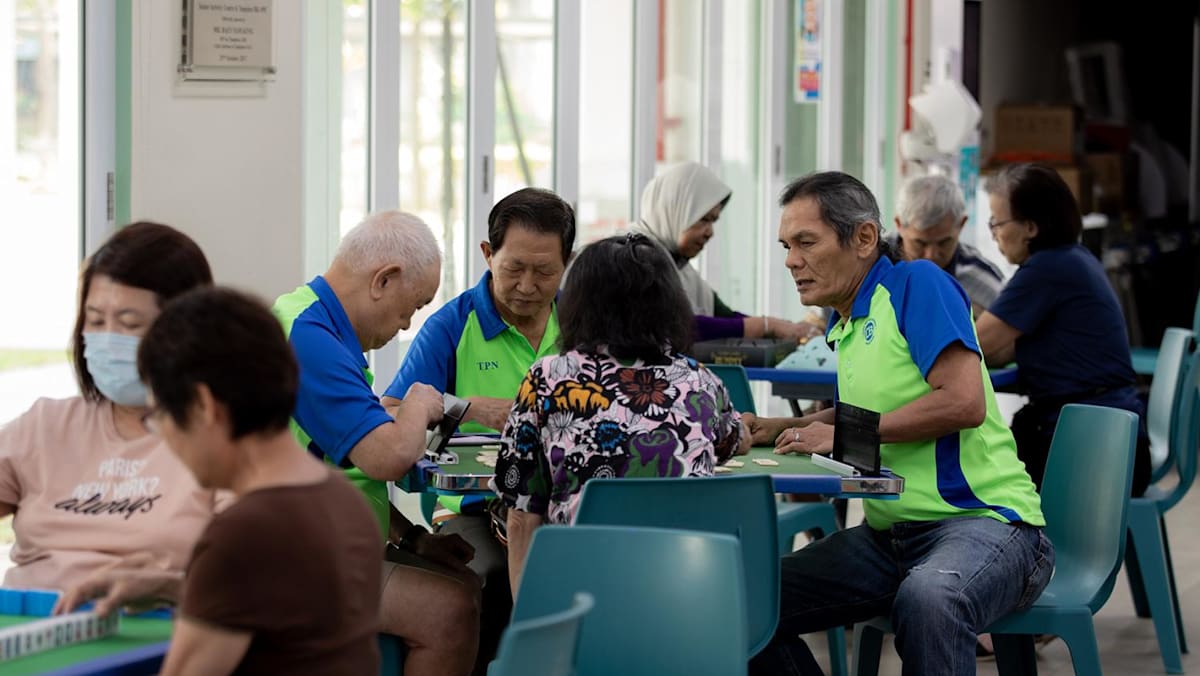
Seniors participating in activities at Lions Befrienders Active Ageing Centre at Block 499C Tampines Avenue 9, on Sept 7, 2023.
This audio is generated by an AI tool.
SINGAPORE: When we think about healthcare, hospitals typically come to mind - doctors, nurses and other medical professionals who diagnose illness, provide treatment, and help patients recover.
Less visible are the many people working to support seniors in their daily lives.
Community therapists at Senior Care Centres help seniors rebuild strength and confidence after a fall. Programme executives at Active Ageing Centres coordinate activities to keep seniors socially engaged. Care staff at nursing homes lead exercises to keep residents more active.
They are part of the diverse community care workforce that enables seniors to continue living well beyond the walls of a hospital. Their work will only get more important now that Singapore is officially a super-aged society with more than one in five aged 65 and above. By 2035, this is expected to reach more than one in four.
CNA Games Guess Word Crack the word, one row at a time Buzzword Create words using the given letters Mini Sudoku Tiny puzzle, mighty brain teaser Mini Crossword Small grid, big challenge Word Search Spot as many words as you can Show More Show Less
Expectations around ageing are changing. Each successive generation of seniors will be more informed, more digitally connected and more confident in making their own healthcare decisions. Many want to remain active, socially connected, and independent for as long as possible.
Meeting the needs of future seniors must go beyond treating illnesses. It will take different forms of support across different stages of ageing to help them age well in the community.
WHAT COMMUNITY CARE MAKES POSSIBLE
The relationships community care professionals build may not be easily measured, but they often determine whether a senior is able to age well in the community.
Take the example of a programme executive at an Active Ageing Centre who noticed that a regular senior had stopped attending activities. After checking in, she learned that the senior had become anxious about leaving home after a fall and gradually withdrew from social activities.
Working with volunteers, family members and colleagues, she gradually helped the senior regain confidence and return to community activities with friends. What began as missed activity sessions turned out to be a sign that someone was at risk of becoming socially isolated.
Identifying that risk and intervening early is often as important as providing healthcare.
And it is precisely this breadth and depth of community care that is largely invisible to most of us.
Unlike acute healthcare settings where interactions are often brief and episodic, community care professionals journey alongside seniors over time. They become familiar and trusted faces, and those sustained relationships become a source of reassurance for families and seniors.
MORE THAN “BASIC” TASKS
As Singapore ages, shrinking family sizes and an increasing number of seniors living alone will add to the demand for community-based support.
But the challenge is not simply about numbers.
Community care can often be seen as helping with “basic” caregiving tasks.
But the work can be physically demanding when transferring seniors from a wheelchair to a bed or toilet, or emotionally taxing when seniors lash out in frustration at needing help with small things. It can also be highly complex, requiring difficult conversations about worsening conditions and changing needs.
Technical competencies matter. So do resilience, empathy and adaptability.
So strengthening the sector is not simply about filling vacancies. It is about equipping people with the right skills and creating opportunities to build meaningful careers in community care.
Efforts are under way to strengthen training, skills development and career progression within the sector. The Agency for Integrated Care has partnerships with the Institutes of Technical Education and polytechnics to strengthen entry pathways.
Sector-wide job redesign initiatives also help to uplift the value and attractiveness of care roles. The Community Care Career Track, for example, provides clearer progression pathways and opportunities for skills development for both newcomers and existing staff.
For many community care professionals, one of the most rewarding aspects of the job is seeing seniors regain confidence, reconnect with others, and rediscover a sense of purpose and identity.
Seniors participating in an acting activity at a Lions Befrienders active ageing centre. (Photo: Lions Befrienders)
RECOGNITION MATTERS WHEN CARERS ARE OFTEN INVISIBLE
But recognition matters too. Community care often remains invisible until we ourselves, or someone we love, need its support.
Community Care Day on Nov 1 is an occasion to acknowledge the people whose work often goes unnoticed, but whose contributions make ageing in place possible every day.
If Singapore is to age well, we need to broaden our understanding of what care looks like, and who makes it possible.
Supporting seniors is not the responsibility of a few professions working behind institutional walls. It takes a network of people across homes, neighbourhoods and care settings working together.
Ageing well does not happen by chance.
Derek Tan is Chief of Manpower and Talent at Agency for Integrated Care.
Get our pick of top stories and thought-provoking articles in your inbox
Stay updated with notifications for breaking news and our best stories
Join our channel for the top reads for the day on your preferred chat app
综合护理机构人力与人才主管陈德瑞在社区护理日(11月1日)表示,帮助老年人安享晚年需要的不仅仅是医院护理。
2023年9月7日,老年人在淡滨尼9道499C座狮子会老年关怀中心参加活动。
这段音频由人工智能工具生成。
新加坡:当我们想到医疗保健时,通常会想到医院——医生、护士和其他医疗专业人员诊断疾病、提供治疗并帮助病人康复。
那些默默奉献、为老年人日常生活提供支持的人们却鲜为人知。
老年护理中心的社区治疗师帮助老年人在跌倒后恢复体力和信心。活力老龄化中心的项目主管协调各项活动,以保持老年人的社交参与度。养老院的护理人员带领住户进行锻炼,以保持他们的活力。
他们是多元化社区护理队伍的重要组成部分,使老年人能够在医院之外继续享受精彩人生。随着新加坡正式迈入超老龄化社会,65岁及以上人口占比超过五分之一,他们的工作将变得更加重要。预计到2035年,这一比例将超过四分之一。
CNA游戏 猜词游戏 逐行破解单词 流行词游戏 用给定的字母组成单词 迷你数独 小小谜题,挑战你的大脑 迷你填字游戏 小方格,大挑战 单词搜索 尽可能多地找出单词 显示更多 显示更少
人们对老龄化的期望正在发生变化。每一代老年人都会更加了解信息,更多地使用数字技术,并且更有信心做出自己的医疗保健决定。许多人希望尽可能长时间地保持活跃、与社会保持联系并独立生活。
满足未来老年人的需求不能仅仅局限于治疗疾病。我们需要在衰老的不同阶段提供不同形式的支持,帮助他们在社区中安享晚年。
社区关怀能带来什么?
社区护理专业人员建立的关系可能不容易衡量,但这些关系往往决定着老年人能否在社区安享晚年。
以一家老年活动中心的项目主管为例,她注意到一位经常参加活动的长者停止了活动。经过了解,她得知这位长者在一次摔倒后开始担心出门,并逐渐退出了社交活动。
在志愿者、家人和同事的帮助下,她逐步帮助这位老人重拾信心,重返社区,与朋友们一起参与活动。起初只是错过一些活动,后来却发现这预示着老人有被社会孤立的风险。
识别风险并及早干预往往与提供医疗保健同等重要。
而正是这种广度和深度的社区关怀,对我们大多数人来说却是难以察觉的。
与急性医疗机构中互动往往短暂且零散不同,社区护理专业人员会长期陪伴老年人。他们成为老年人熟悉且信赖的面孔,这种持续的关系成为家人和老年人的安心来源。
不仅仅是“基本”任务
随着新加坡人口老龄化,家庭规模缩小,独居老人数量不断增加,这将增加对社区支持的需求。
但挑战不仅仅在于数字。
社区照护通常被视为帮助完成“基本”的照护任务。
但这项工作在体力上可能非常消耗,例如将老人从轮椅转移到床上或马桶上;在精神上也可能令人疲惫,例如当老人因为需要帮助做一些小事而感到沮丧并发脾气时。此外,这项工作也可能非常复杂,需要与老人就病情恶化和需求变化进行艰难的沟通。
技术能力固然重要,但韧性、同理心和适应能力也同样重要。
因此,加强社区护理行业不仅仅是填补空缺职位,更重要的是为人们提供合适的技能,并创造机会让他们在社区护理领域建立有意义的职业生涯。
目前正努力加强该领域的培训、技能发展和职业晋升。综合护理机构已与技术教育学院和理工学院建立合作关系,以完善入学途径。
全行业的岗位重新设计举措也有助于提升护理岗位的价值和吸引力。例如,社区护理职业发展路径为新员工和现有员工提供了更清晰的晋升途径和技能发展机会。
对于许多社区护理专业人员来说,这份工作最令人欣慰的方面之一就是看到老年人重拾信心,重新与他人建立联系,并重新发现目标感和身份认同感。
老年人在狮子会关爱老年中心参加表演活动。(图片:狮子会关爱老年中心)
当照顾者常常被忽视时,认可就显得尤为重要。
但认可也很重要。社区关怀往往在我们自己或我们所爱的人需要帮助之前都难以察觉。
11 月 1 日是社区关爱日,旨在表彰那些工作常常不为人知,但正是他们的贡献,才使得居家养老成为可能。
如果新加坡想要实现健康老龄化,我们需要拓宽对护理的理解,明白谁能提供护理。
支持老年人并非少数专业人士在机构围墙内工作的责任,而是需要家庭、社区和护理机构中各方人员的共同努力。
优雅老去并非偶然。
Derek Tan 是综合护理机构的人力资源和人才主管。
订阅我们的邮件,即可获取精选热点新闻和引人深思的文章。
订阅通知,第一时间获取突发新闻和精彩报道。
加入我们的频道,即可在您常用的聊天应用上获取当日热门文章。