Singapore’s wine scene has come a long way. The world is taking notice新加坡的葡萄酒产业发展迅猛,世界已开始关注。
Once a small market with limited selection and challenging storage conditions, Singapore has grown into a destination for international wine events, auctions and a thriving community of enthusiasts.
Once a small market with limited selection and challenging storage conditions, Singapore has grown into a destination for international wine events, auctions and a thriving community of enthusiasts.
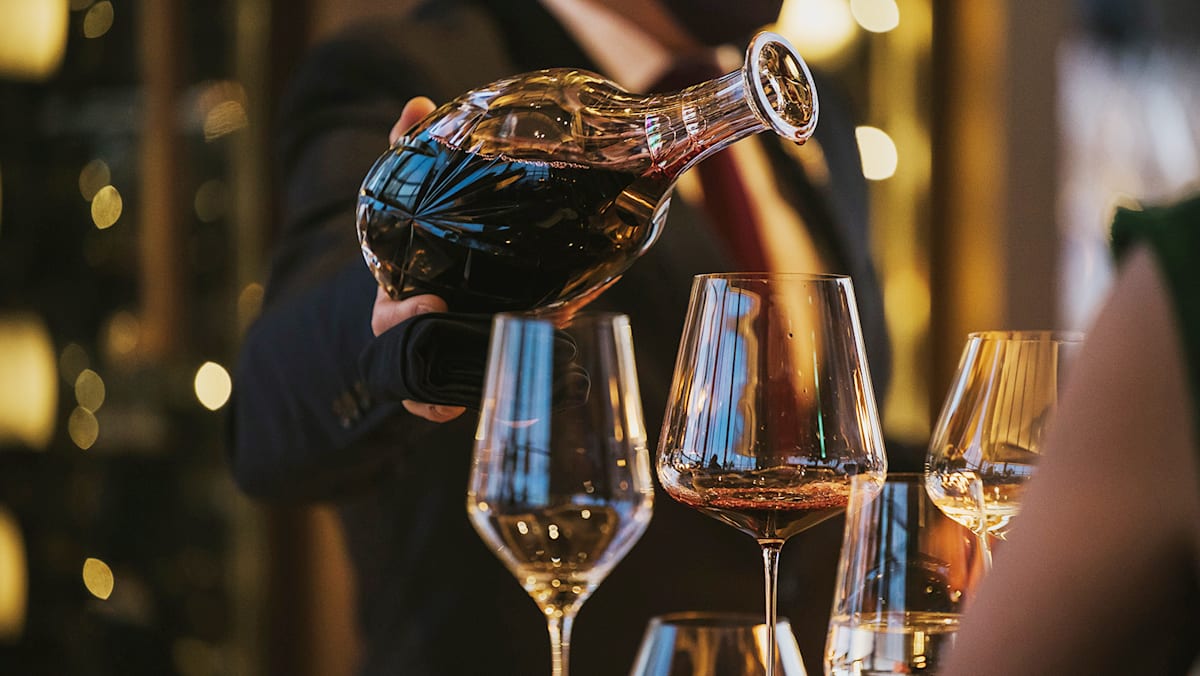
Singapore's wine scene has evolved considerably over the past two decades, with a growing community of collectors, sommeliers and enthusiasts helping to raise its international profile. (Photo: 67 Pall Mall)
This audio is generated by an AI tool.
The flagship event of Singapore Wine Week was a blind tasting called the Judgement of Singapore. It drew inspiration from a historic tasting held half a century ago in Paris, one still remembered for upending the established wine hierarchy.
In 1976, British wine merchant Steven Spurrier and his American colleague Patricia Gallagher organised the original tasting. They pitted leading California wines against top white Burgundies and red Bordeaux, inviting influential figures from the French wine world to judge. No one, including Spurrier, expected California to win. But California triumphed in both categories. The 1973 Chateau Montelena Chardonnay won the white wine category, while the 1973 Stag’s Leap Wine Cellars Cabernet Sauvignon claimed the top spot among the reds.
The results caused an uproar. Odette Kahn, editor of La Revue du Vin de France, demanded her scorecard back. Spurrier later wrote that he was thrown out of a Burgundy cellar over the results. George Taber of Time magazine, the only journalist present that day, dubbed the tasting “The Judgment of Paris”. The event, later loosely dramatised in the movie Bottle Shock, punctured the idea of French superiority and transformed California’s standing.
Fifty years later, the aim in Singapore was not simply to re-enact the Paris tasting, but to give it a contemporary perspective in Asia, a region attracting growing attention in the wine world.
Lisa Perrotti-Brown, a Master of Wine and former editor-in-chief of The Wine Advocate, co-led the Judgement of Singapore tasting. (Photo: Lisa Perrotti-Brown)
At Resorts World Sentosa, an international panel of 15 judges assessed 24 wines blind on Oct 2, with the results announced on Oct 4. The selection comprised 12 Chardonnays and 12 Cabernet Sauvignons, mostly from the 2019 vintage and sourced from producers around the world. Each wine was scored on balance, intensity, complexity, ageing potential and singularity, or how distinctive it was.
The tasting was co-led by Ronan Sayburn, Master Sommelier (MS) and CEO of the Court of Master Sommeliers Europe, and Lisa Perrotti-Brown, Master of Wine (MW) and former editor-in-chief of The Wine Advocate. The panel included several Asia-based judges, including Singapore’s Dr Jackie Ang MW, Taiwan’s Kevin Lu MS, China-based Julien Boulard MW MS and India’s Kamal Malik MS.
The Singapore results weren’t nearly as dramatic as those in 1976. Still, the red category produced a surprise when the relatively little-known Vine Hill Ranch VHR Cabernet Sauvignon 2019 from Oakville, Napa Valley, took first place. It beat the second-growth Bordeaux Chateau Ducru-Beaucaillou 2019 and first-growth Chateau Margaux 2019. Chateau Lafite Rothschild 2019, another first growth, failed to make the top five.
The Judgement of Singapore’s top five Cabernet Sauvignons, from left: Vine Hill Ranch VHR 2019, Chateau Ducru-Beaucaillou 2019, Chateau Margaux 2019, Harlan Estate 2019 and Chateau Pichon Longueville Comtesse de Lalande 2019. (Photo: Singapore Wine Week)
The Chardonnay results were more predictable. Burgundy swept the top five, with Bonneau du Martray Corton-Charlemagne Grand Cru 2019 taking the top prize. According to Sayburn, the judges could still distinguish Old World from New World wines, even as their styles increasingly converge.
For Soo Hoo Khoon Peng, founder of Impeccable APAC and Park90, the decision to hold the tasting in Singapore reflected a broader shift in the wine world. “Fifty years ago, the wine world was an exclusive club, but today, great wine belongs to global culture. Hosting the 50th anniversary tasting here in Singapore is proof of that tectonic shift.”
SINGAPORE’S WINE COMMUNITY: THEN AND NOW
Perrotti-Brown is well placed to reflect on Singapore’s emergence as a regional wine capital”. She lived here for seven years, from 2008 to 2015, after spending several years in Tokyo as a wine buyer.
The city’s wine scene was small but curious. Even in those early years, people were eager to learn. “They were really hungry for wine knowledge. They wanted things to improve,” she recalled.
The five highest-ranked Chardonnays at the Judgement of Singapore. From left: Pierre-Yves Colin-Morey Chassagne-Montrachet 1er Cru Les Chenevottes 2019, Domaine Leflaive Puligny-Montrachet 1er Cru Les Combettes 2019, Domaine Bernard Moreau et Fils Chassagne-Montrachet 1er Cru La Maltroie 2019, Coche-Dury Puligny-Montrachet Les Enseigneres 2020 and Bonneau du Martray Corton-Charlemagne Grand Cru 2019. (Photo: Singapore Wine Week)
But the limited selection of wines and inconsistent storage conditions posed challenges. Perrotti-Brown recalled having relatively few wines to choose from and only a handful of importers who took care to ship and store them under refrigerated conditions. “I very quickly understood why people were mostly drinking red wine, mostly Bordeaux, because they were less susceptible to being baked in the heat,” she continued. Red wines generally proved more resilient, while white wines were often maderised and had turned brown.
She bought from Crystal Wines and wine collector and importer N K Yong. “He became a very dear friend of mine,” she recalled.
Returning years later, she found the market had transformed, with more knowledgeable drinkers and collectors, a strong professional community, and better standards for storing and serving wines. Singapore’s wine expertise has grown alongside consumer interest, she said. “I was the only Master of Wine when I first moved here. There are a lot more MW’s here now.”
Where Singapore's wine market was once dominated by Bordeaux, a wider selection of wines is now opening up new possibilities for exploration and discovery. (Photo: 67 Pall Mall)
Today, she sees a much broader range of wines and excellence in wine logistics. “Everyone’s so aware of the impact of heat on the wines, and the condition that drinks wines in now is just impeccable.”
Not everything has changed, however. “There are still a lot of label chasers. People who want to impress their friends with their cult Burgundies and grower Champagnes. That existed even when I was here, and it hasn’t changed much from what I’ve seen.”
Singapore “is becoming one of the big markets for fine wine”, said the Napa-based wine critic and author. But its growing importance is not simply about selling more bottles. It reflects the city’s transformation from a market with limited selection and inconsistent wine storage to one with a more knowledgeable and sophisticated wine community.
SINGAPORE’S GROWING INFLUENCE
Founded by Soo Hoo Khoon Peng, Park90 is among the establishments helping to shape Singapore’s contemporary fine wine scene. (Photo: Park90)
Justin Yong, director at Impeccable APAC, attributes this transformation to the democratisation of taste. “Access to fine wine has broadened, global curiosity is at an all-time high, and consumers everywhere feel empowered to define their own palates.” He believes Singapore is well placed to influence global wine trends.
There is substance behind the claim. Singapore’s wine culture is supported by wine clubs like 67 Pall Mall and bars like Temper and Park90 , plus a strong line-up of restaurants and qualified sommeliers. International auction houses have also taken notice. In May 2026, Acker held a live auction in Singapore, underscoring the city's appeal to serious wine collectors.
Singapore is also beginning to make its mark through homegrown innovation. One example is SKLO Evolution, a locally designed wine glass developed with Asian wine drinkers in mind, with its proportions taking into account differences in facial anatomy.
Yet wine remains largely the preserve of collectors, professionals and enthusiasts, rather than a part of everyday culture. Jackie Ang MW, who served on the panel, believes it needs to move beyond the lifestyle pages and into mainstream media with a TV personality who could do for wine here what Oz Clarke did in the UK. Whether the shift is tectonic, as Soo Hoo puts it, depends on whether the wider public follows.
A single handpicked story that we think you shouldn't miss. Just one a day.
新加坡曾经是一个选择有限、储存条件艰苦的小市场,如今已发展成为国际葡萄酒盛会、拍卖会和蓬勃发展的葡萄酒爱好者社区的目的地。
过去二十年间,新加坡的葡萄酒行业发生了显著变化,越来越多的收藏家、侍酒师和爱好者涌现,提升了新加坡葡萄酒的国际知名度。(图片:67 Pall Mall)
这段音频由人工智能工具生成。
新加坡葡萄酒周的重头戏是一场名为“新加坡审判”的盲品会。它的灵感来源于半个世纪前在巴黎举行的一场历史性品鉴会,那场品鉴会至今仍因颠覆了当时既有的葡萄酒等级制度而为人铭记。
1976年,英国葡萄酒商史蒂文·斯普里尔(Steven Spurrier)和他的美国同事帕特里夏·加拉格尔(Patricia Gallagher)组织了这场首届品鉴会。他们将加州顶级葡萄酒与勃艮第白葡萄酒和波尔多红葡萄酒进行对比,并邀请了法国葡萄酒界的重量级人物担任评委。包括斯普里尔在内,没有人预料到加州葡萄酒会胜出。但加州葡萄酒最终在两个类别中都拔得头筹。1973年份的蒙特雷纳酒庄(Chateau Montelena)霞多丽葡萄酒荣获白葡萄酒组冠军,而1973年份的鹿跃酒窖(Stag's Leap Wine Cellars)赤霞珠葡萄酒则摘得红葡萄酒组桂冠。
结果引发轩然大波。《法国葡萄酒评论》的编辑奥黛特·卡恩要求归还她的评分卡。斯普里尔后来写道,他因为这个结果被勃艮第一家酒窖赶了出来。《时代》杂志的乔治·塔伯是当天唯一在场的记者,他将这次品酒会称为“巴黎的审判”。这场事件后来被改编成电影《酒瓶震撼》,它打破了法国葡萄酒的优越感,并改变了加州葡萄酒的地位。
五十年后,新加坡的目标不仅仅是重现巴黎的品酒会,而是要赋予它当代亚洲视角,因为亚洲在葡萄酒界正日益受到关注。
葡萄酒大师、前《葡萄酒倡导家》杂志主编丽莎·佩罗蒂-布朗共同主持了新加坡葡萄酒品鉴会。(图片:丽莎·佩罗蒂-布朗)
10月2日,在圣淘沙名胜世界,一个由15位国际评委组成的评审团对24款葡萄酒进行了盲品,结果于10月4日公布。入选的葡萄酒包括12款霞多丽和12款赤霞珠,大部分为2019年份,产自世界各地的酒庄。每款葡萄酒都从平衡性、浓郁度、复杂性、陈年潜力以及独特性(即其风味特征)等方面进行评分。
此次品鉴会由欧洲侍酒大师协会首席执行官、侍酒大师罗南·塞伯恩 (Ronan Sayburn) 和葡萄酒大师、前《葡萄酒倡导家》杂志主编丽莎·佩罗蒂-布朗 (Lisa Perrotti-Brown) 共同主持。评审团成员包括多位亚洲评委,例如新加坡的侍酒大师杰基·昂博士 (Dr Jackie Ang MW)、台湾的侍酒大师卢凯文 (Kevin Lu MS)、中国的葡萄酒大师朱利安·布拉德 (Julien Boulard MW MS) 以及印度的侍酒大师卡迈勒·马利克 (Kamal Malik MS)。
新加坡的葡萄酒评选结果远不及1976年那样引人注目。不过,红葡萄酒类别中还是爆出了一个冷门:来自纳帕谷奥克维尔的鲜为人知的Vine Hill Ranch酒庄2019年份赤霞珠葡萄酒荣登榜首。它击败了波尔多二级庄杜克鲁-博凯鲁酒庄2019年份和一级庄玛歌酒庄2019年份。另一家一级庄拉菲古堡2019年份则未能跻身前五。
新加坡五大赤霞珠葡萄酒评选结果,从左至右:Vine Hill Ranch VHR 2019、Chateau Ducru-Beaucaillou 2019、Chateau Margaux 2019、Harlan Estate 2019 和 Chateau Pichon Longueville Comtesse de Lalande 2019。(图片:新加坡葡萄酒周)
霞多丽的评选结果则在意料之中。勃艮第葡萄酒包揽前五名,其中博诺杜马特雷科尔顿-查理曼特级园2019年份荣获冠军。赛伯恩表示,尽管新旧世界葡萄酒的风格日益趋同,但评委们仍然能够区分它们。
Impeccable APAC 和 Park90 的创始人 Soo Hoo Khoon Peng 认为,选择在新加坡举办品鉴会反映了葡萄酒界更广泛的转变。“五十年前,葡萄酒世界是一个专属俱乐部,但如今,优质葡萄酒已成为全球文化的一部分。在新加坡举办五十周年品鉴会正是这种巨大转变的证明。”
新加坡葡萄酒社群:过去与现在
佩罗蒂-布朗对新加坡崛起为区域葡萄酒之都的经历有着深刻的理解。她曾在东京担任葡萄酒采购员多年,之后于2008年至2015年在新加坡生活了七年。
这座城市的葡萄酒文化虽然规模不大,却颇具特色。即使在早期,人们也渴望学习。“他们对葡萄酒知识如饥似渴,希望葡萄酒行业能够不断进步,”她回忆道。
新加坡评判中排名最高的五款霞多丽葡萄酒。左起:Pierre-Yves Colin-Morey Chassagne-Montrachet 1er Cru Les Chenevottes 2019、Domaine Leflaive Puligny-Montrachet 1er Cru Les Combettes 2019、Domaine Bernard Moreau et Fils Chassagne-Montrachet 1er Cru La Maltroie 2019、Coche-Dury Puligny-Montrachet Les Enseigneres 2020 年和 2019 年 Bonneau du Martray Corton-Charlemagne 特级园。(照片:新加坡葡萄酒周)
但葡萄酒种类有限,储存条件也不稳定,这带来了诸多挑战。佩罗蒂-布朗回忆说,当时可供选择的葡萄酒种类相对较少,而且只有少数几家进口商会注意冷藏运输和储存。“我很快就明白了为什么人们大多喝红葡萄酒,尤其是波尔多红葡萄酒,因为它们不太容易受高温影响而变质,”她继续说道。红葡萄酒通常更耐高温,而白葡萄酒则经常变质发白,变成褐色。
她从Crystal Wines和葡萄酒收藏家兼进口商NK Yong那里购买葡萄酒。“他成了我非常亲密的朋友,”她回忆道。
多年后她重返新加坡,发现市场已焕然一新:饮酒者和收藏家更加博学,专业人士群体日益壮大,葡萄酒的储存和侍酒标准也更高。她说,新加坡的葡萄酒专业知识随着消费者兴趣的增长而不断提升。“我刚来这里的时候,新加坡只有我一个葡萄酒大师。现在,这里的葡萄酒大师多了很多。”
新加坡的葡萄酒市场曾经以波尔多葡萄酒为主导,如今,更丰富的葡萄酒选择为探索和发现新的可能性打开了大门。(图片:67 Pall Mall)
如今,她看到的葡萄酒种类更加丰富,葡萄酒物流也更加完善。“每个人都非常清楚高温对葡萄酒的影响,现在葡萄酒的饮用条件堪称完美。”
然而,并非所有事物都发生了改变。“仍然有很多人追逐品牌。他们想用自己珍藏的勃艮第名酒和酒农香槟来炫耀。这种情况在我在这里的时候就存在,而且据我观察,现在也没有什么变化。”
这位常驻纳帕的葡萄酒评论家兼作家表示,新加坡“正在成为精品葡萄酒的重要市场之一”。但其日益增长的重要性不仅仅体现在销量上,更反映了这座城市的转变:从一个葡萄酒选择有限、储存条件参差不齐的市场,发展成为一个拥有更专业、更成熟的葡萄酒社群的城市。
新加坡日益增长的影响力
Park90由Soo Hoo Khoon Peng创立,是推动新加坡当代精品葡萄酒产业发展的众多机构之一。(图片:Park90)
Impeccable亚太区总监Justin Yong将这种转变归功于品味的民主化。“人们更容易接触到优质葡萄酒,全球对葡萄酒的好奇心达到了前所未有的高度,世界各地的消费者都觉得自己有能力定义自己的味蕾。”他认为新加坡在影响全球葡萄酒趋势方面具有得天独厚的优势。
这一说法并非空穴来风。新加坡的葡萄酒文化得到了众多葡萄酒俱乐部的支持,例如67 Pall Mall,以及Temper和Park90等酒吧,此外还有众多优秀的餐厅和专业的侍酒师。国际拍卖行也注意到了这一点。2026年5月,Acker在新加坡举办了一场现场拍卖会,凸显了这座城市对资深葡萄酒收藏家的吸引力。
新加坡也开始凭借本土创新崭露头角。例如,SKLO Evolution 是一款专为亚洲葡萄酒饮用者设计的本地葡萄酒杯,其尺寸比例充分考虑了不同面部结构的差异。
然而,葡萄酒仍然主要局限于收藏家、专业人士和爱好者的圈子,而非日常文化的一部分。葡萄酒大师杰基·昂(Jackie Ang MW)曾参与评审,她认为葡萄酒需要走出生活方式版面,进入主流媒体,并需要一位电视名人来推动葡萄酒在本地的发展,就像奥兹·克拉克(Oz Clarke)在英国所做的那样。正如苏胡(Soo Hoo)所说,这种转变是否具有颠覆性,取决于广大公众是否会跟进。
每天一篇,我们精心挑选一篇您不容错过的精彩故事。