Commentary: What revised Maju Forest plans could mean for future development decisions评论:修订后的马朱森林规划对未来发展决策的影响
Framing the outcome in terms of winners and losers risks reinforcing the zero-sum thinking we should move beyond, says NUS landscape architecture professor Yun Hye Hwang.
新闻视频
Framing the outcome in terms of winners and losers risks reinforcing the zero-sum thinking we should move beyond, says NUS landscape architecture professor Yun Hye Hwang.
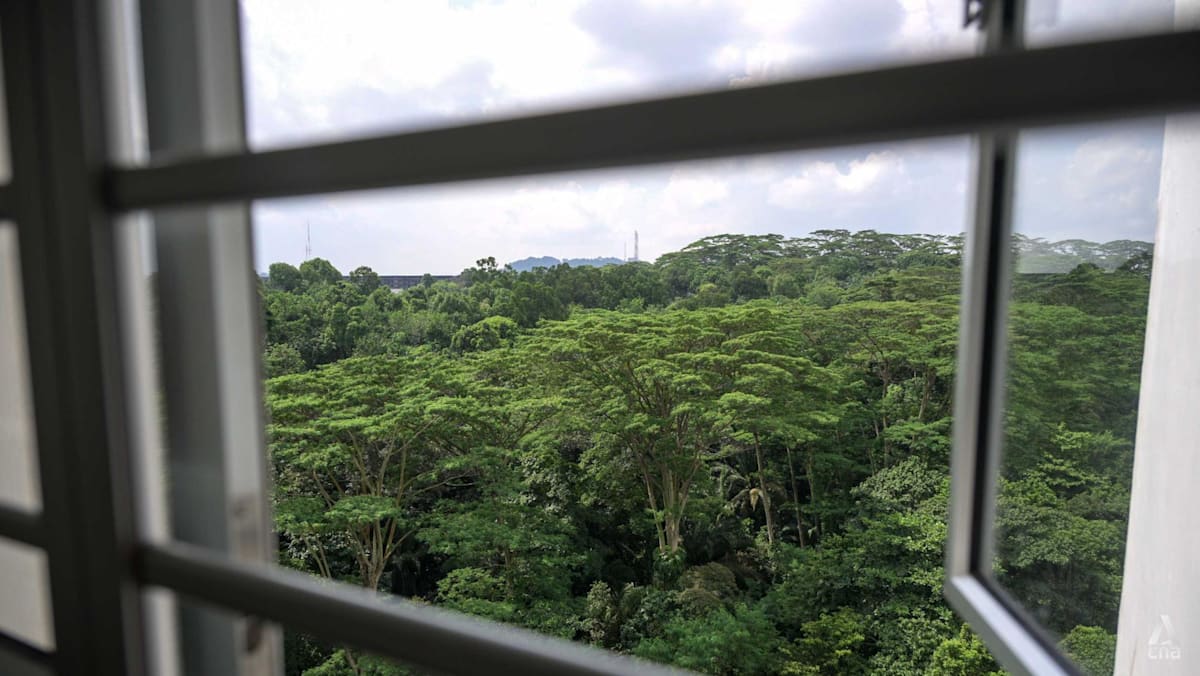
Maju Forest seen from surrounding high-rise housing blocks at the Sunset Way estate in Clementi on Jul 16, 2026. (Photo: CNA/Wallace Woon)
This audio is generated by an AI tool.
SINGAPORE: Following environmental studies and public feedback, the Housing and Development Board (HDB) announced on Wednesday (Oct 28) revised housing plans for Maju Forest and Gillman Barracks : The proposed housing supply will be cut by about 1,200 homes across both sites while retaining an additional six hectares of existing greenery.
In land-scarce Singapore, this is a significant decision amid continuing housing demand. Is it a victory for nature groups ? In some respects, yes. Their sustained engagement has brought greater attention to the environmental implications of development.
However, framing the outcome in terms of winners and losers risks reinforcing the zero-sum thinking we should move beyond.
In 2020, amid public debate over Clementi Forest, I argued in a CNA commentary that Singapore need not view forest conservation and housing development as mutually exclusive. Instead, I called for collaborative planning involving different stakeholders to explore alternatives that accommodate both.
CNA Games Guess Word Crack the word, one row at a time Buzzword Create words using the given letters Mini Sudoku Tiny puzzle, mighty brain teaser Mini Crossword Small grid, big challenge Word Search Spot as many words as you can Show More Show Less
Six years later, the revised plans suggest continued efforts to explore alternative approaches to urban development on forested sites.
TREATING IT AS COLLABORATION, NOT JUST OPPOSITION
Following the initial announcement in July , HDB received approximately 9,500 public submissions and engaged around 1,000 stakeholders, including residents, nature groups, academics and built-environment professionals.
Importantly, the feedback covered more than objections to forest clearance. At Maju Forest, stakeholders raised concerns about habitat connectivity and proposed alternative development footprints and brownfield sites.
At Gillman Barracks, discussions also highlighted military heritage, cultural identity and community value. Engagement also brings out the social and cultural value these places hold for the community, which formal planning assessments cannot fully capture.
HDB said it considered these suggestions alongside housing needs and land availability, incorporating some while explaining why others could not be adopted.
This approach is not entirely new. In 2021, following environmental studies and public consultation, plans for Dover Forest were revised , with about one-third of the secondary forest designated for public housing and the remaining area set aside for a nature park.
However, revising a plan following consultation is not necessarily the same as collaborative planning.
In a joint statement issued on Oct 30, residents involved in the Maju Forest and Gillman Barracks discussions acknowledged the additional greenery and stronger proposed ecological connections, but stressed that this did not constitute endorsement of the revised plans. They also expressed disappointment that requests to review the revised options before their announcement had been declined.
This highlights an important distinction between receiving public feedback and involving stakeholders in shaping decisions.
But how can the government remain responsive without becoming populist?
Responsiveness does not mean accepting every objection. It requires evaluating public concerns transparently against environmental evidence, housing needs and wider public interests.
Nor should the revisions create an expectation that public opposition automatically results in reduced development. Each site presents different conditions and trade-offs.
A more constructive approach would be to encourage early collaboration particularly for sites of recognised ecological significance, allowing stakeholders to identify priorities, explore alternatives and contribute to development scenarios before plans become highly defined. The extent of engagement should reflect each site's environmental significance and planning context.
RETAINING VS ADDING GREENERY
The revisions represent a meaningful adjustment to the relationship between development and existing forests.
However, given the constraints on how much land can be retained for nature, greater attention should also be given to the ecological quality of greenery within residential neighbourhoods.
When secondary forests are cleared, they are often replaced with urban landscapes containing substantial areas of managed greenery. While these cannot fully replace the naturally regenerated forests, they offer opportunities to support biodiversity beyond designated forest patches and integrate habitat-supporting functions throughout the neighbourhood.
At Maju Forest, which forms part of the Clementi Nature corridor, the wider landscape includes potential connections towards Clementi Forest and forest patches around Bukit Batok and Bukit Panjang.
While the proposed wider nature way may help maintain habitat continuity, equal attention should be given to the landscape design of the new residential neighbourhood, particularly its northern portion.
Every square metre of neighbourhood greenery and every metre of roadside planting offers opportunities to support wildlife movement through habitat-sensitive design, forest-edge protection and wildlife-friendly infrastructure. This requires balancing conservation priorities with infrastructure constraints while considering habitat quality, spatial configuration and long-term management.
A PRECEDENT FOR BETTER PLANNING
The revisions do not eliminate difficult trade-offs between housing and conservation, nor do they guarantee long-term ecological benefits.
However, they offer an opportunity to improve how ecological knowledge and community perspectives inform subsequent planning decisions, particularly as both projects move towards the design phase.
The planning process matters as much as the outcome. While not every stakeholder can be satisfied, meaningful engagement can help identify alternatives, clarify trade-offs and build a shared understanding of planning decisions.
The more valuable lesson is not that public opposition necessarily changes development plans. It is that collaborative, evidence-informed and adaptable planning becomes a more consistent part of how Singapore shapes its future landscapes.
Yun Hye Hwang is an Associate Professor in the Landscape Architecture Programme, Department of Architecture, at the National University of Singapore.
Get our pick of top stories and thought-provoking articles in your inbox
Stay updated with notifications for breaking news and our best stories
Join our channel for the top reads for the day on your preferred chat app
新加坡国立大学景观建筑学教授黄允惠表示,将结果定义为赢家和输家可能会强化我们应该超越的零和思维。
2026年7月16日,从金文泰日落道住宅区的周边高层住宅楼眺望马朱森林。(图片:CNA/Wallace Woon)
这段音频由人工智能工具生成。
新加坡:经过环境研究和公众反馈,建屋发展局(HDB)于周三(10月28日)宣布修订马朱森林和吉尔曼军营的住房计划:拟议的住房供应将在两个地点减少约1200套,同时保留额外的6公顷现有绿地。
在土地资源稀缺的新加坡,在住房需求持续增长的情况下,这是一项意义重大的决定。这对自然保护组织来说是一次胜利吗?在某些方面,的确如此。他们持续不断的参与,使人们更加关注开发对环境的影响。
然而,将结果定义为赢家和输家,可能会强化我们应该摒弃的零和思维。
2020年,在公众就金文泰森林问题展开辩论之际,我曾在亚洲新闻台(CNA)的评论文章中指出,新加坡不必将森林保护和房屋开发视为相互排斥的两件事。相反,我呼吁各方利益相关者共同参与规划,探索能够兼顾两者的替代方案。
CNA游戏 猜词游戏 逐行破解单词 流行词游戏 用给定的字母组成单词 迷你数独 小小谜题,挑战你的大脑 迷你填字游戏 小方格,大挑战 单词搜索 尽可能多地找出单词 显示更多 显示更少
六年之后,修订后的计划表明将继续努力探索在森林地区进行城市开发的替代方法。
将其视为合作,而不仅仅是对立
自 7 月份首次公布以来,建屋发展局收到了约 9500 份公众意见书,并与约 1000 名利益相关者进行了沟通,其中包括居民、自然团体、学者和建筑环境专业人士。
值得注意的是,反馈意见不仅限于反对砍伐森林。在马朱森林,利益相关者还提出了栖息地连通性方面的担忧,并建议了替代开发方案和棕地利用方案。
在吉尔曼军营,讨论还重点关注了军事遗产、文化认同和社区价值。参与式讨论也揭示了这些场所对社区的社会和文化价值,而这些价值是正式规划评估无法完全体现的。
建屋发展局表示,他们已将这些建议与住房需求和土地供应情况进行了考虑,采纳了一些建议,并解释了为什么其他建议无法采纳。
这种方法并非全新。2021年,经过环境评估和公众咨询后,多佛森林的规划进行了修订,其中约三分之一的次生林被指定用于公共住房,其余部分则被划为自然公园。
然而,根据协商结果修改计划并不一定等同于协作规划。
10月30日,参与马朱森林和吉尔曼军营讨论的居民发表联合声明,对新增绿化和加强生态连接的提议表示认可,但强调这并不代表他们支持修订后的方案。他们还对在方案公布前要求审阅修订方案的请求被拒绝表示失望。
这凸显了接受公众反馈和让利益相关者参与决策之间的一个重要区别。
但政府如何在保持对民众需求的回应性的同时,又不走向民粹主义呢?
积极回应并不意味着接受所有反对意见。它要求在充分透明的前提下,根据环境证据、住房需求和更广泛的公共利益来评估公众的关切。
修订方案也不应让人误以为公众反对就一定会导致开发项目减少。每个地点的具体情况和需要权衡的因素都不相同。
更具建设性的做法是鼓励尽早开展合作,尤其是在具有公认生态意义的地点,让利益相关者能够在规划方案最终定型之前,确定优先事项、探索替代方案并为发展情景做出贡献。参与的程度应与每个地点的环境意义和规划背景相符。
保留绿化还是增加绿化
这些修订对发展与现有森林之间的关系进行了有意义的调整。
然而,鉴于可供自然保留的土地面积有限,也应该更加重视居民区内绿化的生态质量。
次生林被砍伐后,通常会被包含大片人工绿地的城市景观所取代。虽然这些绿地无法完全取代自然再生的森林,但它们为在指定林地之外支持生物多样性提供了机会,并将栖息地支持功能融入到整个社区。
马朱森林是金文泰自然走廊的一部分,更广阔的景观包括与金文泰森林以及武吉巴督和武吉班让周围的森林斑块的潜在连接。
虽然拟建的更宽阔的自然步道可能有助于维持栖息地的连续性,但同样应该重视新住宅区的景观设计,特别是其北部区域。
社区内每一平方米的绿地和道路两侧每一米的绿化带,都为通过栖息地敏感型设计、森林边缘保护和野生动物友好型基础设施来支持野生动物迁徙提供了机会。这需要在保护优先事项和基础设施限制之间取得平衡,同时还要考虑栖息地质量、空间布局和长期管理。
为更好的规划树立先例
这些修订并没有消除住房和环境保护之间艰难的权衡取舍,也没有保证长期的生态效益。
然而,随着这两个项目都进入设计阶段,它们为改进生态知识和社区视角如何影响后续规划决策提供了机会。
规划过程与最终结果同样重要。虽然不可能让所有利益相关者都满意,但有效的沟通有助于发现替代方案、明确权衡取舍,并就规划决策达成共识。
更有价值的经验并非在于公众反对必然会改变发展计划,而在于协作、以证据为基础且灵活的规划方式,正逐渐成为新加坡塑造未来面貌的重要组成部分。
黄允惠是新加坡国立大学建筑系景观建筑专业的副教授。
订阅我们的邮件,即可获取精选热点新闻和引人深思的文章。
订阅通知,第一时间获取突发新闻和精彩报道。
加入我们的频道,即可在您常用的聊天应用上获取当日热门文章。