LTA can retrieve ERP 2 vehicle location data for law enforcement, police investigationsLTA可以获取ERP 2车辆位置数据,供执法部门和警方调查使用。
The authorities have retrieved ERP data for enforcement against offences such as illegal cross-border taxi services and for detecting deregistered vehicles.
The authorities have retrieved ERP data for enforcement against offences such as illegal cross-border taxi services and for detecting deregistered vehicles.
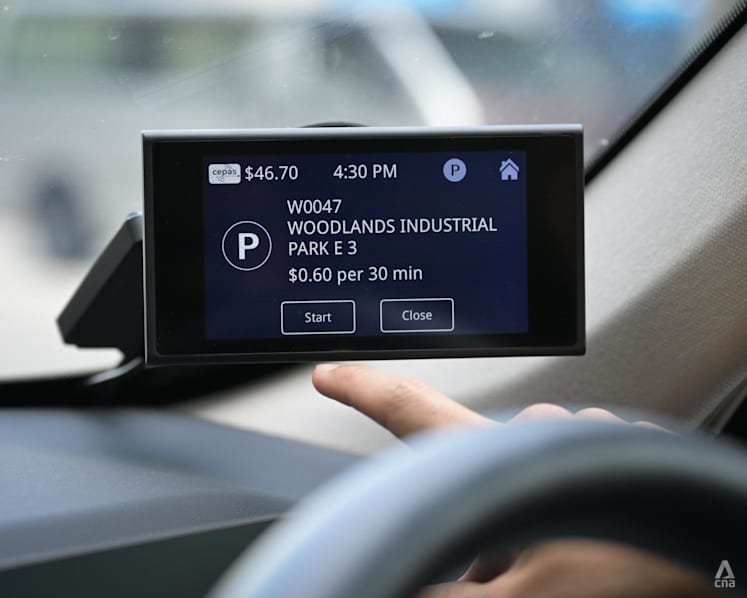
An ERP alert that will appear as part of a trial of ERP 2's location-based charging. The feature will roll out to the public on Jan 1, 2027. (Photo: CNA/Syamil Sapari)
This audio is generated by an AI tool.
SINGAPORE: The authorities can retrieve location data from sensors and systems through the new Electronic Road Pricing (ERP) 2 for law enforcement, Senior Minister of State for Transport Sun Xueling said in parliament on Tuesday (Nov 3).
As with the existing ERP system, ERP 2 is designed primarily for road pricing purposes, but supports other motoring-related functions, including the enforcement of laws and regulations, said Ms Sun.
She added that data collected on individual vehicles is aggregated and anonymised when transferred to LTA's backend system for traffic planning and management.
“However, when specific vehicles need to be identified for enforcement purposes, LTA is able to retrieve location data from sensors and systems,” she said, adding that LTA has done so for enforcement against serious offences, such as illegal cross-border taxi services and for detecting deregistered vehicles.
CNA Games Guess Word Crack the word, one row at a time Buzzword Create words using the given letters Mini Sudoku Tiny puzzle, mighty brain teaser Mini Crossword Small grid, big challenge Word Search Spot as many words as you can Show More Show Less The senior minister of state was responding to a question by Member of Parliament (MP) Tin Pei Ling (PAP-Marine Parade–Braddell Heights) on how ERP 2 will enhance enforcement capabilities compared with the existing ERP system. Ms Sun noted that ERP 2 data will be subject to existing statutory obligations. For example, under the Criminal Procedure Code, the police can require data to be produced for a criminal investigation. For other authorised purposes, the use and sharing of ERP 2 data will be governed by the applicable public sector data governance requirements, with safeguards to ensure data protection and data security, and to prevent unauthorised access, she said. In response to a supplementary question from Ms Tin on what other crimes or offences the data can be used for, Ms Tin said some of the offences against which LTA already takes enforcement action today under ERP 1 will similarly be taken action against under ERP 2. This includes off-peak cars driving outside their permitted hours, the use of vehicles that should not be driven on roads, such as vehicles on laid-up and keeping schemes.
The senior minister of state was responding to a question by Member of Parliament (MP) Tin Pei Ling (PAP-Marine Parade–Braddell Heights) on how ERP 2 will enhance enforcement capabilities compared with the existing ERP system.
Ms Sun noted that ERP 2 data will be subject to existing statutory obligations. For example, under the Criminal Procedure Code, the police can require data to be produced for a criminal investigation.
For other authorised purposes, the use and sharing of ERP 2 data will be governed by the applicable public sector data governance requirements, with safeguards to ensure data protection and data security, and to prevent unauthorised access, she said.
In response to a supplementary question from Ms Tin on what other crimes or offences the data can be used for, Ms Tin said some of the offences against which LTA already takes enforcement action today under ERP 1 will similarly be taken action against under ERP 2.
This includes off-peak cars driving outside their permitted hours, the use of vehicles that should not be driven on roads, such as vehicles on laid-up and keeping schemes.
In a separate parliamentary question, Senior Minister of State for Home Affairs Goh Pei Ming said the Home Team agencies are authorised by law to obtain information from all available sources.
In 2016, then-Minister for Home Affairs K Shanmugam said in Parliament that Home Team would use all investigation and intelligence tools available, and make better use of available data, including data from the ERP system .
“The Home Team expects to use ERP 2 data from January 2027 to prevent, detect, and deter crime, and to solve crimes. ERP 2 data will be subjected to safeguards on its access and use, as with other users of other data obtained by the Home Team,” he said.
In response to a supplementary question by MP Jackson Lam (PAP-Nee Soon) on safeguards applied to the data, including how long vehicle-specific data can be retained, Mr Goh said the police will retain the data for as long as necessary to complete an investigation or to complete court proceedings.
Mr Goh reiterated that the access and use of ERP 2 data will be subject to the same legal and data governance safeguards that apply to all other census and information that the Home Team obtains through the Criminal Procedure Code.
Singapore is preparing to move away from physical ERP gantries, with new road markings and signs rolled out progressively ahead of the launch of the ERP 2 system in January next year.
The ERP 2 system uses global navigation satellite system technology. All Singapore-registered vehicles must be fitted with the ERP 2 on-board unit (OBU) to travel on public roads.
The OBU will detect when a vehicle passes an ERP charging location and calculate the applicable charges.
The new road markings and signs will complement OBU notifications to alert motorists before they enter an ERP charging location, provide information on prevailing ERP charges, and indicate the amount charged when motorists pass through a charging location.
Get our pick of top stories and thought-provoking articles in your inbox
Stay updated with notifications for breaking news and our best stories
Join our channel for the top reads for the day on your preferred chat app
当局已获取ERP数据,用于打击非法跨境出租车服务等违法行为,以及检测已注销车辆。
这是ERP 2系统基于位置的收费试点阶段将出现的ERP警报。该功能将于2027年1月1日正式向公众推出。(图片:CNA/Syamil Sapari)
这段音频由人工智能工具生成。
新加坡:交通部高级政务部长孙雪玲周二(11月3日)在国会表示,当局可以通过新的电子道路收费(ERP)2系统从传感器和系统中检索位置数据,以进行执法。
孙女士表示,与现有的ERP系统一样,ERP 2主要设计用于道路收费,但也支持其他与汽车相关的功能,包括法律法规的执行。
她补充说,收集到的关于单个车辆的数据在传输到陆路交通管理局的后端系统进行交通规划和管理时,会进行汇总和匿名化处理。
“但是,当需要识别特定车辆以进行执法时,陆路交通管理局能够从传感器和系统中检索位置数据,”她说道,并补充说,陆路交通管理局已经这样做了,以打击严重的违法行为,例如非法跨境出租车服务,以及检测已注销的车辆。
CNA游戏 猜词游戏 逐行破解单词 流行词游戏 用给定的字母组成单词 迷你数独 小谜题,脑力挑战 迷你填字游戏 小方格,大挑战 单词搜索 尽可能多地找出单词 显示更多 显示更少 高级政务部长孙女士在回答国会议员陈佩玲(人民行动党-马林百列-布莱德尔高地)关于ERP 2系统与现有ERP系统相比将如何增强执法能力的问题时表示,ERP 2数据将受现有法律义务的约束。例如,根据《刑事诉讼法》,警方可以要求提供数据用于刑事调查。她说,对于其他授权用途,ERP 2数据的使用和共享将受适用的公共部门数据治理要求的约束,并采取保障措施以确保数据保护和数据安全,防止未经授权的访问。针对丁女士提出的补充问题,即这些数据还可以用于哪些其他犯罪或违法行为,丁女士表示,陆路交通管理局目前根据ERP 1已采取执法行动的部分违法行为,在ERP 2下也将采取类似行动。这包括在非高峰时段车辆超出允许行驶时间行驶,以及使用不应在道路上行驶的车辆,例如处于停用和保管计划中的车辆。
高级政务部长在回答国会议员陈佩玲(人民行动党-马林百列-布莱德尔高地)提出的问题时,询问ERP 2与现有的ERP系统相比将如何增强执法能力。
孙女士指出,ERP 2数据将受现有法律法规的约束。例如,根据《刑事诉讼法》,警方可以要求提供数据以进行刑事调查。
她表示,对于其他授权用途,ERP 2 数据的使用和共享将受适用的公共部门数据治理要求的约束,并采取保障措施以确保数据保护和数据安全,防止未经授权的访问。
针对丁女士提出的补充问题,即这些数据还可以用于哪些其他犯罪或违法行为,丁女士表示,陆路交通管理局目前根据 ERP 1 采取执法行动的一些违法行为,同样也会根据 ERP 2 采取执法行动。
这包括在非高峰时段行驶的车辆,以及在允许行驶时间之外行驶的车辆,例如停放和保管计划中的车辆。
在另一次议会质询中,内政部高级政务部长吴佩明表示,内政团队各机构依法有权从所有可用渠道获取信息。
2016 年,时任内政部长尚穆根在国会表示,内政团队将利用所有可用的调查和情报工具,并更好地利用现有数据,包括 ERP 系统的数据。
“内政团队预计将从2027年1月起使用ERP 2数据来预防、侦查和阻止犯罪,并侦破案件。ERP 2数据的访问和使用将受到保障措施,就像内政团队获取的其他数据一样,”他说道。
针对议员林志强(人民行动党义顺选区)提出的关于数据保护措施的补充问题,包括车辆特定数据可以保留多长时间,吴先生表示,警方将保留数据,直至完成调查或完成法庭诉讼程序为止。
吴先生重申,ERP 2 数据的访问和使用将受到与内政团队通过《刑事诉讼法》获得的所有其他人口普查和信息相同的法律和数据治理保障措施的约束。
新加坡正准备逐步淘汰实体 ERP 龙门架,新的道路标线和标志将在明年 1 月 ERP 2 系统推出之前逐步推出。
ERP 2系统采用全球导航卫星系统技术。所有在新加坡注册的车辆都必须安装ERP 2车载单元(OBU)才能在公共道路上行驶。
车载单元 (OBU) 将检测车辆何时经过 ERP 充电站,并计算适用的费用。
新的道路标线和标志将与车载单元 (OBU) 通知相辅相成,在驾驶员进入 ERP 充电站之前发出警报,提供有关当前 ERP 收费的信息,并在驾驶员通过充电站时指示收费金额。
订阅我们的邮件,即可获取精选热点新闻和引人深思的文章。
订阅通知,第一时间获取突发新闻和精彩报道。
加入我们的频道,即可在您常用的聊天应用上获取当日热门文章。