Which Guns And Optics Are Best According To Battle-Tested Ukrainian Soldiers身经百战的乌克兰士兵认为哪些枪支和光学瞄具最好?
Ukrainian troops explain their affinity for HK416s and locally-built UAR-15s rifles, Holosun and Eotech optics, and much more.
新闻视频
Published Nov 4, 2026 2:17 PM EST
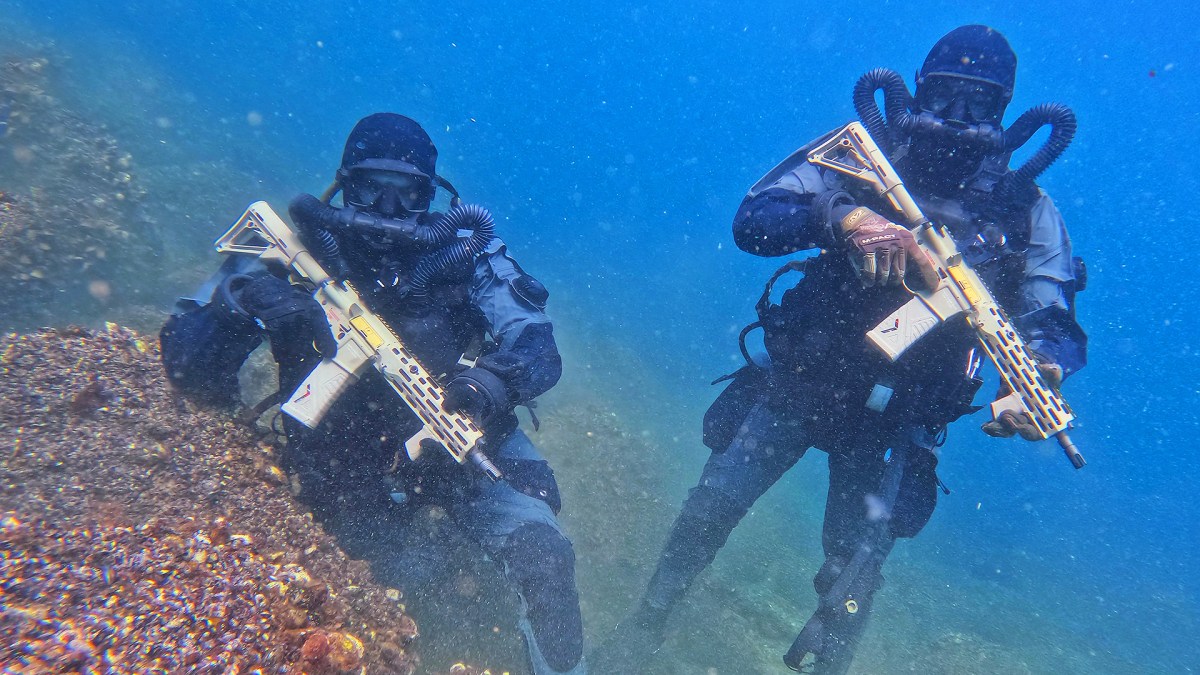
Ukrainian MoD/Spectre 33
When it comes to what rifles, sidearms and optics work best in war, there is perhaps no better place to find out than Ukraine. During more than four years of intense defense of their homeland , Ukrainian troops have used an assortment of small arms and accessories, many foreign-made, others domestically produced, to fight the Russians.
To get a better sense of what Ukrainians are currently using on the front lines, what they like, and what they don’t, we reached out to the First Corps Azov of the National Guard of Ukraine. The unit is stationed in the bloody Dobropillia sector in the eastern Donetsk region and is in the middle of one of the toughest fights in Ukraine.
Five soldiers from different Azov units with a range of specialties offered their unique insights into the weapons, sights and scopes they like and the ones they don’t.
The soldiers are issued all their weapons exclusively through the brigade’s armaments service, which obtains them from the Ukrainian Defense Ministry (MoD). Individuals, however, told us they sometimes purchase their own sights and scopes and other accessories, depending on the models.
Some of the questions and answers have been slightly edited for clarity.
Specifically, what rifles are the most coveted? And if they are AR-15s and AKs, which specific ones?
Tarantino, Chief Armorer, 12th Special Forces Brigade Azov, First Corps Azov of the National Guard of Ukraine.
When it comes to light weapon systems, the most common is an assault rifle based on the AR-15 [chambered 5.56mm], either domestic production or the one given to us by partner countries.
Chill, Chief Tactical Training Instructor, 41st Unmanned Systems Regiment Pilum, First Corps Azov of the National Guard of Ukraine .
So, in my personal opinion, the UAR-15 system is better for me because it’s lighter and it’s more reliable. I have worked with both platforms, both systems, and I can compare them based on my experience. And from my personal experience, the AR system is better.
The caliber is 5.56, and it’s also really convenient in terms of its modification and modernization because with the AK platform, you need to adapt it for further adjustments individually. But in the case of the UAR system, it’s really adaptable and you do not basically need anything in order to modernize it or modify it.
Khalepa, Anti-Aircraft Artillery Battery Commander, Air Defense Battalion Strazh, First Corps Azov of the National Guard of Ukraine.
Well, in our case, we are using larger calibers starting from 12.7mm up to 35mm. So we do not actually use the standard rifles.
Chewie, Deputy Commander for Logistics, Separate Special Operations Detachment Tuman, First Corps Azov of the National Guard of Ukraine.
When it comes to close combat, usually this is the UAR-15S of Ukrainian manufacturer called Zbroyar.
Barman, Tactical Training Instructor, Personnel Training Battalion, First Corps Azov of the National Guard of Ukraine.
So currently our key weapon platform is the UAR-15, but previously we also used the AK-74 and other modifications. The AK-74 fires 5.45mm rounds.
What is most conducive to fighting?
Well, the best weapon to work with is not the weapon itself, but the people we are working with. The weapon is only the instrument. But personally, the most reliable weapon is the one that has as few stoppages as possible because the last thing you want is to have a stoppage in the situation where you need to fire.
For me, that is the Heckler & Koch 416 . But I am talking about my preferences and experience. That gun has a gas piston system that has proven itself the most efficient due to the fact that the movement of the piston back and forth is relatively short. That makes the weapon itself much more reliable.
Heckler & Koch 416. (Heckler & Koch)
Another system, called DI [ direct impingement used in standard AR-15 pattern rifles], requires much more attention from the gunner who is shooting the rifle. Because in the conditions where the operator, the marksman, is sitting in the trench or in a bunker – especially now in autumn when the humidity is high – this DI system requires much more attention due to the wet weather around. The gas piston system has proven itself much more reliable and it doesn’t need that much attention.
We are using the Ukrainian-manufactured UAR-15 rifle, and you know, as they say, the best rifle is the one that you have.
Ukrainian-built UAR-15. Photo credits: (National Guard of Ukraine)
So the weapon system that I told you about, UAR-15, is indeed the most loved because, in addition to this weapon, we do possess small numbers of Beretta, Bren, and several other weapon systems.
The reason why we prefer the UAR-15 is, first of all, it is much lighter. Second, it’s shorter. Another reason is that, taking into account the combat warfare that we have right now, we have the manufacturer on the premises of our country. It means if something happens to the weapon, it doesn’t take much time to either send the request to the manufacturer for them to send us the spare details, or for us to send the weapon system to them for maintenance.
Our preference is of course the UAR-15, and we’re using the 5.56 UAR platforms because it’s more convenient to use, it’s easier to maintain, and it’s also more reliable. But we also need to understand that our enemy is using the AK platforms, the AK-12 , the AK-74, and while of course we are carrying the 5.56 rounds, usually during the assault actions, we can take the AK rifles and the 5.45 rounds to be able to use our rifles in compatibly with the enemy’s rifles. We can use the AKs for the element of surprise and for deception. The way they look compared to the UAR rifles makes it easier to deceive the enemy.
Kalashnikov AK-74. (Kalashnikov)
Have you noticed any performance differences between the AR-15 piston and direct impingement (DI) versions?
Well, again, the biggest difference between this gas piston system and the DI system is that the gas piston system has a very short movement back and forth of the piston. It means that the chances of stoppage in this weapon are quite low, while the DI system is much more demanding because these exhaust gases go back into this tube that pushes the bolt carrier back. That means these gases make this tunnel much more dirty. And in a situation when the rotation of the soldier to the battlefield is for two weeks, and these are the two weeks of a very intensive fight, a soldier doesn’t always have the chance to disassemble a weapon and pull the bolt carrier out and clean it.
Compared to the DI system, the Heckler & Koch quality of the barrel itself is exceptionally phenomenal. So the quality of the metal is good, and it allows you to shoot even four or five or even six magazines in a row without the barrel getting overheated.
Well, talking about the piston system, the only AR-15-based rifle which I know has the piston system is the Heckler & Koch 416. So I have some experience in using it, but unfortunately I do not have this rifle. But I would like to. It’s quite reliable based on my communication with other operators and service members. I also get really good feedback about that weapon. But that’s the only weapon system with this piston system that I know of, and yeah, it presents some advantages.
The UAR-15 system that we are currently using within our unit is the DI-based weapon system, and the key difference is that they become contaminated quicker, and they require better and more frequent maintenance, which is not always possible to ensure in combat conditions.
Well, I have served in the infantry since 2022, and I have had some experience with the piston systems, for instance, with the AK system, and I did not really notice any major differences.
We use only the DI system.
Well, from my experience, the gas piston systems like the one that we can find on the HK 416 , they are simpler to maintain. They are more efficient in terms of their principle of operation, and also they are more reliable, I would say.
Ukrainian Spectre 33 using the Heckler & Koch HK416 assault rifles. (Ukrainian MoD/Spectre 33)
But the key difference in the DI system is that, of course, it’s a little bit more difficult to maintain them. But at the same time, you can regulate the amount of gas that goes back into the receiver. So, both of these systems have their own advantages and disadvantages.
If I were asked to choose between the two, I would use the gas piston system. It also has fewer parts that can be broken during intensive use.
Any bullpups, where the grip is forward of the breech, that have performed well?
I will tell you this: we have never received a foreign-made bullpup weapon. We have several domestic-made ones. One of them is called the Fort 221 .
So for the short-term operations, when you have to fulfill a mission within a small and limited amount of time, and especially when you have to move around a lot, this forward bullpup configuration has proven itself quite good. But when it comes to long-term operations, when you have to, in addition to moving a lot, have to be out there in the field for quite a long time, this one is not the best option for this.
A Ukrainian Fort 221 bullpup rifle. (Ukrainian Ministry of Internal Affairs)
Well, I wouldn’t say that I would recommend any of the bullpups that I have used. So I have used the Fort 224 , and my impressions of this weapon system are like 50-50.
I would say that the primary issue with these rifles is their ergonomic characteristics. So, especially while shooting from a prone position, it’s pretty difficult to handle these rifles. So maybe during some kind of assault actions, active offensive actions, these rifles could be usable. But in terms of ergonomics, the standard rifles are much more convenient to use.
We don’t use bullpups.
We do not use any bullpups. One of the reasons is that a Ukrainian manufacturer used to produce these weapon systems with a 5.45mm, and that’s definitely not a reliable weapon at all.
I had some experience in using bullpup rifles, namely the Tavor , also the Ukrainian-manufactured Malyuk , and I think that’s it with bullpup assault rifles. But also I have used Turkish-manufactured bullpup type shotguns.
In my experience, the bullpup systems function seamlessly, but I’m just more used to the classic configuration of the assault rifles.
But the bullpup rifles have their own advantages. For example, they are more compact, so they can have the same length of the barrel. The ballistics will be the same, but the rifle will be more compact. At the same time, the bullpup configurations require more practice at the shooting range. So you just need to get used to reloading the bullpup rifle because the magazine is located in the rear part of the weapon. I wouldn’t say that this is much more difficult than reloading a weapon with the classical configuration, but it just feels unusual. This is why you just need more practice to get used to it.
Are you using suppressors and, if so, what kind?
When it comes to silencers and these suppressors, this very gap is not yet filled, so there is still a lot of room for maneuver and for somebody to enter this field. We do use them. We use several of them. One of them is called Ase Utra , but this one has the option of what’s called a gas release function.
Ase Utra supressor. (Ase Utra)
Another one we have is called Ukrop FAST (Fast-Attach Suppressor Tactical) suppressor. This can be easily attached and detached. But when it comes to active combat and when it comes to automatic mode of firing, these very suppressors lose their resources quite fast, so the wear and tear comes quite fast.
Personally, I do not use any suppressors, any sound moderators, because I do not have the tasks that require such equipment. But of course, the other service members who have the appropriate tasks, they use those.
No, we do not use any kind of those because we are located far from settlements and towns, which is why we do not need any kind of suppressors.
So when it comes to the UAR system, they go in a set with the manufacturer-issued suppressors. So we do use them because they go in a set. And another one that we use is the one called Ase Utra.
The reason why we prefer this suppressor that goes in a set with UAR-15 is that it has a function of quick removal. It means that to install it on the gun and to take it out from the gun, it doesn’t need much time and it doesn’t require any additional fixing of the aiming point. It means that a person can shoot if at some point he or she needs to put on the suppressor, they put on the suppressor and keeps shooting, so there is no need to do another kind of manipulations with the aiming device.
Ase Ultra doesn’t have this function. It means that after putting on the suppressor, you still have to adjust the aiming point a little bit. There is only one exception with Ase Ultra suppressors, for the caliber .308, which is the UAR-10 . This one has shown its efficiency quite well, and the preciseness of shooting for the distance of approximately 900 yards remains the same with the suppressor and without the suppressor. But that’s the only exception. In the past we used to use the UAR-10 much more often, both modifications, the short barrel and long barrel. But right now it’s more and more rare to use it.
UAR-10 semi-auto sniper rifle chambered for 7.62х51mm NATO round. (National Guard of Ukraine)
I have used some of the sound moderators, mostly manufactured by the Ukrainian company Zbroyar . Also, some of the American manufactured sound moderators, SureFire RC2 , and also the Ukrainian manufactured Mystic Medusa sound moderators. So all of them were used in the automatic fire mode, and they have demonstrated quite a high level of efficiency.
Surefire SOCOM556 RC2 Suppressor. (Surefire)
But I would say that the Zbroyar-manufactured sound moderators have a slight disadvantage in terms of how the gases are channeled. So, if you fire a weapon like the Heckler & Koch, sometimes while shooting automatic fire bursts, you can have some problems with the gas from firing.
It all depends on whether you can regulate the gas block in the weapon system or not. So, for instance, in the UAR systems, there is a possibility to regulate the gas block, and this is why you can adjust your shooting depending on what you’re using. But with some of the weapons, you cannot adjust this, and part of the gas just returns to the receiver, causing problems.
What about personal defense weapons and submachine guns?
Yes, we do use some submachineguns. One of them is Heckler & Koch MP5 , which has proven itself quite good because this one is quite comfortable to work with, and this one is quite a mobile weapon system and easy to operate.
The only drawback of such a weapon is that you can only use it in a few situations. So the variety of usage of this weapon is too narrow. So it’s quite irrational to use this weapon system in modern combat warfare. The best example where it definitely will serve you well? I’d say the drivers of the vehicles use them, or the tank drivers use them, due to the fact that they have to fulfill other missions. The weapon itself is relatively small, so this comes handy for drivers and the tank drivers.
Heckler & Koch MP5. (Heckler & Koch)
Well, usually the only self-defense gun which has been used is the handgun, so the pistol. As for the submachine guns, we almost do not use them at all because of their form factors. So the most standard self-defense weapon is either the rifle for every service member, or when there is an opportunity to use a pistol. But submachine guns are not widely used.
The Fort 20 is the model of the pistol that we are using for personal defense weapons in our unit. And as for the personal weapons, we also use the UAR-15 rifles.
We do not use submachine guns. What our soldiers do use, because they are issued out, are sidearms. It’s either Glock 17 or the Fort 20.
In terms of submachine guns, I have only used those at shooting ranges, so I do not have any real experience with them. But our sidearms are usually Glock 17 or Fort 20, and also we had some experience with Berettas .
What about optics? What red dots and scopes are most used? What works best and what do soldiers see as the positives and negatives of different brands and types, like EOTECH holographic sights versus Holosun or Aimpoint red dots?
There is one optic that’s called Aimpoint, third generation . When it comes to red dot sights, we take what is available commercially. So what has proven its efficiency is the one red dot called Holosun. This one out of everything that is on the market has also proved its efficiency. But we are talking about relatively cheap options right now. Other brands that are quite popular are the EOTECH , Vortex , and Vector Optics .
A view of the sight of a rifle, at an undisclosed location next to the Vuhledar frontline, Ukraine March 7, 2023. The frontline around the city of Vuhledar, a strategic rail and road hub south of Bakhmut, resembles an apocalyptic scenario. (Photo by Ignacio Marin Fernandez/Anadolu Agency via Getty Images) Anadolu
I have been using the Holosun red dot scope for over three years, and I cannot say that I have any complaints regarding that. It performs its function, and the rest of the possible manufacturers of these devices depend on the unit and depend on their personal budgets as well. So, of course, there are some differences between them. For instance, the Aimpoint has proven itself really reliable. The EOTECH as well. There are some drawbacks related to its dimension. It’s pretty large, and it is not appropriate for all the operators.
Holosun, I would say that this is the device that shows the best cost-to-quality ratio. So it all depends on the unit. For instance, when we are talking about the service members that are involved in some direct action, for instance, in assault actions, then they might use the EOTECH or the Aimpoint devices. But other service members might as well use the Holosun devices and other brands that are also available on the market. So, as usual, everything is operator-dependent. I wouldn’t say that there are any particular problems with them, but maybe the price, the high price, can be called just one of the problems.
#Ukraine : Destroyed and captured Russian equipment in Kupiansk-Vuzlovyi, #Kharkiv Oblast – a BTR-80-based vehicle and a Tigr-M IMV. Note the prevalence of US-donated 🇺🇸 M4A1 assault rifles with Aimpoint M68 CCO red dot sights. pic.twitter.com/g0Qx1ypeQ8 — Polymarket Intel (@PolymarketIntel) September 28, 2022
#Ukraine : Destroyed and captured Russian equipment in Kupiansk-Vuzlovyi, #Kharkiv Oblast – a BTR-80-based vehicle and a Tigr-M IMV. Note the prevalence of US-donated 🇺🇸 M4A1 assault rifles with Aimpoint M68 CCO red dot sights. pic.twitter.com/g0Qx1ypeQ8
The baseline is that everyone is using the rifles with iron sights. But then, if, for instance, the additional optical devices are not provided for by the unit, then the fighters can choose to buy their own optics. It all depends on the unit and the operator.
In the unit that I’m currently serving in, we do not use any kind of these optical devices because we are located very far from the front line. Basically, our positions are in the rear, and since we are concerned with shooting down aerial targets, we do not need to use any of these devices.
So we do use Aimpoint. We use the modifications M5 , M4 , and also we use the EOTECH.
An Azov soldier using an Aimpoint red dot sight on a Heckler & Koch HK416 rifle. (Azov)
So when it comes to EOTECH, it has one big advantage. It has quite a big screen or quite a big window that allows the operator to see a much wider spectrum, and this allows him to make much more precise aim. But the drawback of this one is that it doesn’t have this kind of underbarrel option of having the grenade launcher under the barrel. When it comes to Aimpoint, the aim itself is quite small, but this one is capable of withstanding the launching of the underbarrel grenade launcher. When the grenade is leaving the barrel, the Aimpoint still can remain on the barrel and not be lost.
The peculiarity of this EOTECH is the following: when you shoot two or three grenades from the underbarrel grenade launcher, after two or three shots, the aiming stops working correctly. The recoil from the grenade launcher impacts the work of this aiming device, and it’s no longer correct.
I have worked both with red dot sights and optical scopes. In terms of the red dot sights, I have experience in using the EOTECH 553 and the EOTECH XPS3 . I’ve used them with the 3x magnifier, also manufactured by the EOTECH company, and also I have some experience in using the Aimpoint T2 red dot sights , also in combination with the EOTech magnifier. Also, I have used the Vortex Crossfire red dot sight . It’s similar to the Aimpoint T2, but it’s a little bit cheaper and it is intended to be used by sportsmen.
EOTECH XPS3 sight. (EOTECH)
All of these models have their own advantages. In terms of the EOTECH and Aimpoint, they have the mil-spec certification, which is why they can be more resilient than the other brands. If I were to choose, then I would definitely choose the Aimpoint T2 red dot sight because this is like the classical red dot sight, not the holographic sight, like the EOTECH XPS3. So this means that even with the partial damage of the sight, with the partial damage of the lens, it still gives you the red dot, and you are still able to efficiently shoot with it.
Partially we buy them ourselves. Partially we are issued those sights by the state. For instance, in this unit, I was issued the Aimpoint T2 micro kit. So in another unit that we have served before joining this unit, we were issued ACOG sights for the M4A1 rifles, so it really depends.
When it comes to the scopes, the ones that we use are the ones that zoom in at the 3x or 5x magnification, no more, because 3X and 5x are exactly the ranges that are good enough for you to operate your weapon in an efficient way and to cover that area of responsibility each marksman has.
We do not have any organic standard-issue scopes within our unit, but from what I have seen among the operators in our subunits, I have seen the Vortex scopes. So these are the ones that can be used with the AR systems.
As for magnification, it’s either 1-8x or 1-16x. Usually, our operators are using the scopes with variable magnification, and it all depends on the task. But mostly, these scopes are not used for firing, but rather for observation.
We don’t use scopes.
We do use them. We use mostly four different modification brands. One of them is called Nightforce . Another one is called Schmidt & Bender . Another one is called Kahles , and the last one that we use is called Leupold .
So roughly speaking, Kahles and Leupold are equals and they work quite similar. The differences are that in the Kahles, the aiming matrix is different, but when it comes to Leupold, I would say that the lens is quite clean, so that makes this one very, very much loved. So I do possess the Leupold scopes. This is my main scope I use. It has been through a lot, and it has withstood a lot of explosions, and it’s still up and running. It’s still functioning.
A Ukrainian Special Operations Forces soldier with a Leupold scope. (Ukrainian Special Forces)
When it comes to this Kahles, again, roughly speaking, it has shown its efficiency quite well. Some modifications to these Kahles scopes allow it to provide a view called parallax. That’s one of the settings. So if a soldier doesn’t know how to properly use it, it’s not possible to set this scope correctly.
We do buy a lot of those scopes. Back in the past, volunteers used to help us a lot, and other companies used to buy them for us and simply deliver them to us, but right now the system is such that we do receive from the government from the official line of sustainment very efficient scopes.
So currently I’m using the Sig Sauer scope . I need to look up the exact model, but its magnification is one to six. Its ballistics are honed for the 5.56 caliber exactly for the M855 cartridge. This is the scope which is most optimal for the usage with the assault rifle. But previously, I also used the Elcan Specter scope and also the EOTECH Vudu .
I cannot just select only one scope. One of my favorites is the Elcan Specter. It’s quite compact, and its magnification is one to four. At the level of one, it can be used as a red dot sight, and then it can also be used as the classical optical sight to magnify the image. And for shooting at longer ranges, well, I would say that the Sig Sauer is my favorite. So it’s pretty convenient to be used for shooting at ranges of several hundred meters.
Sig Sauer TANGO-MSR COMPACT 1-8x24MM (SFP) rifle scope. (Sig Sauer)
How prevalent are thermal scopes? Is there a difference in quality between those used by the Russians and Ukrainians that gives an upper hand?
When it comes to thermal optics, the one that we use quite often is called Archer . That’s a Ukrainian domestic production thermal vision device, and this one is quite efficient and quite comfortable to use. And when it comes to the night operations, that’s definitely a must-have that each soldier is supposed to have. But when it comes to what the enemy is using, what kind of thermals the enemy is using, I cannot give you the clear answer because, in all honesty, I do not know.
Within our unit, we do not use thermal scopes, but I know guys who do, and well, it’s quite a useful thing if your tasks and if your unit imply using the thermal vision scopes. Since we are an unmanned systems regiment, we do not have the kind of tasks that require the use of the thermal scopes.
We do use the thermal scopes and additional adapters to them. But when it comes to Russian thermals and what kind of thermals they use, I will be honest with you. I have never had any chance to get a hold of them and hold them in my hands, so I cannot compare them.
I can only tell you about Ukrainian manufacturers. But when it comes to long-range guns, we use the Archer 7 for this very purpose. When it comes to the .338 caliber, we use guns by Accuracy International , and Sako TRG 42 . When it comes to the .375 caliber, we use the Cadex 40 Shadow .
When it comes to UAR-15 5.56, usually we use the Archer 10 for this very purpose. When it comes to simply observational functions, we use either Archer 55 or Archer 8. And I also know about some other units that use thermals called Safran because they have the peculiarity of having coolant inside.
Archer TMA 55M thermal scope. (Archer)
I’ve used thermal vision scopes. First of all, in terms of the Russian thermal vision scopes, unfortunately, I haven’t had any experience of using those, but I have some experience with the Archer manufacturer with the Archer thermal vision scopes. Usually, the TSA-7 models have proven to be quite good, and also I had some experience with the Chinese-manufactured AGM thermal vision scopes , and they are also quite good.
Archer TSA-7 thermal scope. (Archer)
My favorite is Archer, the TSA-7. We have used it for the longest periods of time, and we are really used to operating with it. So it has the ballistic suggested for every type of ammunition. It has a laser rangefinder. It has a ballistic calculator. So it’s quite a useful thing, and it’s easy and convenient to use.
What about night vision? Are most troops using night vision goggles and need to set their rifles up for that?
We use a classical one called the PVS-7 . We attach it to our helmets.
Night vision devices on assault rifles and other weapons are primarily used by reconnaissance and assault units — particularly during clearing operations. As for the drone component, NVDs are used by drivers for safe and concealed delivery of crews to the positions during the night, as well as the operators themselvs for nighttime work and launches.
We have some night vision devices, namely Archer 10 , but these devices were just issued to the guys to monitor their perimeter during nighttime. We have no need for that because we are located in the rear and we are more concerned with the sky than with what’s on the ground.
We do not use the night vision devices installed on the weapon system. We do use them installed on the soldiers’ helmets, but not on the weapon system. Sometimes our soldiers do use the laser point night vision devices, but they use it only when they use the infrared spectrum. When it comes to installing the aim on the gun, usually the soldier does a zeroing, and if the zeroing is done properly, the efficient range of such a weapon to operate in this infrared spectrum is up to 200 meters.
Ukrainian SOF's night vision equipment is one area where Ukraine has an advantage over their Russian counterparts, including GPNVGs. https://t.co/aeGD4XxhHH pic.twitter.com/OjGhZyEELR — Rob Lee (@RALee85) March 5, 2022
Ukrainian SOF's night vision equipment is one area where Ukraine has an advantage over their Russian counterparts, including GPNVGs. https://t.co/aeGD4XxhHH pic.twitter.com/OjGhZyEELR
We don’t use the night vision devices on the weapons systems themselves. We use them attached to the camera, to the helmets, and out of those we use the PVS-14 L3Harris . That’s a monocular. Also, we use the PVS-32 . That’s a binocular. The most widely used is the PVS-14.
PVS-14 L3Harris night vision monocular. (L3Harris)
In my personal opinion, the PVS-14 is simply much more comfortable. I love this one simply because this is a monocular and I use it with my left eye because the right eye I mostly use for the red dot or with the laser beam aiming device. But that’s very much an individual opinion because a lot of people in my unit prefer the PVS-32.
How much leeway do troops have for customizing their rifles?
Well, before using any kind of modifiers on any weapon system, the way we deal with that is the following: Before doing that, each soldier is supposed to master how to handle a weapon without any additional modifiers, meaning the default setting of the weapon that he or she receives.
He or she is supposed to first get a feel for this and receive some kind of qualification with this one without any additional modifier. Only after a soldier gets used to, and is quite good at, handling the weapon with the mechanical optics that the weapon goes with, can a soldier go to another level. But this is done only if sergeants and commanders see that the soldier has reached some kind of efficiency level, and only after that, the commander or sergeant can give permission to install any kind of additional modifiers on the weapon.
The first thing that we always emphasize and that we try to popularize among our personnel is the installment of the red dot sights. We try to explain the advantages of using red dot sights on the weapons.
Then, if the weapon does not have the ambidextrous safety, we try to persuade people to install those safety levers that can be switched from both sides ambidextrously, and then the third thing is the buttstock, the pistol grip. So these things are usually not convenient due to the specificities of every person’s ergonomics.
Ukrainian soldiers of the 47th Separate Mechanized Brigade, operating under the call signs “Hrek” and “Mahura”, inspect forward infantry positions near the border with Russia on August 28, 2026 in Sumy Region, Ukraine. The two officers arrived at the frontline on quad bikes to evaluate the defensive lines and meet with infantrymen who had held their ground for 59 days before escorting them to an evacuation point. (Photo by Kostiantyn Liberov/Libkos/Getty Images) Libkos
Apart from just standard procedures like zeroing with the weapon, adjusting the iron sight and so on, we do not customize our weapon. We do not conduct any additional modifications.
We do have some additional modifications when it comes to magazines, when it comes to magnifiers, when it comes to the grasp handles. Some of the soldiers do use the forward grasp handle. Some of the soldiers do use the flashlights that they put underneath the barrel. But it’s not about sport modification. The primary reason is to make the weapon more comfortable for you, and to make you a much better operator of this weapon.
I need to separate it into two parts. The first part is about the insides of the weapon systems. Mostly, we do not change the insides of the weapon systems. There might be some changes with a bolt carriage, but that’s mostly the exception. We can work with the suppressors, with the heavy buffer suppressors and optics, red dots, and handles for a better grip.
What about sidearms? What sidearms are most prevalent and in what caliber?
When it comes to the pistols, the most used one is the Fort 20. That’s domestic production. Also Glock. Also the one called Sig Sauer, and the last one that is the CZ . These are all 9mm weapons.
🇺🇦Ukrainian soldier with modern 🇨🇿CZ P-10 F pistol made by ČZUB. ČZUB supplied Ukraine with a large number of weapons from its stocks, in addition to the CZ P-10 C/F, also CZ Bren 807 or CZ Bren BR. Whether these were a gift from ČZUB or the weapons were donated by the Czech… pic.twitter.com/U8nsFSN92d — 𝕻𝖗𝖆𝖎𝖘𝖊 𝕿𝖍𝖊 𝕾𝖙𝖊𝖕𝖍 (@praisethesteph) October 31, 2024
🇺🇦Ukrainian soldier with modern 🇨🇿CZ P-10 F pistol made by ČZUB. ČZUB supplied Ukraine with a large number of weapons from its stocks, in addition to the CZ P-10 C/F, also CZ Bren 807 or CZ Bren BR. Whether these were a gift from ČZUB or the weapons were donated by the Czech… pic.twitter.com/U8nsFSN92d
Well, previously we used to use Makarov pistols , but now we’re using the Fort 20 Ukrainian manufactured sidearms, and also I have previously used the Glock pistols. So basically, these are the most common, most widespread pistols that you can come across in Ukraine.
Currently the Fort 20 and the Glock 17 are the most commonly used pistols.
So as I have already mentioned, the sidearms that we are using are the Glock 17 and the Fort 20.
So the main caliber is 9x19mm. That’s the most widely used caliber. When it comes to sidearm brands, the most widely used ones are Fort 20, Glock 17, and this Czech CZ.
A Ukrainian soldier firing a Glock 9mm pistol. (Azov)
What are considered the best and most reliable and what has been disappointing or considered not as reliable?
When it comes to these small arms and guns, a lot depends on the anthropometric characteristics of each individual – the size of the palm, the grasp that each individual has. But when it comes to reliability, in my experience, the Fort 20 is number one, and when it comes to comfort and efficiency, I would say that Sig Sauer is the best one.
I cannot give you a very clear answer about which is the most disappointing, because all of these four weapon systems will be able to fulfill their mission in the hands of a very skilled operator. So those small differences, these are the differences that each individual has as preferences only. But when it comes to functions and functionality, they all will do a good job.
When it comes to my favorite weapon systems, it’s definitely gonna be the Sig Sauer, but I really struggle with the idea of finding the most disappointing one.
At some point, Glock might be called one, but Glock is also quite a reliable weapon, and I cannot even tell you assuredly that Glock is the worst.
As for my favorite type of pistol, it’s the Glock, of course. But as for those that do not live up to my expectations, I do not think that I can choose one. Previously, we had some Soviet manufactured sidearm models. For instance, we used the TT Soviet manufactured pistol , so I would say that it was pretty bad. So those were the old Soviet pistols, and they do not live up to the requirements of modern warfare.
TT-33 7.62 pistol used by Ukrainian 151st Mechanized Infantry Brigade, February 2024. pic.twitter.com/5vjGONgUQ7 — B-AREV (@trip_to_valkiri) February 7, 2024
TT-33 7.62 pistol used by Ukrainian 151st Mechanized Infantry Brigade, February 2024. pic.twitter.com/5vjGONgUQ7
I like the Glock because, first of all, it’s convenient. Second, accessibility. Then the shooting precision, and of course their dimensions. Their dimensions are also pretty convenient.
I would just say that every weapon needs its own approach. So you just need to find the right approach to every weapon. But no, there are no weapons that I wouldn’t use.
I like the Glock 17 and the Fort 20 because both of these pistols are easy to maintain, especially the Fort 20. It’s lightweight. It’s not really large, so it’s quite convenient to use. And as for the Glock pistol, it’s just the golden classic, the classical example of a handgun.
Well, in terms of Glock 17, from my own combat experience, I would like to say that this is a really good weapon that works pretty well even in mud conditions, even when it’s dirty. So in 90% of cases, it didn’t show any malfunctions, any stoppages, etc. Even in really bad operational conditions. In terms of the Fort 20, it’s also quite a good weapon. But well, unfortunately, we cannot provide the Glock pistols for all of our service members. But if we had this opportunity, of course, we would provide the Glocks for 100% of our personnel.
The primary reason why we cannot provide Glocks for all of our personnel is that currently our unit is not purchasing Glocks because there are no funds for this procurement. And as for the key differences between the Glock and the Fort systems, the Fort is really sensitive to humidity and it gets rusty quite soon. So basically, this can also lead to some malfunctions.
I have worked with many pistols, and talking about those that I would never use, these are some of the models manufactured by Beretta. I really didn’t like those, both in terms of maintenance, in terms of the recoil of this weapon. They were hard to maintain, and they had too much recoil. It’s also not really controllable, especially in field conditions. But of course, this is also a matter of habit.
Beretta M9A4 pistol. (Beretta)
So you just need to get used to this weapon. I’m already used to the weapons that we use, and we can just easily maintain them, even in field conditions. And also, we’re quite good at operating the weapons.
The one that we use in my unit is the Fort 20. But the drawback of this one is that the barrel is very fragile and very much open for any kind of corrosion and rust. So if I could choose one, according to my preferences, I would definitely choose the CZ P-07 .
Right now we are in the process of rearming the soldiers, meaning that some of the soldiers have already received this weapon system, the rest of us will receive it, I guess, by the end of next year. This is being provided by MoD.
Out of those that I had a chance to put my hands on, I didn’t like the Beretta much because the way it sits in the hand is not comfortable. It has a pretty strong recoil, and this one is very sensitive and requires much more attention.
Do you run red dots on your pistols? If so, what kinds have worked well? What hasn’t? Same for pistol lights.
I have never worked with a pistol with a red dot. I do know that some of the soldiers use it, but for me, it seems mostly like something for the sport world, not the war world.
It goes without saying, but there are some pitfalls and drawbacks of this because when it comes to the red dot on your main gun, it’s always in your hands. It’s always in front of you, so you can control it. But the pistol that the soldiers do have usually is in such a place where you do not completely have control every time you move.
That means that, if at some point you fall, or if at some point you are in the dense wood and it might simply knock this red dot off. So a pistol usually is in the holster, and don’t always have your eye on the holster or the pistol. While the red dot is on your rifle, you always keep an eye on it. So it simply can fall apart. And that’s a bad story when a soldier can only operate the pistol with a red dot, it means that you take the red dot out, and you cannot work with mechanical optics, it will be a very dire situation.
I don’t have much expertise in this field when it comes to the flashlights under the barrel of the pistol, and when it comes to any kind of modifications on the pistols. I do know that some reconnaissance soldiers do use the flashlights on the pistols, but that’s mostly on very rare occasions.
Personally, I have not used any red dot sights with my handguns. The only personnel that I have seen using red dot sights on their pistols are close protection service members, and for them this is justifiable because the pistol is their primary weapon, but for us the pistol is just a sidearm. So this is why we do not concentrate on using red dot sights on our pistols.
Glock 19 with a Holosun 507C red dot. (Photo by Valentine CHAPUIS / AFP) VALENTINE CHAPUIS
No, the effective range of these handguns is 20 to 30 meters, so there is no need, no sense using red dot sights on them. We don’t use pistol lights.
In combat, we do not really use red dot sights on our pistols. Some of our guys can just install red dot sights on their pistols for sports reasons, just for training, for some personal use, etc. But not in combat.
In terms of the closed-type [fully enclosed emitter] red dot sights, first of all they are quite pricey, and secondly they can be easily broken. Again, they are susceptible to mud, to humidity, etc. And in terms of the open-type red dot sights, a bit of mud and it doesn’t work anymore. At the same time, in terms of the use of the iron sights on the pistol, they are basically fail-proof. And even if they are dirty, even if there is some contamination, some mud, you can just clean them off with your glove and keep on shooting. So they are just fail-proof on the battlefield. And it’s easier. You don’t have to put in and out of your holster without the red dot.
My issued weapon doesn’t have a red dot sight, and I feel pretty confident in getting it out of the holster and putting it back in the holster. And my personal sidearm – a Glock 34 – I have a red dot sight on it, and once again, no problems in using the holster. The Glock 34 is a sports weapon I purchased to participate in sports. This is not a self-defense weapon.
When it comes to combat and real combat warfare, we do not use the red dots on the pistols. So the war is about the dust and it’s about being dirty and there is a pretty big and high chance that you might hit your weapon either with a stick or something and simply destroy or break the red dot. That is the reason why most of us stick to mechanical sights.
As for pistol lights, we use Olight .
What about shotguns? Do you use them for trench warfare? What about for shooting down drones?
When it comes to military shotguns, unfortunately, I cannot give you a lot of information because we don’t have many chances to work with them.
Usually they just use shotguns to shoot down drones. I haven’t really heard anything about using shotguns while conducting any actions in the trenches.
Well, as of today, we do not use shotguns, because they can be used against FPV drones or other types of small drones, but our unit does not use shotguns to shoot down Shahed drones.
Well, usually we use shotguns for the crews of armored fighting vehicles, but we use shotguns in really rare cases. Mostly, all the personnel are trained to shoot down drones with their primary weapon without using the shotguns.
We do not use shotguns at all. The weapon that we operate is our authorized UAR-15 with the very standard M855 round.
What shotguns work best for shooting down drones?
So out of those that I had a chance to get my hands on, is one called Benelli. That’s an Italian production shotgun. I have it in my hands. That’s a very qualitative weapon system, and definitely is a reliable one. Another one that I used in my career is the Winchester, and it also looks and works quite and is quite an efficient weapon system.
Benelli 828 U SUPERSPORT A.I. OVER AND UNDER SHOTGUNS. (Benelli)
The one that we know that we use is the one from the Turkish production, and these are the smoothbore weapons. The drawback of all of them is the following: the weapon is the same, but the manufacturers of the same weapon are different. It means that a brand new weapon from one manufacturer can be up and running and working well, but another weapon system from another manufacturer cannot work so smoothly, and it requires additional fixing of some things. The explanation for all this in my mind is quite easy because these all are not military weapons. These are the weapons designed for hunting and for hunters.
We do not really have any kind of standardization in this matter. It’s either the Turkish manufactured platforms or any platforms that we can get.
As a hunter, I prefer the classical platforms, but now we have a lot of different types of shotguns in Ukraine, different form factors, a lot of Turkish-manufactured Hatsan shotguns , both pump-actions and other models, and I would say that the pump-action guns are the most effective that can be used in our conditions of Ukrainian warfare.
Seeing more and more visual evidence of shotgun use against drones. Here's a member of the 53rd Mechanised Brigade firing a 12ga 870-pattern shotgun at a Mavic-type drone. Source: https://t.co/483YpwRBKW #UkraineRussiaWar #SALW #Ukraine pic.twitter.com/C2xpLcm2N5 — Matthew Moss | The Armourer's Bench (@historicfirearm) March 20, 2024
Seeing more and more visual evidence of shotgun use against drones. Here's a member of the 53rd Mechanised Brigade firing a 12ga 870-pattern shotgun at a Mavic-type drone. Source: https://t.co/483YpwRBKW #UkraineRussiaWar #SALW #Ukraine pic.twitter.com/C2xpLcm2N5
Currently we are using the Turkish manufactured copy of Benelli and also the Safari [HG-150M] . This is a Ukrainian manufacturer.
Do you use a 5.56 fragmentation round for shooting down drones?
Yes, 5.56 shot rounds are occasionally used. However, the firing effectiveness depends exclusively on the operator’s skills.
No, we do not usually use specialized anti-drone cartridges. It’s usually just simple shot cartridges.
Well, the UAR-15 rifles have the special type of anti-drone ammunition that doesn’t have a single bullet, but it has something more similar to the shotgun, which just acts as the fragmentary ammunition that you have described. We have them and we practice using them at the training sites at the shooting ranges, but we haven’t had any need to use them in the real combat scenario yet.
If we’re looking at the extreme situations and if we imagine that a rifle with the anti-drone munitions is the only thing that you have against the drones, yes, I would say that these anti-drone munitions are better than just simple bullets. They contain small gauge shot, and in comparison with the bullet, they are much more effective in damaging the drones because they can cover a larger area, and the dispersion is larger and better than in just simple cartridges with bullets.
No special cartridges. We just train them to shoot down the drones with what we have, with what they fight. Because when our personnel are somewhere in the tree line and they have contact with the enemy, and they quickly need to shoot down a drone, they will not have time to change the magazine for the one with the anti-drone cartridges, and basically shooting down drones with standard munitions has proven quite efficient. So we train our people to do this. We have quite high results, and we even had cases when our fighters shot down drones with their pistols.
The only scenario where we use them is during training on the ranges. But when it comes to combat warfare, usually we do stick to our standard rounds because when it comes to warfare right now, a lot of those attacks happen suddenly, unexpectedly. It means that a soldier simply doesn’t have time to change the magazine for the magazine that has those rounds that have these fragments in it.
The peculiarity of the fragmentation round is that its range of efficiency is approximately from 40 to 60 meters, while a usual standard round can hit a drone at a distance of 100 to 150 meters, so we simply made our own conclusion and stuck to this. That using a regular round is much better than this fragment round.
Contact the author: howard@twz.com
Comments couldn’t be loaded. Please refresh the page.
发布于美国东部时间2026年11月4日下午2:17
乌克兰国防部/Spectre 33
要论哪些步枪、手枪和光学瞄具在战争中表现最佳,或许没有比乌克兰更合适的例子了。在长达四年多的保卫祖国的艰苦战斗中,乌克兰军队使用了各种各样的小型武器和配件,其中许多是外国制造的,也有一些是国产的,与俄罗斯军队作战。
为了更好地了解乌克兰前线部队目前使用的装备、他们的喜好以及不满之处,我们联系了乌克兰国民警卫队第一亚速军。该部队驻扎在顿涅茨克州东部血腥的杜布罗皮利亚地区,正处于乌克兰最艰苦的战斗之一的中心。
来自亚速部队不同单位的五名士兵,拥有不同的专业技能,就他们喜欢和不喜欢的武器、瞄准器和瞄准镜提出了自己独特的见解。
士兵们的所有武器都由旅部军需处统一配发,而军需处则从乌克兰国防部采购。不过,一些士兵告诉我们,他们有时也会根据武器型号自行购买瞄准镜、瞄准器和其他配件。
为了更清晰地表达,部分问答内容已略作编辑。
具体来说,哪些步枪最受追捧?如果是AR-15和AK系列,具体是哪些型号?
塔兰蒂诺,乌克兰国民警卫队亚速军第12特种部队旅亚速旅首席军械官。
就轻型武器系统而言,最常见的是以 AR-15(5.56 毫米口径)为基础的突击步枪,无论是国产的还是伙伴国家提供的。
Chill,乌克兰国民警卫队第一军亚速第41无人系统团Pilum首席战术训练教官。
所以,就我个人而言,我认为UAR-15系统更适合我,因为它更轻便、更可靠。我使用过这两个平台和系统,可以根据我的经验进行比较。就我个人经验而言,AR系统更好。
它的口径是5.56毫米,而且在改装和现代化方面也非常方便,因为AK平台需要单独进行调整才能进行进一步的改造。但UAR系统本身就具有很强的适应性,基本上不需要任何额外的配件就可以进行现代化改造或改装。
哈列帕,乌克兰国民近卫军第一军“亚速”防空营“斯特拉日”防空炮兵连连长。
嗯,就我们而言,我们使用的是从12.7毫米到35毫米的较大口径枪支。所以我们实际上并不使用标准步枪。
Chewie,乌克兰国民警卫队第一军亚速部队图曼独立特种作战分遣队后勤副指挥官。
说到近距离战斗,通常指的是乌克兰 Zbroyar 制造商生产的 UAR-15S 步枪。
巴尔曼,乌克兰国民警卫队第一军亚速营人员训练营战术训练教官。
所以目前我们的主要武器平台是UAR-15,但之前我们也使用过AK-74和其他一些改进型。AK-74发射5.45毫米子弹。
什么因素最容易引发争斗?
其实,最好的武器并非武器本身,而是与我们并肩作战的人。武器只是工具而已。但就我个人而言,最可靠的武器是故障率最低的,因为在需要开火的时候,最不希望看到的就是武器卡壳。
对我来说,那就是赫克勒-科赫416型左轮手枪。但我说的只是我个人的偏好和经验。这把枪采用的是气动活塞系统,由于活塞往复运动的行程相对较短,因此已被证明是最有效的系统之一。这使得武器本身更加可靠。
黑克勒和科赫 416。(黑克勒和科赫)
另一种名为DI(直接冲击式,用于标准AR-15型步枪)的系统,需要射手投入更多精力。因为在操作者(即射手)身处战壕或掩体等恶劣环境下——尤其是在秋季湿度较高时——这种DI系统会因潮湿环境而受到干扰,需要格外注意。相比之下,活塞式导气系统已被证明更加可靠,且无需如此多的维护。
我们使用的是乌克兰制造的 UAR-15 步枪,你知道,正如人们常说的,最好的步枪就是你拥有的那支。
乌克兰制造的UAR-15。图片来源:(乌克兰国民警卫队)
所以我刚才提到的UAR-15武器系统确实是最受欢迎的,因为除了这种武器之外,我们还拥有少量的贝雷塔、布伦和其他几种武器系统。
我们之所以更倾向于选择UAR-15,首先是因为它更轻便。其次,它更短。另一个原因是,考虑到我们目前的作战形势,UAR-15的制造商就在我们国家境内。这意味着如果武器出现故障,我们可以很快地向制造商提出更换备件的请求,或者将武器系统送回他们那里进行维修。
我们当然更倾向于使用UAR-15,之所以选择5.56毫米口径的UAR平台,是因为它使用起来更方便、维护更简单、也更可靠。但我们也需要意识到,敌人使用的是AK系列步枪,例如AK-12和AK-74。虽然我们携带的是5.56毫米口径的子弹,但在突击行动中,我们通常会携带AK步枪和5.45毫米口径的子弹,以便与敌人的步枪兼容使用。我们可以使用AK步枪来制造奇袭和迷惑敌人的效果。与UAR步枪相比,AK步枪的外观更容易迷惑敌人。
卡拉什尼科夫 AK-74。 (卡拉什尼科夫)
你有没有注意到 AR-15 活塞式和直接冲击式 (DI) 版本在性能上有什么区别?
再说一遍,这种导气活塞系统和直喷系统最大的区别在于,导气活塞系统的活塞往复运动行程非常短。这意味着这种武器发生故障的概率很低,而直喷系统则要求更高,因为废气会返回到推动枪机后坐的导气管中。这意味着这些废气会使导气管更容易积聚污垢。在士兵轮换上阵两周的情况下,如果这两周是高强度战斗,士兵并非总有机会拆卸武器,取出枪机进行清洁。
与直喷式系统相比,黑克勒-科赫枪管本身的质量堪称卓越。金属材质优良,即使连续射击四五个甚至六个弹匣,枪管也不会过热。
说到活塞式系统,据我所知,唯一一款采用活塞式系统的AR-15步枪是HK 416。我有一些使用经验,可惜我没有这支枪。但我很想拥有一支。根据我与其他作战人员和军人的交流,这支枪相当可靠。我也收到了很多关于这支枪的好评。但据我所知,它是唯一一款采用活塞式系统的武器,而且它的确有一些优势。
我们部队目前使用的 UAR-15 系统是基于直接离子束的武器系统,其主要区别在于它们更容易受到污染,需要更好、更频繁的维护,这在战斗条件下并不总是能够保证的。
我从 2022 年起就在步兵部队服役,也接触过一些活塞式系统,比如 AK 系统,但我并没有注意到有什么重大区别。
我们只使用DI系统。
就我的经验而言,像HK 416上那种气动活塞系统,维护起来更简单。它们的运作原理更高效,而且我认为也更可靠。
乌克兰“幽灵33”特种部队使用HK416突击步枪。(乌克兰国防部/“幽灵33”特种部队)
但DI系统的主要区别在于,它的维护难度当然要大一些。不过,同时,你可以调节回流到接收器中的气体量。所以,这两种系统各有优缺点。
如果让我二选一,我会选择气动活塞系统。它的零件也更少,在高强度使用过程中不易损坏。
有没有哪些无托步枪(握把位于枪膛前方)表现良好?
我可以告诉你:我们从未收到过外国制造的无托步枪。我们有好几支国产的。其中一支叫做Fort 221。
因此,对于短期作战,尤其是在短时间内完成任务,特别是需要频繁转移的情况下,这种前置无托步枪配置已被证明非常有效。但对于长期作战,除了频繁转移外,还需要在野外长时间驻守,这种配置就不是最佳选择。
一支乌克兰产Fort 221型无托步枪。(乌克兰内政部)
嗯,我不会说我会推荐我用过的任何一款无托步枪。我用过Fort 224,我对这套武器系统的印象大概是五五开吧。
我认为这些步枪的主要问题在于其人体工程学设计。尤其是在卧姿射击时,操控这些步枪相当困难。因此,或许在某些突击行动或主动进攻行动中,这些步枪还能勉强使用。但就人体工程学而言,标准步枪的使用便利性要好得多。
我们不使用无托步枪。
我们不使用任何无托步枪。原因之一是,一家乌克兰制造商过去曾生产过使用5.45毫米口径子弹的这类武器系统,而这种子弹绝对不是一种可靠的武器。
我之前用过一些无托步枪,主要是塔沃尔(Tavor)和乌克兰产的马柳克(Malyuk),我想我用过的无托突击步枪就这些了。不过我也用过土耳其产的无托霰弹枪。
以我的经验来看,无托步枪系统运行流畅,但我更习惯于突击步枪的经典配置。
但无托步枪也有其自身的优势。例如,它们更加紧凑,因此可以在保持枪管长度不变的情况下使用无托步枪。弹道性能保持不变,但步枪本身更加紧凑。同时,无托步枪的装弹方式需要更多的练习。你需要习惯无托步枪的装弹方式,因为弹匣位于枪身后部。我并不认为这比传统步枪的装弹方式难多少,只是感觉不太一样。这就是为什么你需要更多练习来适应它的原因。
你是否使用消音器?如果使用,是什么类型的?
说到消音器和抑制器,这个领域的空白尚未被填补,所以还有很大的发展空间,也为其他人进入这个领域提供了机会。我们确实在使用它们,而且不止一种。其中一种叫做Ase Utra,它配备了所谓的气体释放功能。
Ase Utra 抑制剂。 (亚濑宇特拉)
我们还有一款叫做 Ukrop FAST(快速安装战术消音器)的消音器。它可以轻松安装和拆卸。但是,在激烈的战斗和全自动射击模式下,这类消音器的性能损耗非常快,磨损也很快。
就我个人而言,我不使用任何消音器或降噪装置,因为我的任务不需要用到这些装备。但当然,其他承担相应任务的军人会使用这些装备。
不,我们不使用任何类型的消音器,因为我们远离居民区和城镇,所以我们不需要任何类型的消音器。
所以,对于UAR系统来说,它们通常与厂家提供的消音器配套使用。我们使用它们是因为它们是成套的。我们使用的另一种消音器叫做Ase Utra。
我们之所以推荐这款与UAR-15配套的消音器,是因为它具有快速拆卸功能。这意味着安装和拆卸消音器都非常快捷,无需对瞄准点进行任何额外的调整。也就是说,如果射击者需要在射击过程中安装消音器,只需安装即可继续射击,无需对瞄准装置进行任何其他操作。
Ase Ultra 消音器不具备此功能。这意味着安装消音器后,您仍然需要稍微调整瞄准点。Ase Ultra 消音器只有一个例外,那就是 .308 口径的 UAR-10。这款枪的性能表现相当出色,在约 900 码的距离上,无论是否安装消音器,射击精度都保持不变。但这仅是例外。过去我们经常使用 UAR-10,包括短枪管和长枪管两种型号。但现在使用它的人越来越少了。
UAR-10半自动狙击步枪,使用7.62×51毫米北约制式弹药。(乌克兰国民警卫队)
我使用过一些消音器,其中大部分是乌克兰Zbroyar公司生产的。此外,我还使用过一些美国生产的消音器,例如SureFire RC2,以及乌克兰生产的Mystic Medusa消音器。所有这些消音器都用于自动射击模式,并且都展现出了相当高的效率。
Surefire SOCOM556 RC2 消音器。(Surefire)
但我认为,Zbroyar 生产的消音器在气体引导方面略有不足。因此,如果你使用像 Heckler & Koch 这样的武器进行射击,在进行自动连发时,有时会遇到气体泄漏的问题。
这完全取决于武器系统中的导气箍是否可调。例如,在UAR(单动式步枪)系统中,导气箍是可以调节的,因此你可以根据使用的武器调整射击精度。但有些武器无法调节导气箍,部分气体就会回流到枪膛,从而导致问题。
那么个人防卫武器和冲锋枪呢?
是的,我们确实使用一些冲锋枪。其中之一是赫克勒-科赫MP5,事实证明它相当不错,因为它用起来很舒服,而且机动性很强,操作也很简单。
这种武器唯一的缺点就是适用范围有限,用途过于狭窄。因此,在现代战争中使用这种武器系统相当不合理。那么,它最能发挥作用的例子是什么呢?我认为是车辆驾驶员或坦克驾驶员,因为他们还要执行其他任务。这种武器本身体积相对较小,因此对车辆驾驶员和坦克驾驶员来说非常方便。
赫克勒和科赫 MP5。 (赫克勒和科赫)
通常情况下,用于自卫的枪支只有手枪,也就是冲锋枪。至于冲锋枪,由于其外形设计的原因,我们几乎完全不用。因此,最标准的自卫武器要么是每位军人都配备的步枪,要么是在有机会使用手枪时才会使用。但冲锋枪的使用并不普遍。
Fort 20是我们部队用于个人防卫的手枪型号。至于个人武器,我们也使用UAR-15步枪。
我们不使用冲锋枪。我们的士兵使用的是手枪,因为这些手枪是配发的。要么是格洛克17,要么是Fort 20。
至于冲锋枪,我只在靶场用过,所以没什么实际经验。不过我们通常的配枪是格洛克17或Fort 20,之前也用过贝雷塔。
光学瞄具方面呢?哪些红点瞄准镜和光学瞄准镜使用最广泛?哪些效果最好?士兵们认为不同品牌和类型的瞄准镜(例如 EOTECH 全息瞄准镜与 Holosun 或 Aimpoint 红点瞄准镜)的优缺点是什么?
有一种光学瞄准镜叫做Aimpoint,是第三代产品。说到红点瞄准镜,我们主要考虑市面上能买到的产品。目前市面上最好的红点瞄准镜是Holosun。它在所有同类产品中也证明了自己的性能。不过我们现在讨论的是相对便宜的选择。其他比较受欢迎的品牌还有EOTECH、Vortex和Vector Optics。
2023年3月7日,在乌克兰武赫列达尔前线附近一处未公开地点,可以看到一支步枪的瞄准器。武赫列达尔市位于巴赫穆特以南,是重要的铁路和公路枢纽,围绕该市的前线宛如世界末日般的景象。(图片由Ignacio Marin Fernandez/Anadolu Agency via Getty Images提供)
我使用Holosun红点瞄准镜已经三年多了,对它没有任何不满。它的功能完全满足需求,而其他同类产品的厂商则取决于产品本身以及各自的预算。因此,它们之间当然存在一些差异。例如,Aimpoint和EOTECH都证明了它们非常可靠。不过,EOTECH也存在一些与尺寸相关的缺点。它体积较大,并不适合所有用户。
就性价比而言,我认为Holosun是目前市面上最好的瞄准镜。当然,具体情况还要看使用者。例如,参与直接行动(比如突击行动)的军人可能会使用EOTECH或Aimpoint瞄准镜。而其他军人则可能使用Holosun或其他市面上品牌的瞄准镜。所以,一如既往,一切都取决于使用者的具体情况。我并不认为Holosun有什么特别的问题,但价格偏高或许可以算作其中一个问题。
#乌克兰:在哈尔科夫州库皮扬斯克-武兹洛维镇缴获并摧毁了俄军装备,包括一辆基于BTR-80的装甲车和一辆Tigr-M IMV步兵战车。值得注意的是,现场大量装备了美国捐赠的M4A1突击步枪,并配有Aimpoint M68 CCO红点瞄准镜。 pic.twitter.com/g0Qx1ypeQ8 — Polymarket Intel (@PolymarketIntel) September 28, 2022
#乌克兰:在哈尔科夫州库皮扬斯克-武兹洛维镇缴获并摧毁了俄军装备,包括一辆基于BTR-80的装甲车和一辆Tigr-M IMV步兵战车。值得注意的是,现场大量装备了美国捐赠的M4A1突击步枪,并配有Aimpoint M68 CCO红点瞄准镜。pic.twitter.com/g0Qx1ypeQ8
基本条件是所有人都使用带机械瞄具的步枪。但是,如果例如部队没有提供额外的光学瞄具,那么战士们可以选择自行购买。这完全取决于部队和操作人员。
在我目前服役的部队里,我们不使用任何这类光学设备,因为我们离前线很远。基本上,我们的位置在后方,而且由于我们主要负责击落空中目标,所以不需要使用这些设备。
所以我们确实使用Aimpoint瞄准镜。我们使用M5、M4改装版,也使用EOTECH瞄准镜。
一名亚速营士兵正在使用装有Aimpoint红点瞄准镜的HK416步枪。(亚速营)
所以,说到EOTECH,它最大的优势在于其超大的屏幕或视野,让操作员能够看到更广阔的视野,从而实现更精准的瞄准。但它的缺点是无法像其他瞄准镜那样在枪管下方安装榴弹发射器。而Aimpoint的瞄准镜本身虽然很小,但它能够承受枪管下方榴弹发射器的发射。即使榴弹离开枪管,Aimpoint也能牢牢地固定在枪管上,不会脱落。
这款EOTECH瞄准镜的特殊之处在于:当你用枪管下挂式榴弹发射器发射两三枚榴弹后,瞄准功能就会失效。榴弹发射器的后坐力会影响瞄准装置的正常工作,导致其不再准确。
我使用过红点瞄准镜和光学瞄准镜。红点瞄准镜方面,我使用过EOTECH 553和EOTECH XPS3,并搭配过EOTECH公司生产的3倍放大镜。此外,我也使用过Aimpoint T2红点瞄准镜,同样搭配过EOTECH放大镜。我还使用过Vortex Crossfire红点瞄准镜,它与Aimpoint T2类似,但价格略低,主要面向运动射击爱好者。
EOTECH XPS3瞄准镜。(EOTECH)
这些型号各有优势。EOTECH 和 Aimpoint 都拥有军规认证,因此比其他品牌更耐用。如果让我选择,我肯定会选 Aimpoint T2 红点瞄准镜,因为它是一款经典的红点瞄准镜,而不是像 EOTECH XPS3 那样的全息瞄准镜。这意味着即使瞄准镜或镜片部分损坏,它仍然能提供红点,你仍然可以有效地使用它进行射击。
一部分是我们自己购买的,一部分是部队配发的。比如,在这个单位,我配发的是Aimpoint T2微型瞄准镜套件。而在我们加入这个单位之前服役的另一个单位,我们配发的是M4A1步枪用的ACOG瞄准镜,所以具体情况要看情况。
至于瞄准镜,我们使用的都是放大倍率为 3 倍或 5 倍的,不会再高了,因为 3 倍和 5 倍的放大倍率正好足够让你有效地操作武器,并覆盖每个射手的责任区域。
我们单位没有统一的制式瞄准镜,但据我观察,我们下属小队的队员都用的是Vortex瞄准镜。所以这些瞄准镜可以配合AR系统使用。
至于放大倍率,有1-8倍和1-16倍两种。通常情况下,我们的操作人员会使用可变倍率的瞄准镜,具体选择取决于任务。但大多数情况下,这些瞄准镜并非用于射击,而是用于观察。
我们不使用作用域。
我们确实会使用它们。我们主要使用四个不同的改装品牌。其中一个叫 Nightforce,另一个叫 Schmidt & Bender,还有一个叫 Kahles,最后一个叫 Leupold。
总的来说,Kahles 和 Leupold 的瞄准镜性能相当,工作原理也十分相似。区别在于 Kahles 的瞄准矩阵有所不同,而 Leupold 的镜片非常干净,因此我非常喜欢它。我的确拥有 Leupold 的瞄准镜。这是我的主力瞄准镜。它经历了很多,经受住了多次爆炸的考验,至今仍然完好无损,运转正常。
一名乌克兰特种部队士兵,手持Leupold瞄准镜。(乌克兰特种部队)
就这款卡尔斯瞄准镜而言,总的来说,它的性能表现相当出色。对卡尔斯瞄准镜进行一些改装后,它可以提供一种叫做视差的视野。这是它的设置之一。因此,如果士兵不知道如何正确使用,就无法正确设置这款瞄准镜。
我们确实购买了很多这类瞄准镜。过去,志愿者们经常帮助我们,其他公司也会帮我们购买并运送给我们,但现在的系统是,我们直接从政府的官方后勤保障渠道获得非常高效的瞄准镜。
目前我用的是西格绍尔(Sig Sauer)的瞄准镜。我需要查一下具体型号,但它的放大倍率是1:6。它的弹道性能是专门针对5.56毫米口径的M855弹药优化的。这款瞄准镜最适合搭配突击步枪使用。不过之前我也用过Elcan Specter和EOTECH Vudu。
我无法只选一个瞄准镜。我最喜欢的瞄准镜之一是Elcan Specter。它非常小巧,放大倍率是1到4倍。1倍时,它可以用作红点瞄准镜;1倍时,它也可以用作传统的光学瞄准镜来放大图像。至于远距离射击,我会说Sig Sauer是我的首选。所以,它在几百米的射程内非常实用。
西格绍尔 TANGO-MSR COMPACT 1-8x24MM (SFP) 步枪瞄准镜。(西格绍尔)
热成像瞄准镜的普及程度如何?俄罗斯和乌克兰使用的热成像瞄准镜在质量上是否存在差异,从而使一方占据优势?
说到热成像仪,我们常用的是一款叫“弓箭手”(Archer)的热成像仪。这是一款乌克兰国产的热成像设备,性能高效,使用起来也很舒适。在夜间作战中,这绝对是每个士兵的必备装备。至于敌人用的是什么热成像仪,我无法给出确切答案,因为说实话,我并不了解。
我们单位不用热成像瞄准镜,但我认识一些用的人,如果你的任务或单位需要用到热成像瞄准镜,那它确实很有用。因为我们是无人系统团,所以我们没有需要用到热成像瞄准镜的任务。
我们确实会使用热成像瞄准镜及其配套适配器。但说到俄罗斯的热成像瞄准镜以及他们使用的具体型号,我得坦白地说,我从未有机会亲手接触过,所以无法进行比较。
我只能介绍乌克兰的枪械制造商。说到远程射击,我们用的是Archer 7。.338口径的枪,我们用的是Accuracy International和Sako TRG 42。.375口径的枪,我们用的是Cadex 40 Shadow。
对于UAR-15 5.56毫米口径的武器,我们通常使用Archer 10进行此类用途。如果只是用于观测,我们会使用Archer 55或Archer 8。我还知道一些使用热成像仪的武器,例如Safran,因为它们内部装有冷却剂。
Archer TMA 55M 热成像瞄准镜。(Archer)
我用过热成像瞄准镜。首先,就俄罗斯产的热成像瞄准镜而言,很遗憾我没有使用经验,但我对Archer公司生产的热成像瞄准镜有一些了解。通常来说,TSA-7系列的表现相当不错。此外,我也用过中国产的AGM热成像瞄准镜,它们也相当好。
Archer TSA-7 热成像瞄准镜。(Archer)
我最喜欢的是Archer的TSA-7。我们用它的时间最长,对它的操作非常熟悉。它能提供每种弹药的弹道建议,还配备了激光测距仪和弹道计算器。所以它非常实用,而且使用起来简单方便。
夜视设备呢?大多数士兵都使用夜视镜吗?需要为此调整步枪吗?
我们使用的是名为PVS-7的经典款瞄准器,并将其安装在头盔上。
突击步枪和其他武器上的夜视设备主要由侦察和突击部队使用,尤其是在清剿行动中。至于无人机方面,驾驶员使用夜视设备在夜间安全隐蔽地将人员运送到指定位置,操作员本人也使用夜视设备进行夜间作业和发射。
我们有一些夜视设备,具体来说是Archer 10,但这些设备只是配发给士兵们夜间巡逻周围环境用的。我们用不上,因为我们驻扎在后方,我们更关注天空的情况,而不是地面上的情况。
我们不使用武器系统上安装的夜视设备。我们会使用士兵头盔上的夜视设备,但不会将其安装在武器系统上。有时,我们的士兵会使用激光指示器夜视设备,但仅在红外光谱范围内使用。在校准枪支瞄准具时,士兵通常会进行归零,如果归零正确,此类武器在红外光谱范围内的有效射程可达200米。
乌克兰特种部队的夜视装备是乌克兰相对于俄罗斯同行的一个优势领域,包括通用近程夜视仪(GPNVG)。https://t.co/aeGD4XxhHH pic.twitter.com/OjGhZyEELR — Rob Lee (@RALee85) March 5, 2022
乌克兰特种部队的夜视装备是乌克兰相对于俄罗斯同行的一个优势领域,包括通用近程夜视仪(GPNVG)。https://t.co/aeGD4XxhHH pic.twitter.com/OjGhZyEELR
我们不在武器系统本身上使用夜视设备,而是将它们安装在摄像头或头盔上。其中,我们使用L3Harris公司的PVS-14单筒夜视仪,以及PVS-32双筒夜视仪。PVS-14是目前应用最广泛的型号。
PVS-14 L3Harris 夜视单筒望远镜。(L3Harris)
就我个人而言,PVS-14 的舒适度要好得多。我喜欢它的原因很简单,它是单筒望远镜,我用左眼操作,因为右眼主要用来看红点瞄准镜或激光瞄准器。但这只是我个人的看法,因为我们单位很多人都更喜欢 PVS-32。
部队在改装步枪方面有多大的自主权?
嗯,在对任何武器系统使用任何类型的改装之前,我们的处理方式如下:在此之前,每个士兵都应该熟练掌握如何在没有任何额外改装的情况下操作武器,也就是说,要使用他或她所获得的武器的默认设置。
士兵首先需要熟悉这件武器,并在不加装任何额外配件的情况下获得相应的资格认证。只有当士兵熟练掌握并能熟练使用配备机械瞄准镜的武器后,才能晋升到更高等级。但这只有在士官和指挥官认为士兵已达到一定熟练程度后才能进行,并且只有在此之后,指挥官或士官才能批准在武器上安装任何类型的额外配件。
我们始终强调并努力向全体人员推广的第一件事就是安装红点瞄准镜。我们会努力向他们解释在武器上使用红点瞄准镜的优势。
其次,如果武器没有左右手均可操作的保险,我们会尽量说服用户安装那种左右手都能操作的保险杆。第三点是枪托和握把。由于每个人的人体工程学特点不同,这些部件通常都不太方便使用。
2026年8月28日,在乌克兰苏梅州,代号为“赫雷克”(Hrek)和“马胡拉”(Mahura)的第47独立机械化旅的乌克兰士兵正在检查靠近俄罗斯边境的前沿步兵阵地。两名军官骑着四轮摩托车抵达前线,评估防线情况,并与坚守阵地59天的步兵会面,随后护送他们前往撤离点。(图片由Kostiantyn Liberov/Libkos/Getty Images提供)
除了诸如武器归零、调整机械瞄具等标准程序外,我们不对武器进行任何定制或改装。我们不做任何额外的改动。
我们在弹匣、放大镜和握把方面确实有一些额外的改装。有些士兵会使用前置握把,有些士兵会使用安装在枪管下方的战术手电。但这并非出于运动改装的目的。主要目的是为了让武器更符合您的使用习惯,并让您更好地操控这把武器。
我需要把它分成两部分。第一部分是关于武器系统的内部结构。通常情况下,我们不会改动武器系统的内部结构。枪栓组件可能会有一些改动,但这通常是例外。我们可以对消音器、重型缓冲消音器、光学瞄具、红点瞄准镜以及握把进行改进。
那么手枪呢?最常见的手枪是什么型号,口径又是多少?
说到手枪,最常用的是Fort 20,这是国产的。还有格洛克、西格绍尔,以及CZ。这些都是9毫米口径的武器。
🇺🇦一名乌克兰士兵手持捷克兵工厂ČZUB生产的现代化🇨🇿CZ P-10 F手枪。ČZUB从其库存中向乌克兰提供了大量武器,除了CZ P-10 C/F之外,还有CZ Bren 807或CZ Bren BR。这些武器究竟是ČZUB赠送的,还是捷克方面捐赠的,目前尚不清楚…… pic.twitter.com/U8nsFSN92d — 𝕻𝖗𝖆𝖎𝖘𝖊 𝕿𝖍𝖊 𝕾𝖙𝖊𝖕𝖍 (@praisethesteph) October 31, 2024
🇺🇦一名乌克兰士兵手持捷克兵工厂ČZUB生产的现代化🇨🇿CZ P-10 F手枪。ČZUB从其库存中向乌克兰提供了大量武器,除了CZ P-10 C/F之外,还有CZ Bren 807或CZ Bren BR。这些武器究竟是ČZUB赠送的,还是捷克方面捐赠的,目前尚不清楚…… pic.twitter.com/U8nsFSN92d
以前我们用的是马卡洛夫手枪,但现在我们用的是乌克兰制造的Fort 20手枪,我也曾经用过格洛克手枪。所以基本上,这些是你在乌克兰最常见、最普及的手枪。
目前最常用的手枪是Fort 20和Glock 17。
正如我之前提到的,我们使用的副武器是格洛克 17 和 Fort 20。
所以主要口径是9x19毫米,这是最常用的口径。至于手枪品牌,最常用的是Fort 20、格洛克17和这款捷克产的CZ。
一名乌克兰士兵正在使用格洛克9毫米手枪射击。(亚速营)
哪些产品被认为是最好、最可靠的?哪些产品令人失望或被认为不太可靠?
说到这些小型武器和枪支,很大程度上取决于每个人的体型特征——手掌大小、握持方式等等。但就可靠性而言,以我的经验来看,Fort 20 是第一;而说到舒适性和效率,我认为 Sig Sauer 是最好的。
我无法明确回答哪一种最令人失望,因为这四种武器系统在技术娴熟的操作人员手中都能出色地完成任务。所以,这些细微的差别仅仅是个人偏好造成的。但就功能和性能而言,它们都能很好地发挥作用。
要说我最喜欢的武器系统,那肯定是西格绍尔,但要找出最令人失望的一款,我真的很难。
在某种程度上,格洛克可能会被称作最差的武器,但格洛克也是一种相当可靠的武器,我甚至不能肯定地说格洛克是最差的。
至于我最喜欢的手枪,当然是格洛克。但要说哪些手枪不符合我的预期,我恐怕很难选出一个。以前我们用过一些苏联制造的手枪。比如,我们用过苏联制造的TT手枪,我觉得它很糟糕。那些都是老式的苏联手枪,它们已经无法满足现代战争的需求了。
乌克兰第151机械化步兵旅使用的TT-33 7.62毫米手枪,2024年2月。pic.twitter.com/5vjGONgUQ7 — B-AREV (@trip_to_valkiri) 2024年2月7日
2024年2月,乌克兰第151机械化步兵旅使用的TT-33 7.62毫米手枪。pic.twitter.com/5vjGONgUQ7
我喜欢格洛克手枪,首先是因为它方便。其次是因为它易于获取。然后是因为它射击精度高,当然还有它的尺寸。它的尺寸也相当合适。
我想说的是,每种武器都需要不同的使用方法。所以你只需要找到适合每种武器的正确方法。不过,没有哪种武器是我不会用的。
我喜欢格洛克17和Fort 20,因为这两款手枪都易于维护,尤其是Fort 20。它很轻便,尺寸也不大,所以使用起来非常方便。至于格洛克手枪,它堪称经典之作,是手枪的典范。
就格洛克17而言,根据我自身的作战经验,我认为这是一款非常优秀的武器,即使在泥泞或污垢较多的环境下也能很好地发挥作用。在90%的情况下,它都没有出现任何故障或卡壳等问题,即使在非常恶劣的作战条件下也是如此。至于Fort 20,它也是一款相当不错的武器。但是,很遗憾,我们无法为所有官兵配备格洛克手枪。但如果条件允许,我们当然会为所有官兵配备格洛克手枪。
我们无法为所有人员配备格洛克手枪的主要原因是,目前我们单位没有采购格洛克手枪的资金。至于格洛克手枪和Fort系统的主要区别,Fort系统对湿度非常敏感,很容易生锈。因此,这基本上也会导致一些故障。
我用过很多种手枪,要说我绝对不会用的,贝雷塔生产的某些型号就是其中之一。我真的不喜欢它们,无论是维护保养还是后坐力。它们维护起来很麻烦,后坐力也太大了。而且很难控制,尤其是在野外环境下。当然,这也跟个人习惯有关。
贝雷塔M9A4手枪。(贝雷塔)
所以你只需要习惯这种武器。我已经很习惯我们使用的武器了,即使在野战条件下,我们也很容易维护它们。而且,我们操作这些武器也很熟练。
我们单位用的是Fort 20。但它的缺点是枪管很脆弱,极易腐蚀生锈。所以如果让我选,我肯定会选CZ P-07。
目前我们正在为士兵重新配发武器,这意味着部分士兵已经收到了这套武器系统,其余士兵估计要到明年年底才能全部收到。这套武器系统由国防部提供。
在我有机会上手体验的几款手枪中,我不太喜欢贝雷塔,因为它的握持感不太舒服。它的后坐力相当大,而且非常灵敏,需要格外注意。
你会在手枪上装红点瞄准镜吗?如果装的话,哪些类型的红点瞄准镜效果好?哪些效果不好?手枪灯也是一样。
我从未使用过带红点瞄准镜的手枪。我知道有些士兵会用,但对我来说,这似乎更多是运动领域的东西,而不是战争领域的东西。
毋庸置疑,这种做法也存在一些缺陷和不足。例如,主武器上的红点瞄准镜始终在你手中,始终在你面前,因此你可以随时控制。但士兵通常配备的手枪位置比较特殊,移动时无法完全掌控。
这意味着,如果你不小心摔倒,或者身处茂密的树林中,红点瞄准器可能会被碰掉。手枪通常放在枪套里,你不可能一直盯着枪套或手枪。而红点瞄准器装在步枪上,你则需要时刻注意它。所以,红点瞄准器很容易脱落。如果士兵只能使用装有红点瞄准器的手枪,那就非常糟糕了。这意味着一旦红点瞄准器脱落,你就无法使用机械光学瞄准镜,情况会非常危急。
我对手枪枪管下方的照明灯以及手枪的任何改装都不太了解。我知道有些侦察兵会使用手枪照明灯,但这非常罕见。
就我个人而言,我从没在手枪上装过红点瞄准镜。我只见过贴身保镖在手枪上装红点瞄准镜,对他们来说这无可厚非,因为手枪是他们的主要武器。但对我们来说,手枪只是副武器。所以,我们才不注重在手枪上装红点瞄准镜。
带有 Holosun 507C 红点的 Glock 19。 (瓦伦丁·查普伊斯 / 法新社摄)
不,这些手枪的有效射程只有20到30米,所以没必要也没意义使用红点瞄准镜。我们也不使用手枪灯。
在实战中,我们通常不会在手枪上安装红点瞄准镜。有些弟兄可能会出于运动、训练、个人用途等原因在手枪上安装红点瞄准镜,但绝不会在实战中使用。
就封闭式(全封闭发射器)红点瞄准镜而言,首先它们价格昂贵,其次它们容易损坏。此外,它们还容易受到泥土、潮湿等因素的影响。而开放式红点瞄准镜,沾上一点泥土就可能失效。但同时,手枪上的机械瞄具几乎不会出现故障。即使沾染了污垢或泥土,只需用手套擦拭干净即可继续射击。因此,它们在战场上几乎不会出现故障。而且使用起来也更方便,无需像使用红点瞄准镜那样频繁地从枪套中取出和取出。
我配发的武器没有红点瞄准镜,但我能很自信地把它从枪套里拔出来再放回去。我的私人配枪——一把格洛克34——装有红点瞄准镜,同样,使用枪套也没有任何问题。这把格洛克34是我为了参加体育运动而购买的运动用枪,并非自卫武器。
在实战中,我们不会使用手枪上的红点瞄准器。战争充满尘土,也意味着脏乱,你很有可能会被棍棒或其他东西击中,导致红点瞄准器损坏。这就是为什么我们大多数人仍然坚持使用机械瞄具的原因。
至于手枪灯,我们使用 Olight。
霰弹枪呢?你们用它们打堑壕战吗?用来击落无人机呢?
至于军用霰弹枪,很遗憾,我无法提供太多信息,因为我们没有太多机会接触它们。
他们通常用霰弹枪击落无人机。我还没听说过在战壕作战中使用霰弹枪的情况。
嗯,就目前而言,我们不使用霰弹枪,因为它们可以用来对付 FPV 无人机或其他类型的小型无人机,但我们部队不使用霰弹枪击落 Shahed 无人机。
通常情况下,装甲战车乘员会使用霰弹枪,但这种情况非常罕见。大多数情况下,所有人员都接受过使用主武器击落无人机的训练,而不会使用霰弹枪。
我们完全不使用霰弹枪。我们使用的武器是我们经授权的UAR-15步枪,配以标准的M855弹药。
哪种霰弹枪最适合击落无人机?
在我有机会接触到的枪支中,有一款叫贝内利(Benelli)的。这是一支意大利产的霰弹枪。我现在就拿着它。这是一款品质非常高的武器系统,而且绝对可靠。我职业生涯中用过的另一款是温彻斯特(Winchester)的,它的外观和性能也相当出色,是一款非常高效的武器系统。
贝内利 828 U SUPERSPORT AI 上下双管猎枪。(贝内利)
我们目前使用的枪支是土耳其生产的滑膛枪。所有这些枪支的共同缺点是:虽然枪支本身相同,但不同厂家生产的枪支却存在差异。这意味着,一家厂家生产的全新枪支可能运行良好,而另一家厂家生产的枪支则可能无法如此顺畅地运行,需要进行一些额外的维修。在我看来,这一切的解释很简单,因为这些都不是军用武器,而是专为狩猎和猎人设计的枪支。
我们在这方面并没有任何标准化的规范。要么是土耳其制造的平台,要么就是我们能弄到的任何平台。
作为一名猎人,我更喜欢传统的平台,但现在乌克兰有很多不同类型的霰弹枪,不同的外形,有很多土耳其制造的哈桑霰弹枪,包括泵动式和其他型号,我认为泵动式霰弹枪在我们乌克兰的战争条件下是最有效的。
越来越多的视频证据表明,有人使用霰弹枪攻击无人机。这是第53机械化旅的一名士兵用一支12号口径的870型霰弹枪向一架Mavic型无人机射击的画面。来源:https://t.co/483YpwRBKW #乌克兰俄罗斯战争 #轻武器 #乌克兰 pic.twitter.com/C2xpLcm2N5 — Matthew Moss | The Armourer's Bench (@historicfirearm) 2024年3月20日
越来越多的视频证据表明,有人使用霰弹枪攻击无人机。这是第53机械化旅的一名士兵用一支12号口径的870型霰弹枪向一架Mavic型无人机射击的画面。来源:https://t.co/483YpwRBKW #乌克兰与俄罗斯战争 #轻武器 #乌克兰 pic.twitter.com/C2xpLcm2N5
目前我们使用土耳其制造的贝内利仿制品,以及乌克兰制造的Safari [HG-150M]。
你们使用5.56毫米破片弹击落无人机吗?
是的,偶尔也会使用5.56毫米口径的霰弹。但是,射击效果完全取决于操作者的技术。
不,我们通常不使用专门的反无人机弹药,一般只用普通霰弹。
UAR-15步枪配备的是一种特殊的反无人机弹药,它没有单发子弹,而是更像霰弹枪的弹药,可以起到您所描述的碎片弹的作用。我们拥有这种弹药,并在训练场和射击场进行过使用练习,但目前还没有在实战中使用过。
如果我们考虑极端情况,假设你唯一能对抗无人机的武器就是装有反无人机弹药的步枪,那么是的,我会说这些反无人机弹药比普通子弹更好。它们装有小口径弹丸,与子弹相比,它们对无人机的杀伤力更强,因为它们的射程更广,弹丸散布范围也更大,比普通子弹弹药更精准。
没有特制弹药。我们只是训练他们用现有的、他们常用的弹药击落无人机。因为当我们的人员在树林边缘与敌人交火,需要迅速击落无人机时,他们根本没有时间更换装有反无人机弹药的弹匣,而事实证明,用标准弹药击落无人机非常有效。所以我们训练人员这样做。我们取得了相当高的战果,甚至有我们的战士用手枪击落无人机的案例。
我们只在靶场训练时才会使用这种弹药。但在实战中,我们通常还是会使用标准弹药,因为现在的战争中,很多袭击都是突如其来的,毫无预兆。这意味着士兵根本没有时间更换弹匣,去装那些装有碎片弹的弹匣。
这种破片弹的特殊之处在于其有效射程约为40至60米,而普通标准弹可以在100至150米的距离上击中无人机,因此我们得出了自己的结论并坚持使用普通弹,即使用普通弹远胜于这种破片弹。
联系作者:howard@twz.com
评论加载失败,请刷新页面。