The Pentagon needs more ammo for the Iran war. Small communities are paying the price.五角大楼需要更多弹药来打伊朗战争。小城镇正在为此付出代价。
From polluted waterways to repeated safety violations, the Army’s aging ammunition factories have left a troubling legacy, The War Horse reports.
Sonner Kehrt, The War Horse
Share on Facebook (Opens in new window) Facebook
Share on X (Opens in new window) X
Share on Bluesky (Opens in new window) Bluesky
Share on Reddit (Opens in new window) Reddit
Share on LinkedIn (Opens in new window) LinkedIn
Share using Native tools Share Copied to clipboard
Share on Mail (Opens in new window) Mail
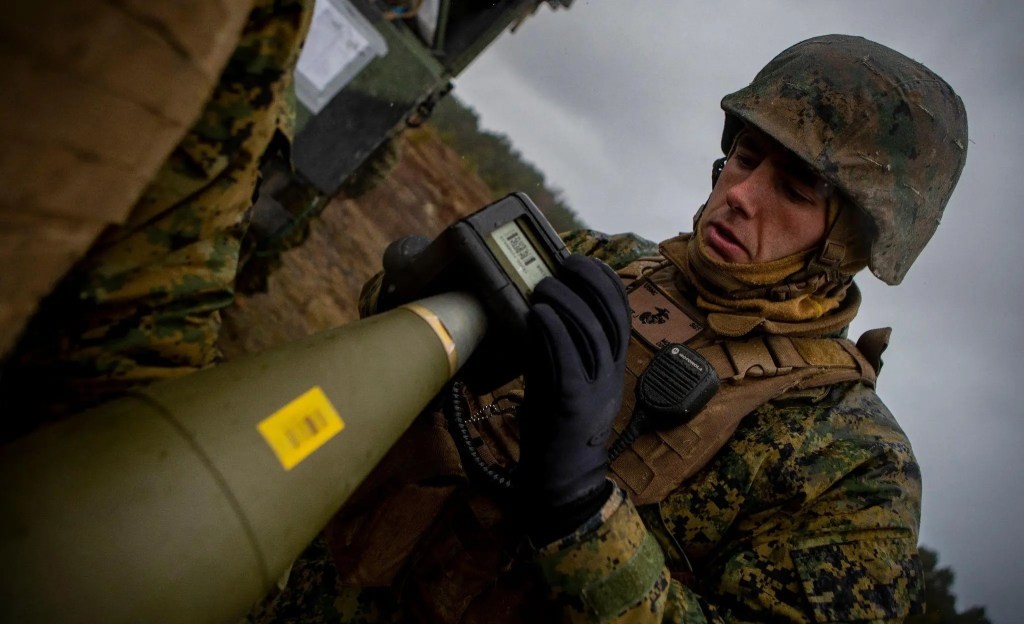
U.S. Marine Corps Sgt. Justin Bryant inspects a 155 mm projectile. (Staff Sgt. Andy Martinez/U.S. Marine Corps)
Editor’s note: This article first appeared on The War Horse , an award-winning nonprofit news organization educating the public on military service. Subscribe to their newsletter .
When Hurricane Helene ripped up the East Coast in the fall of 2024, water from the New River flooded towns and destroyed bridges across parts of West Virginia, North Carolina, and Virginia.
In Radford, Virginia, floodwaters crested at 31 feet. Just downstream, the river surged into the Radford Army Ammunition Plant, tearing through warehouse doors and washing out more than a dozen storage containers with thousands of gallons of toxic chemicals inside.
The Army didn’t warn residents until weeks later about the containers filled with dibutyl phthalate, a key component of rocket propellant that has been linked to cancer and reproductive problems in humans — along with hundreds of gallons of diesel fuel and more than 100,000 pounds of wastewater contaminated with calcium sulfate — that had been washed away in the flood. Officials said later that they assumed the containers would sink to the bottom of the river and floodwaters would dilute any chemical leakage.
At least one container, however, washed up on nearby land, where it was partially drained. Two years later, three remain unaccounted for, according to the Virginia Department of Environmental Quality, which found that more than 1,500 gallons had leaked into the environment.
Radford Army Ammunition Plant had already been cited earlier in 2024 for discharging excessive levels of pollutants into the New River. It faced a similar penalty in 2023. And in 2022, Virginia environmental regulators listed Radford as the state’s top releaser of toxins.
“They’re constantly being cited for putting excessive levels of lead into the water, or other toxic releases into the air, or burning more chemicals than they’re supposed to,” said Alyssa Carpenter, a founder of Citizens for Arsenal Accountability, which advocates for stronger environmental practices at Radford.
Radford is also a critical part of the nation’s munitions supply chain: It is the only domestic producer of certain types of propellant used in artillery and rockets. As the Pentagon moves to replenish its depleted munitions stockpile and increase production, it is relying in part on a network of aging Army ammunition plants like Radford, several of which have long histories of violating environmental and safety regulations.
A worker inspects rocket tube propellant at Radford Army Ammunition Plant. (Photo by Doris Whipple, courtesy of Radford Army Ammunition Plant)
Advocates say the military has too often treated those risks as secondary to production, leaving workers and nearby communities to absorb the consequences.
“The track record of the Department of Defense agencies is not good,” said Mathy Stanislaus, who helped oversee toxic cleanup efforts at the Environmental Protection Agency during the Obama administration. “It’s always defense. ‘That’s our mission.’ Everything else is secondary.”
Now, advocates worry that pressure to produce more ammunition could intensify the risk to local communities. They argue that the costs of rebuilding America’s arsenal are being borne disproportionately by plant workers and the mostly rural communities surrounding the facilities.
“It’s cheap for the military, but it is very expensive for us, for our entire lives,” Carpenter said. “You can’t increase production without increasing the toxic byproducts that come from that production.”
As the United States entered World War II, the Army built a network of ammunition plants across the country that became part of Franklin Roosevelt’s “arsenal of democracy.” Many were decommissioned after the war and more closed by the end of the Cold War.
Today, much of the defense industrial base is run by private companies, but the Army still manages a network of specialized arsenals, ammunition plants, and maintenance depots, many of which help manufacture, test, and repair missiles, heavy ordnance, and their components, handling work that ranges from creating raw explosive chemicals and rocket propellant to loading warheads and artillery shells.
The United States military is running low on several critical munitions. A report from the Center for Strategic and International Studies published this summer estimated that U.S. inventory of Patriot interceptor missiles had fallen from more than 2,300 at the start of the Iran War to around 800 by the end of July. Stocks of THAAD interceptors, which shoot down incoming ballistic missiles, had likewise fallen by nearly half, from roughly 450 before the war.
Stocks of THAAD interceptors have reportedly declined by nearly half since the start of the Iran War. (Missile Defense Agency)
The strain predates the Iran War, however. U.S. inventories of precision-guided weapons and heavy conventional ordnance stockpiles had already been under pressure from decades of post-Cold War factory consolidation and shipments to allies overseas.
Before Russia’s full-scale invasion of Ukraine, the United States produced about 14,000 155 mm artillery shells a month. At times, Ukrainian soldiers were burning through that many rounds in just a few days.
And historically, munitions production has often lost out to other priorities in Pentagon budget fights.
“When you’re putting together a budget, you can’t just ask for everything,” said Carlton Haelig, who works on defense strategy at the Center for a New American Security. “When there need to be cuts to pay for an extra squadron [of fighter jets] purchased, another set of transport aircraft, surface ships, whatever, the place that is often considered for making those cuts is in the munitions portfolio.”
In recent years, however, concern about a potential confrontation with China has pushed the Pentagon to expand munitions production. Last year, the Defense Department established a new council tasked with dramatically increasing production of 14 weapons systems, and it has poured billions of dollars toward accelerating production of 155 mm artillery shells.
Environmental advocates worry that pushing more production through aging Army facilities could worsen existing problems with pollution, worker safety, and transparency.
“Measured by the number of sites where hazardous substances have been released into the environment, the military is far and away the largest polluter in the United States,” said Lenny Siegel, an expert on military contamination who leads the Center for Public Environmental Oversight. “I see the simple issue of math. If you’re releasing X into the environment now, you’re going to release 10X when you multiply your production by 10.”
Justine Barati, a spokesperson for the Army Sustainment Command, which oversees these facilities, disagreed.
“The U.S. Army does not, and will never, compromise the safety of our workforce or our surrounding communities to meet production quotas. Protecting our people and the environment is foundational to national security,” she said. “We cannot sustain warfighter readiness without safe, resilient, and compliant installations.”
Barati pointed to a sweeping $18 billion modernization effort across these facilities, saying the Army’s “highest priority” in the modernization is to improve environmental compliance and workplace safety.
But that project is not scheduled to be completed until 2038, and the Army is already accelerating production at some facilities.
“At the same time, the Ukraine war started to get hot and heavy, and we were given the edict that’s like, ‘hurry up and go fast’,” Maj. Gen. John Reim, head of the joint armaments and ammunitions program executive office, told Breaking Defense last year.
Marines load an M777 towed 155 mm howitzer into the cargo hold of a plane to send in support of Ukraine’s efforts against the Russian invasion. (Cpl. Austin Fraley/U.S. Marine Corps)
EPA records show that all the Army ammunition plants and arsenals involved in producing, testing, or storing weapon components have been cited or flagged for noncompliance by the EPA or state regulators in the past five years. Four of them have been flagged for “significant noncompliance” by the EPA, designating them severe or chronic violators of environmental law. Many of them have also violated state environmental regulations.
EPA records show Scranton Army Ammunition Plant in Pennsylvania, for instance, which helps forge steel 155 mm shell bodies, was flagged for violating the Clean Water Act and Clean Air Act multiple times during 2024 and 2025. At the Iowa Army Ammunition Plant in 2023, regulators found workers improperly detonated explosives in a detonation chamber, among other issues. At Holston Army Ammunition Plant in Kingsport, Tennessee, BAE Systems, which operates the plant, was fined this October by the Tennessee Department of Environment and Conservation’s air pollution control division for improper record-keeping and reporting of data.
Federal and state regulators can inspect and penalize these facilities, but the fines are often small compared with the sheer size and resources of the Defense Department. After EPA inspectors found alleged violations at the Iowa Army Ammunition Plant, in 2024, the EPA fined the Army and plant operator American Ordnance just under $40,000 — compare that with a $53 million Army contract American Ordnance was awarded this year for its work at the plant.
“The biggest problem is that the Department of Defense is effectively self-regulating,” Stanislaus, the former EPA official, said.
“When the rubber hits the road, EPA and state agencies simply do not have the authority to mandate certain activities, everything from preventing harm to doing the cleanup.”
A Whistleblower’s Safety Concerns
The fire that erupted on a July night in Crane, Indiana, burned for 15 hours.
Workers at Crane Army Ammunition Activity, which disposes of old munitions, had been storing mortar rounds outdoors in wooden crates beneath a tarp in the baking sun. Temperatures had climbed into the high 90s for several days.
The rounds contained red phosphorus, which can generate heat and flammable gases as it degrades. On the evening of July 6, 2022, nearly 115,000 pounds of red phosphorus ignited, sending flames and smoke billowing into the sky.
A fire resulting from improperly stored mortar rounds erupted at Naval Weapons Station Crane in 2022. (Photo courtesy of Rick Ward)
What happened before and after illustrates how difficult it can be to hold these facilities accountable.
Three years earlier, Rick Ward, the newly hired safety chief at Crane Army Ammunition Activity, which is housed at Naval Weapons Station Crane, had concerns with safety at the facility. A safety program for controlling hazardous substances was not fully implemented. Hazardous processes weren’t properly classified. Slings used to move heavy explosives didn’t have current certifications.
Ward pointed to an earlier explosion at Crane, in 2013, that sent five people to the hospital. An OSHA inspection afterward identified three dozen safety violations, and an Army “lessons learned” report cited a lack of clear safety procedures.
Ward worried that the safety culture at Crane hadn’t changed. He began bringing concerns up with his supervisors, according to documents he shared with The War Horse.
“Can you imagine taking over as a safety director and knowing that you’ve been handed 36 OSHA violations that never got corrected?” he said.
The year before Ward arrived, EPA had also cited Naval Weapons Station Crane — the base where Crane Army Ammunition Activity is housed — for improperly storing hazardous waste. But Ward felt his concerns were not being taken seriously. So in 2020, he filed an anonymous complaint with OSHA.
Rick Ward, the former civilian safety chief at Crane Army Ammunition Activity, was fired after he brought up safety concerns. (Photo courtesy of Rick Ward)
Because of COVID-related restrictions, OSHA asked the Army to investigate the allegations itself. Ironically, Crane leaders assigned Ward to conduct the investigation.
About an hour after Ward submitted his report, he said, he was put on administrative leave. He was fired several months later, according to a statement from his lawyers.
Ward has struggled to find work ever since. Crane barred him from the installation, and the Air Force, where he serves as a reserve officer, revoked his security clearance.
“It’s really hard to get a job when you’ve been on the front page of every newspaper in Indiana,” he said.
Barati, the Army Sustainment Command spokesperson, disputed Ward’s account.
“The Army did not retaliate against Mr. Rick Ward in any form or manner. The Army takes workplace safety very seriously and welcomes safety concern feedback from all our employees,” she said.
Many of Ward’s concerns were later substantiated.
A whistleblower investigation partially or fully upheld five of his eight allegations. Among them: Crane did not maintain an accurate list of locations where hazardous work occurred and lacked a complete safety plan for controlling and handling hazardous substances.
EPA inspections in 2023 and 2024 found additional problems at Naval Weapons Station Crane. Inspectors reported materials were still stored in ways that could create fire risks, hazardous materials lacked proper labeling, open containers held corrosive waste, and hazardous waste was kept onsite for more than three times the legal time limit.
“If you mislabel a particular compound, and you put it into a vessel that cannot handle the corrosiveness of that, then it leaks through that vessel and contaminates the ground,” Stanislaus said. “Terrible things can happen.”
Last fall, EPA notified Naval Weapons Station Crane that it planned to assess nearly $250,000 in penalties for the violations.
That is a significant EPA penalty. But for Crane, it’s barely a line item in the budget.
Not long after Alyssa Carpenter graduated from Virginia Tech in 2017, just a few miles from the Radford Army Ammunition Plant, she had to have her thyroid removed. She was 26, otherwise healthy, and had no family history of thyroid cancer. Doctors told her the gland was covered in suspicious nodules.
Carpenter cannot say for sure what caused her condition. But as a student at Virginia Tech, she had advocated for better environmental controls at the plant, and she worries the chemicals the plant releases into the environment may have played a role in her illness.
Alyssa Carpenter worries her thyroid condition is linked to toxic chemicals from Radford Army Ammunition Plant. (Photo courtesy of Alyssa Carpenter)
For decades, Radford and other military facilities have disposed of old munitions and production waste by burning or detonating them in the open, releasing toxic gases, particulate matter, and volatile organic compounds into the air.
The United States generally banned open burning and open detonation of hazardous waste in 1980 but created an exception for explosive waste that could not safely be treated another way. That exception has allowed the practice to continue at military and civilian munition facilities.
In 2025, 45 years after the ban, 64 public and private facilities across the United States were still allowed to burn or detonate hazardous waste.
Residents around Radford have long raised concerns about thyroid disease in the area, though a 2022 review of cancer-registry data by VPM News , a local NPR station, found mixed evidence of unusually high rates. What is clear is that the plant regularly releases hazardous pollutants into the air. According to EPA data, in 2024, Radford released into the air — along with other chemicals — 19,000 pounds of ammonia, which reacts with the atmosphere to create a fine particulate matter known to cause respiratory distress, and more than 900 pounds of lead compounds or lead, a neurotoxin with no known safe level of human exposure. EPA requires facilities to report lead emissions if they exceed just 100 pounds a year.
Barati, the Army Sustainment Command spokesperson, said that Radford had reduced the amount of waste treated by open burning by more than 50% since 2017. She also pointed to a new energetic waste incinerator under construction at the facility that will ultimately replace the need for open burning. The incinerator, originally scheduled to be completed in 2025 , will not be operational until 2027, Barati said.
Open burns are subject to environmental limits, and facilities are supposed to account for wind patterns and other factors to make burns safer. But those safeguards can be difficult to enforce.
At Crane, for instance, EPA inspectors cited the facility in 2023 for conducting burns when its own records showed weather conditions outside permitted limits. (Crane officials told the EPA weather was recorded at a different time of day and that the weather was in parameters when it conducted the burns).
Technology has changed since the U.S. allowed an exception for the open burning or detonation of military munitions in 1980. Many other countries, including Germany and Canada, have banned open burning and open detonation of hazardous waste, and military munitions are disposed of in contained burn chambers or closed incinerators. In 2024, the EPA proposed new rules that would further restrict the practice and push facilities toward safer alternative technologies. But the rulemaking has stalled. An EPA spokesperson told The War Horse that the agency plans to finalize the regulations by the end of this year.
A bulldozer shovels refuse in an open air burn pit in Balad, Iraq in 2004. The military moved away from open burning at overseas bases after troops began developing rare cancers and lung conditions. (U.S. Army)
The military has moved away from open-air waste burning in recent years at overseas bases.
For decades, troops stationed in Iraq, Afghanistan, and other countries burned everything from medical waste and plastics to old explosives in open burn pits. Military officials defended the pits as a practical necessity in remote war zones.
Like the residents of some communities near ammunition plants in the U.S., service members at bases with burn pits breathed in toxic air containing particulate matter that irritated their throats and lungs, and heavy metals that accumulated in their tissues. When they came home from deployment, they began developing rare cancers and other diseases.
But as veterans reported respiratory illnesses, cancers, and other health problems after breathing in the smoke, public pressure grew. The military eventually curtailed the use of burn pits overseas, and Congress passed the PACT Act in 2022 , expanding VA benefits for millions of veterans exposed to the toxic substances during military service — but there are no such benefits for civilians exposed to domestic burn pits.
For Carpenter, that history shows the military can change when the risks become impossible to ignore.
“If it’s toxic for service members, then it’s going to be toxic for community members as well,” she said.
This article from The War Horse was edited by Paul Szoldra, fact-checked by Jess Rohan, and copy-edited by Mitchell Hansen-Dewar.
索纳·克尔特,《战马》
分享至 Facebook(在新窗口中打开) Facebook
分享至 X(在新窗口中打开)X
在 Bluesky 上分享(在新窗口中打开)Bluesky
分享到 Reddit(在新窗口中打开)
在领英上分享(在新窗口中打开)领英
使用原生工具分享 已复制到剪贴板
分享至邮件(在新窗口中打开)邮件
美国海军陆战队中士贾斯汀·布莱恩特正在检查一枚155毫米炮弹。(安迪·马丁内斯中士/美国海军陆战队)
编者按:本文最初发表于屡获殊荣的非营利新闻机构“战马”(The War Horse),该机构致力于向公众普及军事服务知识。欢迎订阅他们的电子报。
2024 年秋季,飓风海伦肆虐美国东海岸,新河河水淹没了西弗吉尼亚州、北卡罗来纳州和弗吉尼亚州部分地区的城镇,并摧毁了桥梁。
在弗吉尼亚州拉德福德,洪水水位最高达到 31 英尺。下游不远处,河水涌入拉德福德陆军弹药厂,冲破仓库大门,冲走了十几个装有数千加仑有毒化学品的储罐。
几周后,军方才警告居民,洪水冲走了装满邻苯二甲酸二丁酯(一种火箭推进剂的关键成分,已被证实与人类癌症和生殖问题有关)的容器,以及数百加仑柴油和超过10万磅被硫酸钙污染的废水。官员们后来表示,他们当时认为这些容器会沉入河底,洪水会稀释任何泄漏的化学物质。
然而,至少有一个容器被冲到附近的陆地上,里面的液体部分流出。两年后,据弗吉尼亚州环境质量部称,仍有三个容器下落不明,该部门发现有超过1500加仑的液体泄漏到环境中。
拉德福德陆军弹药厂早在2024年就因向新河排放过量污染物而被处罚。2023年,该厂也面临类似的处罚。2022年,弗吉尼亚州环境监管机构将拉德福德列为该州最大的有毒物质排放源。
“他们不断因向水中排放过量的铅,或向空气中排放其他有毒物质,或燃烧超过规定量的化学品而被处罚,”公民阿森纳问责组织创始人艾丽莎·卡彭特说,该组织倡导拉德福德大学采取更严格的环境措施。
拉德福德也是美国军火供应链的关键一环:它是美国国内唯一一家生产某些用于火炮和火箭推进剂的工厂。随着五角大楼着手补充其日益枯竭的弹药库存并提高产量,它在一定程度上依赖于像拉德福德这样老旧的陆军弹药厂网络,而其中一些工厂长期以来一直存在违反环境和安全法规的问题。
一名工人在拉德福德陆军弹药厂检查火箭推进剂。(照片由多丽丝·惠普尔拍摄,由拉德福德陆军弹药厂提供)
支持者表示,军方常常将这些风险视为次要风险,而将生产置于首位,让工人和附近社区承担后果。
“国防部下属机构的记录并不好,”曾在奥巴马政府时期协助环境保护署监督有毒物质清理工作的马蒂·斯坦尼斯劳斯说,“他们永远把国防放在第一位,‘这是我们的使命。’其他一切都是次要的。”
现在,倡导者们担心,增加弹药生产的压力可能会加剧当地社区面临的风险。他们认为,重建美国军火库的成本不成比例地由工厂工人和工厂周边的农村社区承担。
“对军方来说很便宜,但对我们来说,对我们整个生活来说,代价却非常昂贵,”卡彭特说。“你不可能在不增加生产过程中产生的有毒副产品的情况下提高产量。”
随着美国加入第二次世界大战,陆军在全国各地建立了一个弹药厂网络,成为富兰克林·罗斯福“民主兵工厂”的一部分。战后许多弹药厂被关闭,到冷战结束时,更多弹药厂关闭。
如今,大部分国防工业基地由私营公司运营,但陆军仍然管理着一个由专业兵工厂、弹药厂和维修站组成的网络,其中许多负责制造、测试和修理导弹、重型军械及其部件,其工作范围从制造爆炸性化学品和火箭推进剂到装填弹头和炮弹。
美国军方几种关键弹药的库存告急。战略与国际研究中心今年夏天发布的一份报告估计,美国“爱国者”拦截导弹的库存已从伊朗战争开始时的2300多枚下降到7月底的约800枚。用于拦截来袭弹道导弹的“萨德”拦截系统的库存也同样减少了近一半,从战前的约450枚减少到现在的水平。
据报道,自伊朗战争爆发以来,THAAD拦截器的库存已减少了近一半。(导弹防御局)
然而,这种压力早在伊朗战争之前就已存在。冷战后几十年来,由于工厂整合和向海外盟友的出口,美国的精确制导武器库存和重型常规弹药储备早已面临压力。
在俄罗斯全面入侵乌克兰之前,美国每月生产约14000枚155毫米炮弹。而乌克兰士兵有时几天就能消耗掉这么多炮弹。
从历史上看,在五角大楼的预算斗争中,军火生产往往败给了其他优先事项。
“制定预算时,你不能什么都要求,”新美国安全中心从事国防战略研究的卡尔顿·黑利格说。“当需要削减开支来购买额外的战斗机中队、运输机、水面舰艇或其他任何东西时,军需品预算往往是第一个被考虑削减的项目。”
然而,近年来,对与中国可能发生冲突的担忧促使五角大楼扩大军火生产。去年,国防部成立了一个新的委员会,负责大幅提高14种武器系统的产量,并已投入数十亿美元加速155毫米炮弹的生产。
环保人士担心,在老旧的陆军设施中推行更多生产可能会加剧现有的污染、工人安全和透明度问题。
“从有害物质排放到环境中的地点数量来看,军方是美国最大的污染源,遥遥领先于其他任何机构,”公共环境监督中心主任、军事污染专家伦尼·西格尔说。“我认为这只是简单的数学问题。如果你现在向环境中排放X物质,那么当你的产量乘以10时,你就会排放10X物质。”
负责监管这些设施的陆军后勤司令部发言人贾斯汀·巴拉蒂对此表示异议。
“美国陆军现在不会,将来也绝不会为了完成生产指标而牺牲我们员工或周边社区的安全。保护我们的人员和环境是国家安全的基石,”她说道。“没有安全、可靠且合规的设施,我们就无法维持作战人员的战备状态。”
巴拉蒂指出,陆军正在对这些设施进行一项耗资 180 亿美元的全面现代化改造,并表示陆军在现代化改造中的“最高优先事项”是提高环境合规性和工作场所安全。
但该项目预计要到 2038 年才能完成,而且陆军已经在一些设施中加快生产。
“与此同时,乌克兰战争开始变得愈演愈烈,我们接到命令,‘赶紧行动起来’,”联合武器和弹药项目执行办公室主任约翰·雷姆少将去年告诉《防务新闻》。
海军陆战队员将一门M777型155毫米牵引式榴弹炮装入飞机货舱,准备派往乌克兰支援抵抗俄罗斯入侵的行动。(美国海军陆战队下士奥斯汀·弗雷利摄)
美国环保署(EPA)的记录显示,过去五年中,所有参与生产、测试或储存武器部件的陆军弹药厂和兵工厂都曾因违规行为受到环保署或州监管机构的处罚或警告。其中四家被环保署认定为“严重违规”,属于严重或长期违反环境法的行为。这些工厂和兵工厂中的许多也违反了州级环境法规。
例如,美国环保署(EPA)的记录显示,位于宾夕法尼亚州的斯克兰顿陆军弹药厂(Scranton Army Ammunition Plant)负责锻造155毫米钢制炮弹弹体,该厂在2024年和2025年期间多次因违反《清洁水法》和《清洁空气法》而被点名。2023年,监管机构在爱荷华州陆军弹药厂(Iowa Army Ammunition Plant)发现工人在爆破室中不当引爆炸药,此外还存在其他问题。今年10月,田纳西州环境与保护部空气污染控制部门对运营该厂的BAE系统公司(BAE Systems)处以罚款,原因是其数据记录和报告不当。
联邦和州监管机构可以对这些设施进行检查和处罚,但与国防部庞大的规模和资源相比,罚款金额通常微不足道。2024年,美国环保署(EPA)的检查员在爱荷华州陆军弹药厂发现了涉嫌违规行为后,环保署对陆军和工厂运营商美国军械公司处以略低于4万美元的罚款——相比之下,美国军械公司今年获得了价值5300万美元的陆军合同,用于其在该工厂的工作。
“最大的问题是国防部实际上是在进行自我监管,”前环保署官员斯坦尼斯劳斯说。
“但到了真正需要采取行动的时候,环保署和州政府机构根本没有权力强制执行某些活动,从防止损害到进行清理工作,无一例外。”
举报人的安全顾虑
7 月的一个夜晚,印第安纳州克莱恩市发生了一场大火,这场大火燃烧了 15 个小时。
克莱恩陆军弹药库负责处理旧弹药,工人们一直将迫击炮弹存放在户外,用木箱装着,上面盖着防水布,暴晒在烈日下。气温已经连续几天攀升至华氏90多度(约摄氏32度)。
这些弹药含有红磷,红磷在分解过程中会产生热量和易燃气体。2022年7月6日晚,近11.5万磅红磷被点燃,火焰和浓烟冲天而起。
2022年,克莱恩海军武器站因迫击炮弹储存不当引发火灾。(照片由里克·沃德提供)
前后发生的事情表明,要追究这些机构的责任有多么困难。
三年前,新上任的克莱恩陆军弹药活动中心(位于克莱恩海军武器站内)安全主管里克·沃德对该中心的安全状况感到担忧。当时,一项控制危险物质的安全计划并未得到全面实施;危险作业流程的分类不规范;用于搬运重型炸药的吊索也未通过认证。
沃德指出,克莱恩工厂曾在2013年发生过一次爆炸,导致五人入院。事后,美国职业安全与健康管理局(OSHA)的检查发现了三十多项安全违规行为,而陆军的一份“经验教训”报告也指出该工厂缺乏明确的安全规程。
沃德担心克莱恩公司的安全文化没有改变。根据他提供给《战马》杂志的文件,他开始向上级反映这些问题。
他说:“你能想象接任安全主管一职,却发现自己接手了 36 项 OSHA 违规记录,而且这些违规记录从未得到纠正吗?”
在沃德到任的前一年,美国环保署(EPA)也曾因克莱恩海军武器站(克莱恩陆军弹药活动中心所在地)不当储存危险废物而对其提出指控。但沃德觉得他的担忧没有得到重视。因此,在2020年,他向美国职业安全与健康管理局(OSHA)提交了一份匿名投诉。
克兰陆军弹药厂前任民用安全主管里克·沃德因提出安全隐患而被解雇。(照片由里克·沃德提供)
由于新冠疫情相关的限制,美国职业安全与健康管理局(OSHA)要求陆军自行调查这些指控。具有讽刺意味的是,克莱恩公司的领导层指派沃德负责这项调查。
沃德提交报告约一小时后,他表示自己被停职。据其律师声明,几个月后他被解雇。
此后,沃德一直难以找到工作。克莱恩禁止他进入基地,而他所在的空军预备役军官也撤销了他的安全许可。
他说:“如果你上了印第安纳州所有报纸的头版头条,就很难找到工作了。”
陆军后勤司令部发言人巴拉蒂对沃德的说法提出异议。
“陆军没有以任何形式或方式对里克·沃德先生进行报复。陆军非常重视工作场所安全,并欢迎所有员工就安全问题提出反馈意见,”她说道。
沃德的许多担忧后来都得到了证实。
举报人调查部分或全部证实了他提出的八项指控中的五项。其中包括:克莱恩公司没有保存危险作业地点的准确清单,并且缺乏控制和处理危险物质的完整安全计划。
美国环保署在2023年和2024年的检查中发现,克莱恩海军武器站存在更多问题。检查人员报告称,物料的存放方式仍然可能造成火灾隐患,危险材料缺乏适当的标签,腐蚀性废物存放在敞开的容器中,危险废物在现场存放的时间超过法定时限的三倍。
斯坦尼斯劳斯说:“如果你把某种化合物贴错标签,然后把它装进一个无法承受其腐蚀性的容器里,那么它就会泄漏出容器,污染土壤。后果不堪设想。”
去年秋天,美国环保署通知克莱恩海军武器站,计划对其违规行为处以近 25 万美元的罚款。
这笔费用对环保署来说是一笔不小的罚款。但对克莱恩来说,这笔费用在预算中几乎可以忽略不计。
2017年,艾莉莎·卡彭特从弗吉尼亚理工大学毕业后不久,就在离拉德福德陆军弹药厂几英里远的地方,她不得不接受甲状腺切除手术。当时她26岁,身体健康,也没有甲状腺癌家族史。医生告诉她,她的甲状腺上布满了可疑的结节。
卡彭特无法确定导致她患病的确切原因。但作为弗吉尼亚理工大学的学生,她曾倡导改善该工厂的环境控制,她担心工厂排放到环境中的化学物质可能与她的疾病有关。
艾莉莎·卡彭特担心她的甲状腺疾病与拉德福德陆军弹药厂的有毒化学物质有关。(照片由艾莉莎·卡彭特提供)
几十年来,拉德福德和其他军事设施一直通过在露天焚烧或引爆来处理旧弹药和生产废料,从而向空气中释放有毒气体、颗粒物和挥发性有机化合物。
美国在1980年基本禁止了露天焚烧和露天引爆危险废物,但对无法以其他方式安全处理的爆炸性废物作出了例外规定。这一例外使得军事和民用弹药设施得以继续进行露天焚烧和露天引爆的做法。
2025 年,禁令颁布 45 年后,美国仍有 64 家公共和私人设施被允许焚烧或引爆危险废物。
拉德福德周边居民长期以来一直对该地区甲状腺疾病的发病率表示担忧,尽管当地NPR电台VPM News在2022年对癌症登记数据的审查发现,关于该地区甲状腺疾病发病率异常高的证据并不一致。但可以肯定的是,该工厂定期向空气中排放有害污染物。根据美国环保署(EPA)的数据,2024年,拉德福德向空气中排放了19000磅氨(以及其他化学物质),氨与大气反应会生成细颗粒物,这种颗粒物已知会导致呼吸系统疾病;此外,还排放了超过900磅的铅化合物或铅,铅是一种神经毒素,目前尚无已知的安全人体暴露水平。美国环保署要求,如果工厂的铅排放量超过每年100磅,就必须上报。
陆军后勤司令部发言人巴拉蒂表示,自2017年以来,拉德福德垃圾处理厂露天焚烧的垃圾量减少了50%以上。她还指出,该厂正在建设一座新的高能垃圾焚烧炉,最终将取代露天焚烧。巴拉蒂说,这座焚烧炉原计划于2025年完工,但要到2027年才能投入使用。
露天焚烧受到环境限制,相关设施应考虑风向和其他因素,以确保焚烧安全。但这些安全措施难以有效执行。
例如,2023年,克莱恩公司因在天气状况超出许可范围的情况下进行焚烧作业而被美国环保署检查员开具罚单。(克莱恩公司官员告诉美国环保署,天气记录是在一天中的不同时间进行的,而且焚烧作业时的天气状况符合规定。)
自1980年美国允许露天焚烧或引爆军用弹药以来,技术已经发生了变化。包括德国和加拿大在内的许多其他国家已经禁止露天焚烧和引爆危险废物,军用弹药则在密闭焚烧室或封闭式焚烧炉中进行处置。2024年,美国环保署(EPA)提出了新的规则,旨在进一步限制这种做法,并推动相关设施采用更安全的替代技术。但该规则的制定工作目前陷入停滞。一位环保署发言人告诉《战马报》(The War Horse),该机构计划在今年年底前最终确定相关法规。
2004年,在伊拉克巴拉德,一辆推土机正在清理露天焚烧坑里的垃圾。此前,美军士兵开始出现罕见癌症和肺部疾病,之后军方便停止了在海外基地进行露天焚烧。(美国陆军)
近年来,军方已逐步停止在海外基地露天焚烧垃圾。
几十年来,驻扎在伊拉克、阿富汗和其他国家的军队在露天焚烧坑中焚烧各种物品,从医疗垃圾、塑料到旧爆炸物,无所不包。军方官员辩称,在偏远战区,焚烧坑是实际需要。
就像美国一些弹药厂附近社区的居民一样,驻扎在设有焚烧坑的军事基地的军人吸入了含有颗粒物的有毒空气,这些颗粒物会刺激他们的喉咙和肺部,重金属则会在他们的组织中积聚。当他们从海外部署地返回家乡时,开始出现一些罕见的癌症和其他疾病。
但随着退伍军人报告吸入烟雾后出现呼吸系统疾病、癌症和其他健康问题,公众压力日益增大。军方最终限制了海外焚烧坑的使用,国会于2022年通过了《防止和消除有毒物质法案》(PACT Act),扩大了退伍军人事务部(VA)对数百万在服役期间接触过有毒物质的退伍军人的福利——但接触过国内焚烧坑的平民却无法享受此类福利。
卡彭特认为,这段历史表明,当风险变得不容忽视时,军队是可以改变的。
“如果它对军人有害,那么对社区成员也同样有害,”她说。
本文来自《战马》杂志,由 Paul Szoldra 编辑,Jess Rohan 核实事实,Mitchell Hansen-Dewar 编辑校对。