Air India investment does not impede SIA’s operational capabilities: Jeffrey Siow杰弗里·西奥:印度航空的投资不会影响新加坡航空的运营能力
Singapore Airlines’ investment in Air India does not affect its operational capabilities or essential air services in Singapore despite Air India’s financial losses. Read more at straitstimes.com.
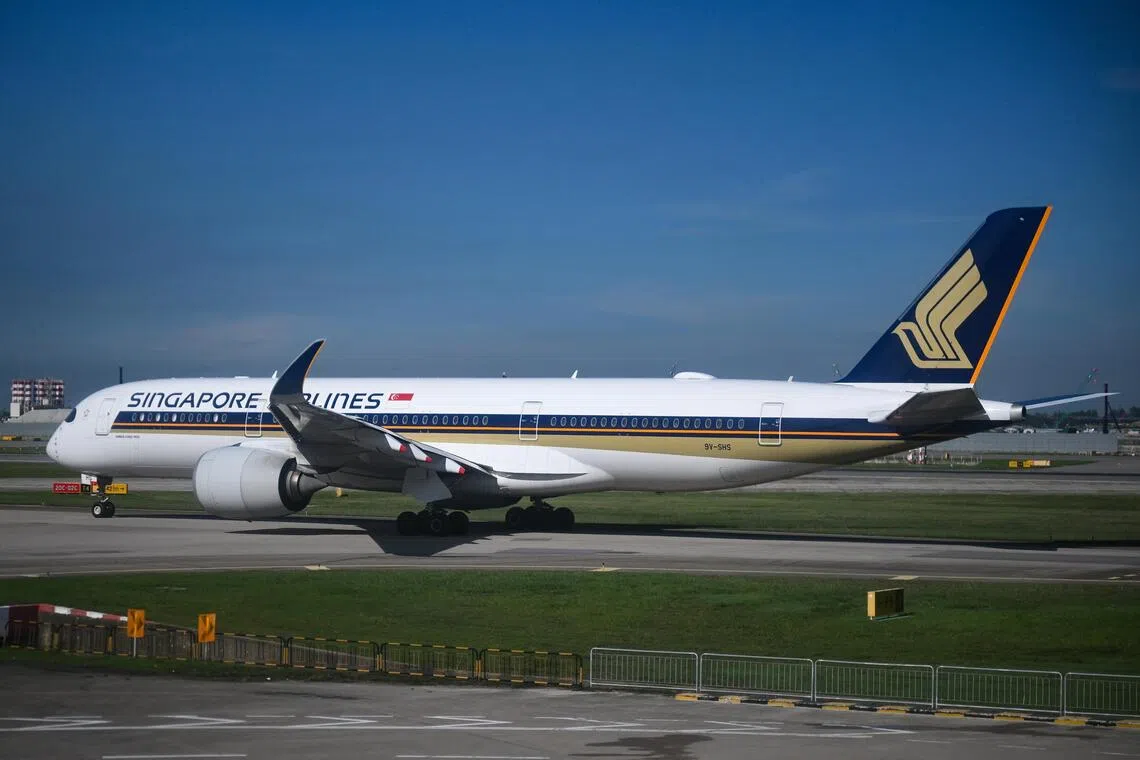
While SIA has a 25.1 per cent stake in Air India, the latter’s finances are not SIA’s and thus its losses do not automatically become the Singapore carrier’s liabilities.
ST PHOTO: LIM YAOHUI
Published Sep 08, 2026, 03:05 PM
Updated Sep 08, 2026, 03:05 PM
Singapore Airlines' stake in Air India does not affect its ability to operate or serve Singaporeans, as losses from Air India are separate from SIA's finances.
SIA's board must decide on further investments based on commercial sense, with no government obligation to support Air India's capital needs.
Transport Minister Jeffrey Siow emphasised SIA's strong financial position and the importance of competing globally despite challenges in foreign markets like India.
SINGAPORE – Singapore Airlines’ (SIA) investment in Air India has no adverse impact on its ability to operate and serve Singaporeans, and it must continue to stay the course in challenging markets to remain competitive globally, Transport Minister Jeffrey Siow said on Sept 8.
While SIA has a 25.1 per cent stake in Air India, the latter’s finances are not SIA’s and thus its losses do not automatically become the Singapore carrier’s liabilities. SIA is also not obliged to accede to the Indian airline’s request for capital injection, Siow added.
Air India, the second-largest airline in India, was reportedly seeking about US$1.5 billion (S$1.9 billion) in fresh equity from its owners, Tata Sons and SIA, in August, months after it posted a record annual loss.
The carrier and its budget unit Air India Express posted combined losses of US$2.33 billion in the fiscal year ended March, more than double the prior year’s losses.
Siow said the onus is on SIA’s board and management to decide whether an investment would make commercial sense for the company and its shareholders, “because it is their duty and responsibility to do so”.
He was replying to a parliamentary question submitted by Workers’ Party MP Kenneth Tiong (Aljunied) about whether SIA’s losses from its foreign investments have been assessed against its capacity to provide essential transport services.
Tiong also asked whether such continuing losses would invoke Section 67B of the Civil Aviation Authority of Singapore Act (2009), which would require SIA to notify the authorities of any event or problem that seriously disrupts its ability to provide an essential transport service.
Siow noted that Section 67B is not a financial reporting rule, and losses in a foreign associate do not necessarily meet that test on their own.
“The relevant question is whether such losses, or anything else, reach the point of materially constraining the resources available for SIA’s fleet, maintenance or network operations here. That is a judgment based on facts, and we are nowhere close to this scenario.”
SIA acquired its stake in Air India after Vistara, its full-service airline joint venture with Tata Sons, merged with the Indian carrier in November 2024 . Tata Group owns a majority stake.
Since then, SIA’s 25.1 per cent stake has been the single largest drag on its earnings. For the 2026 financial year (FY) ended March 31, it booked a $945.2 million loss for its share in the joint venture.
Siow pointed to SIA’s strong financial results as a reason for continued confidence in the carrier’s ability to deliver air services in Singapore. SIA posted record revenues of $20.5 billion and a 39 per cent jump in operating profit for FY2026.
But the carrier posted a net loss of $76 million for the first quarter of FY2027, a point that Tiong noted in his reply to Siow.
The WP MP said other national carriers had been able to turn around their losses in a short number of years, while SIA had continued to post losses from its Air India investment.
He added that there could be further challenging conditions in the India n market. The Indian government is mulling a policy change that would allow the operators of New Delhi and Mumbai airports – two of Air India’s largest hubs – to operate their own airlines, which could put a larger dent in the carrier’s business.
He questioned whether the government has put a limit on SIA’s further investments in Air India.
He also asked whether it would intervene and approve the drawing of reserves should SIA request it to support the Indian carrier, as it had previously done to support SIA’s $8.8 billion recapitalisation package during the Covid-19 pandemic through Temasek, SIA’s largest shareholder.
The risks are very high, given SIA’s smaller non-controlling stake in Air India, Tiong highlighted. Drawing comparisons to a private investment fund, he said Parliament serves the role of a “risk team” to SIA’s board in making its investment decisions.
“I support SIA’s ability to make its own decisions, but I do not support further cash infusions from Temasek to stand behind a decision that, on these facts, reasonable members of the public are questioning,” he said.
“This cannot be a blank cheque, least of all on a minority stake. We ask because through the reserves, Singaporeans are SIA’s stakeholders of last resort, and the stakeholder of last resort needs to know where the line is.”
In response, Siow questioned if Tiong’s position was that SIA should not participate in India, one of the fastest aviation markets in the world. It would also be difficult to identify a buyer or the appropriate price should SIA sell its stake, he said.
“It’s easy to criticise, but I suspect it is much harder for the Member to tell us what SIA should do.”
Siow cited the WP’s motion tabled by Tiong and Sengkang MP Jamus Lim on Aug 5 calling for more focus on the growth of small- and middle-sized enterprises rather than multinational companies to drive Singapore’s economy, saying that it is equally important to ensure Temasek portfolio companies like SIA remain globally competitive as well.
This entails entering potentially difficult markets against incumbents, “and staying the course when there is turbulence”, he said.
“We cannot have it both ways. We cannot tell our companies to go out and compete, and then treat every tough year abroad as proof that they should stay home.”
He added that Temasek’s financial support of SIA during the pandemic, which included $15 billion in equity and bonds that the investment company underwrote, was also meant to bolster the entire aviation sector, with the view that air travel would make its recovery. Ultimately, Temasek had made good returns on this investment, he noted.
“The government does not judge Temasek on any single holding,” he said, adding that the company’s $500 billion portfolio will always contain investments with different risks and time horizons. “Some will look worse than others on any given day, and that’s what investing is.”
Siow also said that Tiong was insinuating SIA was not making its investment decisions on a commercial basis but for other reasons, and that Singaporeans “somehow owe Air India a living” through the carrier’s investments. Both of these claims had no merit, he said.
He also reiterated the Government’s position that discussions on SIA’s investment in Air India should not seek to exploit racial divisions for political purposes , a point that Tiong emphasised was never his intention.
Singapore Parliament
Aviation/Aerospace sector
虽然新加坡航空持有印度航空 25.1% 的股份,但印度航空的财务状况并非新加坡航空的财务状况,因此其亏损不会自动成为这家新加坡航空公司的负债。
ST 照片:林耀辉
发布于 2026 年 9 月 8 日下午 3:05
更新于2026年9月8日下午3:05
新加坡航空公司持有印度航空的股份并不影响其运营或为新加坡人提供服务的能力,因为印度航空的亏损与新航的财务状况无关。
新加坡航空董事会必须根据商业常识决定进一步的投资,政府没有义务支持印度航空的资金需求。
交通部长萧正树强调了新加坡航空公司的强劲财务状况,以及尽管面临印度等海外市场的挑战,但在全球范围内参与竞争的重要性。
新加坡——新加坡交通部长萧敬腾9月8日表示,新加坡航空公司(新航)对印度航空的投资不会对其运营和服务新加坡人的能力产生不利影响,新航必须在充满挑战的市场中继续坚持既定路线,才能在全球保持竞争力。
虽然新加坡航空持有印度航空25.1%的股份,但印度航空的财务状况并非新加坡航空的财务状况,因此其亏损不会自动转嫁给新加坡航空。萧先生补充道,新加坡航空也没有义务同意印度航空的注资请求。
据报道,印度第二大航空公司印度航空在8月份寻求从其所有者塔塔集团和新加坡航空获得约15亿美元(19亿新元)的新股权,此前几个月,该公司公布了创纪录的年度亏损。
该航空公司及其廉价子公司印度航空快运在截至 3 月的财政年度合计亏损 23.3 亿美元,是上一年亏损额的两倍多。
萧先生表示,决定一项投资是否对公司及其股东具有商业意义,是新加坡航空公司董事会和管理层的责任,“因为这是他们的职责所在”。
他是在回应工人党议员张建宗(阿裕尼选区)提出的议会质询,该质询询问新加坡航空公司是否已根据其提供基本运输服务的能力评估其海外投资的亏损。
Tiong 还询问,这种持续亏损是否会触发《新加坡民航局法》(2009 年)第 67B 条,该条规定新加坡航空公司必须将任何严重扰乱其提供基本运输服务能力的事件或问题通知当局。
Siow指出,第67B条并非财务报告规则,外国联营公司的亏损本身并不一定符合该规则的要求。
“关键问题在于,此类损失或其他任何情况是否会对新加坡航空的机队、维护或网络运营造成实质性资源限制。这需要根据事实来判断,而我们目前的情况远未达到这种程度。”
新加坡航空于 2024 年 11 月收购了印度航空的股份,此前新加坡航空与塔塔集团合资成立的全服务航空公司 Vistara 与印度航空合并。塔塔集团持有多数股权。
自此之后,新加坡航空持有的25.1%股份一直是其盈利的最大拖累因素。在截至2026年3月31日的财年,该公司因合资企业的股份而蒙受了9.452亿美元的损失。
萧先生指出,新加坡航空强劲的财务业绩是其持续保持对新加坡航空服务能力信心的原因。新航公布2026财年营收达205亿美元,创历史新高,营业利润也增长了39%。
但该航空公司公布 2027 财年第一季度净亏损 7600 万美元,Tiong 在回复 Siow 时也提到了这一点。
工人党议员表示,其他国家航空公司在短短几年内就扭亏为盈,而新加坡航空却因其对印度航空的投资而持续亏损。
他还补充说,印度市场可能面临更多挑战。印度政府正在考虑一项政策调整,允许新德里和孟买机场(印度航空的两大枢纽机场)的运营商运营自己的航空公司,这可能会对印度航空的业务造成更大的冲击。
他质疑政府是否限制了新加坡航空对印度航空的进一步投资。
他还询问,如果新加坡航空公司请求其支持,该机构是否会介入并批准动用储备金,就像此前该机构通过新加坡航空公司的最大股东淡马锡支持新加坡航空公司在新冠疫情期间的 88 亿美元资本重组计划一样。
鉴于新航在印度航空的持股比例较小且不具控股权,风险非常高,张先生强调说。他将新航比作私人投资基金,称其在新航董事会制定投资决策时扮演着“风险团队”的角色。
“我支持新加坡航空自主决策,但我不支持淡马锡继续注资来支持一项基于这些事实而受到理性公众质疑的决定,”他说。
“这不能是一张空白支票,尤其不能只给少数股权开支票。我们这样问是因为,通过储备金,新加坡人是新航的最终利益相关者,而最终利益相关者需要知道底线在哪里。”
对此,萧先生质疑张先生的立场是否是新航不应参与印度市场——印度是全球发展最快的航空市场之一。他还表示,如果新航出售其股份,也很难找到买家或确定合适的价格。
“批评很容易,但我认为议员要告诉我们SIA应该做什么要难得多。”
萧先生援引工人党议员张志贤和盛港区议员林志蔚于8月5日提出的动议,呼吁新加坡应更加注重中小企业的发展,而不是跨国公司,以推动新加坡经济。他表示,确保淡马锡旗下的投资组合公司(如新加坡航空公司)保持全球竞争力同样重要。
他说,这意味着要进入可能充满挑战的市场,与现有企业竞争,“并在动荡时期坚持到底”。
“我们不能两头都占。我们不能一方面鼓励企业走出国门参与竞争,另一方面又把海外市场每年遇到的困难都当作它们应该留在国内的证据。”
他补充说,淡马锡在疫情期间对新加坡航空提供的财政支持,包括该公司承销的150亿美元股权和债券,也是为了提振整个航空业,认为航空旅行终将复苏。他指出,最终,淡马锡从这项投资中获得了丰厚的回报。
他表示:“政府不会仅凭单一持仓就对淡马锡做出评判。”他还补充说,该公司规模达5000亿美元的投资组合始终包含风险和投资期限各不相同的投资。“在任何特定的日子里,有些投资看起来会比其他投资更糟糕,而这正是投资的本质。”
萧先生还表示,张先生暗示新航的投资决策并非出于商业考量,而是另有隐情,并称新加坡人“似乎亏欠印度航空一份生计”,因为新航的投资让他们得以维持生计。萧先生称,这两种说法都毫无根据。
他还重申了政府的立场,即关于新加坡航空投资印度航空的讨论不应利用种族分歧达到政治目的,而张强调这绝非他的本意。
新加坡国会
航空航天领域