Singapore will have to carefully assess any action aimed at easing US tariff rates: DPM Gan新加坡副总理颜金勇表示,新加坡必须谨慎评估任何旨在降低美国关税的行动。
Singapore will engage the US on tariffs and support businesses adapting to trade changes, assessing all steps carefully amid ongoing negotiations. Read more at straitstimes.com.
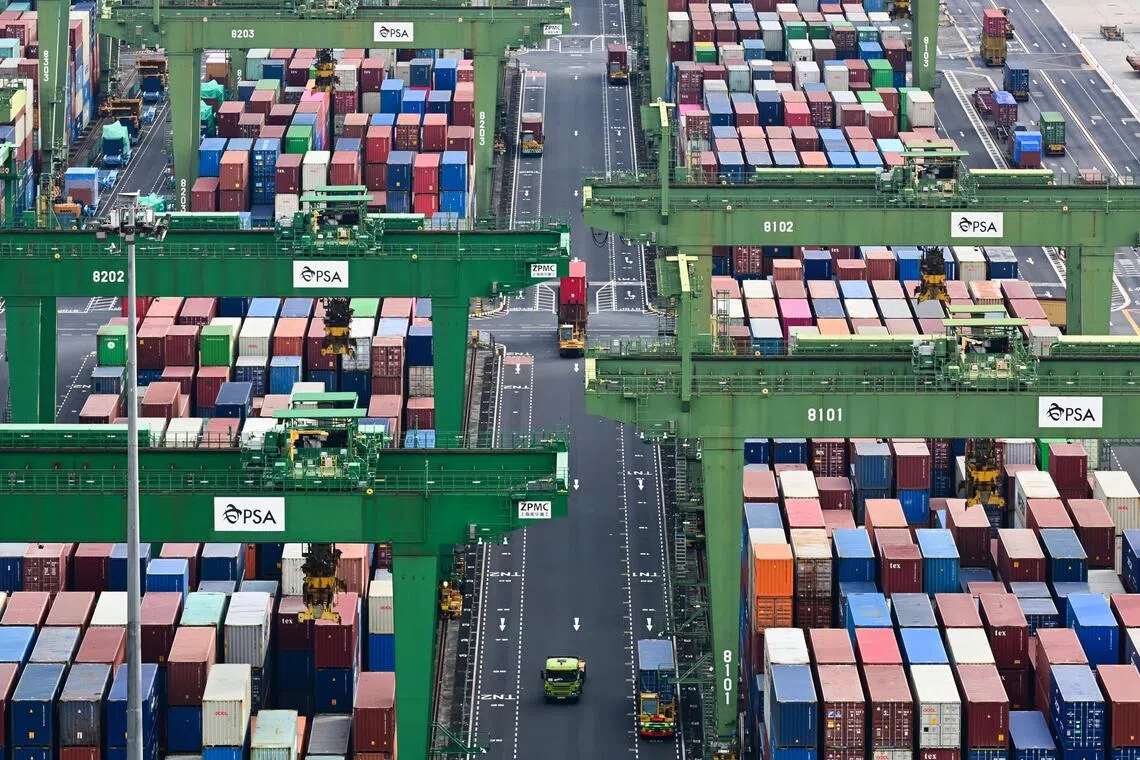
Any import prohibition would have significant implications for Singapore’s trade, DPM Gan said in a written reply to a parliamentary question on Sept 8.
ST PHOTO: LIM YAOHUI
Published Sep 09, 2026, 03:35 PM
Updated Sep 09, 2026, 03:40 PM
Follow our live coverage here.
SINGAPORE – Singapore will continue to engage the US on lowering tariffs and help businesses and workers adapt, but will consider any steps carefully in response to the negotiations, said Deputy Prime Minister Gan Kim Yong.
About a third of Singapore’s domestic exports to the US – worth about $ 9.5 billion annually – became subject to a 12.5 per cent levy on July 24 , along with dozens of other economies coming under 10 or 12.5 per cent duties amid US allegations of forced labour.
DPM Gan said there is no evidence that Singapore is involved in the trade of goods associated with forced labour, but the higher rate was imposed because it lacks a law prohibiting the importation of goods produced with forced labour.
Singapore has also not negotiated an Agreement on Reciprocal Trade (ART) with the US, which could have included such prohibitions along with other trade restrictions.
As a major trading hub with around $ 2.5 trillion in goods and services trade each year, including $ 1.4 trillion in goods, any import prohibition would have significant implications for Singapore’s trade, Gan said.
“Businesses could face substantial compliance costs arising from supply-chain due diligence, documentation, and investigations, particularly where production takes place outside Singapore and beyond our jurisdiction,” he said in a written reply to a parliamentary question on Sept 8.
“Such measures could also affect our broader trade relationship with other partners,” added Gan, who is also the Minister of Trade and Industry (Trade).
He cited a July 24 statement from the Singapore Business Federation, which also noted that any new regulatory requirements should be carefully studied in consultation with industry.
Gan said the Government will continue discussions with businesses and workers through the Singapore Economic Resilience Taskforce (SERT).
The Government has also considered an ART with the US to lower tariffs.
However, based on agreements the US has concluded with other economies, such arrangements may involve commitments beyond an import prohibition, including export controls or restrictions relating to third countries.
“These wider implications have to be assessed carefully before Singapore decides on any course of action,” Gan said.
He said the Government’s immediate priority is to help businesses and workers adjust to higher costs and disruptions in trade flows associated with the tariffs.
He said that while the impact of the US tariff on the economy has been muted so far, the SERT has been working closely with workers and industry partners to monitor the impact and help them adapt.
For instance, the Business Adaptation Grant launched in October 2025, support s eligible enterprises in redesigning their business operations and strengthening supply chain resilience.
This year’s Budget also provides more grant support under schemes such as the Market Readiness Assistance grant to help firms diversify and grow in overseas markets.
Singapore has engaged the Office of the US Trade Representative (USTR) actively at both the political and official levels, including during Gan’s visit to the US in August and via written comments to the USTR and bilateral government consultations.
Singapore and the US are major trade and investment partners. In 2025, goods trade between the US and Singapore amounted to $ 139.2 billion.
Singapore was the US’ third-largest Asian investor with about US$53 billion in foreign direct investment stock in 2025, while the US was Singapore’s largest investor with $ 778.6 billion in FDI stock in 2024.
Bilateral trade and Singapore’s investments support around 350,000 jobs in the US.
Singapore Parliament
副总理颜金勇在9月8日对议会质询的书面答复中表示,任何进口禁令都会对新加坡的贸易产生重大影响。
ST 照片:林耀辉
发布于 2026 年 9 月 9 日下午 3:35
更新于2026年9月9日下午3:40
请点击此处关注我们的实时报道。
新加坡——副总理颜金勇表示,新加坡将继续与美国就降低关税进行磋商,并帮助企业和工人适应变化,但会根据谈判结果谨慎考虑采取任何措施。
7 月 24 日,新加坡对美国的国内出口商品约有三分之一(价值约 95 亿美元)被征收 12.5% 的关税,与此同时,由于美国指控存在强迫劳动,数十个其他经济体也被征收 10% 或 12.5% 的关税。
副总理颜金勇表示,没有证据表明新加坡参与了与强迫劳动相关的商品贸易,但之所以征收较高的税率,是因为新加坡缺乏禁止进口强迫劳动生产的商品的法律。
新加坡也没有与美国就互惠贸易协定(ART)进行谈判,该协定可能包括此类禁令以及其他贸易限制。
颜金勇表示,新加坡是每年商品和服务贸易额约 2.5 万亿美元(其中商品贸易额达 1.4 万亿美元)的主要贸易中心,任何进口禁令都将对新加坡的贸易产生重大影响。
他在9月8日对议会质询的书面答复中表示:“企业可能会面临因供应链尽职调查、文件编制和调查而产生的巨额合规成本,尤其是在生产发生在新加坡境外和我们管辖范围之外的情况下。”
“这些措施也可能影响我们与其他伙伴的更广泛贸易关系,”兼任贸易及工业部长(贸易)的颜金勇补充道。
他引用了新加坡商业联合会7月24日的一份声明,该声明也指出,任何新的监管要求都应与业界协商后仔细研究。
颜金勇表示,政府将继续通过新加坡经济韧性工作组(SERT)与企业和工人进行讨论。
政府也考虑过与美国达成一项替代贸易协定,以降低关税。
然而,根据美国与其他经济体达成的协议,此类安排可能涉及进口禁令以外的承诺,包括与第三国有关的出口管制或限制。
“在新加坡决定采取任何行动方案之前,必须仔细评估这些更广泛的影响,”颜金勇说。
他表示,政府的当务之急是帮助企业和工人适应关税带来的成本上升和贸易流动中断。
他表示,虽然迄今为止美国关税对经济的影响还比较有限,但SERT一直在与工人和行业伙伴密切合作,监测其影响并帮助他们适应。
例如,2025 年 10 月启动的“企业适应补助金”旨在支持符合条件的企业重新设计其业务运营并加强供应链韧性。
今年的预算案还通过市场准备援助补助金等计划提供更多资助,以帮助企业实现多元化发展并在海外市场扩张。
新加坡在政治和官方层面都积极与美国贸易代表办公室 (USTR) 进行沟通,包括甘清亮总理 8 月份访问美国期间,以及通过向美国贸易代表办公室提交书面意见和双边政府磋商。
新加坡和美国是重要的贸易和投资伙伴。2025年,美新两国间的货物贸易额将达到1392亿美元。
2025年,新加坡是美国在亚洲的第三大投资国,外国直接投资存量约为530亿美元;而2024年,美国是新加坡最大的投资国,外国直接投资存量达7786亿美元。
双边贸易和新加坡的投资为美国提供了约 35 万个就业岗位。
新加坡国会