Southeast Asia faces test of turning climate promises into action东南亚面临着将气候承诺转化为实际行动的考验。
Climate advocates are in Singapore for the Climate Reality Leadership Corps Training, organised by former US Vice President Al Gore’s nonprofit organisation The Climate Reality Project.
新闻视频
Climate advocates are in Singapore for the Climate Reality Leadership Corps Training, organised by former US Vice President Al Gore’s nonprofit organisation The Climate Reality Project.
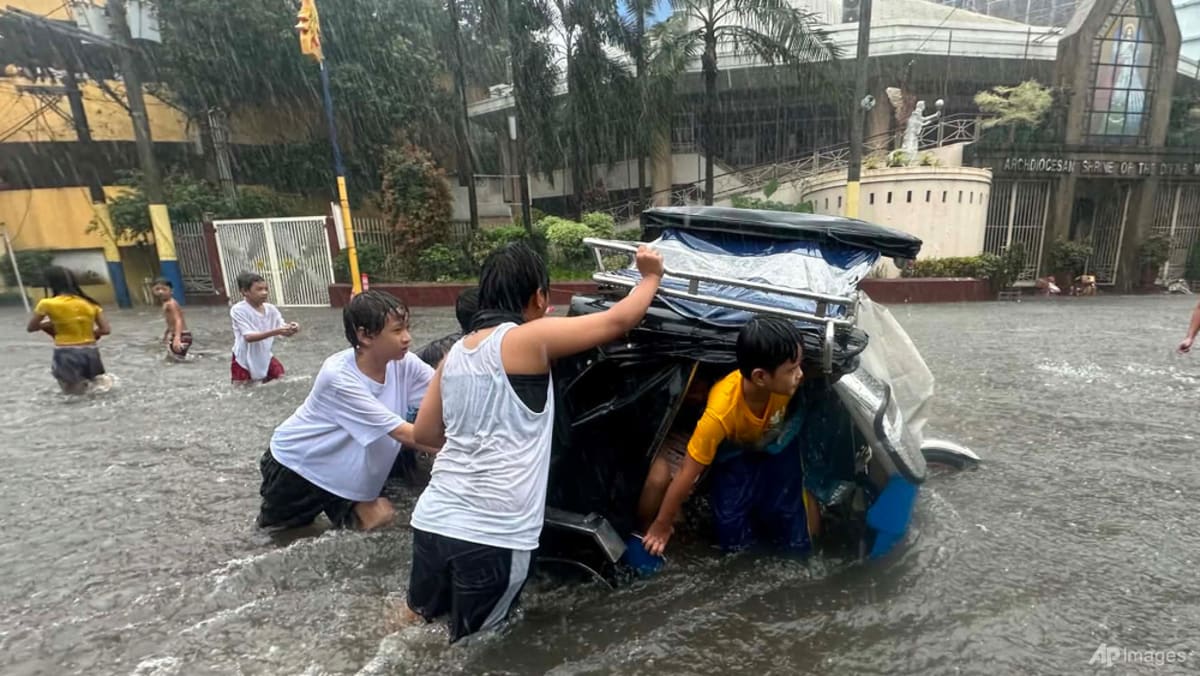
Residents push a tricycle along a flooded street due to heavy monsoon rains at Mandaluyong, Metro Manila, Philippines, Monday, Aug. 17, 2026. (AP Photo/Joeal Calupitan)
This audio is generated by an AI tool.
SINGAPORE: From giving young people a greater say in policymaking to protecting communities from climate-related health risks, Southeast Asia faces a growing challenge: turning climate commitments into meaningful action on the ground.
These were some of the issues in focus at the Climate Reality Leadership Corps Training in Singapore, organised by The Climate Reality Project, a nonprofit founded by former United States Vice President Al Gore .
The two-day event, which began on Tuesday (Sep 8), has brought together about 800 participants from across Southeast Asia. Half of them are aged 30 or younger, according to the organisation.
The Singapore gathering marks the organisation’s 10th leadership training in the region and its first session in the country.
Topics covered include the region’s energy transition, climate finance and regional cooperation, with participants hearing from Mr Gore as well as scientists and climate experts.
Climate Reality Project president and CEO Phyllis Cuttino said the training comes at a critical time for Asia, as global emissions continue to rise, while “government ambition” in some parts of the world is waning.
“Asia is so important in the next decade for really determining the trajectory of the climate crisis,” Ms Cuttino told CNA.
She said Singapore had shown leadership when it came to tackling the climate crisis, adding that countries around the world could learn from its example.
“Singapore, for instance, is one of the few nations in the world that disincentivises pollution with both a carbon tax and without subsidising fossil fuels,” she said.
Ms Cuttino said participants were being equipped with the knowledge, skills and networks to help drive climate solutions in their communities, countries and across the region.
CNA Games Guess Word Crack the word, one row at a time Buzzword Create words using the given letters Mini Sudoku Tiny puzzle, mighty brain teaser Mini Crossword Small grid, big challenge Word Search Spot as many words as you can Show More Show Less
YOUTH INFLUENCE ON POLICIES
As Southeast Asia makes decisions that will shape its climate policies for decades, a key question is who gets a meaningful say in making them.
Young people are increasingly part of that conversation, but youth climate advocates say representation and consultation do not necessarily translate into influence.
For young people, getting a seat at the table is only the first step, said Ms Jitsai Santaputra, co-founder of Youth for Energy Southeast Asia and founding member of the Thailand Youth Climate Council.
“We need to really consider young people as not just beneficiaries of policies, but people who can provide input and real feedback on how energy is being consumed and what kind of energy they want to be consuming,” she said.
She noted that she was seeing more young people represented in stakeholder discussions in Southeast Asia, alongside a broader range of civil society voices.
“As much as I want to say that I'm seeing very real, translatable actions based on the feedback that are provided, I'm really not seeing that as much in Southeast Asia.”
She said what was lacking was “that space and that follow-through”, calling for structures that policymakers follow to show how they are implementing feedback.
CLIMATE CHANGE AS A HEALTH ISSUE
Climate change is also becoming increasingly personal through its impact on health.
Extreme heat is the clearest example, but the risks stretch from air quality and disease to food and water security – especially in dense, fast-growing cities across Southeast Asia.
“Climate change is already affecting the health of the world, especially of the marginalised, the vulnerable, in poorer countries,” said SingHealth Duke-NUS Global Health Institute’s associate professor of global and planetary health Renzo Guinto.
Even in Singapore, day-to-day exposure to heat is already affecting people’s physical and mental health, he said.
Assoc Prof Guinto also pointed to flooding in Metro Manila due to intense rain and typhoons in his home country of the Philippines, saying infectious diseases and other health impacts were being borne by the “poorest of the poor”.
“The climate impact on health is already present, palpable, and therefore it needs to be addressed.”
Looking at climate change through the lens of health could offer another way to address the issue, given how much people value their health and well-being, he added.
GREENER MOBILITY IN CITIES
Beyond its impact on health, tackling climate change also means rethinking how people move around cities.
Ms Golda Hilario, director for urban development at the Institute for Climate and Sustainable Cities, said efforts were already under way to address transport emissions , but the scale of change was not yet sufficient.
She said making cities more compact and accessible could reduce reliance on private motorised vehicles, with people able to use public transport, walk or cycle instead.
“The push is not just drastic actions to electrify, but also ensuring that the systems work around it,” said Ms Hilario.
She added that these systems should be “affordable, accessible for everyone”, so that people have more options in how they travel around their cities.
Get our pick of top stories and thought-provoking articles in your inbox
Stay updated with notifications for breaking news and our best stories
Join our channel for the top reads for the day on your preferred chat app
气候倡导者们齐聚新加坡,参加由美国前副总统阿尔·戈尔的非营利组织“气候现实项目”组织的“气候现实领导力培训班”。
2026年8月17日星期一,在菲律宾马尼拉大都会曼达卢永市,居民们推着三轮车沿着被季风暴雨淹没的街道行进。(美联社照片/乔尔·卡卢皮坦)
这段音频由人工智能工具生成。
新加坡:从让年轻人对政策制定有更大的发言权,到保护社区免受气候相关健康风险的影响,东南亚正面临着一个日益严峻的挑战:将气候承诺转化为切实可行的行动。
这些是气候现实项目在新加坡举办的气候现实领导力培训班的重点议题之一。气候现实项目是由美国前副总统阿尔·戈尔创立的非营利组织。
此次为期两天的活动于周二(9月8日)开幕,汇聚了来自东南亚各地的约800名参与者。据主办方称,其中一半参与者年龄在30岁或以下。
此次新加坡聚会是该组织在该地区举办的第十届领导力培训,也是该组织在新加坡举办的首届培训。
会议涵盖了该地区的能源转型、气候融资和区域合作等议题,与会者将听取戈尔先生以及科学家和气候专家的发言。
气候现实项目总裁兼首席执行官菲利斯·库蒂诺表示,此次培训对亚洲来说正值关键时刻,因为全球排放量持续上升,而世界某些地区的“政府雄心”却在减弱。
“亚洲在未来十年对于真正决定气候危机的走向至关重要,”库蒂诺女士告诉亚洲新闻台。
她表示,新加坡在应对气候危机方面展现了领导力,并补充说,世界各国都可以向新加坡学习。
“例如,新加坡是世界上少数几个既征收碳税又不补贴化石燃料的国家之一,”她说。
库蒂诺女士表示,参与者将获得知识、技能和人脉,以帮助在其社区、国家和整个地区推动气候解决方案。
CNA游戏 猜词游戏 逐行破解单词 流行词游戏 用给定的字母组成单词 迷你数独 小小谜题,挑战你的大脑 迷你填字游戏 小方格,大挑战 单词搜索 尽可能多地找出单词 显示更多 显示更少
青年对政策的影响
东南亚正在做出将影响其未来几十年气候政策的决策,一个关键问题是,谁在制定这些决策时拥有有意义的发言权。
年轻人越来越多地参与到这场对话中来,但青年气候倡导者表示,代表性和咨询权并不一定能转化为影响力。
“对于年轻人来说,获得一席之地仅仅是第一步,”东南亚青年能源组织联合创始人兼泰国青年气候委员会创始成员吉赛·桑塔普特拉女士说道。
“我们需要真正把年轻人视为政策的受益者,而不仅仅是政策的受益者,他们还可以就能源消耗方式以及他们想要消耗的能源类型提供意见和真实的反馈,”她说。
她注意到,在东南亚的利益相关者讨论中,她看到越来越多的年轻人参与其中,同时民间社会的声音也更加广泛。
“尽管我很想说我看到了根据反馈而采取的非常实际、可转化的行动,但在东南亚,我真的没有看到太多这样的行动。”
她表示,目前缺乏的是“那个空间和后续行动”,并呼吁建立政策制定者遵循的机制,以展示他们是如何落实反馈意见的。
气候变化与健康问题
气候变化对健康的影响也使其越来越与个人息息相关。
极端高温是最明显的例子,但风险范围从空气质量和疾病到食品和水安全——尤其是在东南亚人口稠密、快速发展的城市。
“气候变化已经影响到世界人民的健康,尤其是边缘化群体、弱势群体和贫困国家人民的健康,”新加坡保健集团杜克-新加坡国立大学全球健康研究所全球和行星健康副教授伦佐·金托表示。
他说,即使在新加坡,人们每天暴露在高温下也已经影响到他们的身心健康。
副教授金托还指出,由于他的祖国菲律宾遭受暴雨和台风袭击,马尼拉大都会区发生洪水,传染病和其他健康影响正由“最贫困的人”承受。
“气候变化对健康的影响已经存在,而且显而易见,因此必须加以解决。”
他补充说,考虑到人们对自身健康和福祉的重视程度,从健康的角度看待气候变化或许能为解决这一问题提供另一种途径。
城市绿色出行
除了对健康的影响之外,应对气候变化还意味着重新思考人们在城市中的出行方式。
气候与可持续城市研究所城市发展主任戈尔达·希拉里奥女士表示,目前已在努力解决交通排放问题,但变革的规模还不够大。
她表示,让城市更加紧凑便捷,可以减少人们对私家车的依赖,使人们能够改用公共交通、步行或骑自行车。
“推动电气化不仅仅是采取激进措施,还要确保相关系统能够适应电气化,”希拉里奥女士说。
她补充说,这些系统应该是“价格合理、人人都能负担得起的”,这样人们在城市出行方面就有了更多选择。
订阅我们的邮件,即可获取精选热点新闻和引人深思的文章。
订阅通知,第一时间获取突发新闻和精彩报道。
加入我们的频道,即可在您常用的聊天应用上获取当日热门文章。