US Navy Aircraft Carriers Had Escalators Just Like At The Mall美国海军航空母舰上也有像商场里那样的自动扶梯。
Instead of carrying shopping bag toting consumers, these escalators carried fully geared-up aircrews on the way to their aircraft.
新闻视频
Updated Jul 5, 2020 7:15 PM EDT
When you think of escalators, shopping malls, department stores, airports, office buildings, and even President Trump come to mind—not US Navy aircraft carriers. But the technology was introduced aboard these ships at the dawn of the jet age as a way to get gear-laden aircrews from their ready rooms buried deep in the bowels of the ship, up to the flight deck without severely winding them before their missions even started.
Although we call anything that acts like an escalator an escalator today, at the time the name actually belonged to the OTIS elevator company. The units installed aboard aircraft carriers during the late 1940s and 1950s were technically “Electric Stairways” built by Westinghouse.
USS Hornet’s flight deck elevator photographed in 1992 at Puget Sound Naval Shipyard in Bremerton, Washington. , USN
Over a dozen Essex and Ticonderoga class carriers were deeply refitted after World War II to handle heavier and higher performing aircraft, including jets, and to make them more survivable based on lessons learned the hard way during combat operations. Part of these extensive refits included moving squadron ready rooms from just under the carriers’ relatively unarmored teak flight decks to deep in the ships’ hulls, underneath their fortified hangar bays. The escalators were installed as a relatively high-tech solution that was supposed to solve the logistical nightmare of getting crews to their aircraft after being suited up for flight. And they did just that, albeit only when they were functioning. When they didn’t work they became 100 foot long staircases for weighted down pilots to struggle up, and as the ships aged, they became less and less reliable.
The much larger Kitty Hawk class was also built with this feature, albeit with two escalators, one forward and one aft, to accommodate its much larger size and expanded air wing. There are even some reports that a third escalator was also built into the Kitty Hawk initially to move high ranking officers from lower decks up to the ship’s bridge. It remains unclear if the Forrestal class also had escalators, but it seems as if they did, at least for a period of time.
After the Kitty Hawk class, ready rooms were moved closer to the flight deck once again, and Enterprise and later the Nimitz class omitted the feature entirely.
One can only imagine how these escalators must have added to the drama for flight crews as they slowly rose their way through the escalator’s dim tunnel to the flight deck before launching off into the night for air missions over Vietnam, or later on, over Iraq, Afghanistan and other dangerous locales.
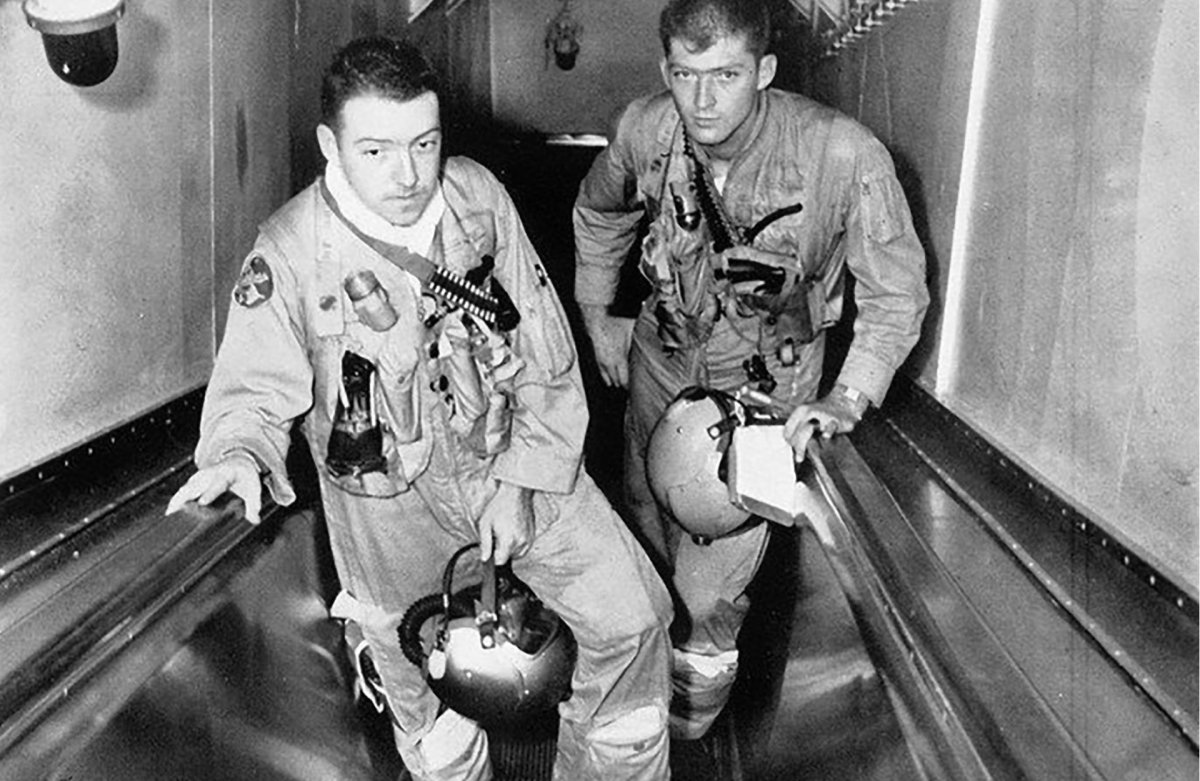
Navy pilots on the flight deck escalator aboard the aircraft carrier USS Bon Homme Richard (CVA-31) in 1956., USN
Contact the author: Tyler@thedrive.com
Comments couldn’t be loaded. Please refresh the page.
更新于美国东部时间2020年7月5日晚上7:15
提到自动扶梯,人们首先想到的可能是购物中心、百货公司、机场、办公楼,甚至特朗普总统——而不是美国海军航空母舰。然而,这项技术在喷气式飞机时代初期就被引入这些舰艇,目的是为了让装备齐全的机组人员能够从位于舰艇深处的准备舱快速抵达飞行甲板,而无需在任务开始前就让他们过度疲劳。
虽然如今我们把任何类似自动扶梯的东西都称为自动扶梯,但当时这个名称实际上属于奥的斯电梯公司。20世纪40年代末和50年代安装在航空母舰上的那些装置,严格来说是由西屋公司制造的“电动楼梯”。
1992年,在华盛顿州布雷默顿的普吉特海湾海军造船厂,拍摄了“大黄蜂”号航空母舰的飞行甲板升降机。(美国海军)
二战后,十几艘埃塞克斯级和提康德罗加级航母进行了深度改装,以搭载更重、性能更高的飞机,包括喷气式飞机,并根据战时惨痛的战果提升其生存能力。这些大规模改装的一部分包括将中队准备室从航母相对无装甲的柚木飞行甲板下方移至舰体深处,即加固的机库下方。安装自动扶梯作为一种相对高科技的解决方案,旨在解决机组人员穿戴好飞行服后如何前往飞机的后勤难题。而自动扶梯也确实做到了这一点,尽管前提是它们能够正常运行。一旦发生故障,它们就变成了100英尺长的楼梯,让负重的飞行员艰难地爬上去。随着航母舰龄的增长,这些自动扶梯的可靠性也越来越低。
更大的“小鹰”级战列舰也配备了自动扶梯,不过由于其庞大的舰体和扩充的舰载机联队,该级战列舰只配备了两部自动扶梯,分别位于舰首和舰尾。甚至有报道称,“小鹰”级最初还建造了第三部自动扶梯,用于将高级军官从下层甲板送至舰桥。目前尚不清楚“福莱斯特”级战列舰是否也配备了自动扶梯,但似乎至少在一段时间内是配备的。
在“小鹰”级之后,舰艇准备室再次被移至更靠近飞行甲板的位置,“企业”级以及后来的“尼米兹”级完全取消了这一设计。
人们只能想象,当机组人员缓缓穿过昏暗的扶梯隧道到达飞行甲板,然后起飞执行飞越越南,或者后来飞越伊拉克、阿富汗和其他危险地区的夜间空中任务时,这些扶梯一定给飞行人员增添了多少戏剧性。
1956年,美国海军飞行员在“好人理查德”号航空母舰(CVA-31)的飞行甲板自动扶梯上。
联系作者:Tyler@thedrive.com
评论加载失败,请刷新页面。