How Europe can build its defense while maintaining US support欧洲如何在维持美国支持的同时加强自身防御
Opinion: Europe sought “autonomy” without providing adequate defense resources, while the U.S. wanted more European defense contributions without losing influence.
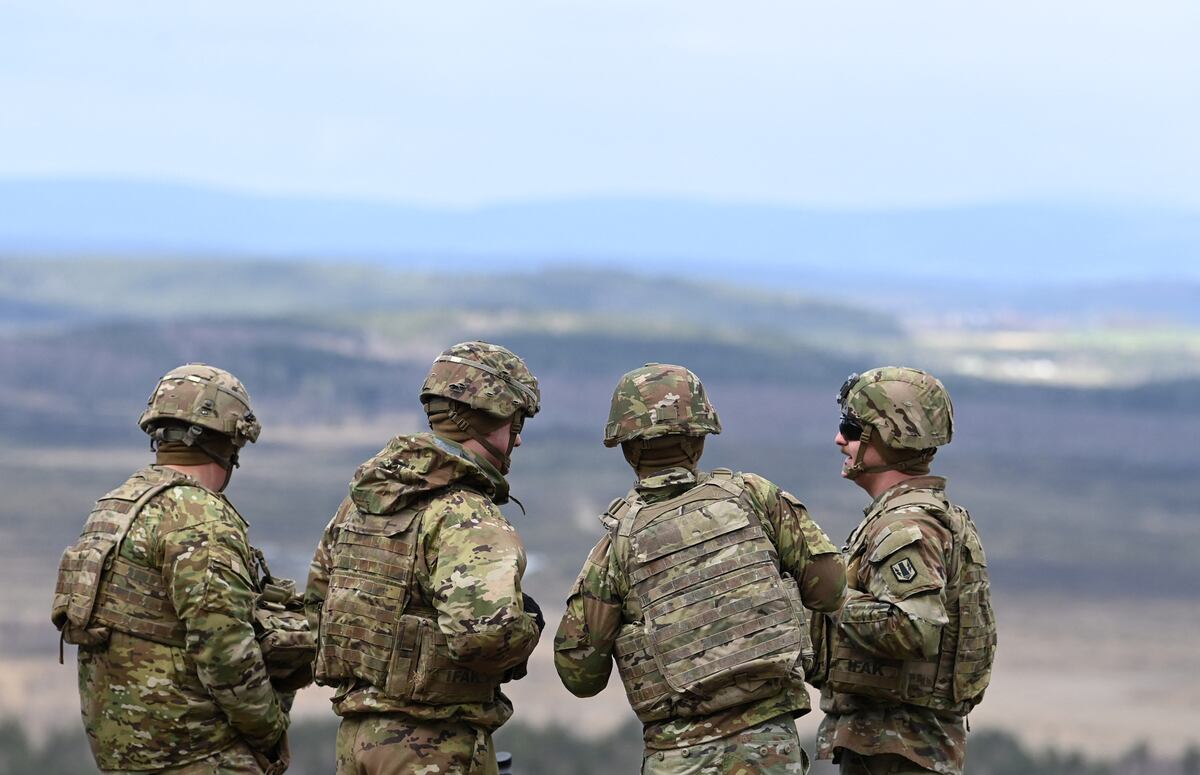
Two years after invading Ukraine again, Russian President Vladimir Putin has accomplished two things for NATO. First, he has helped to expand and reinvigorate the alliance; Sweden is set to join NATO. Second, and more concerning, he has deepened Europe’s dependence on the United States. That problem requires urgent attention.
Faced with an aggressive Russia, a war of attrition in Ukraine and uncertainty about U.S. reliability, anxious European allies are accelerating their defense spending. This year they are to collectively meet NATO’s target of spending 2% of gross domestic product on defense. And they have logged nine consecutive years of growth in their defense budgets.
Spending more, however, doesn’t necessarily mean spending well. NATO’s 2% goal is important as a baseline input metric, but it is unlikely to be enough to ensure that Europe strengthens its defenses before Russia reconstitutes its depleted forces. To assure that defense resources are spent well, some clear output metrics are needed to define what Europe’s military capabilities should be.
As the alliance continues its most urgent task — helping Ukraine win — it must address this important longer-term challenge of rebalancing trans-Atlantic defense. Doing so will mean squaring a triangle : ensuring Europe’s capacity to better defend itself against Russia and manage crises along its southern periphery; addressing European aspirations for greater strategic autonomy; and maintaining confidence that the United States can adequately uphold its commitments in both the North Atlantic and the Indo-Pacific region.
We have called squaring this triangle “achieving European strategic responsibility.”
In the past, Europe has sought “autonomy” without providing adequate defense resources, while the United States has wanted greater European defense contributions without diminishing U.S. influence. These tensions have been exacerbated by inadequate cooperation between U.S. and European defense industries.
NATO’s 75th anniversary summit in Washington this summer provides an opportunity to reconcile these two perspectives and find a new strategic balance. To do so, European allies should focus on achieving two military capability or output goals as quickly as possible.
First, Europe should build its conventional military capabilities to a level that would provide at least half of all the forces and capabilities — including the strategic enablers such as strategic lift, air-to-air refueling and operational intelligence — required to deter and, if needed, to defeat a major-power aggressor.
Should a conflict simultaneously break out with China in Asia and with Russia in Europe, the United States may not be able to deploy adequate reinforcements to Europe. European allies need to be able to pick up the slack.
Second, European allies should develop capabilities to conduct crisis management operations in Europe’s neighborhood without today’s heavy reliance on U.S. enablers. The European Union’s goal to develop the capacity to generate an “intervention force” of 5,000 individuals who could deploy beyond EU boundaries is a small yet useful start. Much more is needed.
Meeting these two output goals would allow Europe to become the first responder to most crises in its neighborhood, acting through NATO, through the EU or through ad hoc coalitions of the willing. It would permit the United States to shift some of its forces and strategic focus to the Indo-Pacific region without significant reduction in the capabilities needed to deter Russia.
To achieve these two output goals, NATO allies could agree at the summit to use NATO’s Defense Planning Process to create a minimum level of military ambition necessary to attain European strategic responsibility. European allies and Canada should firmly commit to investing sufficient resources to ensure that within a few years they can meet 50% of all of NATO’s minimum capability requirements. Similar informal goals already exist; now they should be formalized and implemented at the summit.
Doing half of what’s needed within the alliance is an absolute minimal requirement for Europe to attain strategic responsibility. It assumes the Europeans can still count on the Americans. But if former President Donald Trump wins the November election and reneges on America’s NATO commitments , doing half will not be nearly enough. So Europe should not delay a moment longer. A delay could be fatal, as Russia is on a war footing, has attained significant combat experience and will reconstitute its drained forces as quickly as possible.
Achieving strategic responsibility for Europe will require more — not less — trans-Atlantic consultations. New mechanisms for NATO-EU coordination and industrial cooperation will be needed. Now is the moment for the U.S. and Europe to shed their contending views and to make European strategic responsibility a win-win for both sides of the Atlantic.
Hans Binnendijk, formerly a senior director for defense policy on the U.S. National Security Council, is a distinguished fellow at the Atlantic Council think tank. Daniel S. Hamilton, formerly a U.S. deputy assistant secretary of state, is a nonresident senior fellow at the Brookings Institution think tank. Alexander R. Vershbow, formerly a NATO deputy secretary general, is a distinguished fellow at the Atlantic Council.
在再次入侵乌克兰两年后,俄罗斯总统弗拉基米尔·普京为北约做了两件事。首先,他帮助扩大并重振了北约;瑞典即将加入北约。其次,更令人担忧的是,他加深了欧洲对美国的依赖。这个问题亟需解决。
面对咄咄逼人的俄罗斯、乌克兰旷日持久的消耗战以及对美国可靠性的担忧,焦虑不安的欧洲盟国正在加快国防开支。今年,它们将共同达到北约设定的国防开支占国内生产总值2%的目标。而且,它们的国防预算已经连续九年增长。
然而,增加军费开支并不一定意味着提高军费开支的效率。北约2%的目标作为一项基准投入指标固然重要,但不太可能足以确保欧洲在俄罗斯重建其削弱的军事力量之前加强自身防御。为了确保国防资源得到有效利用,需要一些明确的产出指标来界定欧洲应具备的军事能力。
在联盟继续执行其最紧迫的任务——帮助乌克兰取得胜利——的同时,它也必须应对重新平衡跨大西洋防务这一重要的长期挑战。要做到这一点,就意味着要平衡三者:确保欧洲有能力更好地防御俄罗斯并应对其南部周边地区的危机;满足欧洲对更大战略自主权的诉求;以及保持对美国能够充分履行其在北大西洋和印太地区承诺的信心。
我们将解决这个三角问题称为“实现欧洲战略责任”。
过去,欧洲一直寻求“自主”,却不愿提供充足的国防资源;而美国则希望欧洲加大国防投入,同时又不削弱自身的影响力。美欧国防工业合作不足,加剧了这些紧张关系。
今年夏天在华盛顿举行的北约成立75周年峰会为调和这两种观点、寻求新的战略平衡提供了契机。为此,欧洲盟国应集中精力尽快实现两项军事能力或产出目标。
首先,欧洲应该将其常规军事能力提升到一定水平,使其至少拥有威慑大国侵略者所需的一半兵力和能力,包括战略运输、空中加油和作战情报等战略赋能手段。
如果美国同时与亚洲的中国和欧洲的俄罗斯发生冲突,可能无法向欧洲部署足够的增援部队。欧洲盟友需要能够弥补这一缺口。
其次,欧洲盟友应发展自身能力,以便在欧洲周边地区开展危机管理行动,摆脱目前对美国援助的过度依赖。欧盟的目标是建立一支5000人的“干预部队”,使其能够部署到欧盟境外,这是一个虽小但有益的开端。然而,还需要做更多的工作。
实现这两个产出目标将使欧洲能够成为其周边地区大多数危机的第一响应者,通过北约、欧盟或临时组建的自愿联盟采取行动。这将使美国能够在不大幅削弱威慑俄罗斯所需能力的前提下,将其部分兵力和战略重心转移到印太地区。
为实现这两个产出目标,北约盟国可在峰会上达成一致,利用北约国防规划流程,制定实现欧洲战略责任所需的最低军事目标。欧洲盟国和加拿大应坚定承诺投入充足资源,确保在几年内达到北约所有最低能力要求的50%。类似的非正式目标已存在;现在应在峰会上将其正式化并付诸实施。
欧洲要想承担起战略责任,在联盟内部履行一半的义务是绝对的最低要求。这假设欧洲人仍然可以指望美国。但如果前总统唐纳德·特朗普赢得11月的选举,并背弃美国对北约的承诺,那么仅仅履行一半的义务远远不够。因此,欧洲不应再拖延片刻。拖延可能会是致命的,因为俄罗斯已经进入战争状态,积累了丰富的实战经验,并将尽快重建其精疲力竭的部队。
要实现欧洲的战略责任,需要加强而非减少跨大西洋磋商。北约与欧盟之间需要建立新的协调和产业合作机制。现在正是美欧摒弃分歧、携手实现欧洲战略责任双赢的关键时刻。
汉斯·宾内迪克,曾任美国国家安全委员会国防政策高级主任,现任大西洋理事会杰出研究员。丹尼尔·S·汉密尔顿,曾任美国副助理国务卿,现任布鲁金斯学会非常驻高级研究员。亚历山大·R·弗什博,曾任北约副秘书长,现任大西洋理事会杰出研究员。