MBDA unveils AI-based Ground Warden tool for finding hidden targetsMBDA推出基于人工智能的地面巡逻工具,用于寻找隐藏目标
MBDA makes a similarly named platform, the Sky Warden, which is a counter-drone system designed to control a large range of sensors and effectors.
PARIS — The missile manufacturer MBDA has unveiled an artificial intelligence-based capability to allow military forces to see hidden targets in challenging combat environments.
The multinational firm presented its Ground Warden beyond line-of-sight technology here during the Eurosatory defense and security conference .
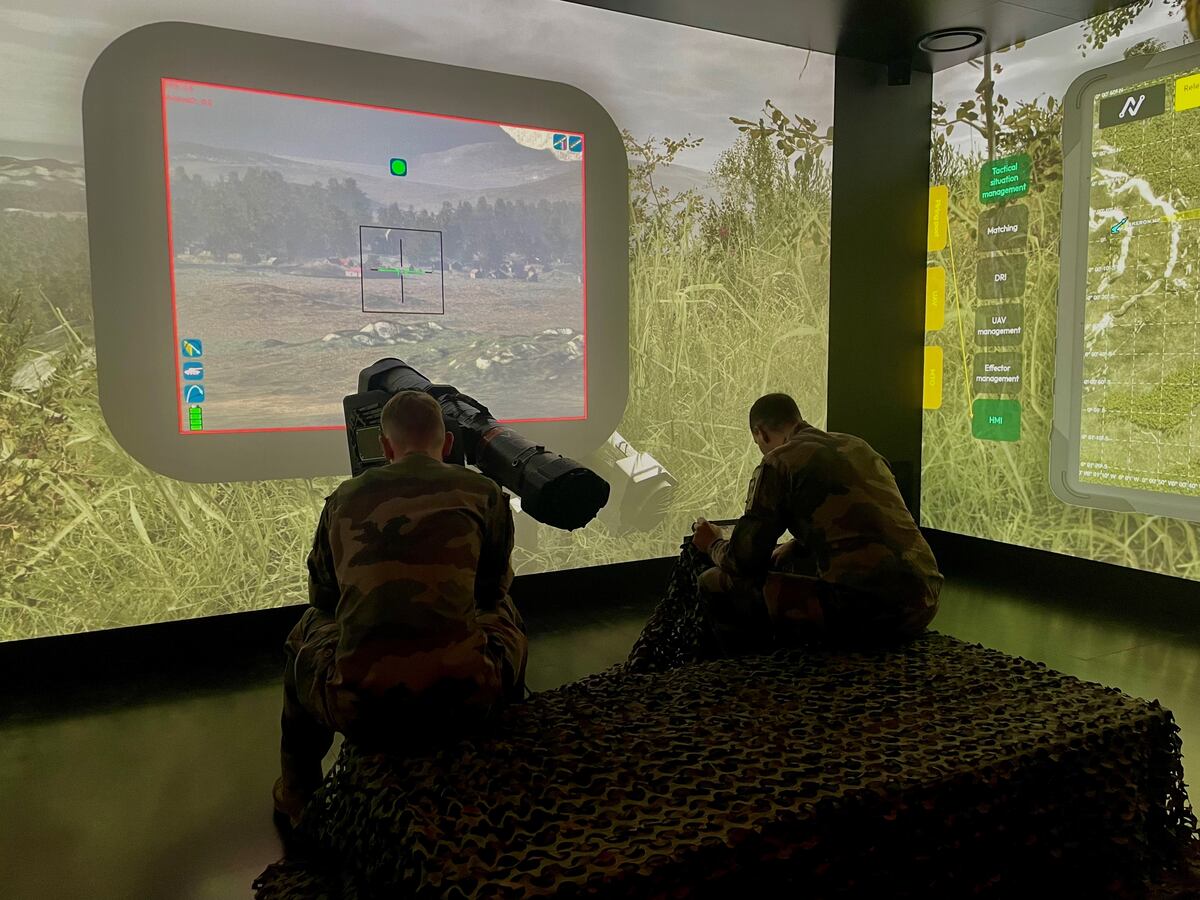
In one scenario presented by MBDA, a firing post is located above a village, concealed within hilly terrain. As an enemy target is detected from the shooter’s point of view, that data is relayed to a control system.
When the first missile is launched, it processes images in real time during its flight trajectory and before hitting the identified threat. That data is then fed to the new man-portable module, dubbed Ground Warden, and used to inform any subsequent missiles of concealed threats.
The Ground Warden, shown, is based on MBDA’s combat-proven Akeron anti-tank guided missile system. (MBDA)
The Ground Warden is based on MBDA’s combat-proven Akeron anti-tank guided missile system and is the company’s answer to a “growing need for reactivity” in increasingly fast-paced combat.
A second simulation presented to reporters stemmed from an unmanned aerial vehicle’s perspective around an area heavily populated by trees, which company representatives said make it difficult for missiles to reach their targets.
This scenario was meant to show the Ground Warden can work alongside drones. In this context, the UAV can provide an overview and recording of the operational environment that it then relays to the AI module and command system. The Ground Warden can further provide insights to the gunner of where the target — in this case a tank — can be intercepted and when to fire.
MBDA makes a similarly named platform, the Sky Warden, which is a counter-drone system designed to control a large range of sensors and effectors.
Elisabeth Gosselin-Malo was a Europe correspondent for Defense News. She covers a wide range of topics related to military procurement and international security, and specializes in reporting on the aviation sector. She is based in Milan, Italy.
巴黎——导弹制造商MBDA推出了一项基于人工智能的技术,使军队能够在充满挑战的作战环境中发现隐藏目标。
这家跨国公司在欧洲防务与安全会议期间展示了其地面警卫超视距技术。
MBDA提出的一个场景中,射击哨设在村庄上方,隐蔽在丘陵地带。当射手发现敌方目标时,相关数据会传输到控制系统。
第一枚导弹发射后,会在飞行过程中实时处理图像,并在击中已识别的威胁目标前进行监测。这些数据随后会被传输到名为“地面警卫”(Ground Warden)的新型便携式模块,用于告知后续导弹可能存在的隐蔽威胁。
图中所示的“地面守卫者”导弹系统,是基于MBDA公司久经实战考验的“阿克龙”反坦克导弹系统研发的。(MBDA)
“地面守卫者”导弹系统基于MBDA公司经过实战检验的“阿克龙”反坦克导弹系统,是该公司针对日益快节奏的战斗中“不断增长的反应能力需求”而推出的产品。
向记者展示的第二个模拟场景是从无人机的视角出发,围绕着一片树木茂密的区域进行观察。公司代表表示,树木使得导弹难以击中目标。
此场景旨在展示地面指挥系统如何与无人机协同工作。在此场景中,无人机可以提供作战环境的概览和记录,并将信息传输至人工智能模块和指挥系统。地面指挥系统还可以进一步为炮手提供目标(在本例中为坦克)的拦截位置和开火时机等信息。
MBDA 也生产类似名称的平台“天空守卫者”,这是一种反无人机系统,旨在控制各种传感器和执行器。
伊丽莎白·戈斯林-马洛曾任《防务新闻》欧洲通讯员。她的报道涵盖军事采购和国际安全等广泛领域,尤其擅长航空领域的报道。她常驻意大利米兰。