Europe’s armor industry must merge, Arquus boss saysArquus公司老板称,欧洲装甲行业必须合并。
Many middling companies are unable to muster the research-and-development oomph needed to push the market forward, according to Emmanuel Levacher.
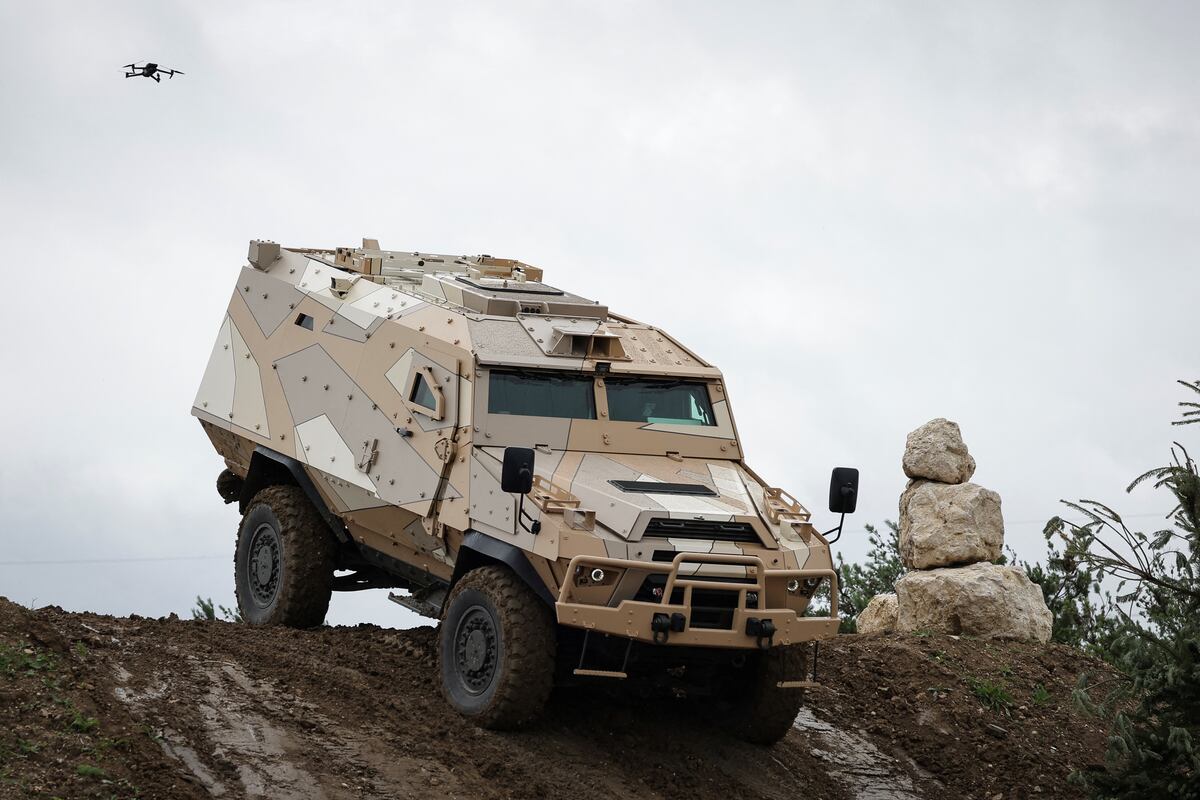
PARIS — The European market for light and medium armored vehicles has too many players and needs to consolidate, as some companies currently lack the size necessary to push research and development, according to Emmanuel Levacher, the CEO of French armored-vehicle maker Arquus.
Joint European purchasing of armored vehicles is also needed to bring the industry together, with various national programs too small to result in high production volumes and economies of scale, compared to U.S. acquisition programs that can be a factor 10 or 20 bigger, Levacher said in a briefing with reporters at the Eurosatory defense show in Paris on Tuesday.
Belgium’s John Cockerill in January agreed to buy Arquus , and that deal is expected to go ahead next month, Levacher told Defense News. The combined company targets defense revenue of €1 billion ($1.1 billion) by 2026, an amount that the Arquus CEO says is enough to invest around €50 million to €100 million a year in “new capacities, new technologies and so on.”
Arquus posted 2023 sales of €600 million, and the company invested €20 million of its own money in R&D as well as €30 million of French government funds, according to Levacher.
“We can still do lot of things, we are also quite agile, but I think there is a limit to also being able to finance new development, innovation and R&D,” Levacher said, “It’s not an exact science, but I think if we would be the double our size it would be better. There is an issue of reaching a critical size.”
Consolidation of European armored-vehicle programs will be key to bringing the industry together, according to the Arquus CEO. He said just joining up the industrial players wouldn’t be enough, as that would still leave European orders fragmented. “Then you will not reach what we want to achieve, which is economies of scale and reaching higher volumes, which is really the key.”
Levacher said the French-German Main Ground Combat System program to develop a future main battle tank is a demonstration of “how difficult it is to align the needs of different European countries.”
Europe can help by synchronizing and aligning R&D programs, which allows firms “to learn to work with each other and build some trust between the different companies,” Levacher said. “And then little by little, we may go together on some programs.”
The executive said an example of cooperation is the Famous program financed by the European Defence Fund, which is providing the basic building blocks for the French-Belgium program for the VBAE small reconnaissance vehicle. Finland’s Patria presented an all-terrain vehicle developed within the Famous program at Eurosatory on Monday.
Europe’s fragmented armored-vehicle industry faces competition in export markets, with firms from Turkey, South Korea, Israel and South Africa competing for international orders. Turkish firms are also increasingly a competitive threat in Europe, where they are “quite aggressive” in vying for orders for armor, according to Levacher.
With Turkey a NATO member, its companies offer products that are “very close” in terms of concept and regulation to those offered by European Union firms. Turkish defense armored-vehicle makers are competitive on cost, if not necessarily cheap due to the cost of technology that needs to be included.
“They have very good players in Turkey, and they have invested a lot in product and technologies,” the Arquus CEO said. “We respect them very much, because they have made a lot of progress. It’s nothing surprising that labor cost is a bit lower in Turkey, so that makes a bit of the difference.”
Governments increasingly demand localization as a condition for contract awards, including European clients such as Belgium, which is “not a very exotic country for us.”
“This is the way the world is,” Levacher said. “We cannot just export the hardware as we used to do 30 years ago. So now it really comes together with service and with localization, and this is true in many, many countries, even smaller countries which do not have a local industry, but they would like to develop some capacities.”
Arquus has sold 11 Bastion four-wheeled armored personal carriers to Ukraine, with another batch of 100 units to come, Levacher told Defense News. The VAB Mk3 6-wheeled APC “would be relevant” for Ukraine as long as it can protect itself from drones, according to the CEO. “In the Ukraine war, all the armored vehicles are under huge threats, but as long as it maybe can protect itself, especially from UAVs, that would make sense.”
The company is also seeing more demand for the Caesar 155mm howitzer, for which Arquus makes the six-wheel chassis, not only from France and Ukraine but also other markets.
Rudy Ruitenberg is a Europe correspondent for Defense News. He started his career at Bloomberg News and has experience reporting on technology, commodity markets and politics.
巴黎——法国装甲车制造商 Arquus 的首席执行官 Emmanuel Levacher 表示,欧洲轻型和中型装甲车市场参与者过多,需要进行整合,因为一些公司目前缺乏推进研发所需的规模。
勒瓦歇尔周二在巴黎举行的欧洲防务展上向记者介绍情况时表示,欧洲各国联合采购装甲车辆也是为了将整个行业团结起来,因为与美国的采购项目相比,各国的项目规模太小,无法实现高产量和规模经济,而美国的采购项目规模可以大10到20倍。
据《防务新闻》报道,比利时的约翰·科克里尔(John Cockerill)于1月份同意收购Arquus,预计该交易将于下个月完成。合并后的公司目标是到2026年实现10亿欧元(11亿美元)的国防收入,Arquus首席执行官表示,这笔资金足以每年投资约5000万至1亿欧元用于“新产能、新技术等等”。
据 Levacher 称,Arquus 公布 2023 年销售额为 6 亿欧元,该公司投入了 2000 万欧元自有资金用于研发,并获得了 3000 万欧元法国政府资金。
“我们仍然可以做很多事情,我们也相当灵活,但我认为我们在为新开发、创新和研发提供资金方面也存在极限,”莱瓦彻说,“这并非一门精确的科学,但我认为如果我们规模扩大一倍会更好。这是一个达到临界规模的问题。”
据Arquus首席执行官称,整合欧洲装甲车辆项目是实现行业一体化的关键。他表示,仅仅将各工业企业联合起来是不够的,因为这仍然会导致欧洲订单分散。“这样就无法实现我们想要达成的目标,即规模经济和提高产量,而这才是真正的关键。”
勒瓦歇尔表示,法德联合开发的“主战坦克地面作战系统”项目表明“协调不同欧洲国家的需求是多么困难”。
莱瓦彻表示,欧洲可以通过协调和统一研发项目来提供帮助,这使得各公司“能够学习如何相互合作,并在不同公司之间建立一些信任”。“然后,我们或许可以逐步在一些项目上开展合作。”
该高管表示,合作的一个例子是由欧洲防务基金资助的“Famous”项目,该项目为法比联合研发的VBAE小型侦察车项目提供了基础架构。芬兰帕特里亚公司周一在欧洲防务展上展示了一款在“Famous”项目框架下开发的全地形车。
欧洲装甲车辆行业格局分散,在出口市场面临激烈竞争,来自土耳其、韩国、以色列和南非的公司都在争夺国际订单。莱瓦彻表示,土耳其公司在欧洲也日益构成竞争威胁,它们在争夺装甲车辆订单方面“相当积极”。
土耳其是北约成员国,其企业提供的产品在概念和法规方面与欧盟企业的产品“非常接近”。土耳其国防装甲车制造商在成本方面具有竞争力,尽管由于技术成本较高,其产品未必便宜。
Arquus首席执行官表示:“他们在土耳其拥有非常优秀的员工,并且在产品和技术方面投入了大量资金。我们非常尊重他们,因为他们取得了长足的进步。土耳其的劳动力成本略低,这并不令人意外,这也造成了一定的影响。”
各国政府越来越倾向于将本地化作为授予合同的条件,包括比利时等欧洲客户,比利时“对我们来说并不是一个很陌生的国家”。
“这就是世界现状,”莱瓦彻说。“我们不能再像30年前那样只出口硬件了。现在,硬件必须与服务和本地化结合起来,这在很多国家都是如此,甚至包括一些没有本地产业的小国,但他们也希望发展一些相关能力。”
据《防务新闻》报道,Arquus公司已向乌克兰出售了11辆Bastion四轮装甲运兵车,另有100辆即将交付。该公司首席执行官莱瓦彻表示,VAB Mk3六轮装甲运兵车只要能够抵御无人机攻击,对乌克兰来说就“至关重要”。他补充道:“在乌克兰战争中,所有装甲车辆都面临着巨大的威胁,但只要它们能够保护自身,特别是抵御无人机攻击,那就很有意义。”
该公司还发现,凯撒155毫米榴弹炮(由Arquus公司生产六轮底盘)的需求量正在增加,不仅来自法国和乌克兰,也来自其他市场。
鲁迪·鲁伊滕贝格是《防务新闻》的欧洲记者。他的职业生涯始于彭博新闻社,拥有报道科技、大宗商品市场和政治方面的经验。