Four lessons on sea denial from the Black and Red seas从黑海和红海汲取的四个关于海洋封锁的教训
Opinion: Winning and losing are fluid characterizations in combat, yet learning should be a constant, writes the assistant commandant of the U.S. Marine Corps.
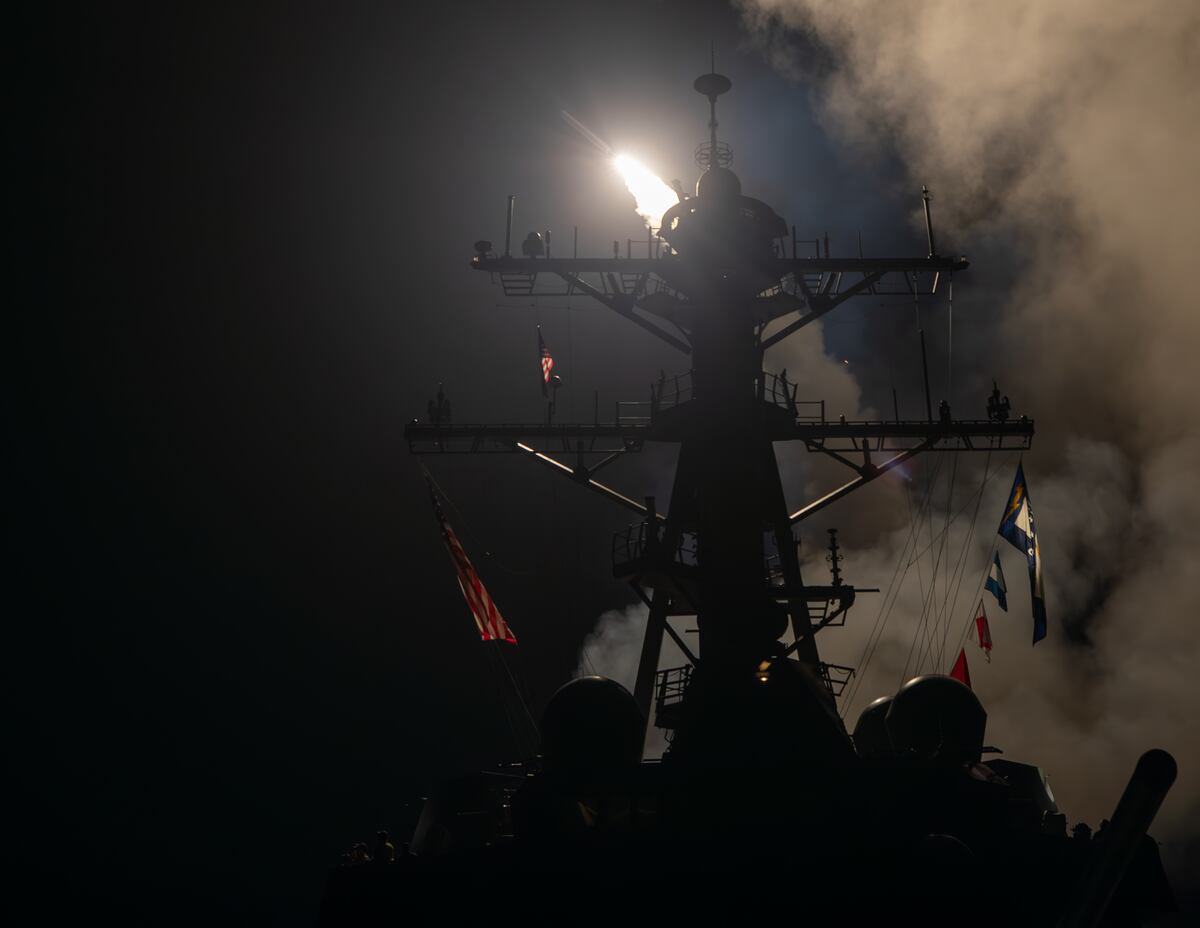
In the early morning hours of Feb. 1, 2024, six Ukrainian sea drones destroyed the Russian missile ship Ivanovets in the Black Sea. The day prior, 2,000 miles away in the Red Sea, the U.S. Navy destroyer Carney successfully shot down three Iranian drones and an anti-ship ballistic missile fired by Houthi forces.
Two events, disparate in geopolitical context, present evidence that land-based maritime forces play a decisive role in naval operations. It does not take an act of imagination to see how the U.S. Marine Corps, the world’s foremost land-based maritime force, operating with a suite of high-end anti-ship weapons and uncrewed systems, would prove instrumental in a sea-denial campaign.
Since the dawn of the gunpowder age, land-based forces along coastal areas have challenged navies in their quest to dominate coastal seas. But in the last two decades, long-range precision weapons have proliferated among state and nonstate actors due to their plummeting costs. This development continues to favor terrestrial forces and has given new life to the sage wisdom of the 18th century naval strategist and tactician Adm. Horatio Nelson, who said : “A ship’s a fool to fight a fort.”
Using small, distributed littoral forces; civilian and military sensors; sea and airborne drones; long-range missiles; and an aircraft on one occasion, Ukraine has severely damaged or destroyed 24 Russian warships, including a submarine. Without any naval ships of its own, and relying exclusively on landward littoral forces, Ukraine has eliminated more than a third of Russia’s naval tonnage in the Black Sea, imposed costs into the billions of dollars, broken Moscow’s naval blockade of Odesa and other coastal cities, and created a badly needed maritime lifeline for merchant shipping.
A seaborne drone approaches a Russian tanker on the Black Sea. (AP)
In the Red Sea, we see a seemingly different picture. Yemen’s Iran-backed Houthis, operating under the pretext of solidarity with Palestinians in Gaza , are disrupting the free flow of global trade by attacking both commercial and naval vessels in the Red Sea. Like Ukrainian forces, they rely on drones and long-range missiles; but unlike Ukraine, they have sunk few ships.
There are lessons here, which may prove critical to future policy and resourcing considerations.
First, and most obviously, relative strength matters. The disparity between coalition and Houthi capabilities in the Red Sea is far wider than between Ukraine and Russian naval power in the Black Sea. Ukraine’s forces are well equipped, supported by NATO intelligence and technology, and confront an opponent of modest naval strength.
Houthi forces, by contrast, lack comparable support and face the world’s premiere naval force — a U.S. carrier strike group with a half dozen U.S. and coalition destroyers and frigates.
Second, counting the number of ships sunk is a shallow measurement of success. Using this metric, Ukraine’s scorecard is clear. But any objective assessment will also reveal that the Houthi’s sea-denial campaign has altered global trade routes, imposed global economic costs, enhanced its international profile, and perhaps most importantly tied up a significant portion of American naval power at a time when demand for our naval ships outstrips supply.
Third, fighting land forces with naval forces is costly. Fortunately for U.S. and coalition forces, the cost has been only monetary.
Since November 2023, the U.S. Navy has conducted more than 450 strikes, intercepting more than 200 drones and missiles. Naval forces are capable of countering enemy weapons with a range of capabilities, yet most far exceed the cost of the munition they are intended to destroy.
One-way Houthi attack drones have been estimated to cost as little as $2,000 to produce. Any defensive weapon that costs a dollar more puts us on the wrong side of the cost curve — and some counter-air missiles cost millions of dollars.
In the Red Sea, the costs have been acceptable to date, but we are in a new age of drone warfare, and production has skyrocketed. Ukraine and Russia, for example, each aim to acquire more than 2 million drones in 2024. A land-based force that employs drones at scale against one at sea will quickly deplete the latter’s defensive magazine — and that nation’s budget.
Finally, these maritime conflicts demonstrate that ground forces, difficult to locate and destroy, have a stubborn way of persisting. In the Black Sea, Russia has not employed its maritime firepower decisively against Ukraine’s anti-ship forces. In fact, it has retrenched almost entirely, choosing to relocate its fleet away from the threat.
By contrast, U.S. and coalition naval forces in the Red Sea have taken the fight to the Houthis, conducting dozens of strikes, destroying their missiles, drones and delivery systems. And yet, even in this lopsided contest, Houthi forces continue their disruption.
As we continue to observe Ukraine’s success in the Black Sea and the ongoing fight in the Red Sea, it will be important to temper our enthusiasm with a dose of humility. Winning and losing are fluid characterizations in combat, yet learning should be a constant.
Gen. Christopher Mahoney is the assistant commandant of the U.S. Marine Corps.
2024年2月1日凌晨,六架乌克兰海上无人机在黑海击沉了俄罗斯导弹舰“伊万诺维茨”号。此前一天,在2000英里外的红海,美国海军驱逐舰“卡尼”号成功击落了三架伊朗无人机和一枚胡塞武装发射的反舰弹道导弹。
两起地缘政治背景迥异的事件都表明,陆基海上力量在海军作战中发挥着决定性作用。不难想象,作为世界首屈一指的陆基海上力量,美国海军陆战队凭借其一系列高端反舰武器和无人系统,将在海上拒止作战中发挥至关重要的作用。
自火药时代伊始,沿海地区的陆基部队就一直在与海军争夺近海控制权。但在过去二十年中,由于成本骤降,远程精确武器在国家和非国家行为体中迅速普及。这一发展趋势继续有利于陆基部队,也印证了18世纪海军战略家和战术家霍雷肖·纳尔逊海军上将的至理名言:“战舰与堡垒作战是愚蠢的。”
乌克兰利用分散部署的小型近岸部队、民用和军用传感器、海空无人机、远程导弹,以及一次出动的飞机,重创或摧毁了24艘俄罗斯军舰,其中包括一艘潜艇。乌克兰自身没有海军舰艇,完全依靠陆上近岸部队,就已在黑海摧毁了俄罗斯超过三分之一的海军吨位,给俄罗斯造成了数十亿美元的损失,打破了莫斯科对敖德萨和其他沿海城市的封锁,并为商船运输开辟了一条急需的海上生命线。
一架海上无人机在黑海上接近一艘俄罗斯油轮。(美联社)
在红海,我们看到的似乎是截然不同的景象。也门胡塞武装在伊朗的支持下,以声援加沙巴勒斯坦人为幌子,袭击红海的商船和军舰,扰乱全球贸易的自由流通。与乌克兰军队一样,他们也依赖无人机和远程导弹;但与乌克兰不同的是,他们击沉的船只寥寥无几。
这里蕴含着一些经验教训,这些经验教训可能对未来的政策和资源配置考虑至关重要。
首先,也是最显而易见的,相对实力至关重要。红海地区联军与胡塞武装的实力差距远大于黑海地区乌克兰与俄罗斯海军力量的差距。乌克兰军队装备精良,得到北约情报和技术的支持,而其对手的海军实力则相对较弱。
相比之下,胡塞武装缺乏类似的支援,并且面对的是世界一流的海军力量——美国航母打击群,以及六艘美国和盟军的驱逐舰和护卫舰。
其次,仅以击沉船只数量来衡量战果是片面的。如果以此为标准,乌克兰的战绩显而易见。但任何客观的评估都会揭示,胡塞武装的海上封锁行动已经改变了全球贸易路线,造成了全球经济损失,提升了其国际地位,而且或许最重要的是,在美军舰艇需求远超供给之际,胡塞武装牵制了美国相当一部分海军力量。
第三,用海军力量对抗陆军代价高昂。幸运的是,对美国及其盟军而言,代价仅限于金钱。
自2023年11月以来,美国海军已执行超过450次打击任务,拦截了200多架无人机和导弹。海军部队拥有多种对抗敌方武器的能力,但大多数作战行动的成本远远超过其旨在摧毁的弹药的成本。
据估计,胡塞武装的单向攻击无人机生产成本低至2000美元。任何防御性武器,只要成本增加一美元,就会使我们陷入成本陷阱——而一些反空袭导弹的成本高达数百万美元。
在红海地区,无人机的成本迄今为止尚可接受,但我们已进入无人机战争的新时代,无人机产量呈爆炸式增长。例如,乌克兰和俄罗斯都计划在2024年采购超过200万架无人机。一支陆基部队如果大规模使用无人机对抗一支海上部队,将迅速耗尽后者的防御弹药——以及该国的预算。
最后,这些海上冲突表明,难以定位和摧毁的地面部队具有顽强的抵抗能力。在黑海,俄罗斯并未对其海上火力进行果断打击,打击乌克兰的反舰力量。事实上,它几乎完全撤退,选择将其舰队转移到远离威胁的地方。
相比之下,美国及其盟军在红海的海军力量已将战局转向胡塞武装,发动了数十次空袭,摧毁了他们的导弹、无人机和运载系统。然而,即便在这样实力悬殊的对抗中,胡塞武装仍在继续制造混乱。
当我们持续关注乌克兰在黑海取得的胜利以及红海战事时,保持谦逊至关重要。在战争中,胜负并非绝对,但学习却应是永恒不变的。
克里斯托弗·马奥尼将军是美国海军陆战队的助理司令。