Citing missile mismatch, Lockheed snarls at HIMARS challenge in Europe洛克希德公司以导弹性能不匹配为由,对欧洲的HIMARS挑战表示不满。
"If Germany was to opt for PULS, they could not gain access to our missiles,” a Lockheed Martin exec said, referring to a competing system from Elbit.
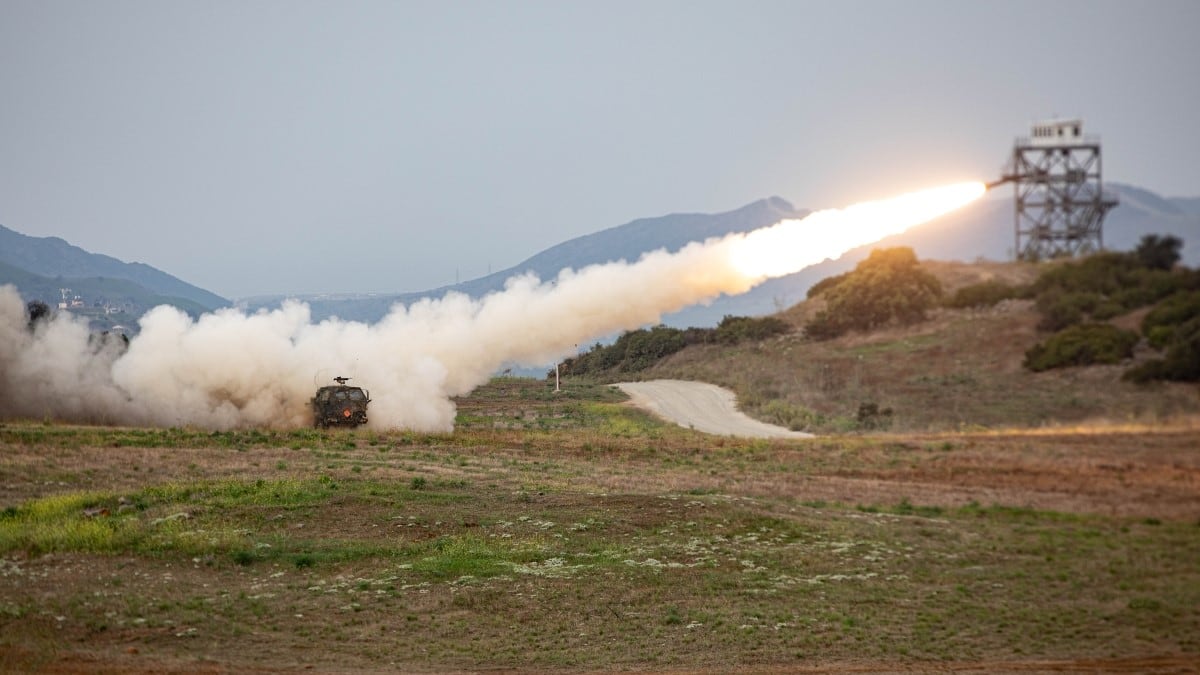
PARIS — Tensions are running high in the race to decide Europe’s artillery rocket system of choice, with Germany emerging as a decisive player in a race between teams Rheinmetall-Lockheed Martin and Elbit-KNDS.
On the opening day of the Eurosatory trade show here, all eyes were on the German-American duo, which have paired up to offer a European-made rocket launcher based on Lockheed’s High Mobility Artillery Rocket Systems (HIMARS) to Berlin.
The trans-Atlantic team is trying to claw its way back into a tender for Germany’s next multiple-launch rocket launcher in which Elbit, offering its PULS weapon, was seen as having a leg up. The German armed forces have said they want to buy five PULS systems to replace weapons donated to Ukraine, and army formations in neighboring Netherlands, which are closely linked to their German Bundeswehr counterparts, are also slated to get the system.
The Israeli company’s offer rests on the proposition that the PULS will be able to fire the ubiquitous GMLRS missile, which prospective European customers already have in their inventories, and which Washington has given to Ukraine to fend off Russian invaders.
At the Eurosatory trade show here, Rheinmetall CEO Armin Papperger, whose company would build the launcher truck, pushed back against that idea without naming the competitor.
“Others speak about being able to fire a kind of missiles being universal, a claim most often not even true, promoting fragmentation of development funds and national egoisms, while not being utilized on the Ukrainian battlefield at all,” he told reporters on June 17.
Howard Bromberg, vice president of strategy and business development for land forces at Lockheed Martin, was more direct. “Our MLRS Family of Munitions cannot be integrated into the PULS system – if Germany was to opt for PULS they could not gain access to our missiles,” he told Defense News.
The same would apply to the U.S. Army’s newer Precision Strike Missile, a Lockheed spokesman added.
Elbit and KNDS signed a cooperation agreement last year to begin the joint production of the EuroPULS rocket artillery system, a Europeanized version of Elbit’s existing PULS system. At the time, the Israeli firm suggested the weapon’s open-architecture concept would enable the firing of other makers’ missiles.
An Elbit spokesman said the company had no comment on Lockheed’s claims. It’s unclear what role the U.S. defense giant would have in a potential government-level arrangement on missile interchangeability.
Germany has been on the hunt to replace its aging MARS 2 systems for some time now. Although it has yet to select a replacement, the possibility of localizing the production of the rocket launchers will likely be an important consideration at play.
A funding decision by the German Bundestag on an initial PULS batch had been expected before the summer, but was recently postponed until the end of the year, German defense trade website Hartpunkt reported earlier this month.
Editor’s note: This story was corrected to reflect the fact that Germany has yet to formally commit to PULS.
Elisabeth Gosselin-Malo was a Europe correspondent for Defense News. She covers a wide range of topics related to military procurement and international security, and specializes in reporting on the aviation sector. She is based in Milan, Italy.
巴黎——在决定欧洲首选火箭炮系统的竞赛中,紧张局势不断升级,德国在莱茵金属-洛克希德·马丁公司和埃尔比特-KNDS公司之间的竞争中扮演了决定性角色。
在本次欧洲防务展的开幕当天,所有人的目光都集中在德美二人组身上,他们联手向柏林推销一款基于洛克希德高机动性火箭炮系统(HIMARS)的欧洲制造火箭发射器。
这支跨大西洋团队正试图重新赢得德国下一代多管火箭炮的招标,此前埃尔比特公司凭借其PULS武器被认为占据优势。德国军方表示,他们希望购买五套PULS系统,以替换捐赠给乌克兰的武器。与德国联邦国防军关系密切的邻国荷兰的军队也计划接收该系统。
这家以色列公司的提议基于这样一个前提:PULS 系统能够发射无处不在的 GMLRS 导弹,而潜在的欧洲客户已经拥有这种导弹,华盛顿也已将其提供给乌克兰以抵御俄罗斯入侵者。
在本次欧洲防务展上,莱茵金属公司首席执行官阿明·帕佩格尔(该公司将制造发射车)对这一想法提出了反驳,但没有指明竞争对手是谁。
“其他人则声称能够发射某种导弹是普遍适用的,这种说法通常根本不属实,反而助长了发展资金的碎片化和民族利己主义,而这种导弹根本没有在乌克兰战场上得到应用,”他在 6 月 17 日告诉记者。
洛克希德·马丁公司陆军战略与业务发展副总裁霍华德·布罗姆伯格的表态则更为直接。他告诉《防务新闻》:“我们的多管火箭炮系列弹药无法与PULS系统集成——如果德国选择PULS系统,他们就无法获得我们的导弹。”
洛克希德公司的一位发言人补充说,这同样适用于美国陆军新研制的精确打击导弹。
去年,埃尔比特系统公司和KNDS公司签署了一项合作协议,开始联合生产EuroPULS火箭炮系统,该系统是埃尔比特现有PULS系统的欧洲化版本。当时,这家以色列公司表示,该武器的开放式架构设计使其能够发射其他制造商生产的导弹。
埃尔比特公司的一位发言人表示,该公司对洛克希德·马丁公司的说法不予置评。目前尚不清楚这家美国国防巨头将在潜在的政府层面导弹互换性协议中扮演何种角色。
德国一直在寻求替换其老旧的MARS 2系统。尽管尚未选定替代方案,但火箭发射器本地化生产的可能性很可能是一个重要的考量因素。
据德国国防贸易网站 Hartpunkt 本月早些时候报道,德国联邦议院原本预计在夏季之前就首批 PULS 导弹的拨款做出决定,但最近已推迟到年底。
编者按:本文已更正,以反映德国尚未正式承诺加入 PULS 计划的事实。
伊丽莎白·戈斯林-马洛曾任《防务新闻》欧洲通讯员。她的报道涵盖军事采购和国际安全等广泛领域,尤其擅长航空领域的报道。她常驻意大利米兰。