No, Passive Radar Isn’t Going To Make Stealth Technology Obsolete Anytime Soon不,被动雷达不会很快让隐身技术过时。
While passive radars will become increasingly valuable pieces of advanced air defense ecosystems, they don't invalidate stealth technology.
Updated Dec 1, 2019 6:02 AM EST
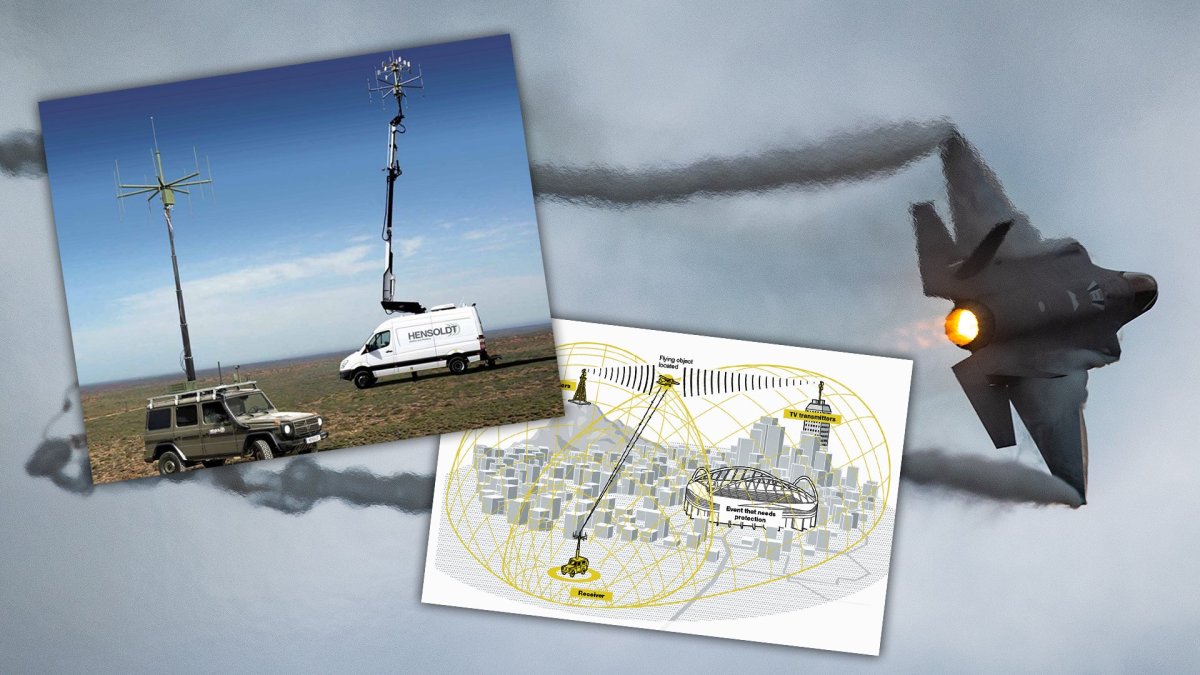
Earlier today, C4ISRnet.com posted a colorful piece about how the German radar company Hensoldt tracked a pair of F-35s that were departing the Berlin Air Show in 2018 with their “TwInivs” passive radar system . The article was well written and brings up the most glaring points regarding Hensoldt’s claims. Yet my inbox and DMs started filling up with readers showing great concern and amazement regarding what some are saying on social media is the “end of stealth” technology. They wanted to know what to think of all this. Well let’s start with this: no, passive radar doesn’t invalidate the need for stealth and stealth isn’t just about hiding from radar, it is about employing a broad cocktail or measures to drastically increase survivability via limiting the adversary’s ability to detect and target you. And guess, what? It isn’t a magical cloak of invisibility. It never has been and it never will be. And passive radar isn’t a magic stealth detection tool, either.
At its most basic, the passive radar concept uses ambient RF radiation, such as emissions from cellphone towers, television and radio broadcasts, and more, instead of its own active radar emitter, and uses returns from those signals to detect targets moving through an area of the sky. The concept has been around for a long time. It dates back to the dawn of radar, with passive radars seeing service during World War II. Multiple weapons manufacturers in multiple countries have been pursuing the technology, to varying degrees, in recent decades.
TwInivs passive radar system., Hensoldt
In fact, it seems that every few years an article makes a big splash by declaring that stealth technology may be invalid due to passive radar system advances. Usually, these articles are packaged with the threat de jour—Iran, Russia, China, etc. Similar claims are now made in articles about low frequency and quantum radar technology today.
Hensoldt’s own claims are over a year old and came at a time when Germany was looking at buying the F-35 to replace its Tornado fighters. But really, anything on this type of topic seems to spark a bit of misplaced hysteria, and when the F-35 is the subject of attention along with it, it is bound to grab eyeballs.
As the years have progressed, passive radar has not slashed the utility of stealth technology for a laundry list of reasons. First off, just detecting something unknown in your vicinity does not mean that the target can be accurately classified or engaged. In other words, in most cases, passive radar does not provide engagement quality telemetry for which to employ weapons. It is an awareness tool largely used for cueing other, more traditional sensors.
General concept behind TwInivs passive radar system., Hensoldt
In other words, it could be used to direct other air defense sensors, such as search and fire control radars, toward an area of the sky that said object appears to be in. This is a worthy capability, as it is possible that some of those sensors will be able to get a better track on the aircraft, especially by varying tactics with the knowledge that they are looking for a low-observable target. But considering that stealth aircraft are optimized to evade detection specifically from the types of radar bands used by these radars, especially from certain aspects, just directing their beams to an area of sky may be a fruitless endeavor. This is especially true if said stealthy target is at a significant distance from those sensors and at a favorable aspect in relation to them. And even if tracking is realized, it would likely be intermittent and not long continuous enough to guide weapons onto the target.
Also, once those sensors are cued by the passive radar system, the aircraft being hunted for will know full well that this is occurring and will employ route changes and advanced electronic warfare capabilities to confuse, spoof, or blind those radar systems. These active sensors give away their location by emitting, so the aircraft or other platforms it is networked to, could also elect to destroy some or all of those threatening sensors if they pose a dire threat to its mission or if the aircraft’s mission itself is to do so. So, once the passive radar does its job and cues other higher-fidelity active sensors onto the target area, those sensors are now at risk of being obliterated.
Where the passive radar has an advantage, even over its active counterparts, is that it doesn’t emit radiation that can give away its location or even the fact that it is present in the region. That means it is very hard to hunt down and destroy. That is until it broadcasts information to other air defense nodes, such as to cue fire control and/or search radars, if it does so without being connected to them via a hard line. In most cases, if the passive radar was hard-wired to the other sensors, it would be in a fixed position or near those systems anyway, thus making it vulnerable to attack, too. The vulnerability of any integrated air defense node talking to another via radio emissions depends on what type of data-link and its associated hardware is being used. Regardless, it is something very important to consider.
Passive radars also rely on dense third-party RF radiation to exploit a medium in which stealthy aircraft can be spotted. So, using it in highly remote areas would be problematic if not totally useless. In other words, because the radiation level cannot be controlled by its operators, the system is subject to the ambient RF environment it is placed in. This limits how and where the system can be effectively employed. Even then, their range and fidelity are limited.
For instance, in the German passive radar story, the company says it tracked two F-35s flying, but at the time those F-35s had their transponders on and were talking on air traffic control frequencies (emitting their own RF energy). They may have even had their radars on utilizing basic modes. They were also flying with their radar reflectors attached to their fuselages and with their aircraft in a non-combat configuration and software mode. The operators also knew the local RF environment very well and how to optimize the system to spot aircraft that they already knew were going to be there. Even under these near ideal conditions, they claimed they tracked the aircraft for about 90 miles. That is a substantial distance, but is no way indicative of what ranges would be possible under actual combat conditions, and that’s even if they would see an unannounced, emissions silent, combat configured, electronic warfare-enabled F-35 at all.
Where passive radar systems may be most capable is when they are paired with an advanced infrared search and track system. This could allow for more precise secondary targeting of whatever the passive radar sees on its scope. It could also provide classification data and even weapons employment information. But IRSTs, especially those mounted on the ground, have major limitations themselves, especially in terms of range and fidelity, which can be highly environmental conditions-dependent, not to mention scanning speed.
The ability to help direct fighters onto potential targets of interest that normal radars don’t see is another potentially potent application for such a system. But that means fighters need to be in the air or on alert nearby in order for such a concept to work.
So, the point is that passive radars have their place in an advanced integrated air defenses system. But their capabilities are limited and largely supportive in nature. As computer processing continues to improve, their ability to pick out targets from the chaos of the electromagnetic spectrum in populated areas will improve and with it so will the IADS overall capabilities. Also, moving from bistatic passive radars configurations—like TwInivs—to multi-static systems with arrays distributed across large geographical areas should also provide more robust capabilities.
Eventually, one could imagine the processing power and the complexity of these systems becoming so intricate they could get an infrared homing missile into the right area to possibly lock onto a stealthy aircraft. This would be something of a ‘holy grail’ of long-range, all passive, surface-to-air engagement where no active radar is used at all. Still, a data-link connection between the missile and the passive radar system would be needed. But the truth is that at this point the missiles that could support such an engagement are largely still in the concept stage or fielded in very limited numbers , and the passive radars capable of providing high-quality telemetry for them are largely an idea, not a reality. Also, aircraft like the F-35 have advanced missile approach warning systems that will still spot the missile heading their way and various forms of infrared countermeasures and even hard-kill systems can be employed.
Above all else, this assumes a perfect scenario and one where there are plenty of RF emissions being pumped into a sky. One way to drastically degrade these systems’ effectiveness, no matter how advanced, is to strike the commercial RF transmitters that enable them. Often times this is the first step in an air campaign anyway. In fact, many of these systems stop broadcasting during a time of war anyway.
So overall, passive radar is not a capability invalidates stealth. At least anytime soon, and likely no time in the foreseeable future, if ever. In fact, it makes stealth all that much more important as it allows aircraft to evade the radars that will be used to attack it if passive radar detects their presence.
As I have stated many times over, stealth technology is not some monolithic ‘thing’ that makes airplanes disappear. It is a wide-ranging cocktail of measures, including airframe shaping, composite structures, radar-absorbent materials, low-probability of intercept radars and communications, infrared signature attenuation, enhanced situational awareness, high-quality intelligence, mission and route planning based on that intelligence, destruction and suppression of enemy air defenses, tailored tactics employment, munitions selection, and now more than ever before, electronic warfare . All of these elements and more are balanced against performance and mission goals. Even with the best of these elements employed in the best possible way, it does not mean an aircraft is invisible to radar, it means it is far less detectable over a given range and aspect to a particular threat sensor. And just because a stealthy aircraft can be briefly detected, doesn’t mean it can be successfully engaged.
The F-35, above all other aircraft flying today, has had its traditional stealth technology backstopped with other capabilities, namely electronic warfare and enhanced situational awareness, to help ensure its survivability in many threatening scenarios it could experience in the years to come. And even today, no matter what the USAF brass proclaims in big public speeches, there are places the F-35 wouldn’t wander into without significantly degrading the enemy’s IADS fist. That’s what standoff munitions are for, which are also becoming enemy air defense network disruptors.
You can read more about the F-35’s bag of guileful survival tricks in this recent exclusive of ours .
Beyond the F-35, future combat aircraft will use very low-observable design concepts that allow it to attenuate RF energy over a far broader number of bands. This, along with advanced in radar-absorbing coatings and structures, will impact even the effectiveness of passive radar. Their self-defensive systems will be kinetic and laser-based, as well. Meaning if they do get detected, the missiles will have a hard time actually reaching their target and scoring a blow.
So no, passive radar is not something that will end the need for stealth technology, including low-observable shaping, structures, and coatings on combat aircraft. It does, however, have the potential to be an increasingly important component within any highly networked advanced integrated air defense system. It’s just another facet of the ever-increasing realm of air combat and the measures and countermeasures that it leans upon.
In the end, neither passive radar or stealth technology is magic. The truth is that the side with the best book of spells, not the single best spell, has the greatest chance of winning the air wars of the future.
Contact the author: Tyler@thedrive.com
Comments couldn’t be loaded. Please refresh the page.
更新于美国东部时间2019年12月1日上午6:02
今天早些时候,C4ISRnet.com网站发表了一篇生动的文章,讲述了德国雷达公司亨索尔特(Hensoldt)如何利用其“TwInivs”被动雷达系统追踪两架在2018年柏林航展后离开的F-35战机。这篇文章写得很好,也指出了亨索尔特公司说法中最明显的几个疑点。然而,我的邮箱和私信却开始被读者们的留言塞满,他们对社交媒体上一些人所说的“隐身技术终结”的说法感到非常担忧和惊讶。他们想知道对此应该怎么看。好吧,首先要说明的是:被动雷达并不能取代隐身技术,而隐身也不仅仅是躲避雷达探测,它指的是运用一系列综合措施,通过限制敌方探测和锁定目标的能力,来大幅提高生存能力。而且,你猜怎么着?它不是一件神奇的隐形斗篷。它从来都不是,也永远不会是。被动雷达也不是什么神奇的隐身探测工具。
被动雷达的基本原理是利用环境射频辐射,例如手机信号塔、电视和广播等产生的辐射,而不是依靠自身的主动雷达发射器,并利用这些信号的回波来探测天空中移动的目标。这一概念由来已久,可以追溯到雷达诞生之初,被动雷达在二战期间就已投入使用。近几十年来,多个国家的多家武器制造商都在不同程度上研究和开发这项技术。
TwInivs被动雷达系统,亨索尔特
事实上,似乎每隔几年就会出现一篇耸人听闻的文章,声称由于被动雷达系统的进步,隐形技术可能已经失效。通常,这些文章会与当时的热门威胁——伊朗、俄罗斯、中国等等——捆绑在一起。如今,在关于低频和量子雷达技术的文章中,也出现了类似的说法。
亨索尔特的说法已经过去一年多了,当时德国正考虑购买F-35战斗机来替换其“旋风”战斗机。但实际上,任何这类话题似乎都会引发一些不必要的恐慌,而当F-35也成为关注焦点时,自然会吸引大量目光。
随着时间的推移,被动雷达并未削弱隐身技术的效用,原因有很多。首先,仅仅探测到附近未知目标并不意味着能够准确地识别或攻击目标。换句话说,在大多数情况下,被动雷达无法提供可用于武器交战的遥测数据。它主要是一种感知工具,用于引导其他更传统的传感器。
TwInivs被动雷达系统的总体概念,亨索尔特
换句话说,它可以用来引导其他防空传感器,例如搜索雷达和火控雷达,对准目标所在的天空区域。这是一项很有价值的能力,因为这些传感器或许能够更好地追踪目标,尤其是在得知目标是一个低可探测性目标后,通过调整战术来提高追踪精度。但是,考虑到隐形飞机经过优化,能够躲避这些雷达所使用的特定频段的探测,特别是从某些特定角度的探测,仅仅将它们的波束指向某个天空区域可能徒劳无功。如果目标隐形飞机距离这些传感器相当远,并且相对于它们处于有利的方位,这种情况就更加明显。即使能够实现追踪,追踪也可能是间歇性的,无法持续足够长的时间来引导武器击中目标。
此外,一旦被动雷达系统触发这些传感器,被追击的飞机就会清楚地意识到这一点,并会改变航线和运用先进的电子战能力来干扰、欺骗或使这些雷达系统失效。这些主动传感器会通过发射信号暴露自身位置,因此,如果这些传感器对飞机的任务构成严重威胁,或者飞机的任务本身就是摧毁它们,那么飞机或与其联网的其他平台也可以选择摧毁部分或全部这些威胁传感器。所以,一旦被动雷达完成任务,引导其他高精度主动传感器锁定目标区域,这些传感器就面临着被摧毁的风险。
被动雷达的优势在于,即使与主动雷达相比,它也不会发射暴露自身位置甚至其所在区域的辐射。这意味着它很难被追踪和摧毁。但如果它没有通过硬线与其他防空节点连接,而是向其他防空节点广播信息(例如引导火控雷达和/或搜索雷达),情况就不同了。在大多数情况下,如果被动雷达与其他传感器硬线连接,它本身就会处于固定位置或靠近这些系统,因此也容易受到攻击。任何通过无线电辐射与其他防空节点通信的集成防空节点的脆弱性取决于所使用的数据链类型及其相关硬件。无论如何,这都是一个非常重要的考虑因素。
被动雷达也依赖于密集的第三方射频辐射来探测隐形飞机。因此,在高度偏远地区使用被动雷达即使不是完全无效,也会遇到诸多问题。换句话说,由于辐射水平无法由操作人员控制,该系统会受到所处环境射频辐射的影响。这限制了系统有效使用的方式和地点。即便如此,其探测距离和精度仍然有限。
例如,在德国被动雷达的案例中,该公司声称追踪到了两架飞行中的F-35战机,但当时这两架F-35战机的应答器处于开启状态,并且正在使用空中交通管制频率进行通信(自身也发射射频能量)。它们甚至可能开启了雷达,但使用的是基本模式。此外,它们的机身还安装了雷达反射器,并且处于非战斗配置和软件模式。操作人员对当地的射频环境非常熟悉,知道如何优化系统来发现他们已知会出现在那里的飞机。即使在这些近乎理想的条件下,他们也声称追踪到该飞机约90英里。这确实是一个相当远的距离,但这根本无法代表在实际战斗条件下可能达到的距离,而且前提是他们真的能够发现一架未事先通知、无辐射、战斗配置且具备电子战能力的F-35战机。
被动雷达系统与先进的红外搜索跟踪系统配合使用时,其效能才能发挥到极致。这种配合可以对被动雷达探测到的目标进行更精确的二次瞄准,还能提供目标分类数据,甚至武器运用信息。然而,红外搜索跟踪系统(IRST),尤其是地面安装的IRST,自身也存在诸多局限性,尤其是在探测距离和精度方面,这些都极易受到环境条件的影响,更不用说扫描速度了。
这种系统的另一项潜在强大应用是能够引导战斗机攻击普通雷达无法探测到的潜在目标。但这也就意味着,为了使这种理念奏效,战斗机必须处于空中或附近处于警戒状态。
因此,被动雷达在先进的综合防空系统中占有一席之地。但它们的能力有限,主要起到辅助作用。随着计算机处理能力的不断提升,它们在人口稠密地区从电磁频谱的混沌环境中识别目标的能力将得到提高,综合防空系统的整体能力也将随之增强。此外,从双基地被动雷达配置(例如TwInivs)过渡到在广阔地理区域内分布阵列的多基地系统,也将显著提升其作战能力。
最终,人们可以想象,这些系统的处理能力和复杂性将变得如此精妙,以至于能够将红外制导导弹精确定位到目标区域,从而有可能锁定隐形飞机。这将是远程、全被动、完全不使用主动雷达的地对空作战的“圣杯”。当然,导弹和被动雷达系统之间仍然需要数据链连接。但事实是,目前能够支持这种作战的导弹大多仍处于概念阶段或部署数量非常有限,而能够为其提供高质量遥测数据的被动雷达也还停留在设想阶段,尚未成为现实。此外,像F-35这样的飞机配备了先进的导弹逼近告警系统,仍然可以探测到来袭的导弹,并且还可以使用各种红外对抗措施,甚至硬杀伤系统。
首先,这假设了一种理想情况,即天空中有大量的射频辐射。无论这些系统多么先进,大幅削弱其效能的一种方法是打击为其提供支持的商用射频发射机。通常,这本身就是空袭行动的第一步。事实上,许多此类系统在战争时期都会停止广播。
所以总的来说,被动雷达并不会使隐身能力失效。至少在短期内不会,而且在可预见的未来,甚至可能永远不会。事实上,这反而使隐身能力更加重要,因为它可以让飞机在被动雷达探测到其存在的情况下,躲避原本会用来攻击它的雷达。
正如我多次强调的,隐形技术并非某种能让飞机消失的单一“装置”。它是由一系列措施组成的综合体,包括机身外形设计、复合材料结构、雷达吸波材料、低截获概率雷达和通信系统、红外特征衰减、增强态势感知、高质量情报、基于情报的任务和航线规划、摧毁和压制敌方防空系统、定制战术运用、弹药选择,以及如今比以往任何时候都更加重要的电子战。所有这些要素以及更多其他要素都需与性能和任务目标进行权衡。即使以最佳方式运用所有这些要素,也并不意味着飞机对雷达完全隐形,而是指在特定距离和角度下,特定威胁传感器探测到它的概率大大降低。而且,即使隐形飞机能够被短暂探测到,也不意味着它能够被成功拦截。
在所有现役战机中,F-35 战机不仅拥有传统的隐身技术,还配备了其他先进能力,例如电子战和增强型态势感知能力,以确保其在未来几年可能遇到的各种威胁场景中拥有良好的生存能力。即使在今天,无论美国空军高层在公开演讲中如何宣称,F-35 战机在某些区域作战时仍会谨慎行事,因为一旦进入,势必会对敌方的综合防空系统造成严重破坏。这正是防区外弹药的作用所在,而防区外弹药也正逐渐成为干扰敌方防空网络的有效手段。
您可以阅读我们最近的独家报道,了解更多关于 F-35 的各种巧妙生存技巧。
除了F-35之外,未来的战斗机将采用极低可探测性设计理念,使其能够在更广泛的频段内衰减射频能量。这一点,再加上先进的雷达吸波涂层和结构,甚至会影响被动雷达的效能。它们的自卫系统也将基于动能和激光技术。这意味着,即使被探测到,导弹也很难真正击中目标并造成打击。
所以,被动雷达并不会取代隐身技术,包括战斗机上的低可探测性外形、结构和涂层。然而,它确实有可能成为任何高度网络化的先进综合防空系统中日益重要的组成部分。它只是不断发展的空战领域及其所依赖的防御措施和反制措施的另一个方面。
归根结底,被动雷达和隐身技术都不是魔法。事实是,拥有最全套战术体系的一方,而非拥有最强单项魔法的一方,更有可能赢得未来的空战。
联系作者:Tyler@thedrive.com
评论加载失败,请刷新页面。