US Army will not conduct Typhon live-fire at exercises in Philippines美国陆军不会在菲律宾的演习中进行“台风”导弹实弹射击。
Typhon has been in the Philippines for a year, angering China, which has criticized the move and warned it could destabilize the region.
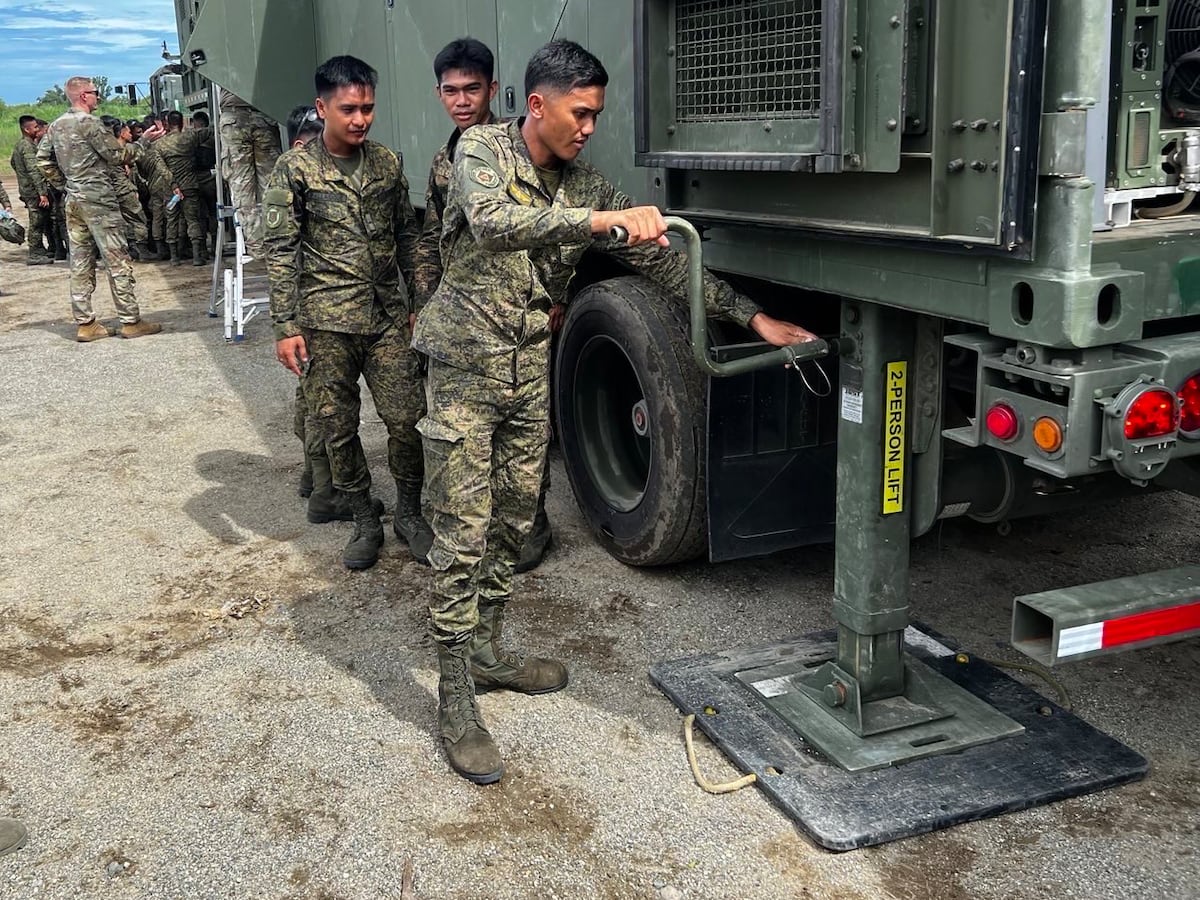
The U.S. Army will not conduct a live-fire operation of its Mid-Range Capability missile system, known as Typhon, during exercises in the Philippines this spring, according to the service commander in charge of U.S. Army Pacific operations.
“We are not planning to conduct live-fire in the Philippines right now,” Maj. Gen. Jeffrey VanAntwerp, deputy chief of staff of operations, plans and training at U.S. Army Pacific, told reporters in a media briefing Thursday.
The news comes almost a year after the Army’s 1st Multi-Domain Task Force transported a Typhon launcher to Luzon, Philippines, as part of that year’s Salaknib exercise — marking the first time the new capability, deemed vital to the U.S. Army’s strategy in the Indo-Pacific, had been deployed. The missile system traveled more than 8,000 miles from Joint Base Lewis-McChord, Washington, aboard a C-17 Globemaster cargo aircraft on a 15-hour flight.
Typhon has since remained in the country, angering China, which has criticized the move and warned it could destabilize the region. Officials have yet to fire the missile system in the Philippines.
It is unclear how long Typhon will remain in the Philippines or if it will go elsewhere in the Pacific theater.
In response to a question on where the system might be headed next, VanAntwerp said, “We’re making plans, but I have to defer to [the Office of the Secretary of Defense].”
The Lockheed Martin-built system , consisting of a vertical launch system that uses the Navy’s Raytheon-built Standard Missile-6 and Tomahawk missiles, can strike targets in the 500- to 2,000-kilometer range. The complete system has a battery operations center, four launchers, prime movers and modified trailers.
The missile system is capable of sinking ships, hitting land targets at long ranges and is “mobile and survivable,” VanAntwerp said.
As part of this year’s Salaknib and Balikatan military drills between the U.S. and the Philippines, the Philippine Navy plans to fire C-Star, Spike Non-Line-of-Sight and Mistral missiles. The country’s military will not fire its Brahmos medium-range ramjet supersonic cruise missile, which has a higher price point per shot.
Typhon’s presence in the Philippines has prompted other countries in the Pacific region to inquire about the possibility of hosting the weapon system, a U.S. defense official recently told Defense News.
The Army knew Typhon would have a strong deterrent effect, but didn’t expect it to have an effect as great as has been observed over the past year, the official said, particularly in rattling China.
The biggest challenge now is transporting the capability around the Pacific — if the desire is to rotate it in and out of countries — due to the high costs of moving equipment, the official said.
Meanwhile, the Army’s 3rd MDTF, headquartered in Hawaii, is slated to soon receive its Typhon battery , which the service has certified at JBLM.
“We’re constantly looking for opportunities to exercise capability like that forward in theater,” Col. Michael Rose, the 3rd MDTF commander, said recently. “We learn enormous lessons by bringing capability into the theater.”
Rose said the Army anticipates the Typhon supporting Operation Pathways , a series of year-round exercises designed to strengthen cooperation with regional allies and deter China.
Noah Robertson and Leilani Chavez contributed to this report.
Jen Judson is an award-winning journalist covering land warfare for Defense News. She has also worked for Politico and Inside Defense. She holds a Master of Science degree in journalism from Boston University and a Bachelor of Arts degree from Kenyon College.
据美国陆军太平洋作战司令部司令称,美国陆军今年春季在菲律宾举行的演习期间,不会对其代号为“台风”的中程导弹系统进行实弹射击演练。
“我们目前没有计划在菲律宾进行实弹射击,”美国太平洋陆军作战、计划和训练副参谋长杰弗里·范安特卫普少将在周四的新闻发布会上告诉记者。
这条消息传来之际,距离美国陆军第一多域特遣部队将一套“台风”(Typhon)导弹发射系统运往菲律宾吕宋岛已近一年。当时,这套系统作为“萨拉克尼布”(Salaknib)演习的一部分,首次部署了这项被认为对美国陆军印太战略至关重要的新型装备。该导弹系统从华盛顿州刘易斯-麦科德联合基地出发,由一架C-17“环球霸王”运输机运送,飞行时间长达15小时,行程超过8000英里。
此后,“台风”导弹系统一直驻扎在菲律宾,这激怒了中国。中国批评了这一举动,并警告称这可能破坏地区稳定。菲律宾官员尚未在菲律宾境内试射该导弹系统。
目前尚不清楚台风会在菲律宾停留多久,或者是否会转移到太平洋战区的其他地方。
当被问及该系统下一步的发展方向时,范安特卫普表示:“我们正在制定计划,但我必须听从(国防部长办公室)的意见。”
这套由洛克希德·马丁公司制造的系统,包括一个垂直发射系统,使用海军雷神公司制造的标准-6型导弹和战斧导弹,射程可达500至2000公里。整套系统包括一个作战指挥中心、四个发射装置、牵引车和改装拖车。
范安特卫普表示,该导弹系统能够击沉舰船,远距离打击陆地目标,并且“机动性强,生存能力高”。
作为今年美菲“萨拉克尼布”和“肩并肩”联合军事演习的一部分,菲律宾海军计划发射C-Star、Spike非视距导弹和“西北风”导弹。该国军方不会发射单次发射成本较高的布拉莫斯中程冲压式超音速巡航导弹。
一位美国国防官员最近告诉《防务新闻》,台风导弹系统在菲律宾的部署促使太平洋地区的其他国家询问是否有可能部署该武器系统。
这位官员表示,陆军知道台风病毒会起到强大的威慑作用,但没想到它在过去一年中的影响会如此之大,尤其是在震慑中国方面。
这位官员表示,目前最大的挑战是如何在太平洋地区运输这种能力——如果希望它在不同国家之间轮换使用的话——因为运输设备的成本很高。
与此同时,总部位于夏威夷的陆军第3多学科特遣部队即将接收其台风导弹炮,该炮已在刘易斯-麦科德联合基地获得陆军认证。
“我们一直在寻找机会,在战区前沿演练这类能力,”第3多学科特遣部队指挥官迈克尔·罗斯上校近日表示。“通过将能力部署到战区,我们汲取了宝贵的经验教训。”
罗斯表示,陆军预计“台风”导弹系统将支持“路径行动”,这是一系列旨在加强与地区盟友合作并威慑中国的全年演习。
Noah Robertson 和 Leilani Chavez 对本报道亦有贡献。
珍·贾德森是一位屡获殊荣的记者,为《防务新闻》报道陆地战争。她也曾为《政治报》和《内幕防务》工作。她拥有波士顿大学新闻学硕士学位和凯尼恩学院文学学士学位。