Saildrone launches Red Sea naval drone hardened against GPS jammingSaildrone公司在红海投放了一架能够抵御GPS干扰的海军无人机
Electromagnetic interference is a widespread problem for forces in the area, as Houthi rebels target commercial vessels.
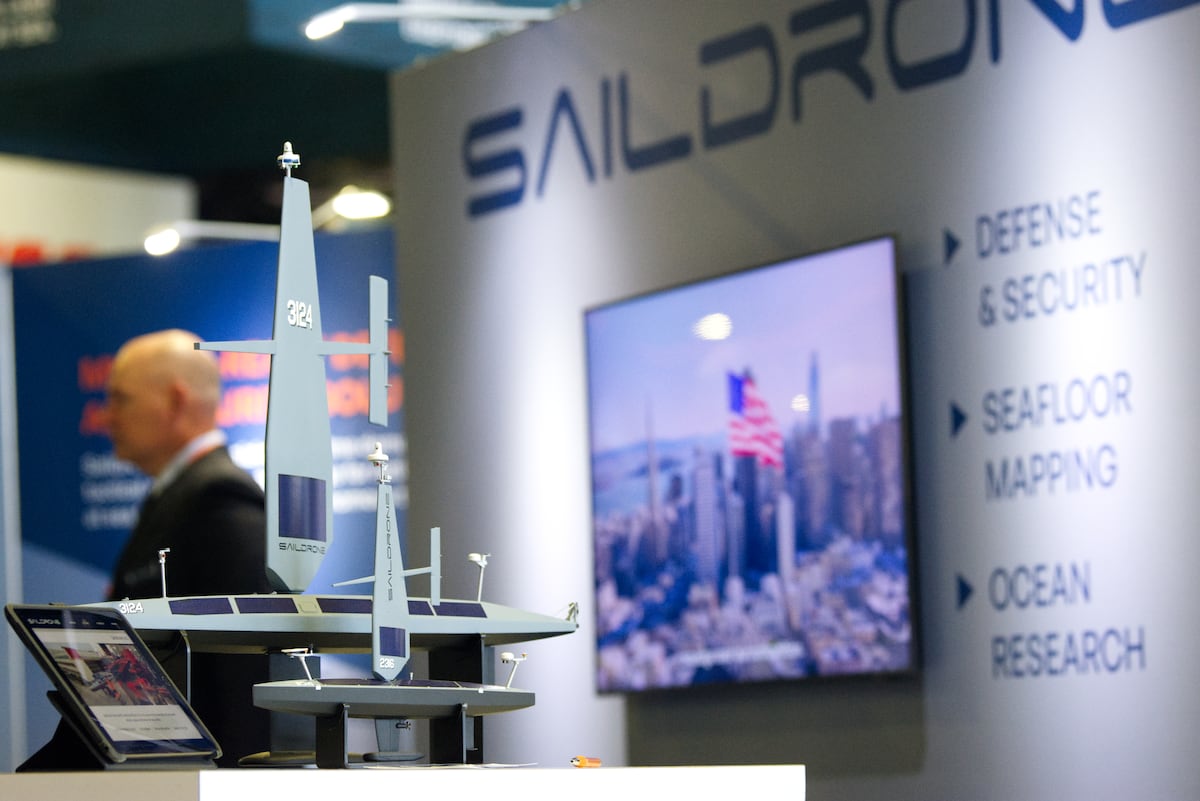
MILAN – Saildrone, a U.S. manufacturer of unmanned surface vessels, has integrated new protective equipment onto its drone boats operating in the Middle East to safeguard them against widespread jamming of communication systems in the region.
The company said it had successfully deployed its Saildrone Voyager, a 33-foot USV, in Jordan, with new hardware and software algorithms, allowing it to operate in GPS-denied environments.
“Due to regional events, GPS jamming and spoofing have hindered unmanned operating systems in the area – following intensive testing by our engineers to create a resilient positioning system, Saildrone now has the ability to autonomously operate in spoofed maritime environments,” a company statement reads.
The U.S. Navy’s Task Force 59 has used Saildrone USVs for several years as part of experiments with unmanned systems and artificial intelligence carried out across the U.S. Fifth Fleet area of operations, which include the Arabian Gulf and the Red Sea.
Key challenges identified in these waters include piracy as well as smuggling of weapons and drugs.
A more recent threat to regional maritime security has been GPS interference, according to the United Kingdom Maritime Trade Operations (UKMTO), which tracks intrusion reports in these areas.
The agency has received further corroborating reports from vessels experiencing jamming in the Strait of Hormuz, with disruptions lasting several hours, affecting navigation systems and requiring vessels to rely on backup methods, it said in a March 10 statement.
The upgrades made to the Saildrone USV exploit different forms of localization to allow the systems to operate without relying exclusively on satellite signals.
The boat carried out missions in contested environments during the International Maritime Exercise (IMX) 2025, the largest maritime exercise in the Middle East, last month.
“Satellite positioning and connectivity can no longer be relied upon in potential future conflicts,” Richard Jenkins, founder and chief executive officer at Saildrone, said in a statement.
In recent years, there has been increased pressure for U.S. forces to train without relying on GSP for positioning, navigation and timing information (PNT).
In a 2022 article for the U.S. Naval Institute, U.S. Navy Lt. Anthony Carrillo noted that a major vulnerability of the country’s naval weapons is that nearly all of them rely on GPS.
Elisabeth Gosselin-Malo was a Europe correspondent for Defense News. She covers a wide range of topics related to military procurement and international security, and specializes in reporting on the aviation sector. She is based in Milan, Italy.
米兰——美国无人水面舰艇制造商 Saildrone 已在其在中东运营的无人船上集成新的防护设备,以保护它们免受该地区通信系统大范围干扰的影响。
该公司表示,其 33 英尺长的无人水面艇 Saildrone Voyager 已成功在约旦部署,该艇配备了新的硬件和软件算法,使其能够在 GPS 信号受限的环境中运行。
“由于区域性事件,GPS干扰和欺骗阻碍了该地区无人操作系统的运行——经过我们工程师的密集测试,创建了一个具有弹性的定位系统,Saildrone现在能够在受欺骗的海洋环境中自主运行,”该公司声明中写道。
美国海军第 59 特遣部队多年来一直使用 Saildrone 无人水面艇,作为在美国第五舰队作战区域(包括阿拉伯湾和红海)开展的无人系统和人工智能实验的一部分。
这些水域面临的主要挑战包括海盗活动以及武器和毒品走私。
据英国海事贸易行动组织(UKMTO)称,GPS干扰已成为区域海上安全面临的最新威胁。该组织负责追踪这些地区的入侵报告。
该机构在 3 月 10 日的一份声明中表示,已收到来自霍尔木兹海峡遭遇干扰的船只的进一步证实报告,干扰持续数小时,影响了导航系统,并迫使船只依赖备用方法。
对 Saildrone 无人水面艇进行的升级利用了不同的定位方式,使系统能够在不完全依赖卫星信号的情况下运行。
上个月,这艘船在中东地区规模最大的海上演习——2025 年国际海上演习 (IMX) 期间,在对抗激烈的环境中执行了任务。
Saildrone 的创始人兼首席执行官 Richard Jenkins 在一份声明中表示:“在未来潜在的冲突中,卫星定位和连接将不再可靠。”
近年来,美国军队面临着越来越大的压力,需要在不依赖 GSP 进行定位、导航和授时信息 (PNT) 的情况下进行训练。
美国海军中尉安东尼·卡里略在 2022 年为美国海军学会撰写的一篇文章中指出,美国海军武器的一个主要弱点是,几乎所有海军武器都依赖于 GPS。
伊丽莎白·戈斯林-马洛曾任《防务新闻》欧洲通讯员。她的报道涵盖军事采购和国际安全等广泛领域,尤其擅长航空领域的报道。她常驻意大利米兰。