Is the US running out of Tomahawk missiles? Here’s what the experts say美国的战斧导弹是不是快用完了?专家们是这么说的。
The United States has purportedly launched at least 850 Tomahawk long-range cruise missiles just over one month into Operation Epic Fury.
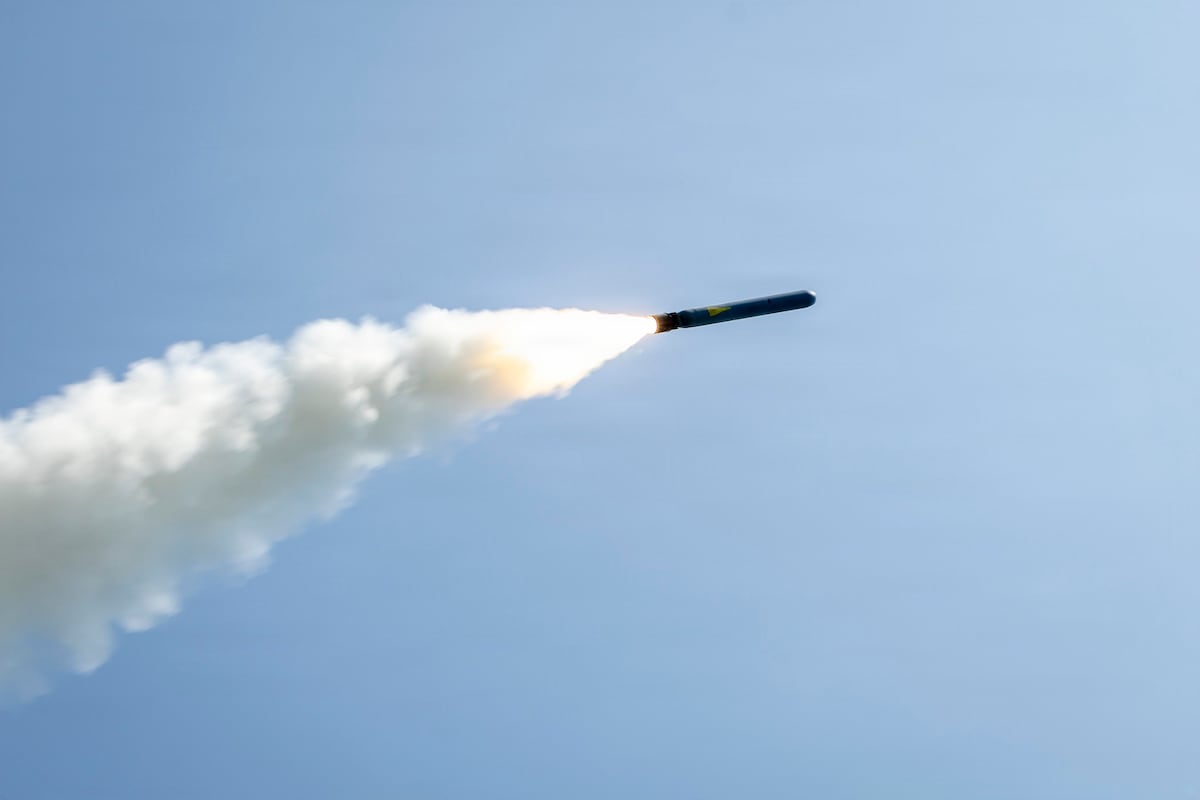
Last week, the Washington Post reported that the United States has launched at least 850 Tomahawk long-range cruise missiles just over one month into Operation Epic Fury, the joint U.S.-Israeli war on Iran. That number far exceeds the missile’s use in previous conflicts, according to an assessment from the Center for Strategic International Studies by Mark Cancian and Chris Park.
Though the Department of Defense does not divulge the precise number of Tomahawks in the U.S. arsenal, the CSIS analysis estimates the U.S. still has around 3,000. It is a highly advanced weapon; in addition to its impressive 1,000-mile range and precision, it can also be controlled via satellite and can find a target while in flight.
As Cancian told Military Times, the concern from some in the Pentagon about burning through the Tomahawk stockpile is less about what will happen in Operation Epic Fury, and more about U.S. security commitments in other parts of the world — namely as a counter to China.
The below interview has been edited for length and clarity.
Mark Cancian: Tomahawk is a ship-launched ground attack missile. It’s very long range and very accurate. It’s been around for a long time, but it’s been upgraded continuously over time, and now the Block V is the current version. Its long range and accuracy have always been its great strength. Plus, the fact that it can be launched from sea means that you can move ships around and launch it. You don’t have to have aircraft coming from the United States, and you don’t have to have a base in the region.
They’re very flexible, and the fact that they’re long range means that if the opposition has some defensive capabilities, [U.S. forces] can stay out of those defensive capabilities. That’s why it was used in the early stages of Epic Fury, until the United States and Israel had beaten down what was left of the Iranian air defense system.
Once we established air superiority, the number of Tomahawks fired declined. It didn’t go to zero, but it came down because they’re so expensive and scarce that if we can use shorter range munition, then we’ll use that because those are much cheaper. To give you a little sense about that, a Tomahawk costs something like $3.5 million apiece and has a range of 1,000 miles, depending on the version.
A JDAM, which is a guidance kit put on a dumb bomb, has a range of maybe 20 miles, but cost $80,000 and has the same explosive effect and the same accuracy. So if you can use a JDAM, much better, but that means you have to get close.
Cancian: This is the key concern with the inventories because we have enough of everything, including Tomahawks and Patriots and THAADs to fight the current conflict, that is, Epic Fury. The problem is the effect on other theaters like Ukraine and the Western Pacific, a conflict against China. And strategists are very worried that depletion of inventories will weaken our ability to deter or to fight a conflict there.
Cancian: With China particularly focused on Taiwan it’s very helpful because China has a tremendous number of missiles. We want to stand back as far as we can, but still be able to shoot in against any Chinese invasion force or any Chinese force that has established itself on Taiwan.
I should note that there’s what’s called a maritime strike Tomahawk , which is the relatively new version that could hit ships. The original version could only hit ground targets, but this other version can hit ships and [in the event of a] Chinese invasion of Taiwan, that would be very helpful.
Cancian: It does a lot of damage — it has a 1,000-pound warhead. The drones that we’ve used and that the Iranians have used, they have warheads that are between 50 and 100 pounds. So it’s somewhere between 10 to 20 times the effect of a drone. Whatever it hits, it’s going to cause a lot more destruction.
Cancian: The Department of Defense has been talking with [defense contractors] for several years to get production rates up. It began in the Biden administration. It’s continued in the Trump administration. Hegseth has been going on this Arsenal of Freedom tour , plant to plant, to talk to workers and management about speeding up production . Bottom line, I think currently, to replace the 850 to 1,000 that we’ve expended, you’re talking two or three years.
Cancian: It doesn’t shift the strategy. But what it does mean is that we don’t have to use these very expensive and scarce missiles as much, but can use the much less expensive short range munitions. That means we can keep the fighting going much longer, in fact, essentially indefinitely. And although we put a big dent in the inventories, you know, we’re not going to go down to zero Patriot and Tomahawks.
Cancian: Right now, we have enough Patriots to defend in the Gulf against the Iranian ballistic missile attacks, and that’s what the Patriots do. They’re not used against drones. We estimated there were about 4,000 [Patriot missiles] at the beginning of the war. We’ve maybe used 1,000 now, so we’ve used a quarter, which is, on the one hand a lot. On the other hand, that means you still have three-quarters left.
But again, you have this strategic problem, and you have the same problem about rebuilding the inventories. We’re producing [about] 600 Patriots a year. About half of those go to the United States, and half go to allies, and that’s going to continue. I wouldn’t be surprised if there were some discussions about maybe reallocating some of that production to other countries, shifting people around in the queue so that maybe the Gulf states would get up to the front, and maybe some others would be moved back.
上周,《华盛顿邮报》报道称,在美以联合对伊朗发动的“史诗狂怒行动”开始仅一个多月后,美国已发射至少850枚“战斧”远程巡航导弹。据战略与国际研究中心马克·坎西安和克里斯·帕克的评估,这一数字远远超过了该导弹在以往冲突中的使用量。
尽管美国国防部没有透露美国武库中战斧导弹的确切数量,但战略与国际研究中心(CSIS)的分析估计,美国仍然拥有大约3000枚。这是一种高度先进的武器;除了其令人印象深刻的1000英里射程和精度外,它还可以通过卫星控制,并在飞行中发现目标。
正如坎西安告诉《军事时报》的那样,五角大楼一些人担心耗尽战斧导弹库存,与其说是担心“史诗狂怒行动”会发生什么,不如说是美国在世界其他地区的安全承诺——特别是作为对抗中国的行动。
为了篇幅和清晰度,以下采访内容经过编辑。
马克·坎西安:战斧导弹是一种舰载对地攻击导弹。它射程远、精度高。这款导弹服役已久,并不断升级,目前的版本是Block V。其远射程和高精度一直是它的最大优势。此外,由于它可以从海上发射,因此可以调动舰船进行发射。无需美国派出飞机,也无需在该地区设立基地。
它们非常灵活,而且射程远,这意味着即使对手拥有一定的防御能力,美军也能避开这些防御体系。正因如此,在“史诗狂怒”行动初期,美军和以色列才开始使用这种武器,直到他们彻底摧毁了伊朗残余的防空系统。
一旦我们取得制空权,战斧导弹的发射数量就下降了。虽然没有完全停止,但确实减少了,因为战斧导弹价格昂贵且稀缺,如果能使用射程更短的弹药,我们就会选择使用,因为射程短的弹药便宜得多。为了让大家有个概念,一枚战斧导弹的成本大约是350万美元,射程约为1000英里,具体射程取决于型号。
JDAM(联合直接攻击弹药)是一种安装在普通炸弹上的制导装置,射程可能只有20英里,但造价高达8万美元,而且爆炸效果和精度都与普通炸弹相同。所以,如果能使用JDAM,效果会好得多,但这也就意味着你必须靠近目标。
坎西安:库存问题的关键在于此,因为我们拥有足够的武器装备,包括战斧导弹、爱国者导弹和萨德系统,足以应对当前的冲突,也就是史诗级的“狂怒”行动。问题在于库存不足会对其他战区,例如乌克兰和西太平洋地区,以及与中国的冲突产生影响。战略家们非常担心,库存的消耗会削弱我们威慑或应对这些地区冲突的能力。
坎西安:鉴于中国尤其关注台湾,这非常有用,因为中国拥有数量庞大的导弹。我们希望尽可能保持距离,但仍能打击任何中国入侵部队或任何已在台湾站稳脚跟的中国部队。
我应该指出,有一种叫做海上打击型战斧导弹的新型导弹,可以攻击舰船。最初的版本只能攻击地面目标,但这种新版本可以攻击舰船,如果中国入侵台湾,这将非常有用。
坎西安:它的破坏力非常大——它配备了一枚1000磅重的弹头。我们和伊朗人使用的无人机,其弹头重量在50到100磅之间。所以它的威力大约是无人机的10到20倍。无论它击中什么目标,都会造成更大的破坏。
坎西安:国防部多年来一直在与国防承包商商讨提高生产效率。这项工作始于拜登政府时期,并在特朗普政府时期继续进行。赫格塞斯一直在进行“自由兵工厂之旅”,挨家挨户地走访工厂,与工人和管理层讨论加快生产速度的问题。总而言之,我认为目前要弥补我们已经消耗的850到1000个设备,需要两到三年的时间。
坎西安:这不会改变战略。但这确实意味着我们不必像以前那样频繁地使用这些非常昂贵且稀缺的导弹,而是可以使用价格低廉得多的短程弹药。这意味着我们可以让战斗持续更长时间,实际上,几乎可以无限期地持续下去。虽然这会大幅削减库存,但我们不会完全停止使用爱国者和战斧导弹。
坎西安:目前,我们在海湾地区拥有足够的“爱国者”导弹防御系统来抵御伊朗的弹道导弹袭击,而这正是“爱国者”导弹系统的主要用途。它们并不用于对抗无人机。战争初期,我们估计大约有4000枚“爱国者”导弹。现在我们可能已经使用了1000枚,也就是四分之一,一方面,这已经很多了。另一方面,这意味着我们仍然剩下四分之三的导弹。
但话说回来,你们面临着战略问题,以及重建库存的问题。我们每年生产大约600套“爱国者”导弹系统。其中大约一半供应美国,一半供应盟国,这种情况还会持续下去。如果讨论将部分产能重新分配给其他国家,调整生产顺序,让海湾国家优先获得导弹,而其他一些国家则被推迟生产,我不会感到惊讶。