Eastern European nations reshape their fleets of fighting vehicles东欧各国对其作战车辆舰队进行改造
Numerous Eastern European allies have supplied tanks and infantry fighting vehicles to Ukraine, generating a spike in demand for replacements.
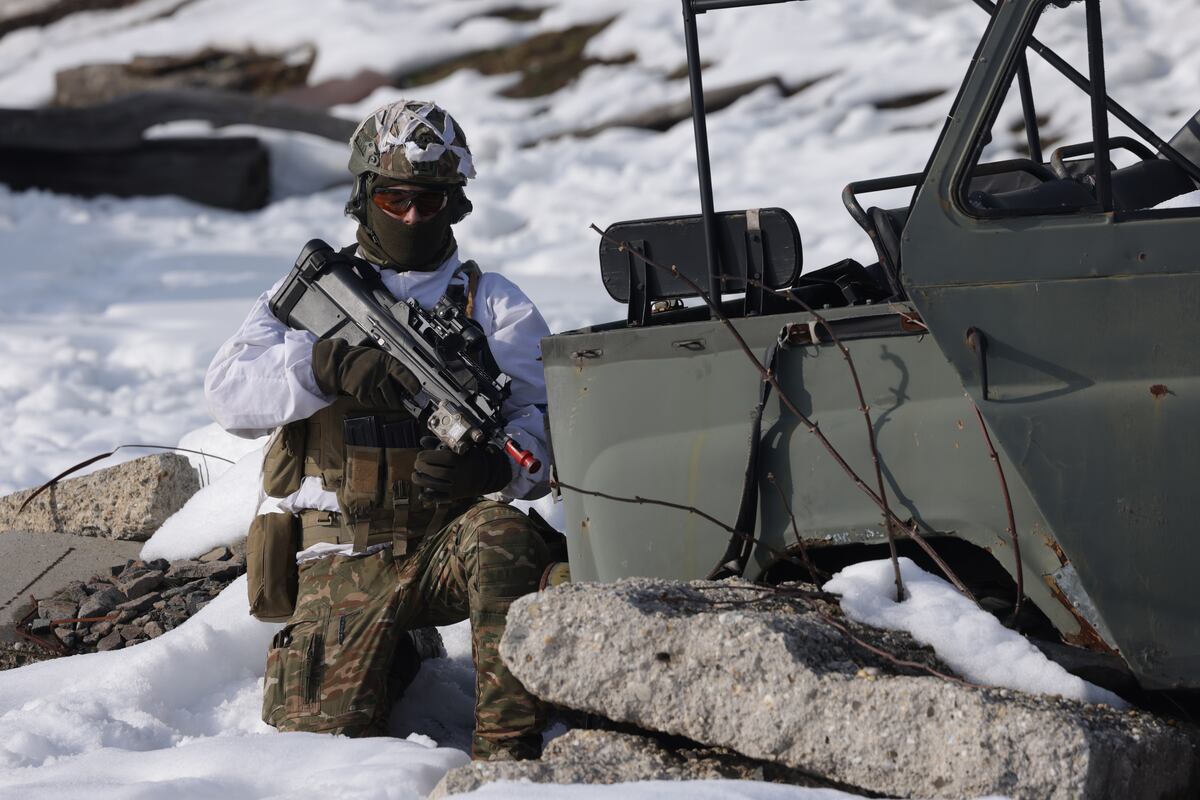
WARSAW, Poland — With Russia’s invasion of Ukraine fueling military acquisitions along NATO’s eastern flank, several European allies are advancing purchases of new wheeled and tracked infantry fighting vehicles.
Military budgets are soaring across the region, and lessons drawn from the ongoing war are triggering a robust increase in defense acquisitions. Numerous Eastern European allies have supplied tanks and infantry fighting vehicles to Ukraine, generating a spike in demand for replacements.
Some seek to buy foreign-made vehicles, while securing domestic participation in their manufacturing and maintenance, and others intend to have their own industry develop new vehicles fitted with foreign-designed weapons.
Here’s a snapshot of what that looks like:
Poland’s Defence Ministry is developing the largest tracked vehicle acquisition program in Eastern Europe in terms of the number of units planned for production. Earlier this year, the ministry signed a contract with a consortium led by Huta Stalowa Wola — an offshoot of Polish defense giant PGZ — to buy about 1,400 vehicles on a tracked platform.
Developed under the Borsuk program (or “Badger” in English), the initiative is to enable Poland to replace its outdated fleet of BWP-1s, a version of the Soviet-designed BMP-1 vehicle.
A Polish BWP-1 amphibious tracked infantry fighting vehicle demonstrates capabilities during training in Wierzbiny, Poland, on June 4, 2018. (Spc. Alan Prince/U.S. Army National Guard)
“The framework agreement concluded on 28 February 2023 foresees the delivery of about 1,400 vehicles based on a universal modular tracked platform, including 1,000 Borsuk infantry fighting vehicles,” a spokesperson for the ministry told Defense News. “The delivery time of these vehicles will be stipulated in the further executive contracts.”
The 400 tracked vehicles that are to accompany the Borsuk are to come in several variants, including command, medical evacuation, engineering reconnaissance, contamination reconnaissance and more.
The Borsuk is equipped with a ZSSW-30 turret armed with a Mk44 Bushmaster II 30 mm chain gun, a Spike LR anti-tank missile system and a UKM-2000C 7.62mm machine gun, among other weapons, according to the ministry.
Poland plans to implement the entire project by 2035.
Foreign designs for Romania
Romania is spearheading a similar initiative. The nation’s MLI-84 infantry fighting vehicle is a design from the early 1980s. About 180 such vehicles were produced for the country’s land forces, some of which were later modernized in cooperation with Israeli partners. The Romanian Defence Ministry now plans to replace them with a new platform in what could represent one of the country’s largest acquisition programs in the coming years.
U.S. Marines look at a Romanian MLI-84 infantry fighting vehicle during a presentation at the Smardan Training Area in Romania on May 9, 2016. (Lance Cpl. Kyle A. Kauffman/U.S. Marine Corps)
Contrary to Poland, which decided to develop its new generation of tracked vehicles through its domestic defense industry, Romania is seemingly planning to acquire a foreign product to be manufactured with the participation of its domestic defense sector.
Other Eastern European nations have employed a similar model. Among others, the Czech Republic and Slovakia selected the CV90 made by BAE Systems Hägglunds in Sweden, and Hungary opted for the German firm Rheinmetall’s Lynx.
A spokesperson for the Romanian ministry told Defense News that Bucharest “intends to buy a total number of 298 IFVs in different configurations.”
“There is a mix of technical criteria, regarding both the armaments systems and the performances of the vehicle, that will be evaluated, together with financial, economic and delivery conditions,” the representative said.
In March 2023, the ministry requested lawmakers’ approval for several programs, including its tracked vehicle acquisition plans. Publicly available information suggests the program is worth about €2.99 billion (U.S. $3.28 billion).
“There is a cross-party consensus that military spending is needed, given the war that is taking place just across the border in Ukraine,” a senior Romanian defense analyst told Defense News on the condition of anonymity due to the sensitivity of military acquisition efforts.
“The program is divided into two phases. The first phase will take place between 2023 and 2031, and involves the acquisition of 246 vehicles. The second phase will begin after 2031, and involves the procurement of 52 vehicles for the strategic reserve,” the analyst added.
Slovenia’s commitment
For Slovenia, developing a fleet of eight-wheel-drive infantry fighting vehicles is part of the nation’s commitment to NATO.
The country has vowed it will be able to deploy a midsized battalion battle group and a midsized reconnaissance battalion to take part in NATO activities. According to Slovenia’s 2020 defense whitepaper, the government will establish the former by 2027 and the latter by 2030.
In July 2023, the government amended the Defence Ministry’s acquisition program for the years 2023 to 2026, authorizing it to allocate about €695.2 million toward the purchase of 106 wheeled infantry fighting vehicles.
The ministry is currently “in the process of purchasing 8x8 wheeled combat vehicles on a government-to-government model. We estimate that the procurement process will be completed this year with the signing of the relevant intergovernmental agreement,” a spokesperson for the Slovenian ministry told Defense News.
The latest development follows the government’s decision last year to scrap a deal to buy 45 Boxer armored vehicles with related equipment and services for a total of €343.4 million from the international entity Organisation for Joint Armament Co-operation. The move was based on findings from an internal audit commissioned by Defence Minister Marjan Šarec.
In a July 2023 interview with local broadcaster RTV Slovenija, Šarec said his ministry is evaluating five offers, but he did not disclose the names of the companies involved.
“This purchase will definitely be carried out according under the government-to-government system, which means without intermediaries,” he said.
Jaroslaw Adamowski is the Poland correspondent for Defense News.
波兰华沙——随着俄罗斯入侵乌克兰,北约东翼的军事部署也随之增加,一些欧洲盟国正在推进新型轮式和履带式步兵战车的采购。
整个地区的军费预算都在飙升,持续不断的战争带来的教训也促使国防采购大幅增加。众多东欧盟国向乌克兰提供了坦克和步兵战车,导致乌克兰对替换装备的需求激增。
一些国家寻求购买外国制造的车辆,同时确保国内参与车辆的制造和维护;另一些国家则打算让自己的工业开发配备外国设计武器的新车辆。
以下是它的截图:
波兰国防部正在推进东欧规模最大的履带式车辆采购项目,其计划生产的数量位居全国之首。今年早些时候,该部与由波兰国防巨头PGZ旗下子公司Huta Stalowa Wola牵头的财团签署合同,采购约1400辆履带式车辆。
该计划是在 Borsuk 计划(或英文中的“獾”)下制定的,目的是使波兰能够替换其过时的 BWP-1 车队,BWP-1 是苏联设计的 BMP-1 车辆的改进型。
2018年6月4日,在波兰维尔兹比尼,一辆波兰BWP-1型两栖履带式步兵战车在训练中展示性能。(美国陆军国民警卫队下士艾伦·普林斯摄)
“2023年2月28日签署的框架协议预计将交付约1400辆基于通用模块化履带平台的车辆,其中包括1000辆博尔苏克步兵战车,”国防部发言人告诉《防务新闻》。“这些车辆的交付时间将在后续的执行合同中予以规定。”
随“博尔苏克”号巡洋舰一同出动的 400 辆履带式车辆将有多种型号,包括指挥车、医疗后送车、工程侦察车、污染侦察车等等。
据国防部称,Borsuk坦克配备了ZSSW-30炮塔,炮塔上装有Mk44 Bushmaster II 30毫米链式机炮、Spike LR反坦克导弹系统和UKM-2000C 7.62毫米机枪等武器。
波兰计划在2035年前完成整个项目。
罗马尼亚的外国设计
罗马尼亚正在牵头开展一项类似的计划。该国的MLI-84步兵战车是上世纪80年代初的设计。罗马尼亚陆军共生产了约180辆此类战车,其中一些后来与以色列合作伙伴进行了现代化改造。罗马尼亚国防部目前计划用一种新型平台替换这些战车,这可能成为该国未来几年规模最大的采购项目之一。
2016年5月9日,在罗马尼亚斯马尔丹训练区举行的演示活动中,美国海军陆战队员正在观看一辆罗马尼亚MLI-84步兵战车。(美国海军陆战队下士凯尔·A·考夫曼摄)
与波兰决定通过其国内国防工业开发新一代履带车辆的做法相反,罗马尼亚似乎计划采购外国产品,并由其国内国防部门参与生产。
其他东欧国家也采用了类似的型号。其中,捷克和斯洛伐克选择了瑞典BAE系统公司哈格隆德分公司生产的CV90,而匈牙利则选择了德国莱茵金属公司的Lynx。
罗马尼亚国防部发言人告诉《防务新闻》,布加勒斯特“打算购买总共 298 辆不同配置的步兵战车”。
“评估标准包括武器系统和车辆性能等技术标准,以及财务、经济和交付条件,”该代表表示。
2023年3月,该部向立法者申请批准多项计划,其中包括其履带车辆采购计划。公开信息显示,该计划价值约29.9亿欧元(32.8亿美元)。
一位罗马尼亚高级国防分析师在接受《防务新闻》采访时表示:“鉴于乌克兰边境正在发生的战争,各党派一致认为需要增加军费开支。”由于军事采购工作的敏感性,这位分析师要求匿名。
“该计划分为两个阶段。第一阶段将于2023年至2031年期间进行,涉及采购246辆车。第二阶段将于2031年后开始,涉及为战略储备采购52辆车,”该分析师补充道。
斯洛文尼亚的承诺
对斯洛文尼亚而言,发展一支八轮驱动步兵战车部队是该国对北约承诺的一部分。
该国已承诺将能够部署一个中型营级战斗群和一个中型侦察营参与北约行动。根据斯洛文尼亚2020年国防白皮书,政府计划在2027年前组建前者,在2030年前组建后者。
2023 年 7 月,政府修改了国防部 2023 年至 2026 年的采购计划,授权其拨款约 6.952 亿欧元用于购买 106 辆轮式步兵战车。
斯洛文尼亚国防部发言人告诉《防务新闻》:“该部目前正以政府间协议模式采购8x8轮式战车。我们预计,随着相关政府间协议的签署,采购流程将于今年完成。”
最新进展源于政府去年决定取消一项价值3.434亿欧元的协议,该协议原计划从国际组织联合军备合作组织(OJAC)购买45辆“拳击手”装甲车及相关设备和服务。此举是基于国防部长马里安·沙雷茨委托进行的内部审计结果。
2023 年 7 月,Šarec 在接受斯洛文尼亚当地广播公司 RTV 采访时表示,他的部门正在评估五份报价,但他没有透露相关公司的名称。
“这次采购肯定会按照政府对政府的方式进行,这意味着不会有中间人,”他说。
Jaroslaw Adamowski 是《防务新闻》驻波兰记者。