A Hornet Weapon Systems Officer’s View of the Navy’s Suffocating Jet Crews一名“大黄蜂”战斗机武器系统军官眼中的海军令人窒息的喷气式飞机机组人员
The problem appears to be getting worse, and some fed up pilots are boycotting their flight schedules.
新闻视频
By Joe “Smokin” Ruzicka
Updated Jul 3, 2020 4:17 AM EDT
Being hypoxic in a military fighter jet is no joke. Back in 2010, my pilot and I were returning from a training mission in the southern California desert when we noticed the cabin pressure gauge in our F/A-18D Hornet had spiked to nearly 20,000 feet. This was essentially our current altitude—and not a good place to be if you do not have supplemental oxygen. To complicate matters, I was not wearing my oxygen mask on our transit back from the training area. Normal cabin pressurization hovers around 8,000 feet, so my habit (like many others) was to not wear supplemental oxygen when in a purely administrative flying mode. Big mistake.
I noticed pretty quickly that I could not say or remember my flight’s callsign. I fumbled with connecting my mask for what seemed to be eternity. In reality, it was probably only about 10 seconds but my hand dexterity had diminished. The lack of oxygen to my brain turned a simple task into a very difficult one. Once I was able to properly secure my mask and receive a good flow of air, using supplemental oxygen from the jet did not immediately remedy my affects. I still felt sluggish and slow. Thankfully, my pilot had his oxygen mask on the entire time and said he felt fine.
NATOPS procedures require an emergency descent below 10,000 feet to get the jet and cabin to a safer altitude. We quickly descended at a rate of about 6,000 feet per minute, while our wingman followed us down. This was not a comfortable situation, as the terrain rises steeply into mountains just east of MCAS Miramar. After about a minute below 10,000 feet, I began to feel normal, but the resultant lack of oxygen was a shock to the system, and a clear indicator that hypoxia onset is quick, debilitating, and potentially deadly. My situation is referred to as “histotoxic hypoxia,” which is the disorienting feeling associated with lack of oxygen.
I tell this story to let folks know the recent issues with F/A-18 Hornet cabin pressure and oxygen incidents are nothing new . More importantly, I am scared for my fellow F/A-18 Hornet and T-45 aviators and I know something must be done to correct this situation.
Naval Aviators are climbing into a machine that may kill them—and it’s not from what you may think, say, a surface to air missile or an enemy fighter. Because of a recurring problem with the oxygen and cabin pressurization systems—more commonly known as OBOGS, which stands for On-board Oxygen Generating System—in the Navy’s F/A-18 fighters and T-45 trainer jets, an alarming increase in episodes of hypoxia for aircrew have occurred. Hypoxia is a deficiency in the amount of oxygen to the body which can lead to fatal consequences. This problem has become so serious and frequent, T-45 flight instructors boycotted training flights last week.
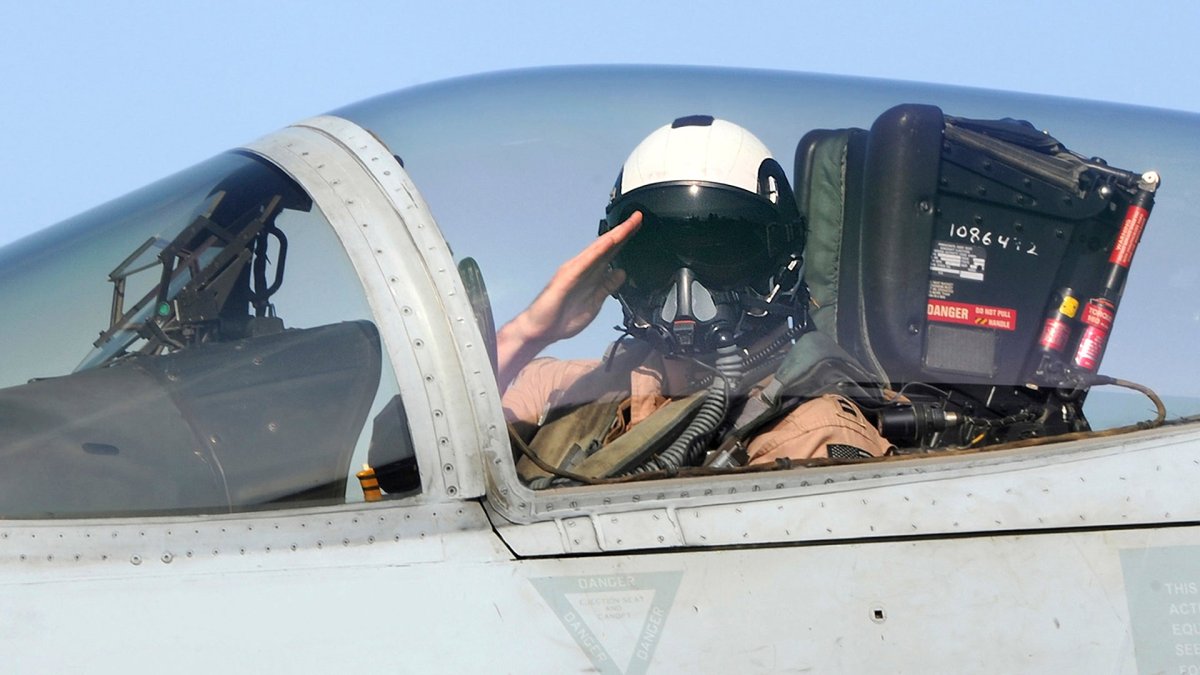
Ed Darack via Getty Images
The biggest concern is that this is a glaring safety issue beyond what is an already dangerous job. A job that includes night arrestments on aircraft carriers and dropping bombs in hostile areas of Iraq and other locations we cannot speak about. Now, naval aviators are having to deal with malfunctioning equipment that is truly a silent killer—causing lack of precious oxygen in the cockpit, and to air crews’ most important instrument—their brains.
Unfortunately, the Navy admits progress on solving the issue is currently at the head-scratcher stage. But the real question is this: Has Naval leadership and engineers at Naval Air Systems Command (NAVAIR) really done all they can do to try and solve the problem? It’s not like they haven’t had a great deal of time to come up with a fix.
According to testimony from Navy leaders to Congress this week, “Since May 1, 2010, all models of the F-18 show steady, yearly increases in the number of physiological episodes.” The Navy has investigated 382 cases of physiological episodes induced from the F/A-18 system. Investigators have determined failures occur in two main categories: breathing contaminated air and loss of cabin pressurization. According to the Navy, 130 incidents involved some form of oxygen contamination while 114 involved a failure of the jet’s system that maintains cabin pressure.
Every naval aviator goes through altitude chamber training so they can recognize early onset of hypoxia caused by cabin depressurization. The instructors take the chamber up to 25,000 feet where trainees remove their masks and then try to play a simple game of patty-cake. The results are both humbling and hilarious. Most folks can’t clap their hands together after about 15 seconds. Continued oxygen deprivation at those types of altitude leads to an unconscious state and ultimately death. It is safe to say that quickly recognizing hypoxia is a critical element to staying alive—even for private and commercial jet aircrews.
For the record, cabin depressurization is what killed professional golfer Payne Stewart and his fellow passengers back in 1999. In a strange twist of fate, Payne joined me and 15 other trainees in the Navy’s pressurization chamber as we were going through altitude training together back in 1998. The 1991 and 1999 US Open champion had been invited to ride in a Navy F-14B as part of a morale, welfare, and recreation event. He followed up his Tomcat ride by playing nine holes at the NAS Oceana golf course, where the crowd followed as he talked about each shot. The Tomcat did not have an OBOGS system, but relied on pure oxygen instead.
OBOGS provides oxygen rich breathing gas to the aircrew using engine bleed air that is cooled and then routed to an OBOGS concentrator. Inside the concentrator, nitrogen is removed using two molecular sieve beds—commonly known as “kitty litter.” The resultant cleansed air is then pumped to the aircrew. The system provides a continuous supply of oxygen, avoiding the need for constant replenishment of liquid oxygen like in the F-14.
Today’s fleet naval aviators appear to be getting a good old fashioned run around as no current solution for repairing OBOGS currently exists. Vice Admiral Mike Shoemaker admits that the oxygen issues are “the number one safety priority.” But he also admits there is “no smoking gun” they can find to solve the problem. With a problem that has been going on for greater than seven years and shows no signs of slowing down, one would think there was at least some concerted effort to indicate what is causing the problem with OBOGS.
The only known treatment for the issue has been to regularly change out the kitty litter. In addition to increased aircrew training, the Navy has also gone so far as to install a decompression machine onboard deploying aircraft carriers. Both of these solutions seem to be only treating the resultant issues and not the actual causal factors. It is time for a far more concerted effort to defeat this problem.
NAVAIR must take a critical look at data from a much larger cross section of jet flights. The problem appears to be with the system and not jet specific—as even the latest Super Hornet, the EA-18 Growler, has reportedly had issues . A small sampling of data from only a few training command flights is not enough information to determine the causal factors across the fleet. Additionally, pilots must report after every flight how the system worked—or did not work—along with critical flight parameters. Maintenance teams will need to track and periodically check OBOGS potentially after every fight. Maybe this is already being done, but naval leadership has not communicated up and down the chain of command what the plan is to solve this problem. Lack of communication has led to some serious consequences and I personally applaud those T-45 instructors who took a stand.
I don’t personally have an answer to this problem, but I do know that time is no longer on a Naval Aviator’s side with the OBOGS issue. Delayed production of the F-35C (and ultimately a reduced number of purchase Lightning IIs) means the Hornet and Super Hornet, along with its OBOGS problems, are here to stay. To Naval Aviation leadership’s credit, there has not been a “fly or else” mentality towards pilots who have to climb into those machines. However, not flying over the long term is simply not an option. Solving this problem is going to require an all hands effort from pilots, engineers, and leadership. It must or it will be just a matter of time before we will lose someone.
Joe “Smokin” Ruzicka is a valued contributor to The War Zone. His prior works are a must read, you can find them here and here . Joe was a Radar Intercept Officer in the F-14 Tomcat and Weapon Systems Officer in the F/A-18 Hornet with over 2,000 flight hours in fast jets. Joe was also a part of the final F-14 demonstration aircrew , as well as being Legislative Fellow to John McCain and worked in Washington DC on critical US Navy programs on behalf of the US Navy. You can keep in touch with him by following him on Twitter at @smokinjoe96 .
Contact the editor: Tyler@thedrive.com
Comments couldn’t be loaded. Please refresh the page.
作者:乔·“斯莫金”·鲁齐卡
更新于美国东部时间2020年7月3日凌晨4:17
在军用战斗机里缺氧可不是闹着玩的。2010年,我和我的飞行员从南加州沙漠的一次训练任务返回途中,发现我们那架F/A-18D“大黄蜂”战斗机的座舱压力表指针飙升到了近20000英尺。这基本上就是我们当时的飞行高度——如果没有辅助氧气,这可不是什么好地方。更糟糕的是,在从训练场返回的途中,我并没有佩戴氧气面罩。正常的座舱增压高度在8000英尺左右,所以我的习惯(和很多人一样)是在纯粹的行政飞行模式下不佩戴辅助氧气。这真是个大错。
我很快发现自己既说不出也记不起航班的呼号。我笨手笨脚地戴上氧气面罩,感觉过了好久好久。实际上可能只有十秒钟左右,但我的手部灵活性明显下降。大脑缺氧让原本简单的任务变得异常艰难。好不容易戴好面罩,呼吸顺畅后,飞机提供的辅助氧气并没有立即缓解我的症状。我仍然感觉迟钝迟缓。幸运的是,我的飞行员全程都戴着氧气面罩,他说他感觉很好。
根据北约飞行操作程序(NATOPS),飞机必须在10,000英尺以下紧急下降,以确保飞机和机舱处于更安全的高度。我们以每分钟约6,000英尺的速度迅速下降,僚机也紧随其后。由于米拉马尔海军陆战队航空站以东地势陡峭,山峦起伏,这种情况并不舒适。下降到10,000英尺以下约一分钟后,我开始感觉恢复正常,但随之而来的缺氧对身体造成了冲击,也清楚地表明缺氧发作迅速、令人虚弱,甚至可能致命。我的情况被称为“组织毒性缺氧”,这是一种与缺氧相关的迷失方向感。
我讲述这个故事是为了让大家知道,最近F/A-18“大黄蜂”战斗机座舱压力和氧气问题并非新鲜事。更重要的是,我为我的F/A-18“大黄蜂”和T-45战机飞行员同伴们感到担忧,我知道必须采取措施来纠正这种情况。
海军飞行员正登上可能夺走他们性命的机器——而致命的并非你可能想到的地对空导弹或敌方战斗机。由于海军F/A-18战斗机和T-45教练机的氧气和座舱增压系统(通常被称为机载氧气发生系统,简称OBOGS)反复出现故障,机组人员缺氧的发生率急剧上升。缺氧是指体内氧气供应不足,可能导致致命后果。这个问题已经变得如此严重和频繁,以至于T-45飞行教官上周抵制了训练飞行。
Ed Darack via Getty Images
最令人担忧的是,这不仅是一项本身就十分危险的工作,更凸显了一个极其严重的安全问题。这项工作包括在航空母舰上执行夜间任务,以及在伊拉克敌对地区和其他一些我们无法透露具体地点投掷炸弹。如今,海军飞行员们不得不面对故障设备带来的真正“无声杀手”——这些设备会导致驾驶舱内氧气不足,进而损害机组人员最重要的“仪器”——他们的大脑。
不幸的是,海军承认,目前解决这个问题仍处于令人费解的阶段。但真正的问题是:海军领导层和海军航空系统司令部(NAVAIR)的工程师们是否真的竭尽全力去解决这个问题?他们并非没有足够的时间来找到解决方案。
根据海军领导人本周向国会作证的情况,“自2010年5月1日以来,所有型号的F/A-18战斗机的生理异常事件数量均呈现逐年稳步增长的趋势。”海军已对382起由F/A-18系统引起的生理异常事件展开调查。调查人员确定,故障主要分为两大类:吸入受污染空气和座舱失压。据海军称,其中130起事件涉及某种形式的氧气污染,而114起事件则涉及飞机座舱压力维持系统故障。
每位海军飞行员都要接受高空舱训练,以便能够及早识别由机舱失压引起的低氧症。教官会将训练舱升至25000英尺(约7600米)的高度,学员们摘下氧气面罩,然后尝试玩一个简单的拍手游戏。结果既令人震惊又令人捧腹。大多数人在大约15秒后就无法拍手了。在这种高度持续缺氧会导致昏迷,最终甚至死亡。可以说,迅速识别低氧症是保命的关键——即使对于私人和商业喷气式飞机的机组人员来说也是如此。
需要说明的是,1999年导致职业高尔夫球手佩恩·斯图尔特及其同机乘客丧生的事故,正是由于机舱失压。令人意想不到的是,1998年,佩恩和我以及其他15名学员一起在海军的增压舱内进行高空训练。这位1991年和1999年美国公开赛冠军受邀乘坐海军F-14B“雄猫”战斗机,作为一项旨在提升士气、增进福利和娱乐的活动。体验完“雄猫”之后,他还前往奥希阿纳海军航空站的高尔夫球场打了九洞,沿途的观众都跟着他,听他讲解每一杆的击球感受。当时的“雄猫”没有机载制氧系统(OBOGS),而是依靠纯氧供氧。
机载氧气供应系统(OBOGS)利用发动机引气为机组人员提供富氧呼吸气体。引气冷却后被输送到OBOGS氧气浓缩器。在浓缩器内部,氮气通过两层分子筛(俗称“猫砂”)去除。净化后的空气随后被泵送至机组人员。该系统可提供持续的氧气供应,避免了像F-14战斗机那样需要不断补充液氧。
如今,海军舰队飞行员似乎正被各种繁琐的办法敷衍搪塞,因为目前尚无修复机载制氧系统(OBOGS)的有效方案。海军中将迈克·舒梅克承认,氧气问题是“头等安全事项”。但他同时也承认,他们找不到解决问题的“确凿证据”。这个问题已经持续了七年多,而且丝毫没有缓解的迹象,人们理应认为至少应该有人集中精力去找出OBOGS故障的根源。
目前已知的唯一解决办法是定期更换猫砂。除了加强机组人员训练外,海军甚至还在部署的航空母舰上安装了减压机。然而,这两种方法似乎都只是治标不治本,并未触及问题的根源。现在是时候采取更加协调一致的措施来彻底解决这个问题了。
海军航空系统司令部(NAVAIR)必须认真审视来自更大规模喷气式飞机飞行数据。问题似乎出在系统本身,而非特定机型——就连最新的超级大黄蜂EA-18“咆哮者”电子战飞机也曾出现过类似问题。仅从少数训练指挥部飞行中抽取少量数据不足以确定整个舰队的根本原因。此外,飞行员必须在每次飞行后报告系统的运行情况(包括故障情况)以及关键飞行参数。维护团队需要跟踪并定期检查机载制氧系统(OBOGS),可能每次飞行后都需要检查。或许目前已经有人在这样做,但海军领导层尚未将解决此问题的计划上下传达给所有指挥人员。沟通不畅已导致一些严重后果,我个人对那些挺身而出的T-45教练员表示赞赏。
我个人没有解决这个问题的答案,但我知道,对于海军飞行员来说,在机载制氧系统(OBOGS)问题上,时间已经不多了。F-35C的生产延误(以及最终采购的F-35“闪电II”战斗机数量减少)意味着“大黄蜂”和“超级大黄蜂”战斗机及其OBOGS问题将长期存在。值得称赞的是,海军航空兵领导层并没有对必须驾驶这些战机的飞行员抱有“要么飞,要么死”的心态。然而,长期不飞行是行不通的。解决这个问题需要飞行员、工程师和领导层的共同努力。我们必须这样做,否则我们迟早会有人因此丧命。
乔·“斯莫金”·鲁齐卡是《战区》的重要撰稿人。他之前的作品值得一读,您可以在这里和这里找到它们。乔曾担任F-14“雄猫”战斗机的雷达拦截官和F/A-18“大黄蜂”战斗机的武器系统官,拥有超过2000小时的喷气式战斗机飞行经验。乔也是最后一批F-14演示飞行机组的成员,曾担任约翰·麦凯恩的立法助理,并在华盛顿特区代表美国海军参与关键的海军项目。您可以通过在推特上关注@smokinjoe96与他保持联系。
联系编辑:Tyler@thedrive.com
评论加载失败,请刷新页面。