As US claims victory, Iran emerges bruised but with leverage over Hormuz美国宣布胜利之际,伊朗虽受重创,但对霍尔木兹海峡拥有了筹码。
The U.S.-Iran ceasefire locks in a harsh reality: an entrenched, radical government with control over the Strait of Hormuz.
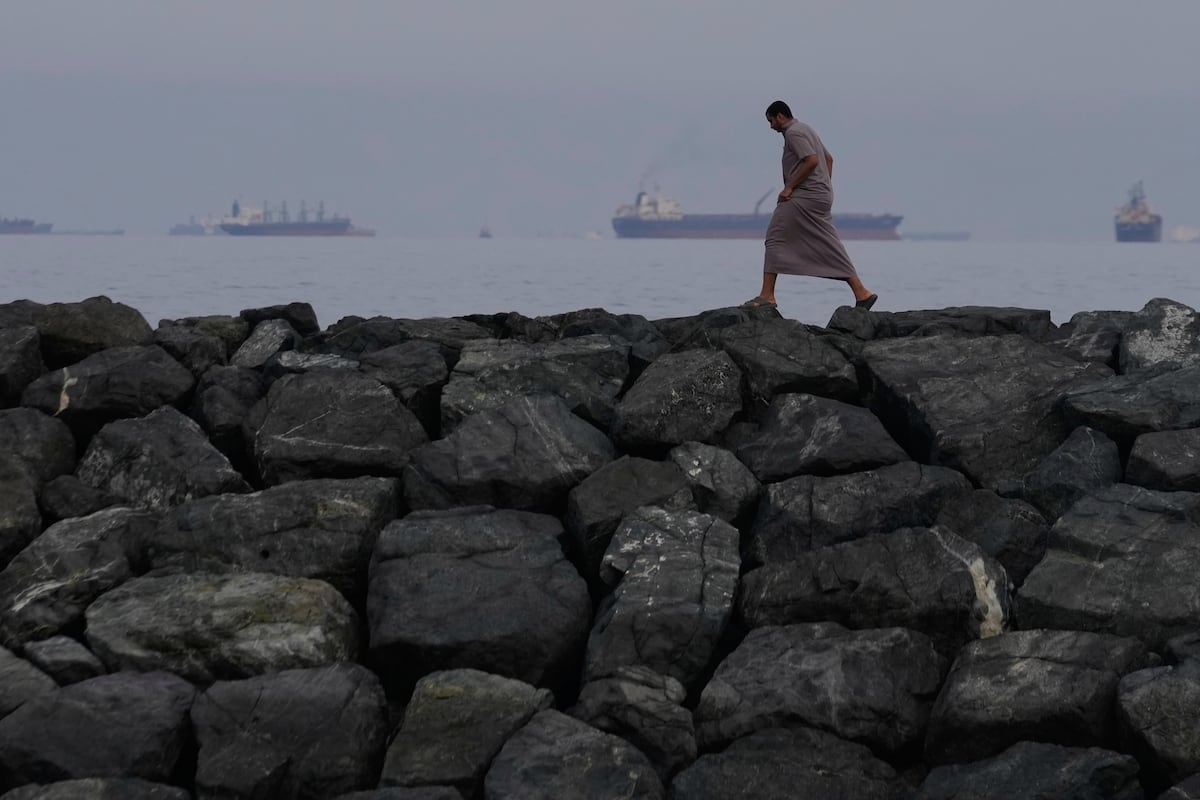
Nearly six weeks of war in Iran have ended, for now, with President Donald Trump claiming victory, but the U.S.-Iran ceasefire locks in a harsh reality: an entrenched, radical government with control over the Strait of Hormuz and a powerful lever over global energy markets and Gulf rivals, analysts say.
The shockwaves have rippled outward, contributing to global economic strains and bringing conflict to Gulf neighbors whose economies depend on stability.
“This war will be remembered as Trump’s grave strategic miscalculation. One whose consequences reshaped the region in unintended ways,” Middle East scholar Fawaz Gerges told Reuters.
Before the war, the Strait, a narrow passage carrying around a fifth of the world’s oil and gas, was formally treated as an international waterway. Iran monitored it, harassed shipping and intermittently intercepted vessels, but it stopped short of asserting outright control.
In the new reality, Tehran has moved from shadowing tankers to effectively dictating terms. It currently functions as the de facto gatekeeper of the shipping route, selectively deciding on passage and on what terms. Iran wants to charge ships for safe passage.
Additionally, Iran has demonstrated resilience under sustained attack and retained the capacity to escalate further, projecting influence across multiple fronts and strategic choke points.
A U.S. sailor signals the launch of an F/A-18E Super Hornet from the flight deck of the USS Gerald R. Ford, March 2, 2026. (U.S. Navy)
Its reach extends through Lebanon and Iraq via Hezbollah and Shi’ite militias, and into the Bab el-Mandeb in the Red Sea, leveraging the sphere of influence of its Houthi allies.
At home, Iran’s leadership remains firmly in control - even though the country’s economy is in tatters and great swathes of infrastructure in ruins from American and Israeli bombs.
“What did the U.S.–Israeli war actually achieve?” asked Gerges. “Regime change in Tehran? No. The surrender of the Islamic Republic? No. Containment of Iran’s stockpile of highly enriched uranium? No. An end to Tehran’s support for its regional allies? No.”
Iran has absorbed the blows while retaining — and in some cases strengthening — its core instruments of power, said four analysts and three Gulf government sources who spoke to Reuters for this story.
As well as Iran’s control of Hormuz, the political picture now, they noted, is of a more brutal, empowered establishment, unaccounted nuclear material, continued missile and drone production, and ongoing support for regional militias.
Echoing Trump, U.S. Defense Secretary Pete Hegseth on Wednesday said Washington had won a decisive military victory, and that Iran’s missile program had been functionally destroyed. The State Department and White House did not immediately respond to requests for comment.
The United States, Israel and Iran agreed to a two-week ceasefire and U.S. and Iranian officials are expected to hold talks from Friday to discuss a long-term settlement.
While the ceasefire may halt the fighting, the Gulf officials said its durability hinges on addressing the deeper conflicts shaping the region’s security and energy landscape.
Any deal that falls short of a comprehensive settlement risks entrenching Iranian leverage rather than constraining it, they add.
Ebtesam Al‑Ketbi, president of the Emirates Policy Center described the truce as a fragile pause, one likely to institutionalize new forms of instability unless it expands well beyond a narrow cessation of hostilities.
“This ceasefire is not a solution; it is a test of intentions,” Ketbi told Reuters. “If it does not evolve into a broader agreement redefining the rules of engagement - in Hormuz and across proxy theaters — it will amount to little more than a tactical pause before a more dangerous and complex escalation.”
“If Trump reaches a deal with Iran without addressing core issues - ballistic missiles, drones, proxies, nuclear concerns, and the rules governing Hormuz - then the conflict is effectively left unresolved and the region exposed,” said Ketbi.
Iran, for its part, has put forward to Washington terms that include sanctions relief, recognition of enrichment rights, compensation for war damage and continued control over the Strait, underscoring just how far apart the sides remain.
Trump acknowledged receiving the Iranian plan and called it “a workable basis to negotiate.”
For Gulf countries who rely on Hormuz to export their oil, the Strait remains a non-negotiable red line, added Saudi analyst Ali Shihabi.
“Any outcome that leaves the waterway effectively in Iranian hands would be a defeat for President Trump,” with the potential repercussions of high energy prices extending into the midterm elections, he said.
The Callisto tanker sits anchored in Port Sultan Qaboos in the Strait of Hormuz, Muscat, Oman, March 12, 2026. (Benoit Tessier/Reuters)
What the war may nonetheless open up for Tehran, Shihabi added, is the prospect of a negotiated settlement — potentially including sanctions relief.
From a Gulf perspective, the picture is deeply unsettling. Mistrust of Iran is running high following Tehran’s strikes on energy facilities and commercial hubs across the region. More troubling still, the war has transformed Hormuz into an explicit instrument of leverage and coercion, analysts say.
The economic stakes are equally stark. Iran wants to charge fees for ships passing through the Hormuz shipping lanes as part of any permanent peace deal, a move that would reverberate far beyond the Gulf, hitting global energy markets and the economic lifelines of states along the opposite shore.
“If Iran can extract millions per ship, the implications are enormous — not just for the Gulf, but for the global economy,” Ketbi said. “In that sense, the outcome is not just a regional setback, but a systemic shift with worldwide consequences.”
More broadly, the analysts warned, it would signal a fundamental change in the regional order, from a strait governed by international norms to one effectively policed by a hostile state emboldened, not weakened, by war.
The ceasefire, brokered by Pakistan, followed a war launched on February 28 by Trump and Israeli Prime Minister Benjamin Netanyahu, who said they aimed to curb Iran’s regional power, dismantle its nuclear program and create conditions for Iranians to topple their rulers.
Both sides declared victory. Trump called the ceasefire a “total and complete victory,” saying U.S. forces had achieved their objectives, while Iran’s Supreme National Security Council claimed Trump had accepted its conditions.
But the war has yet to deprive Iran of its stockpile of near‑weapons‑grade enriched uranium or its ability to strike neighbors with missiles and drones. The leadership, which faced a mass uprising months ago, withstood the superpower onslaught with no sign of collapse.
A Gulf source said restoring trust with Tehran would require stringent, written commitments — not informal assurances — covering non‑interference, freedom of navigation, and the security of key maritime corridors, including Hormuz, as well as the national security requirements of the Gulf states.
Those conditions, the Gulf source said, were conveyed to Pakistani mediators to be included as part of a comprehensive settlement.
An Israeli official said senior Trump administration officials had assured Israel that they would insist on previous conditions, such as the removal of Iran’s nuclear material, a halt to enrichment and the elimination of ballistic missiles.
Pakistan’s prime minister said Iranian and U.S. delegations were expected to meet in Islamabad on Friday for what would be the first official peace talks since the war began.
伊朗近六周的战争暂时结束,美国总统唐纳德·特朗普宣称取得了胜利,但分析人士表示,美伊停火协议巩固了一个残酷的现实:一个根深蒂固的激进政府控制着霍尔木兹海峡,并对全球能源市场和海湾竞争对手拥有强大的影响力。
冲击波向外扩散,加剧了全球经济紧张局势,并给依赖稳定的海湾邻国带来了冲突。
“这场战争将被铭记为特朗普严重的战略误判。其后果以意想不到的方式重塑了该地区,”中东问题专家法瓦兹·格尔格斯告诉路透社。
战前,这条狭窄的水道承载着全球约五分之一的石油和天然气,被正式视为国际航道。伊朗对其进行监视,骚扰过往船只,并偶尔拦截船只,但始终没有完全控制该海域。
在新形势下,德黑兰已从跟踪油轮转变为实际主导航线。它目前扮演着航线的实际守门人角色,选择性地决定船只是否通行以及通行条件。伊朗希望向船只收取安全通行费。
此外,伊朗在持续攻击下展现出了韧性,并保留了进一步升级冲突的能力,在多个战线和战略要地投射影响力。
2026年3月2日,一名美国水兵在“杰拉尔德·R·福特”号航空母舰的飞行甲板上示意一架F/A-18E“超级大黄蜂”战斗机起飞。(美国海军)
其势力范围通过真主党和什叶派民兵延伸至黎巴嫩和伊拉克,并进入红海的曼德海峡,利用其胡塞武装盟友的影响范围。
在国内,尽管伊朗经济一片狼藉,大片基础设施被美国和以色列的炸弹摧毁,但伊朗领导层仍然牢牢掌控着国家。
“美以战争究竟取得了什么成果?”格尔格斯问道。“德黑兰政权更迭?没有。伊朗伊斯兰共和国投降?没有。伊朗高浓缩铀库存被遏制?没有。德黑兰停止支持其地区盟友?也没有。”
路透社采访了四位分析人士和三位海湾政府消息人士,他们表示,伊朗在承受打击的同时,保留了其核心权力工具,并在某些情况下加强了这些工具。
他们指出,除了伊朗控制霍尔木兹海峡之外,目前的政治形势是:一个更加残暴、权力更大的政权,不明来源的核材料,持续的导弹和无人机生产,以及对地区民兵的持续支持。
美国国防部长皮特·赫格塞斯周三与特朗普的说法遥相呼应,称华盛顿取得了一场决定性的军事胜利,伊朗的导弹计划已被基本摧毁。国务院和白宫尚未对此置评。
美国、以色列和伊朗同意停火两周,预计美伊官员将于周五开始举行会谈,讨论长期解决方案。
虽然停火协议可能会停止战斗,但海湾官员表示,停火协议能否持久取决于能否解决影响该地区安全和能源格局的更深层次冲突。
他们补充说,任何未能达成全面和解的协议都有可能巩固伊朗的影响力,而不是限制其影响力。
阿联酋政策中心主席埃布特萨姆·阿尔-凯特比将停火描述为一种脆弱的暂停,除非停火范围远远超出狭义的停止敌对行动,否则很可能会将新的不稳定形式制度化。
“这次停火并非解决方案,而是一次意向测试,”凯特比告诉路透社。“如果它不能发展成为一项更广泛的协议,重新定义霍尔木兹海峡及其他代理战场的交战规则,那么它只不过是更危险、更复杂的冲突升级前的一次战术性暂停。”
“如果特朗普与伊朗达成协议,却不解决核心问题——弹道导弹、无人机、代理人、核问题以及霍尔木兹海峡的规则——那么冲突实际上将无法解决,该地区也将面临风险,”凯特比说。
伊朗方面向华盛顿提出了一系列条件,包括解除制裁、承认其铀浓缩权、赔偿战争损失以及继续控制霍尔木兹海峡,这凸显了双方之间的分歧仍然非常巨大。
特朗普承认收到了伊朗的计划,并称其为“谈判的可行基础”。
沙特分析师阿里·希哈比补充说,对于依赖霍尔木兹海峡出口石油的海湾国家而言,霍尔木兹海峡仍然是不可谈判的红线。
他说:“任何让这条水道实际上落入伊朗手中的结果,对特朗普总统来说都是一次失败”,而且高能源价格的潜在影响可能会延续到中期选举。
2026年3月12日,卡利斯托号油轮停泊在阿曼首都马斯喀特霍尔木兹海峡的苏丹卡布斯港。(Benoit Tessier/路透社)
希哈比补充说,尽管如此,这场战争或许会为德黑兰带来通过谈判解决问题的前景——其中可能包括解除制裁。
从海湾国家的角度来看,局势令人深感不安。德黑兰对该地区能源设施和商业中心发动袭击后,对伊朗的不信任感日益加剧。分析人士指出,更令人担忧的是,这场战争已将霍尔木兹海峡变成了一种赤裸裸的施压和胁迫工具。
经济利害关系同样重大。伊朗希望将对通过霍尔木兹海峡的船只收取费用作为任何永久和平协议的一部分,此举的影响将远远超出海湾地区,冲击全球能源市场以及对岸国家的经济命脉。
“如果伊朗能从每艘船上榨取数百万美元,其影响将是巨大的——不仅对海湾地区,而且对全球经济,”凯特比说。“从这个意义上讲,其结果不仅仅是地区性的挫折,而是一个具有全球影响的系统性转变。”
分析人士警告说,更广泛地说,这将标志着区域秩序的根本性变化,海峡将从受国际规范管辖转变为由敌对国家有效管控,而这个敌对国家因战争而更加大胆,而不是被削弱。
在巴基斯坦斡旋下达成的停火协议,是在特朗普和以色列总理内塔尼亚胡于2月28日发动战争之后达成的。他们声称,他们的目标是遏制伊朗的地区影响力,拆除其核计划,并为伊朗人推翻其统治者创造条件。
双方都宣布取得胜利。特朗普称停火是“彻底的胜利”,并表示美军实现了目标;而伊朗最高国家安全委员会则声称特朗普接受了其提出的条件。
但这场战争尚未剥夺伊朗的近乎武器级浓缩铀储备,也未使其丧失用导弹和无人机打击邻国的能力。数月前曾面临大规模起义的伊朗领导层,顶住了超级大国的猛烈攻击,没有出现崩溃的迹象。
一位海湾国家的消息人士称,要恢复与德黑兰的信任,需要严格的书面承诺,而不是非正式的保证,这些承诺应涵盖不干涉、航行自由、包括霍尔木兹海峡在内的重要海上通道的安全,以及海湾国家的国家安全要求。
这位海湾消息人士称,这些条件已传达给巴基斯坦调解人,以便纳入全面和解方案中。
一位以色列官员表示,特朗普政府高级官员向以色列保证,他们将坚持之前的条件,例如移除伊朗的核材料、停止浓缩铀以及销毁弹道导弹。
巴基斯坦总理表示,伊朗和美国代表团预计将于周五在伊斯兰堡会面,这将是自战争爆发以来的首次正式和平谈判。