Flying Boats Flew Japan’s Little-Known Follow-On Raid On Pearl Harbor水上飞机参与了日本鲜为人知的对珍珠港的后续袭击
The second attempted attack on Pearl Harbor indirectly changed the course of the war in the Pacific.
新闻视频
Updated Dec 8, 2021 3:55 AM EST
Eighty years ago today, the Japanese attack on Pearl Harbor plunged the United States headlong into World War II, and the event’s notoriety has ensured it has remained a profound touchstone in the public’s imagination ever since. The surprise raid of December 7, 1941, exacted a heavy toll on the U.S. Navy’s Pacific Fleet battleships in particular, but it was not enough for Imperial Japan. That country staged a much less well-known follow-up attack less than three months later, this time using huge four-engine Kawanishi H8K flying boats, at the time a brand-new weapon, in what was one of the longest bombing missions flown up to that time.
The effects of the December 7 raid were, at first sight, immense, with the Imperial Japanese Navy, or IJN, having scored hits on all eight of the Pacific Fleet battleships, destroying two of them and putting the remainder out of action for different lengths of time. On top of the materiel losses, more than 2,400 Americans had been killed.
Although the United States had been dragged into the war, Japan now continued its imperial conquest of Asia, with hopes that a weakened U.S. Pacific Fleet would be unable to stop it.
Very quickly, however, it became clear that the actual damage to the naval base at Pearl Harbor was limited. While 21 ships had been damaged to some degree, the vast majority could be repaired . And this process was made easier by the fact that the shipyards and maintenance facilities at the base had survived almost unscathed. Fuel reserves at the base had also been spared, and the Pacific Fleet aircraft carriers had not been in port when the IJN struck.
The wrecked destroyers USS Downes (DD-375) and USS Cassin (DD-372) at Pearl Harbor in the wake of the December 7, 1941 attack. USS Pennsylvania (BB-38) is astern, occupying the rest of the drydock., NATIONAL ARCHIVES
In March 1942, the IJN was ready to launch a follow-up surprise raid on Pearl Harbor, known as Operation K. The original December 7 mission had been planned as Operation Z.
The aim of this attack was to put a stop to the recovery and maintenance work ongoing at the base, further blunting the Pacific Fleet’s ability to counter the IJN across the Asia Pacific theater. The mission was also intended to gather reconnaissance on the overall situation at Pearl Harbor.
While Operation Z had been spearheaded by multiple aircraft carriers , as well as submarines large and small , Operation K would send a much smaller package of bomb-carrying flying boats. The chosen aircraft was the Kawanishi H8K, which was given the Allied reporting name Emily.
Described by aviation historian René Francillon as “the most outstanding water-based combat aircraft of the Second World War,” the H8K was then one of the most recent types to enter IJN service — it had made its first flight in prototype form in January 1941, with production authorized later that year. It was judged the ideal platform for the second raid on Pearl Harbor thanks to its prodigious range — more than 4,400 miles in patrol configuration — and its useful internal bombload of up to 4,400 pounds. Other potential long-range bombing missions using the H8K against targets in California had apparently been discussed but were quickly shelved.
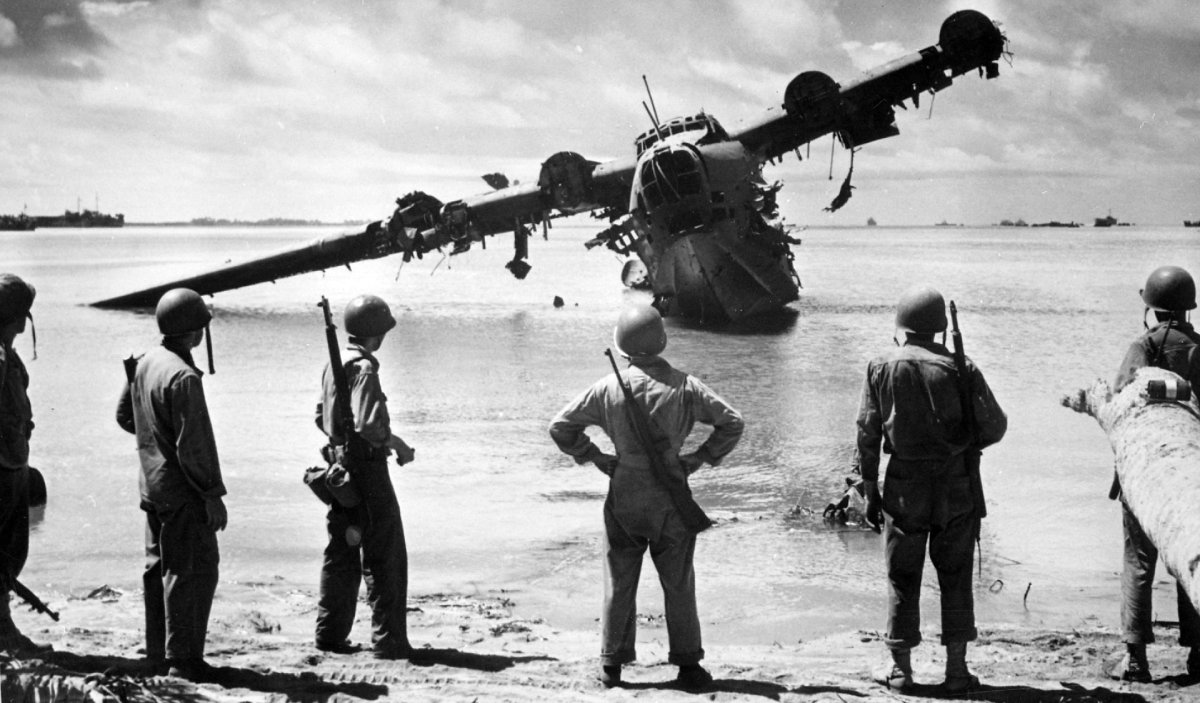
The mighty H8K in a preserved state. , Max Smith/Wikimedia Commons
Long range would be a prerequisite of the second raid on Pearl Harbor, which would involve a 4,800-mile round trip. Never before had a small number of aircraft attempted such a long bombing mission, and few, if any, had covered such a distance without any fighter escort. If successful, more similar raids were planned, with the aim of further degrading the U.S. Navy’s warfighting potential.
In fact, despite its size, the H8K would later demonstrate an unusual ability to survive encounters with enemy fighters. It was surprisingly maneuverable in the air, and it was protected by a very heavy defensive armament, with up to five 20-mm cannons and four 0.303-inch machine guns mounted in various positions around the aircraft.
Although initial plans called for five H8Ks to take part in Operation K, only two were ultimately available for the mission, both assigned to the Yokohama Naval Air Corps. The big flying boats took off from their base at Wotje Atoll in the Marshall Islands, in the western Pacific Ocean, on March 4, 1942. Lt. Hisao Hashizume commanded the first aircraft, with Ensign Shosuke Sasao in charge of the second one. Each flying boat was armed with four 550-pound bombs, which were to be dropped on the docks at Pearl Harbor. Remarkably, this was the first time the aircraft had even been deployed in combat.
An H8K in flight in July 1944. Seconds later it was shot down by a U.S. Navy Consolidated PB4Y-1 Liberator of Bombing Squadron 115 (VB-115) from which the photo was taken., U.S. Navy
The flying boats first touched down at French Frigate Shoals, around 1,900 miles from Wotje Atoll, 560 miles northwest of Honolulu. This was the largest atoll available in the Northwestern Hawaiian Islands, owned by the United States, but remote and unoccupied and used by the IJN as an anchorage. Here the flying boats rendezvoused with two submarines that were waiting to refuel them .
Seen during initial sea trials, I-15 was one of the two designated refueling submarines at French Frigate Shoals., WIKIMEDIA COMMONS
When darkness fell, the H8Ks took off and headed toward Oahu.
In fact, as they had been ahead of the December 7 attack, U.S. codebreakers were aware that the Japanese were planning on some kind of operation involving refueling at French Frigate Shoals. As was the case in the lead-up to the Pearl Harbor raid, this intelligence was apparently ignored.
The 4,800-mile round trip took the two H8Ks from the Marshall Islands to Hawaii and back., WIKIMEDIA COMMONS
The Japanese, too, suffered from the vagaries of the intelligence available to them. They had been able to intercept and read U.S. weather reports that would have helped find a window with clear weather over Pearl Harbor. A change in the American codes cut them off from that information and meant the H8Ks were now going to be flying through clouds and rain.
Regardless of the U.S. intel misstep, at a distance of around 200 miles from Hawaii, the flying boats were picked up by two U.S. radar stations in Hawaii, and P-40 fighters were scrambled from the island to intercept them. Though they had no airborne radar of their own to warn them of this response, the Japanese intruders were cloaked by darkness and thick clouds and managed to slip through the defenses, arriving over Oahu at around 15,000 feet early in the morning of March 4.
Although the night and poor weather offered the IJN aircraft protection, the downside was that their crews now had to find their targets visually. With little in the way of moonlight to help them, and with a blackout over Hawaii since the December attack, it was left mainly to dead reckoning. Plans to have the IJN submarine I-23 off Pearl Harbor to help guide the flying boats to their target also fell through when it disappeared off Hawaii. I-23 was subsequently determined to have been lost, but the circumstances of its sinking are unknown to this day.
Archival footage of the H8K:
The crews of the IJN flying boats dropped their bombs, but under these conditions, they were relying on a good degree of luck to get anywhere near their naval targets. Instead, the weapons from Hashizume’s aircraft fell on the foothills of the extinct volcano outside Honolulu, blowing out the windows of a high school but not causing any injuries.
It’s unclear what happened to Sasao’s bomb load, but it likely came down into the water, after he had lost contact with the bomber leader as they began their attack run.
After dropping their weapons, the two flying boats flew southwest toward the Marshall Islands. Sasao managed to return to Wotje Atoll, but Hashizume’s aircraft had damaged its hull on departing French Frigate Shoals, so he instead flew to his home base at Jaluit Atoll, also in the Marshall Islands.
The raid had been a success in terms of launching a very long-range bombing mission against Hawaii and arriving there unscathed. As such, the Japanese used it for propaganda value, reporting considerable damage to Pearl Harbor as well as multiple U.S. casualties.
The actual military result had been negligible. In fact, the mission had the very opposite effect as what had been hoped.
A second mission was flown on March 10 but ended in disaster. Hashizume’s H8K was shot down by Brewster F2A-3 Buffalo fighters from U.S. Marine Corps fighter squadron VMF-211 near Midway Atoll.
An F2A-3 Buffalo from VMF-211 is loaded aboard the USS Curtiss at Pearl Harbor for shipment to Midway Islands, in March 1942., U.S. Navy
Instead of putting a stop to the U.S. Navy’s recovery plans for its Pacific Fleet, the initial raid had alerted the Americans to the continued threat posed against Hawaii. While the IJN raiders had not been intercepted, the radar coverage insured at least that it could be determined that they had refueled at French Frigate Shoals. In response, a U.S. Navy destroyer was now tasked to patrol the area to watch for Japanese activity.
An aerial view of the newly constructed East Island Coast Guard LORAN station at French Frigate Shoals in April 1945., U. S. Navy
A little over a month later, the U.S. military launched a long-range bombing mission of its own, flying 16 B-25 bombers off the deck of the aircraft carrier USS Hornet to attack a string of Japanese cities on the Japanese mainland. The main value of the April 18, 1942 “ Doolittle Raid ” also lay in what it signaled to the enemy — namely, that the United States was willing and able to take the war to the heart of Japan.
With the United States now demonstrably on the offensive, Japan was compelled to double down on its effort against Hawaii, convinced that it had to conquer these islands and destroy the U.S. Navy’s carrier fleet to blunt any future American aggression.
The next step toward Hawaii was the Midway Islands, where the U.S. Navy and IJN would come to blows in a major battle of June 1942, in what was widely considered the turning point in the Pacific War.
In an ironic twist to the story of the H8K in the Pacific campaign, as Wyatt Olson observed in his account for Stars and Stripes , the flying boats were to be tasked with reconnaissance of the U.S. Navy’s carriers ahead of the Battle of Midway . But ever since the two H8Ks had used French Frigate Shoals to attack Hawaii, the islets had been closely guarded by the U.S. Navy. With the shoals unavailable to launch scouting missions, the IJN was deprived of vital intelligence that would likely have warned them that American carriers were lying in wait for them at Midway. As it was, the U.S. Navy sent four Japanese flattops, among other enemy ships, to the bottom of the Pacific during that battle.
An H8K on its beaching gear at a land base., San Diego Air and Space Museum Archive
While the second attack on Pearl Harbor ended up in many ways setting the stage for the ultimate defeat of the IJN at sea and for the unraveling of Japan’s imperial ambitions in Asia, the H8K would soldier on until the end of the war.
Still, although it was never built in numbers that approached the American PBY Catalina or the British Short Sunderland , the H8K established a reputation for excellence. However, the 167 examples built were increasingly wasted on missions such as troop transport, as the tide of the war turned against the Japanese.
Today, military flying boats have a much more limited presence in the Asia Pacific region. It’s notable that ShinMaywa Industries, which today builds US-2 amphibious aircraft for the Japan Maritime Self-Defense Force, or JMSDF, is descended from the Kawanishi Aircraft Company that built the H8K.
There has been revived interest in this kind of capability within the U.S. military more recently. In a turn of events that would have been unimaginable 80 years ago, a senior officer from the U.S. Air Force Special Operations Command last month visited the JMSDF unit at Iwakuni, Japan, to learn more about its US-2s, as the command continues to look toward fielding an amphibious version of the MC-130 transport.
Members of the Japan Maritime Self-Defense Force alongside Gen. Eric Hill, Air Force Special Operations Command deputy commander, and MCAS Iwakuni leadership in front of a US-2 amphibian, on November 9, 2021., U.S. Air Force/1st Lt Rachael Parks
So, while the IJN’s long-range bombing mission against Pearl Harbor may now be widely forgotten, despite its strategic implications, the days of flying boats covering the vast expanses of the Pacific are apparently far from over.
Contact the author: thomas@thedrive.com
Comments couldn’t be loaded. Please refresh the page.
更新于美国东部时间2021年12月8日凌晨3:55。
八十年前的今天,日本偷袭珍珠港,将美国拖入第二次世界大战的漩涡。这一事件的臭名昭著,使其在公众心中留下了深刻的印记。1941年12月7日的突袭,对美国海军太平洋舰队的战列舰造成了沉重打击,但这还不足以平息日本帝国的怒火。不到三个月后,日本发动了一次鲜为人知的后续袭击。这一次,他们动用了当时全新的巨型四引擎川西H8K水上飞机,执行了当时飞行距离最长的轰炸任务之一。
12月7日空袭的后果乍看之下十分惨重,日本帝国海军(IJN)击中了太平洋舰队的全部八艘战列舰,其中两艘被摧毁,其余战舰也不同程度地丧失了作战能力。除了物资损失外,还有超过2400名美国人阵亡。
尽管美国已被拖入战争,但日本现在继续其对亚洲的帝国征服,希望实力削弱的美国太平洋舰队无力阻止它。
然而,很快人们就意识到,珍珠港海军基地的实际损失有限。虽然有21艘舰艇不同程度受损,但绝大多数都可以修复。而且,由于基地内的造船厂和维修设施几乎毫发无损,修复工作也变得更加容易。基地的燃料储备也未受影响,太平洋舰队的航空母舰在日军发动袭击时并不在港内。
1941年12月7日珍珠港事件后,损毁的驱逐舰“唐斯”号(DD-375)和“卡辛”号(DD-372)停泊在珍珠港。“宾夕法尼亚”号战列舰(BB-38)位于其后,占据了干船坞的剩余空间。(美国国家档案馆)
1942 年 3 月,日本海军准备对珍珠港发动后续的突袭,即“K 行动”。原定于 12 月 7 日执行的任务原计划称为“Z 行动”。
此次袭击的目的是阻止珍珠港基地正在进行的修复和维护工作,进一步削弱太平洋舰队在整个亚太战区对抗日本海军的能力。此次任务的另一个目的是侦察珍珠港的整体局势。
Z行动由多艘航空母舰以及大小潜艇共同执行,而K行动则只派出规模小得多的载弹水上飞机。选定的飞机是川西H8K,盟军代号为“艾米丽”。
航空史学家勒内·弗朗西隆将H8K描述为“二战中最杰出的水上战斗机”。当时,H8K是日本海军最新服役的机型之一——原型机于1941年1月首飞,同年晚些时候获准量产。由于其惊人的航程(巡逻模式下超过4400英里)和高达4400磅的有效内部载弹量,H8K被认为是第二次珍珠港空袭的理想平台。据说,当时也曾讨论过使用H8K对加利福尼亚目标执行远程轰炸任务,但这些计划很快就被搁置了。
保存完好的H8K。图片来源:Max Smith/Wikimedia Commons
第二次珍珠港空袭的先决条件是远程轰炸,这次空袭需要往返4800英里。此前从未有过少量飞机尝试如此长途的轰炸任务,而且几乎没有飞机在没有战斗机护航的情况下完成过如此远的航程。如果成功,将会有更多类似的空袭计划,旨在进一步削弱美国海军的作战能力。
事实上,尽管H8K体型庞大,但它后来展现出了非凡的生存能力,能够在与敌机交战中幸存下来。它在空中机动性出奇地好,并且配备了非常强大的防御武器,机身各处最多可安装五门20毫米机炮和四挺0.303英寸机枪。
尽管最初计划派出五架H8K水上飞机参与“K行动”,但最终只有两架投入使用,均隶属于横滨海军航空队。这两架大型水上飞机于1942年3月4日从位于西太平洋马绍尔群岛沃杰环礁的基地起飞。第一架飞机由桥爪久雄中尉指挥,第二架由笹尾正介少尉指挥。每架水上飞机都携带了四枚550磅炸弹,目标是珍珠港的码头。值得一提的是,这是该型飞机首次投入实战。
1944年7月,一架H8K轰炸机正在飞行。几秒钟后,它被美国海军第115轰炸中队(VB-115)的一架PB4Y-1“解放者”轰炸机击落,这张照片就是从这架飞机上拍摄的。
水上飞机首先降落在法属护卫舰礁,该礁距离沃杰环礁约1900英里,位于檀香山西北560英里处。沃杰环礁是夏威夷西北群岛中最大的环礁,归美国所有,但位置偏远且无人居住,被日本海军用作锚地。水上飞机在此与两艘等候加油的潜艇会合。
在最初的海试期间,I-15 潜艇是法属护卫舰礁两艘指定补给潜艇之一。(图片来自维基共享资源)
夜幕降临后,H8K 飞机起飞,飞往瓦胡岛。
事实上,早在12月7日袭击发生之前,美国密码破译人员就已经知晓日军计划在法属护卫舰礁进行某种形式的燃料补给行动。但正如珍珠港事件前夕的情况一样,这一情报显然被忽视了。
这段往返4800英里的航程,让两架H8K飞机从马绍尔群岛飞往夏威夷,然后再返回。(图片来自维基共享资源)
日本人也深受情报不稳定的影响。他们原本能够截获并解读美国的气象报告,从而找到珍珠港上空晴朗天气的窗口期。但美国密码的更改切断了他们获取这些信息的途径,这意味着H8K轰炸机现在只能在云雨中飞行。
尽管美国情报出现失误,但这些水上飞机在距离夏威夷约200英里处被夏威夷的两个美国雷达站发现,美军随即从岛上紧急起飞P-40战斗机进行拦截。虽然日军自身没有机载雷达预警美军的行动,但凭借夜色和厚厚的云层,这些入侵者成功突破了美军的防御,于3月4日清晨抵达瓦胡岛上空约15000英尺处。
虽然夜色和恶劣天气为日本海军飞机提供了掩护,但不利之处在于,机组人员现在必须目视寻找目标。由于月光微弱,加上自12月袭击事件以来夏威夷一直处于灯火管制状态,他们主要依靠航位推算来定位目标。原计划派遣日本海军潜艇伊-23号在珍珠港附近协助引导水上飞机攻击目标,但由于该潜艇在夏威夷附近失踪而作罢。伊-23号后来被确认失踪,但其沉没的具体情况至今仍是个谜。
H8K的档案影像:
日本海军水上飞机的机组人员投下了炸弹,但在这种条件下,他们能否接近海上目标很大程度上取决于运气。结果,桥爪的飞机投下的炸弹落在了檀香山郊外一座死火山的山麓,炸碎了一所高中的窗户,但所幸没有造成人员伤亡。
目前还不清楚笹尾的炸弹发生了什么事,但很可能是在他与轰炸机长失去联系后,在开始攻击时落入了水中。
放下武器后,两架水上飞机向西南方向飞往马绍尔群岛。笹尾成功返回沃杰环礁,但桥爪的飞机在离开法属护卫舰礁时机身受损,因此他飞往位于马绍尔群岛贾卢伊特环礁的基地。
这次空袭取得了成功,日本对夏威夷进行了一次超远程轰炸,并且毫发无损地抵达了目的地。因此,日本人利用这次空袭进行宣传,宣称珍珠港遭受了相当大的破坏,并且美军也伤亡惨重。
实际的军事成果微乎其微。事实上,这次任务的效果与预期完全相反。
第二次任务于3月10日执行,但以失败告终。桥爪的H8K战斗机在中途岛附近被美国海军陆战队VMF-211战斗机中队的布鲁斯特F2A-3“水牛”战斗机击落。
1942年3月,一架隶属于VMF-211中队的F2A-3“水牛”战斗机在珍珠港装载到“柯蒂斯”号航空母舰上,准备运往中途岛。(美国海军)
最初的袭击非但没有阻止美国海军重建太平洋舰队的计划,反而使美国人意识到夏威夷仍然面临威胁。虽然日本海军的袭击舰艇并未被拦截,但雷达覆盖范围至少确保了可以确定它们在法属护卫舰礁进行了补给。作为回应,美国海军立即派遣一艘驱逐舰在该区域巡逻,监视日军的活动。
1945年4月,美国海军在法属护卫舰浅滩新建的东岛海岸警卫队罗兰导航站的鸟瞰图。
一个月后,美军也发动了一次远程轰炸行动,从“大黄蜂”号航空母舰上起飞16架B-25轰炸机,对日本本土的一系列城市进行了轰炸。1942年4月18日“杜立特空袭”的主要价值还在于它向敌人发出的信号——美国有能力也有意愿将战争推进到日本的腹地。
由于美国已明显转入进攻,日本被迫加倍努力攻打夏威夷,它坚信必须征服这些岛屿并摧毁美国海军的航母舰队,才能遏制美国未来的任何侵略。
通往夏威夷的下一步是中途岛,美国海军和日本海军于 1942 年 6 月在那里展开了一场大战,这场大战被广泛认为是太平洋战争的转折点。
太平洋战争中H8K水上飞机的故事颇具讽刺意味。正如怀亚特·奥尔森在《星条旗报》的报道中所指出的,这些水上飞机原本的任务是在中途岛海战前侦察美国海军的航母。然而,自从两架H8K利用法属护卫舰礁袭击夏威夷后,这些岛屿就一直受到美国海军的严密保护。由于无法利用这些礁石进行侦察任务,日本海军失去了至关重要的情报,而这些情报很可能让他们意识到美国航母正在中途岛严阵以待。最终,在中途岛海战中,美国海军击沉了包括四艘日本航母在内的多艘敌舰,使它们沉入了太平洋海底。
一架H8K直升机在陆地基地装载着沙滩起降装备。(圣地亚哥航空航天博物馆档案馆)
虽然第二次偷袭珍珠港最终在许多方面为日本海军在海上的最终失败以及日本在亚洲的帝国野心的瓦解奠定了基础,但H8K战机仍将一直服役到战争结束。
尽管H8K的产量远不及美国的PBY卡特琳娜水上飞机或英国的肖特桑德兰水上飞机,但它却以其卓越的性能赢得了声誉。然而,随着战争形势对日本不利,所生产的167架H8K越来越多地被用于诸如运送部队之类的任务,造成了资源的浪费。
如今,军用水上飞机在亚太地区的应用已大大减少。值得注意的是,目前为日本海上自卫队(JMSDF)生产US-2水上飞机的信明和工业株式会社,其前身是生产H8K水上飞机的川西飞机株式会社。
近年来,美国军方对这类能力重新燃起了兴趣。在80年前难以想象的情况下,上个月,美国空军特种作战司令部的一名高级军官访问了日本海上自卫队位于岩国的部队,以了解更多关于其US-2运输机的信息。该司令部正持续寻求部署MC-130运输机的两栖版本。
2021年11月9日,日本海上自卫队成员与美国空军特种作战司令部副司令埃里克·希尔将军以及岩国海军陆战队航空站领导在一架US-2两栖飞机前合影。(美国空军/中尉雷切尔·帕克斯摄)
因此,尽管日本海军对珍珠港的远程轰炸任务现在可能已被广泛遗忘,尽管其具有战略意义,但水上飞机覆盖广阔太平洋的时代显然远未结束。
联系作者:thomas@thedrive.com
评论加载失败,请刷新页面。